Understanding clocks Math Worksheets for Ages 8-9
3 filtered results
-
From - To
Explore our “Understanding Clocks” Math Worksheets designed specifically for children ages 8 to 9. These engaging worksheets help young learners master the concepts of time, including reading analog and digital clocks, calculating elapsed time, and interpreting time-related word problems. With a variety of exercises that stimulate critical thinking and problem-solving skills, students will enhance their time-telling abilities in a fun and interactive way. Our resources are perfect for classroom use or at-home learning, ensuring that kids gain the confidence they need to understand and manage time effectively. Dive in and watch their skills flourish through enjoyable practice!
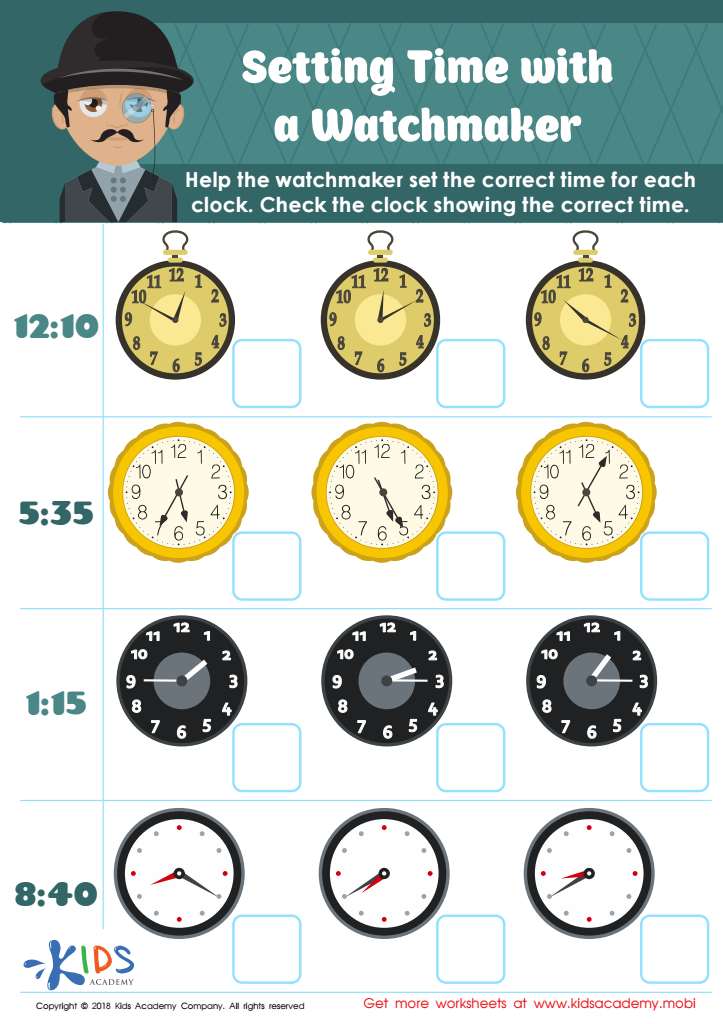
Setting Time with Watchmaker Worksheet
 Assign to My Students
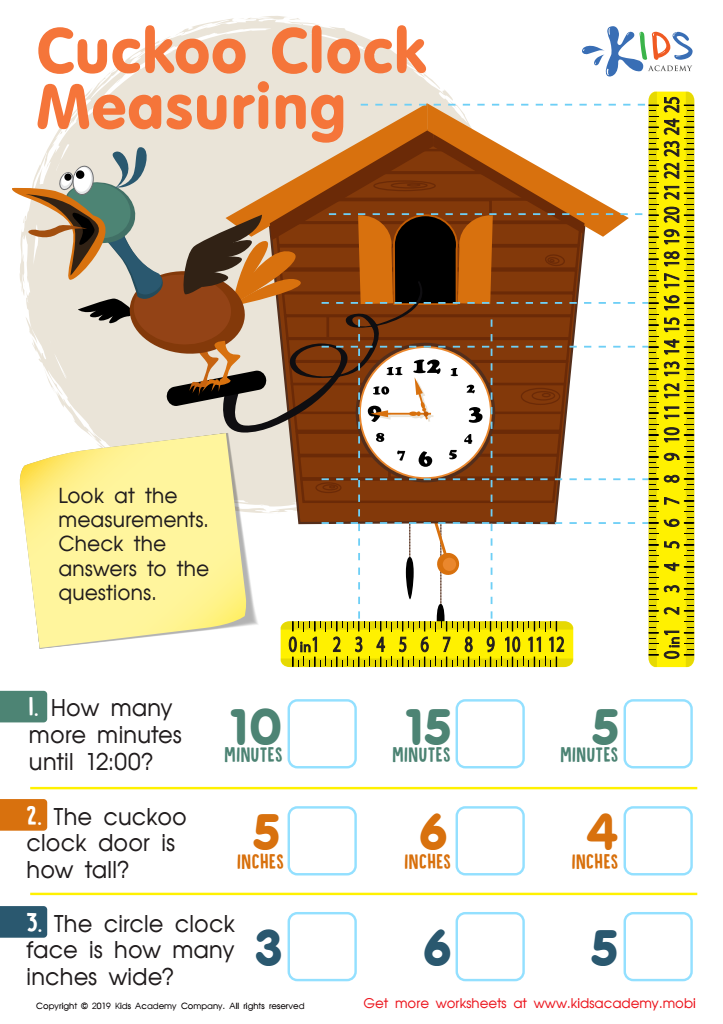
Cuckoo Clock Measuring Worksheet




.jpg)


Understanding clocks and time-telling is crucial for children aged 8-9 as it lays the foundation for essential life skills and their academic development. At this age, children are increasingly independent and engage in various activities that require time management, such as school schedules, playdates, and homework deadlines. Mastering the concept of time helps children foster responsibility and accountability in their daily routines.
Moreover, learning to read clocks enhances critical thinking and problem-solving skills. It prompts cognitive development as students make connections between numbers, angles, and sequences, improving their understanding of both mathematics and real-world applications. This knowledge also supports their engagement in increasingly complex math topics, such as fractions and ratios, which often relate to time-based problems.
Furthermore, fostering a strong understanding of time can improve social interactions among peers and develop communication skills, as children can plan and discuss time-related events effectively. In summary, when parents and teachers prioritize the understanding of clocks, they empower children with practical skills that enrich their everyday lives, promoting academic success and fostering personal growth.








