Check out this FREE Trial Lesson on Math for age 8-9!

Match Exactly the Same

Favorites
With answer key
Interactive
  • 8-9
  • Understanding fractions
  • Math
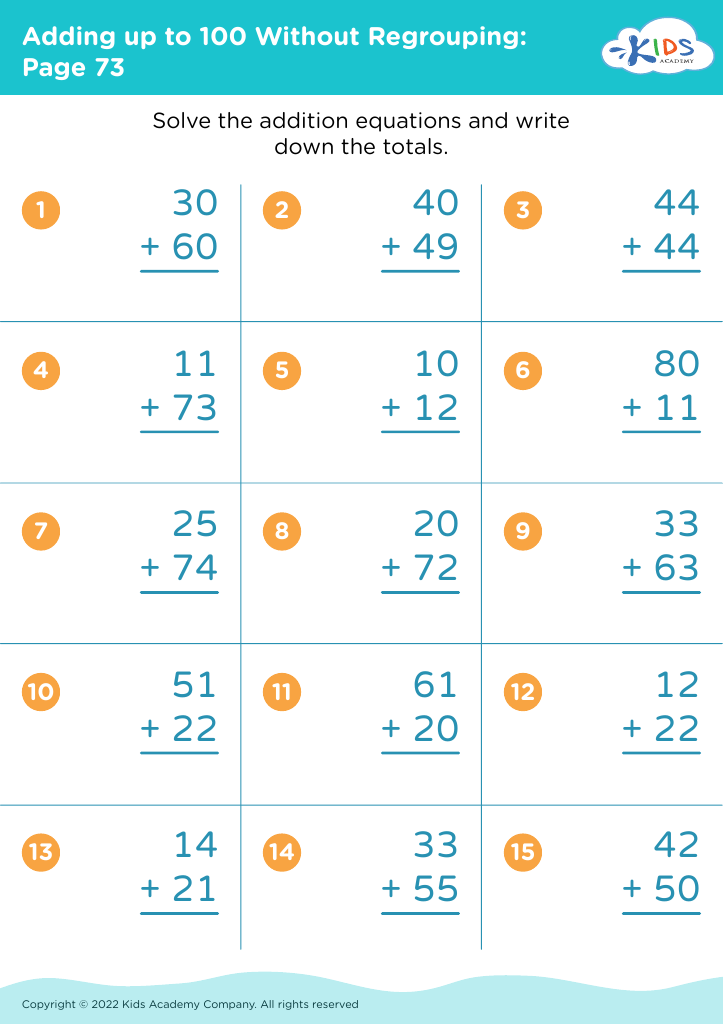
Adding up to 100 Without Regrouping: Page 73
Worksheet
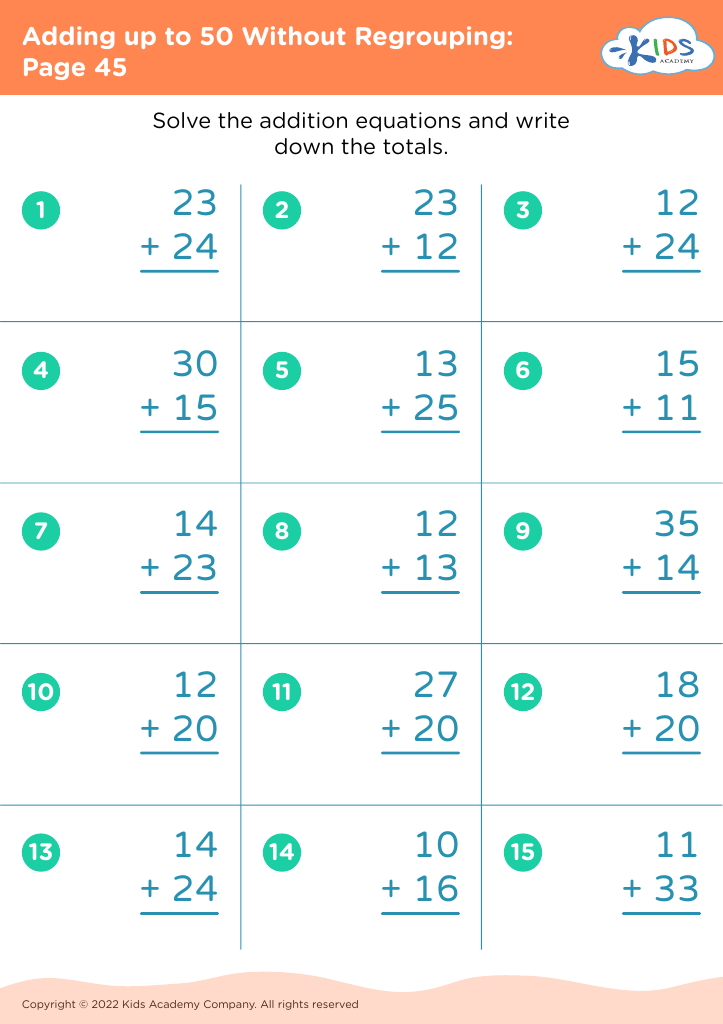
Adding up to 50 Without Regrouping: Page 45
Worksheet
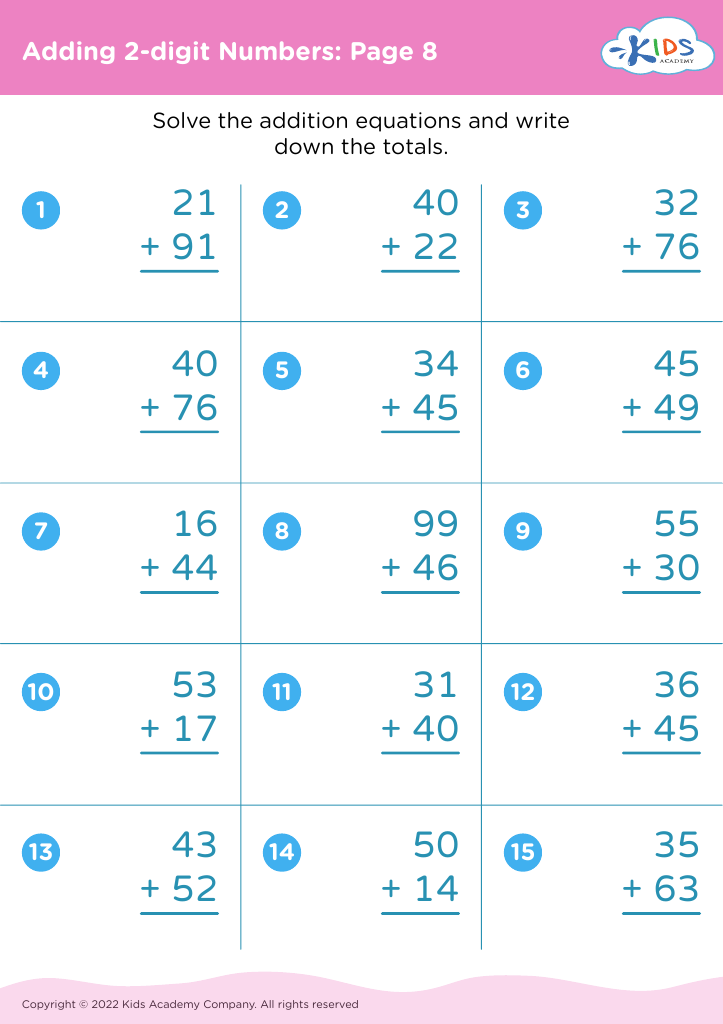
Adding 2-digit Numbers: Page 8

Adding 2-digit Numbers: Page 8

Adding 2-digit Numbers: Page 8
Worksheet
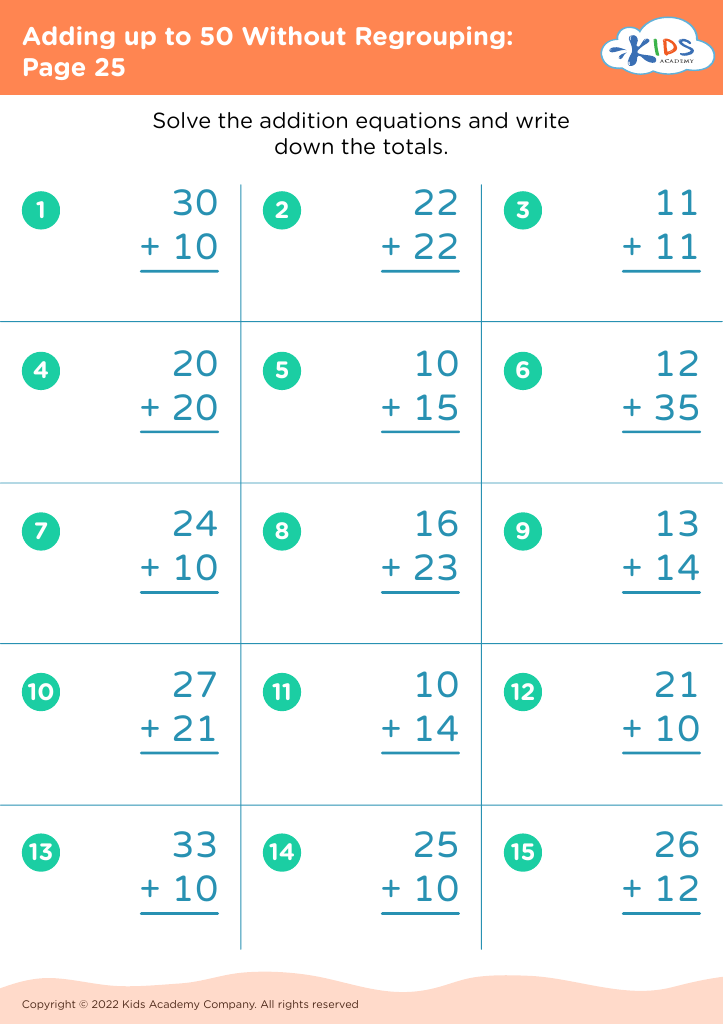
Adding up to 50 Without Regrouping: Page 25
Worksheet
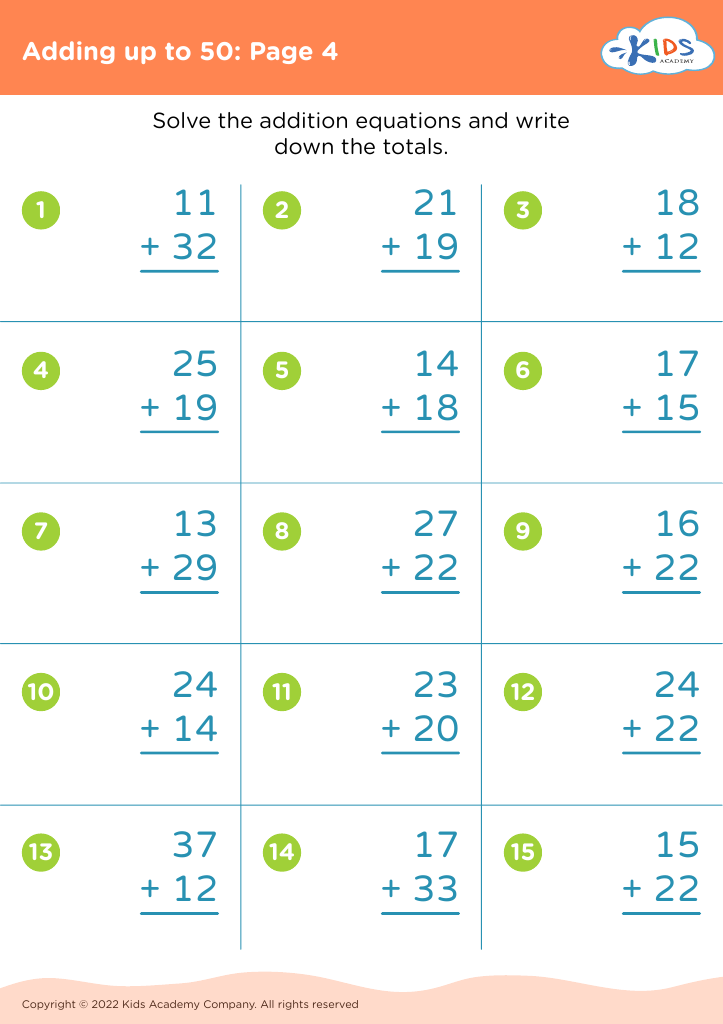
Adding up to 50: Page 4

Adding up to 50: Page 4

Adding up to 50: Page 4
Worksheet
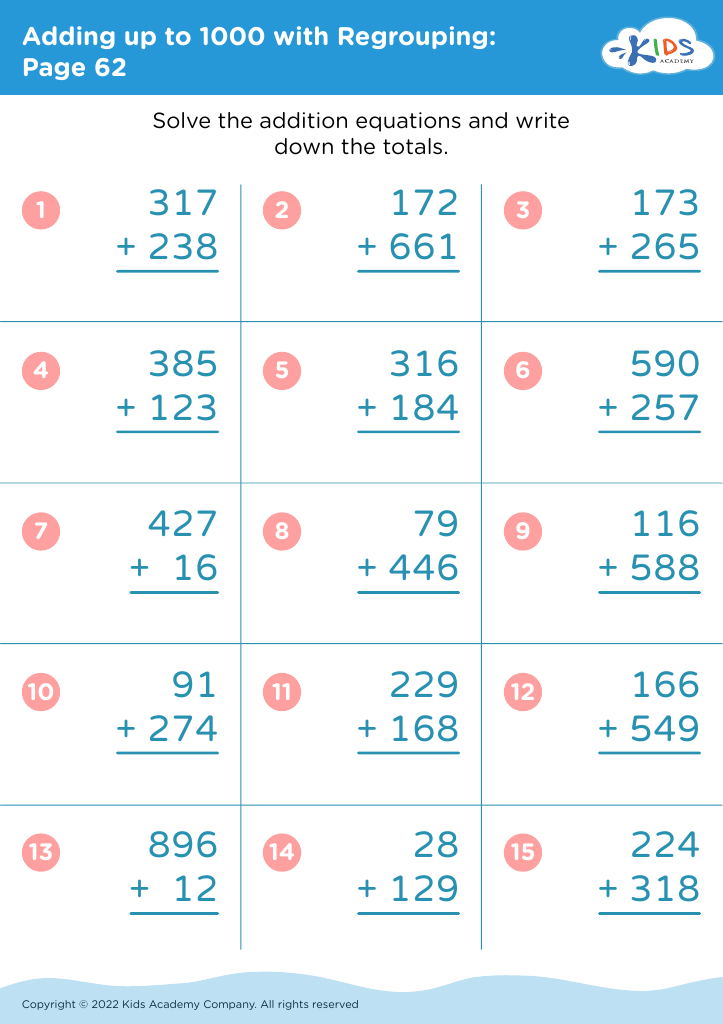
Adding up to 1000 with Regrouping: Page 62
Worksheet
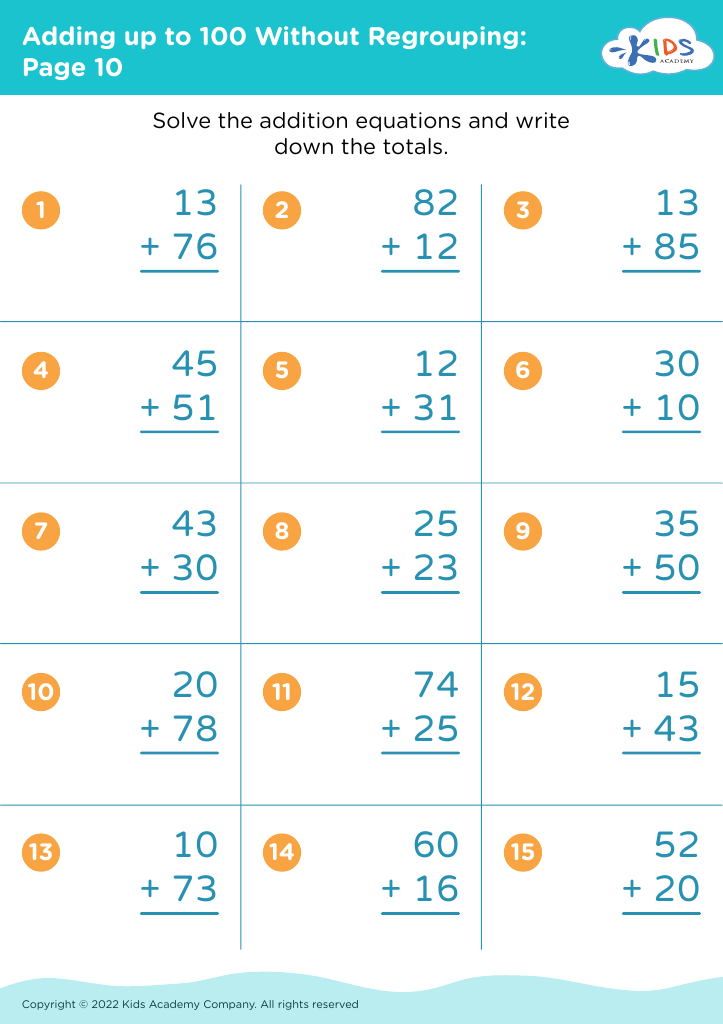
Adding up to 100 Without Regrouping: Page 10
Worksheet
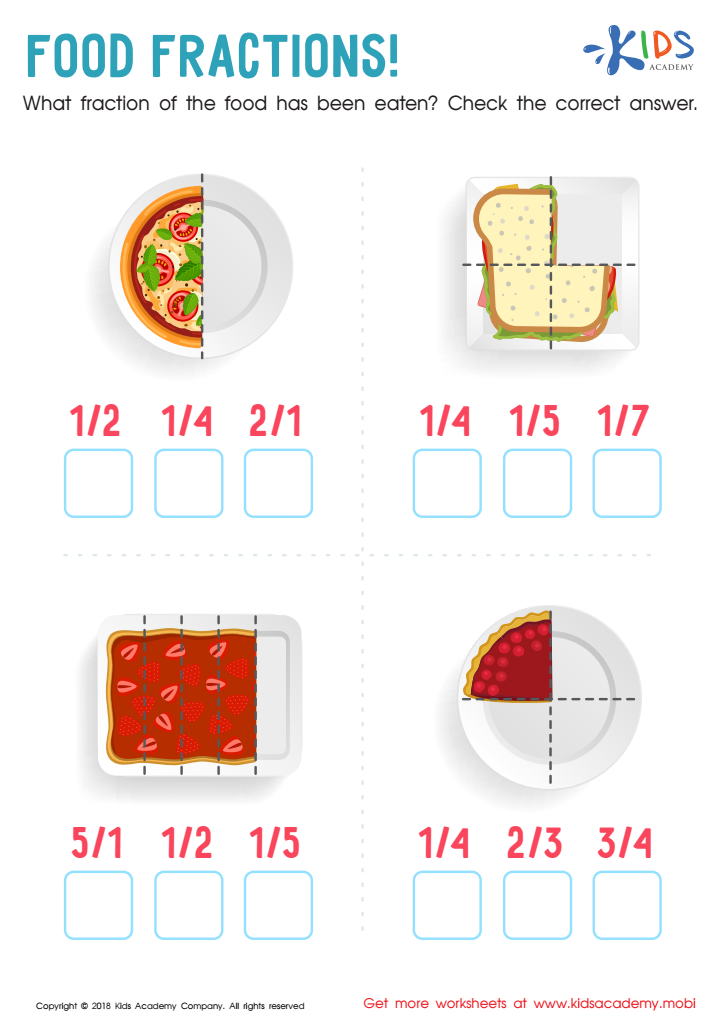
Food Fractions Worksheet

Food Fractions Worksheet

Test your child's understanding of fractions with this Food Fractions worksheet. Ask them to identify what fraction of the food in the four pictures has been eaten and select the correct answer from the options provided. See how well they understand your lessons!
Food Fractions Worksheet
Worksheet
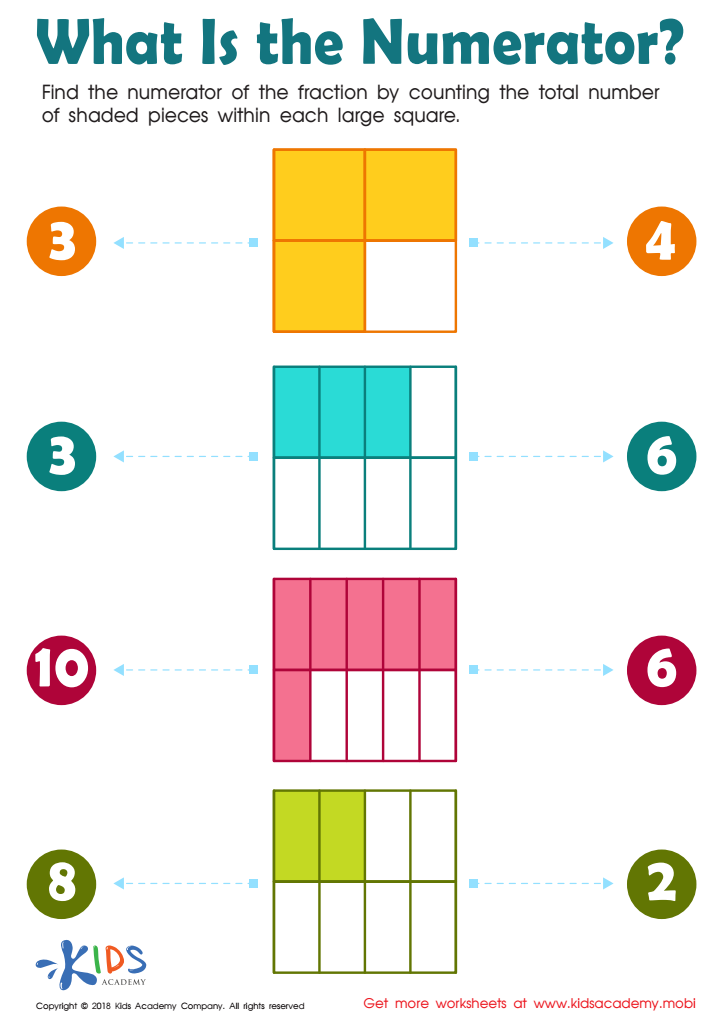
What Is the Numerator? Worksheet
What Is the Numerator? Worksheet
Help your kids learn fractions with this simple worksheet. Explain that the numerator is the number atop another number, then have them count the shaded pieces in each large square to find the numerator of the fraction. This activity is perfect for young kindergartners starting out with fractions.
What Is the Numerator? Worksheet
Worksheet
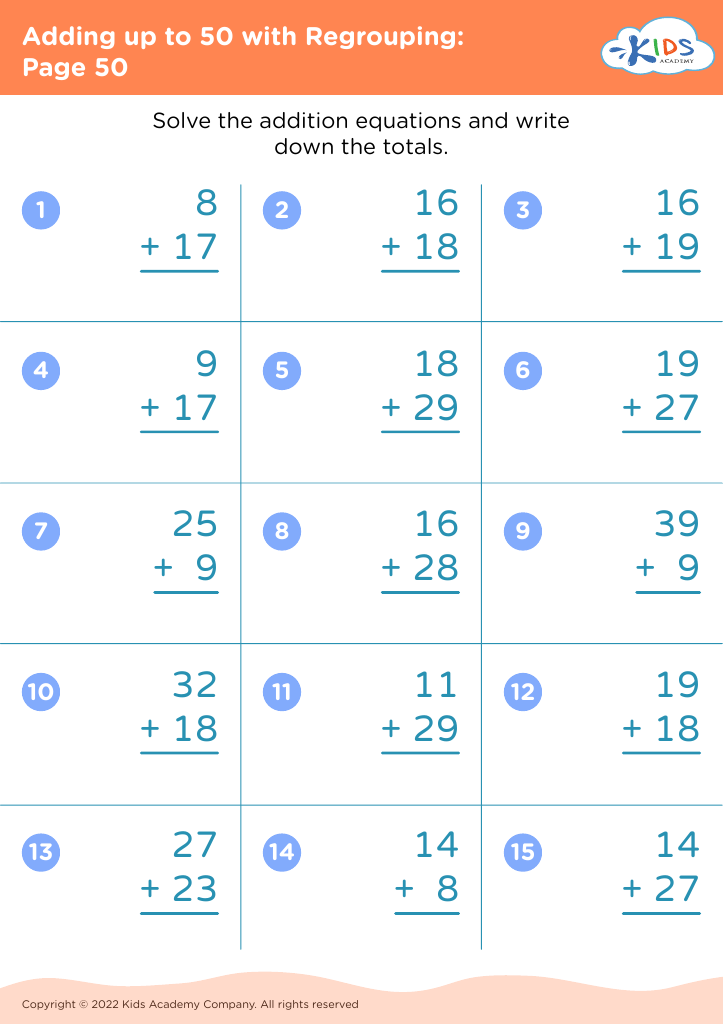
Adding up to 50 with Regrouping: Page 50
Worksheet
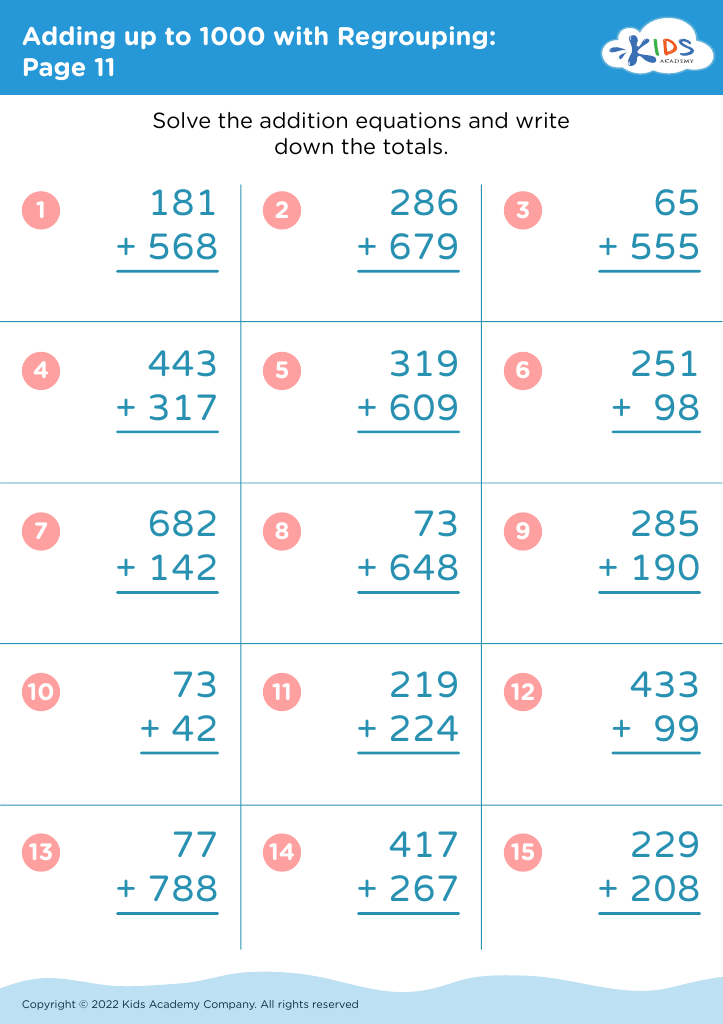
Adding up to 1000 with Regrouping: Page 11
Worksheet
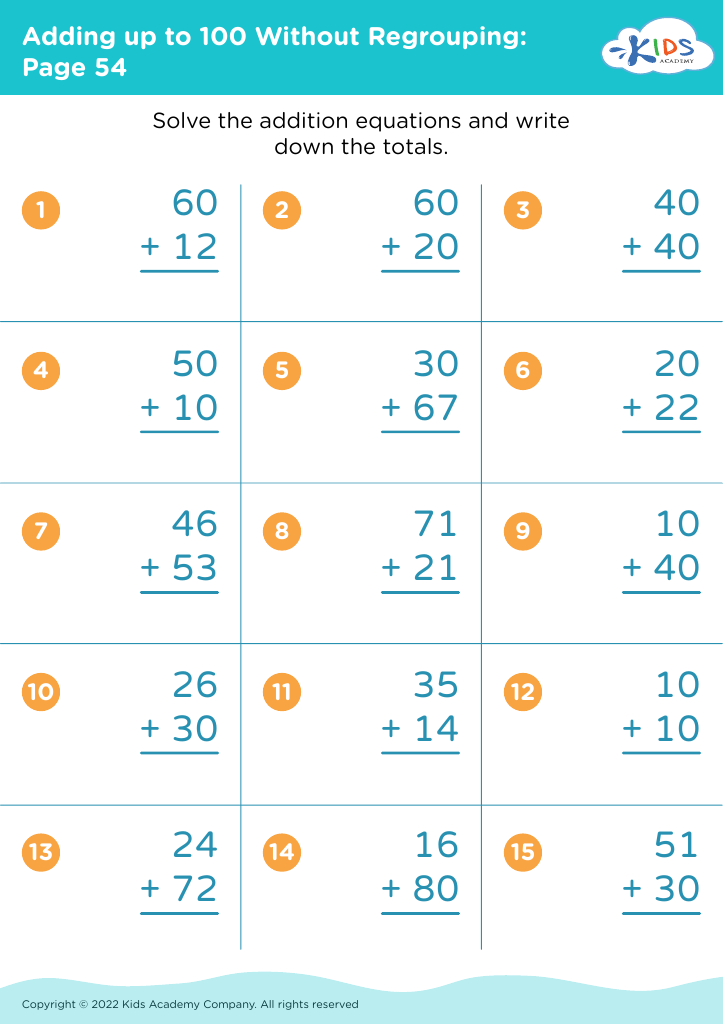
Adding up to 100 Without Regrouping: Page 54
Worksheet
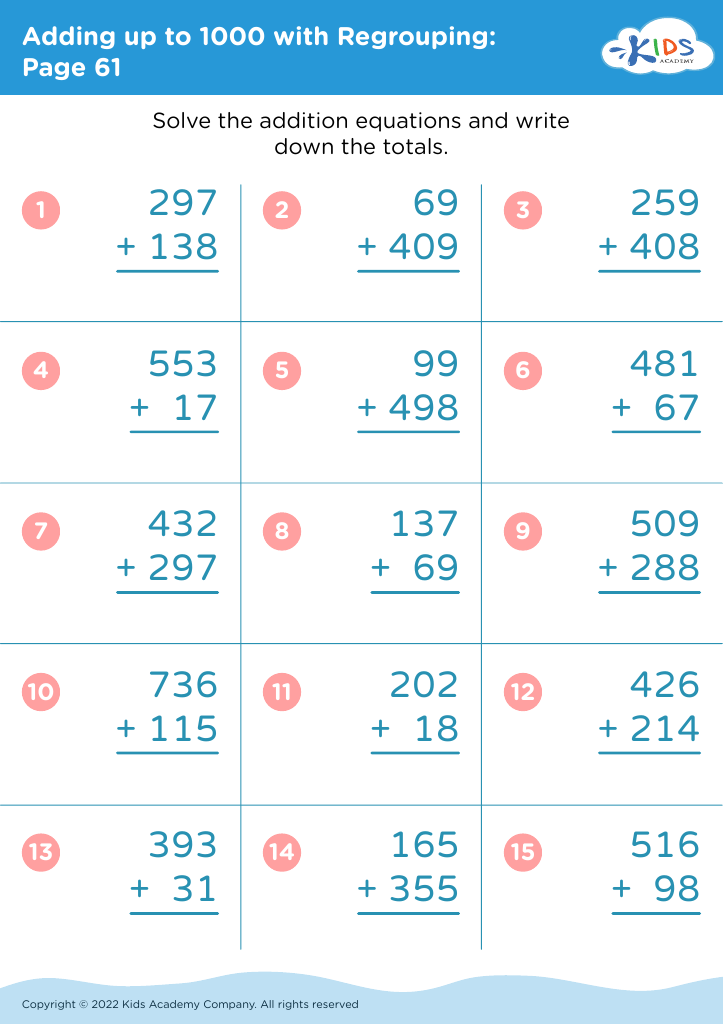
Adding up to 1000 with Regrouping: Page 61
Worksheet
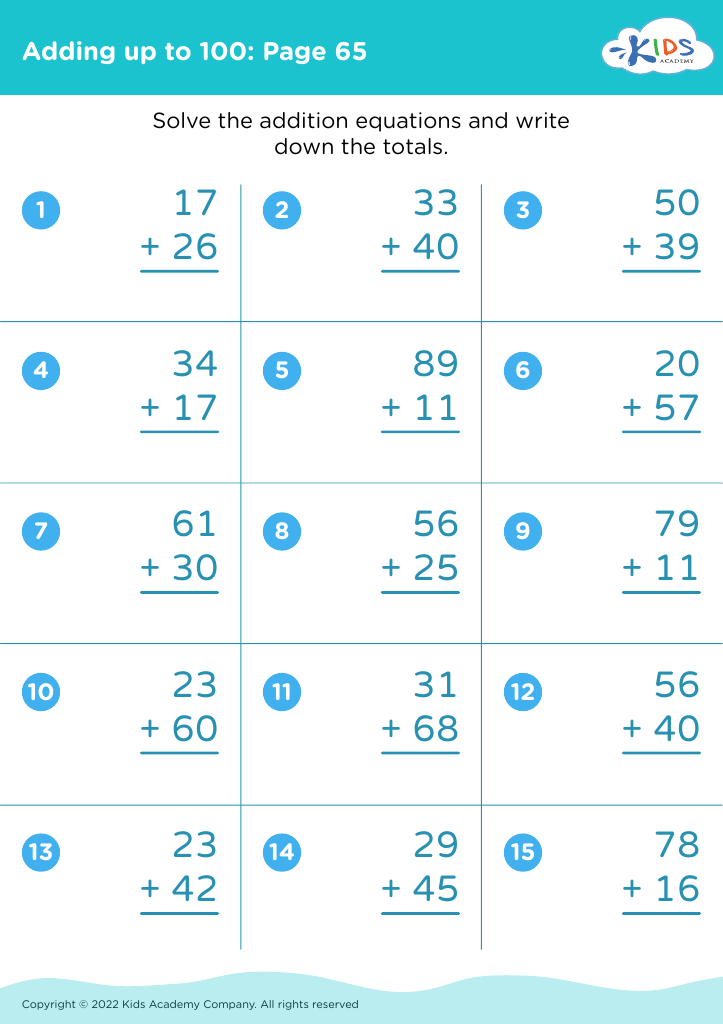
Adding up to 100: Page 65

Adding up to 100: Page 65

Adding up to 100: Page 65
Worksheet
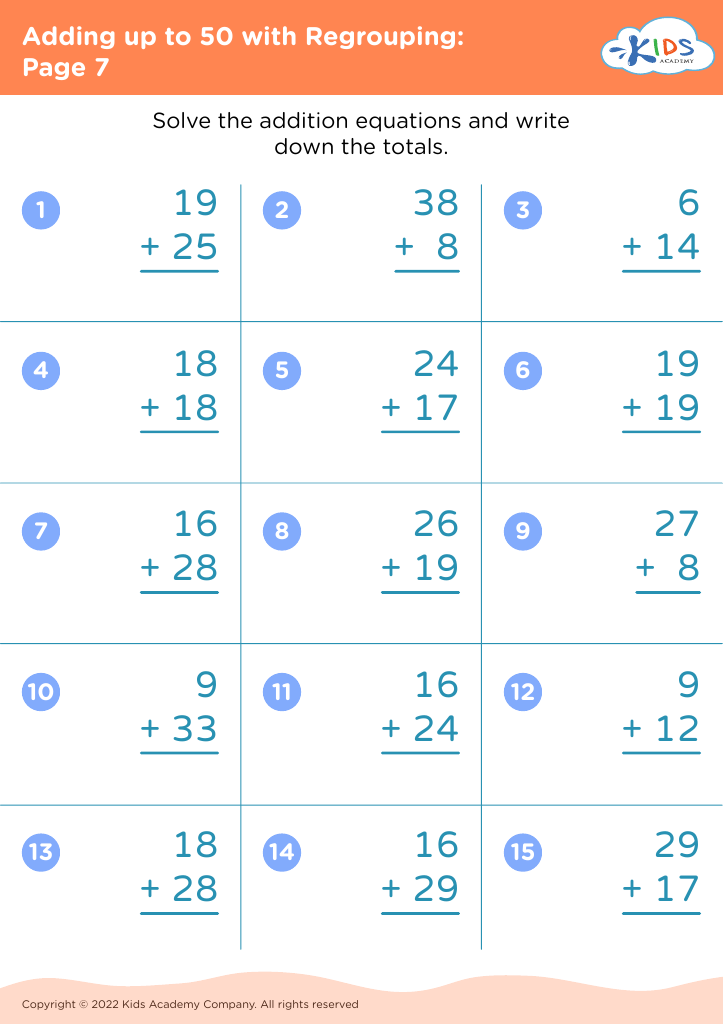
Adding up to 50 with Regrouping: Page 7
Worksheet
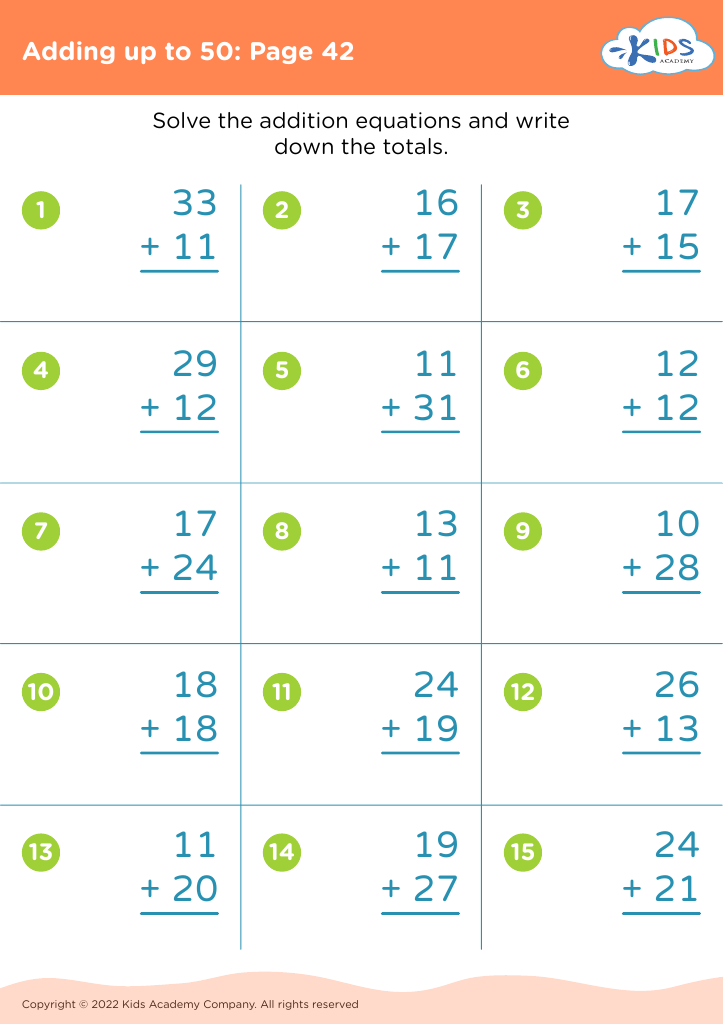
Adding up to 50: Page 42

Adding up to 50: Page 42

Adding up to 50: Page 42
Worksheet
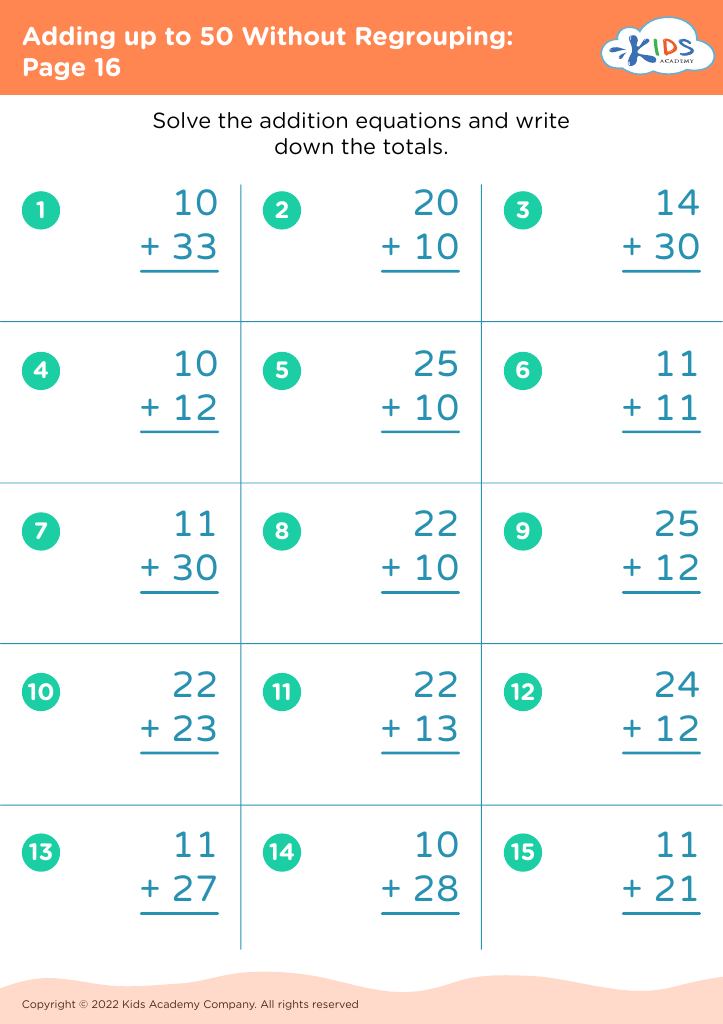
Adding up to 50 Without Regrouping: Page 16
Worksheet
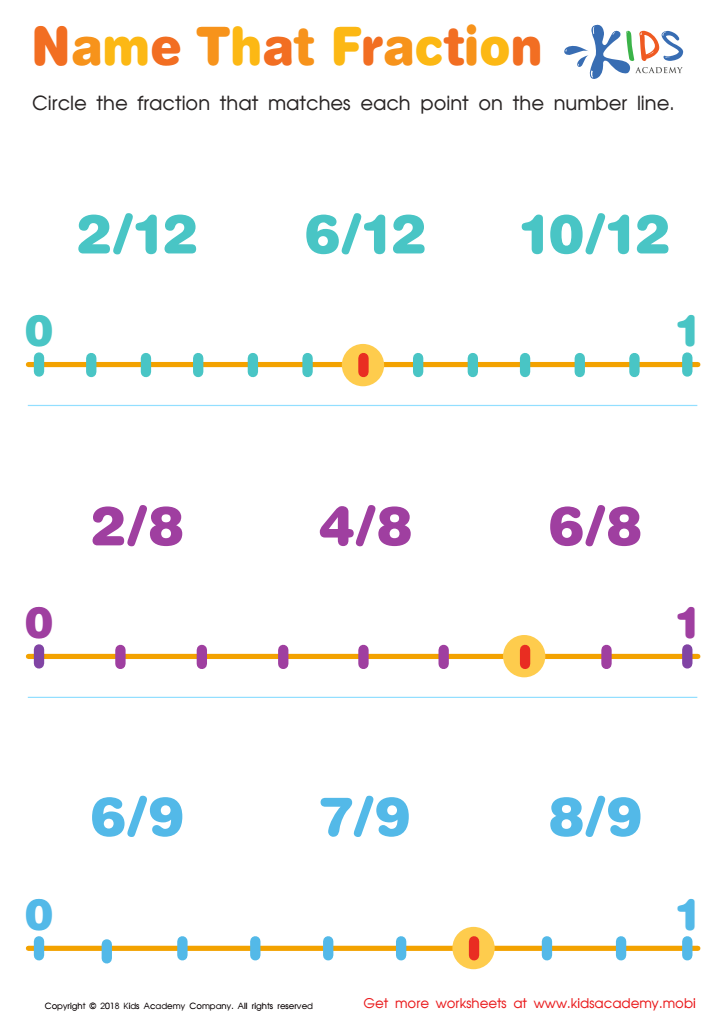
Name That Fraction Worksheet
Name That Fraction Worksheet

Kids must learn to identify and name fractions to solve equations. Included in this worksheet are three equations that need solving. Have your child match each point on the number line with the correct fraction and circle it. This exercise helps build their fraction skills.
Name That Fraction Worksheet
Worksheet
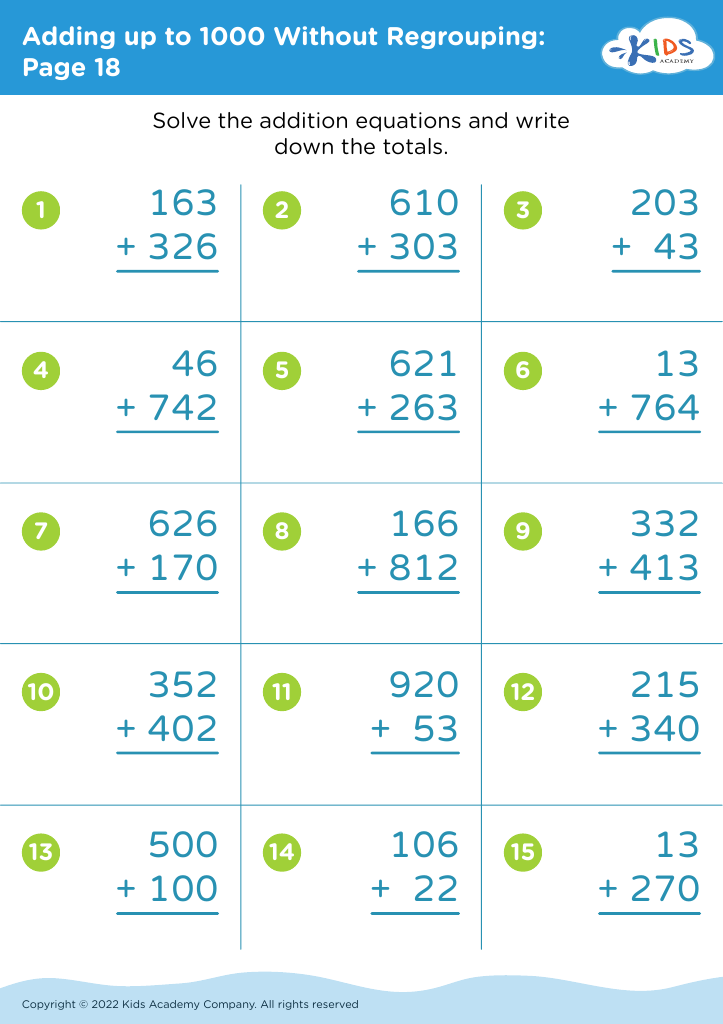
Adding up to 1000 Without Regrouping: Page 18
Worksheet
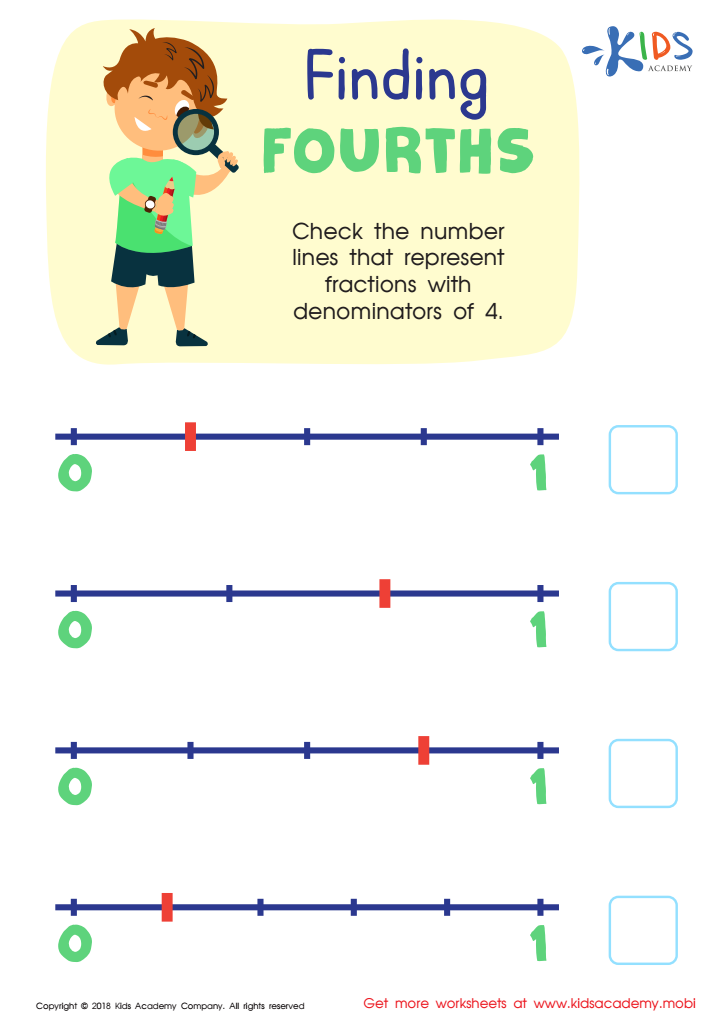
Finding Fourths Worksheet
Finding Fourths Worksheet
Help your kids sharpen math skills with extra homework, stimulating exercises, and fun worksheets. This printout features four equations with fractions and number lines. Your child's task is to check the number lines with denominators of 4. Enough to get them thinking and learning.
Finding Fourths Worksheet
Worksheet
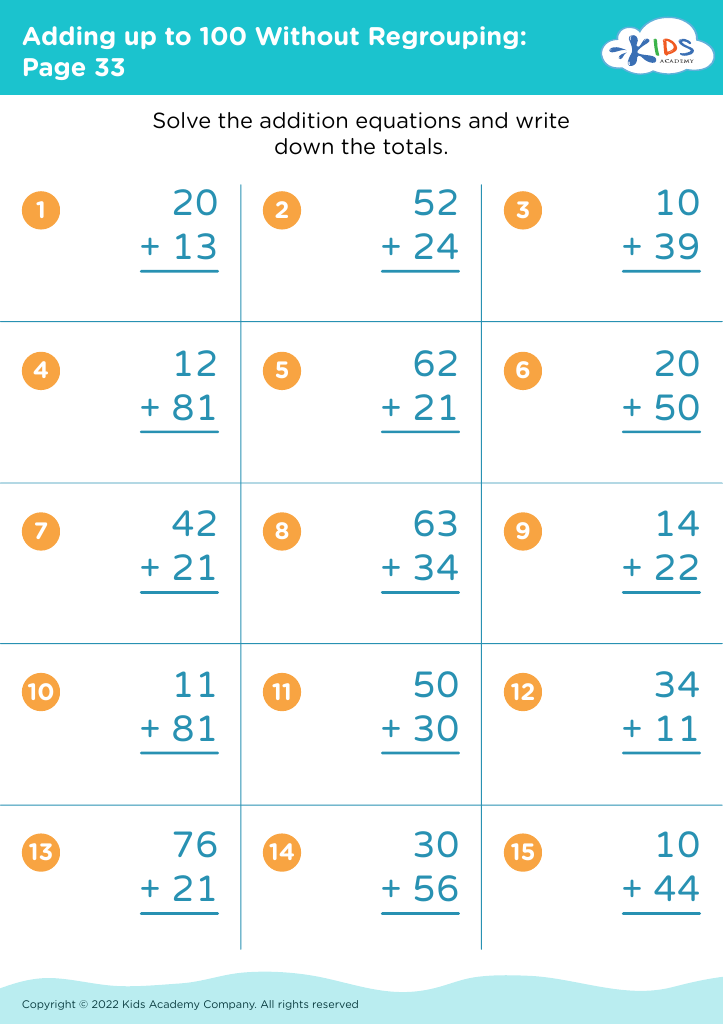
Adding up to 100 Without Regrouping: Page 33
Worksheet
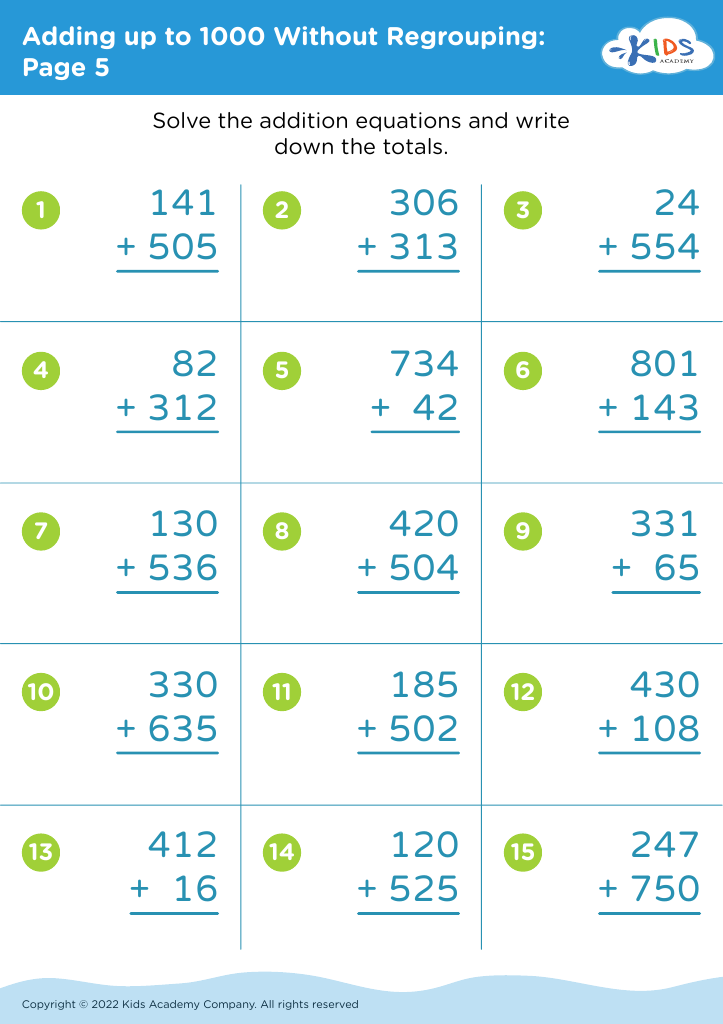
Adding up to 1000 Without Regrouping: Page 5
Worksheet
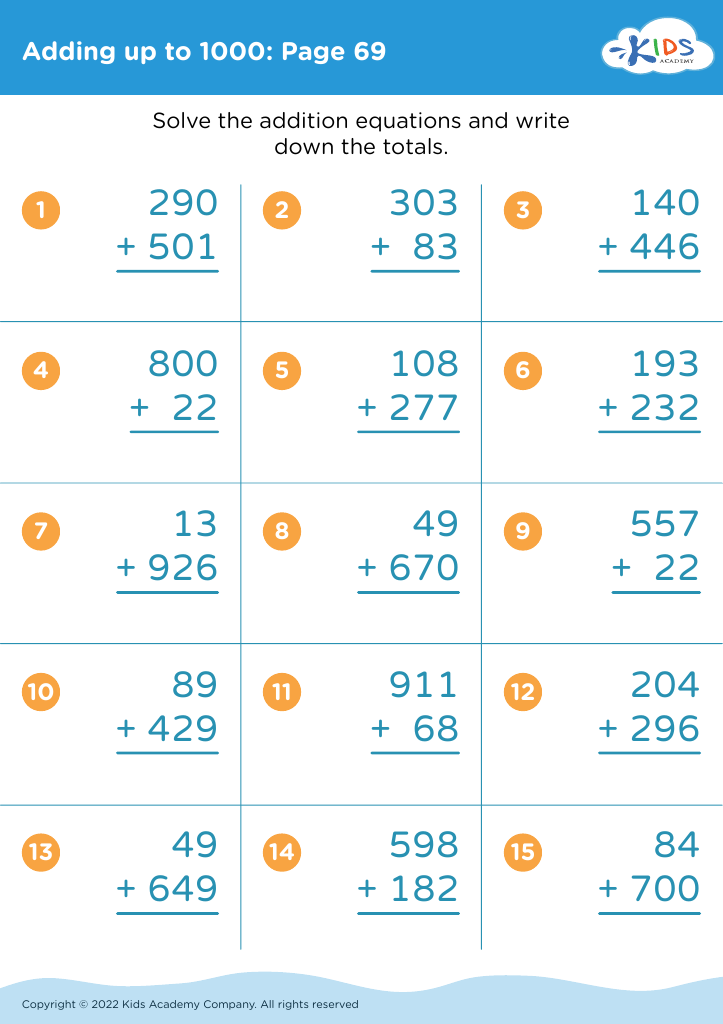
Adding up to 1000: Page 69

Adding up to 1000: Page 69

Adding up to 1000: Page 69
Worksheet
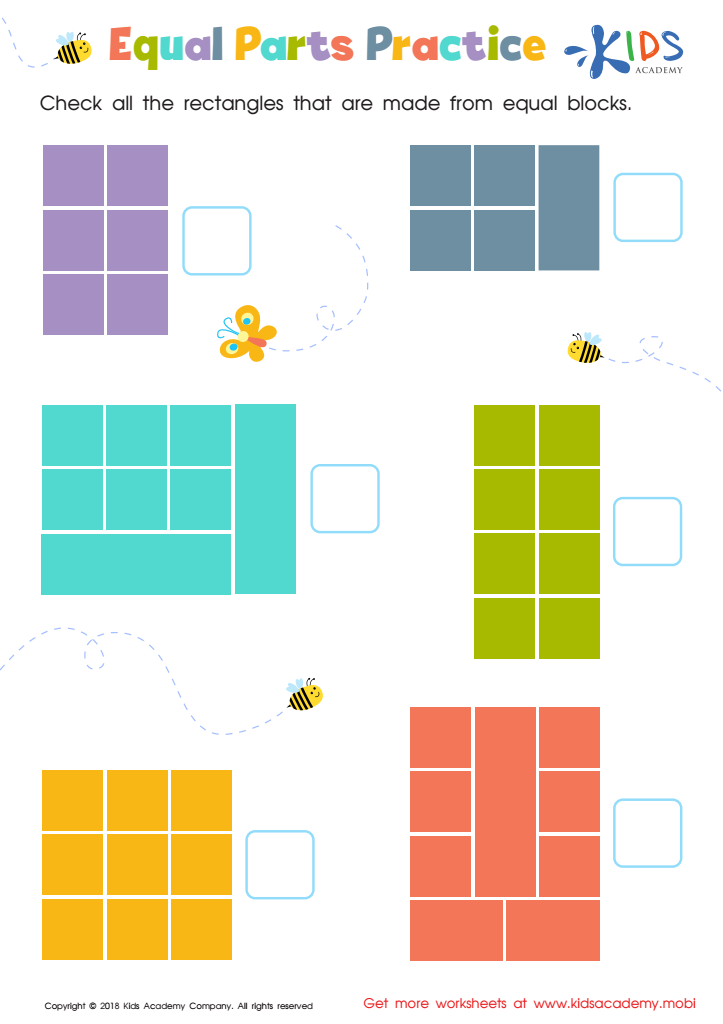
Equal Parts Practice Worksheet


Equal Parts Practice Worksheet
This worksheet checks your child's knowledge of halves and equal pieces. Have them go through the rectangles and check those made up of equal blocks. Your kids should be able to tell which parts are equal and which are not after the exercise.
Equal Parts Practice Worksheet

Worksheet


Understanding fractions is critical for children ages 8-9 because it lays down a strong mathematical foundation essential for future learning. Fractions are not just another math topic; they are a pivotal concept that aids in developing both analytical and problem-solving skills.

Firstly, fractions represent parts of a whole, an idea that translates into many real-life situations such as dividing a pizza, measuring ingredients for a recipe, or even understanding money. Grasping this concept at an early age allows children to relate math to everyday activities, making the subject less abstract and more approachable.

Secondly, mastery of fractions is often a prerequisite for advanced mathematical concepts like ratios, proportions, and algebra. These topics become significantly easier to understand if the groundwork laid down by learning fractions is strong. Proficiency in fractions boosts a child’s confidence, preparing them to tackle more complex math problems as they progress through school.

Furthermore, understanding fractions enhances cognitive abilities such as reasoning, logic, and spatial thinking. It encourages students to think critically and make connections between different pieces of information, skills that are applicable beyond math, in subjects like science and engineering.

Lastly, a solid comprehension of fractions aligns with common core education standards, ensuring children meet academic expectations. Hence, parents and teachers should actively support children in mastering fractions to equip them with essential skills for academic success and everyday life.