Check out this FREE Trial Lesson on Math for age 8-9!

A

Favorites
With answer key
Interactive
  • 8-9
  • Understanding fractions
  • Math
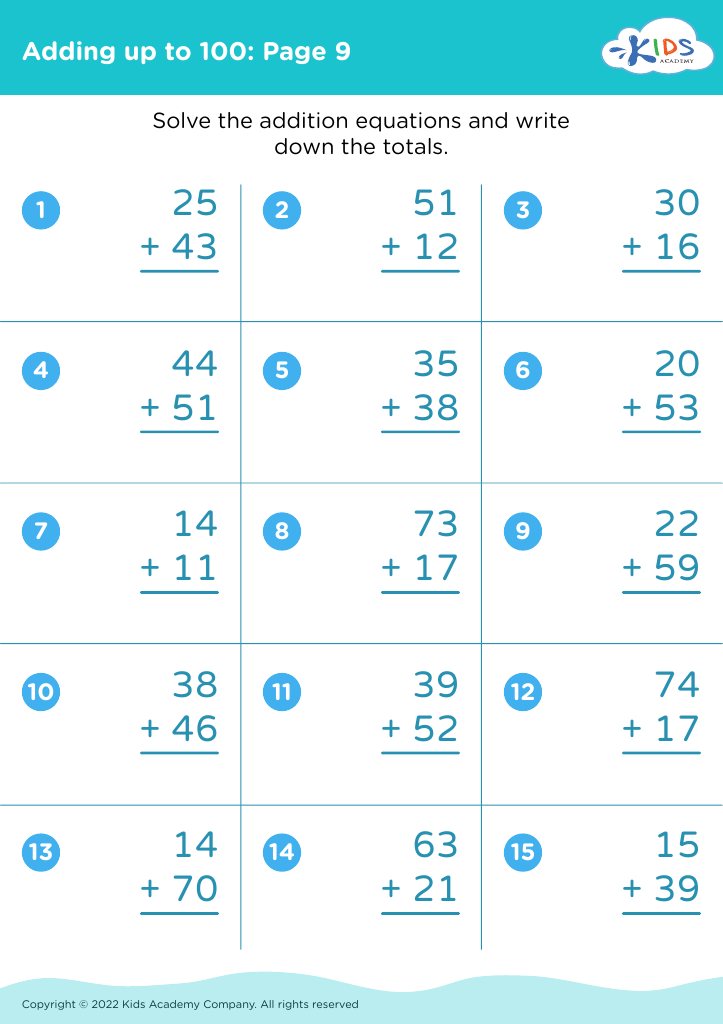
Adding up to 100: Page 9

Adding up to 100: Page 9

Adding up to 100: Page 9
Worksheet
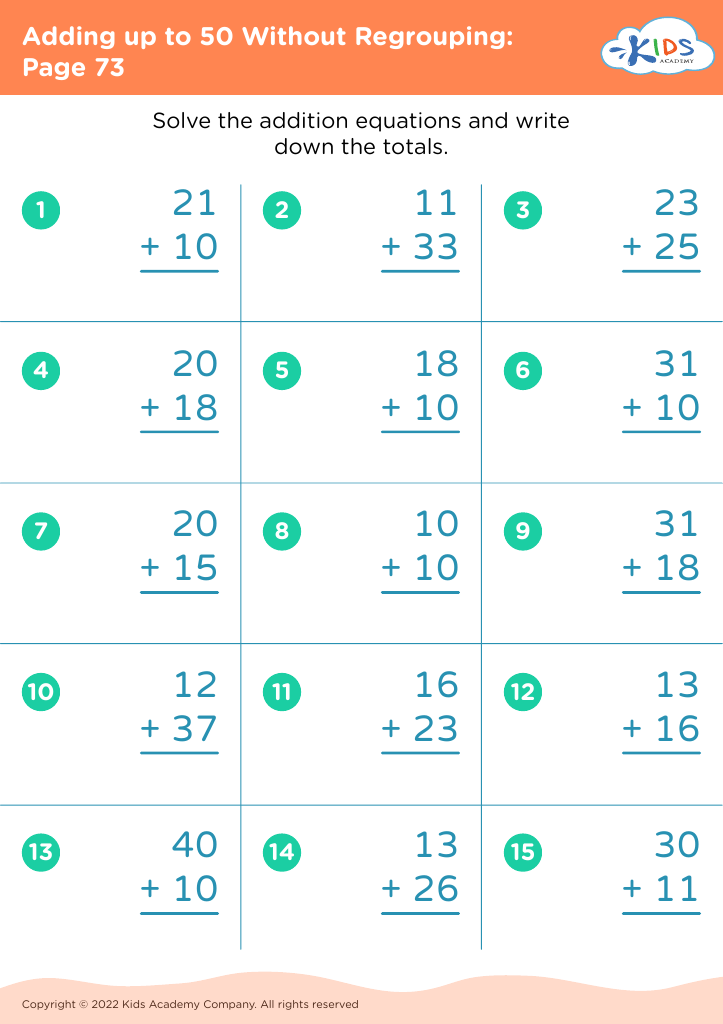
Adding up to 50 Without Regrouping: Page 73
Worksheet
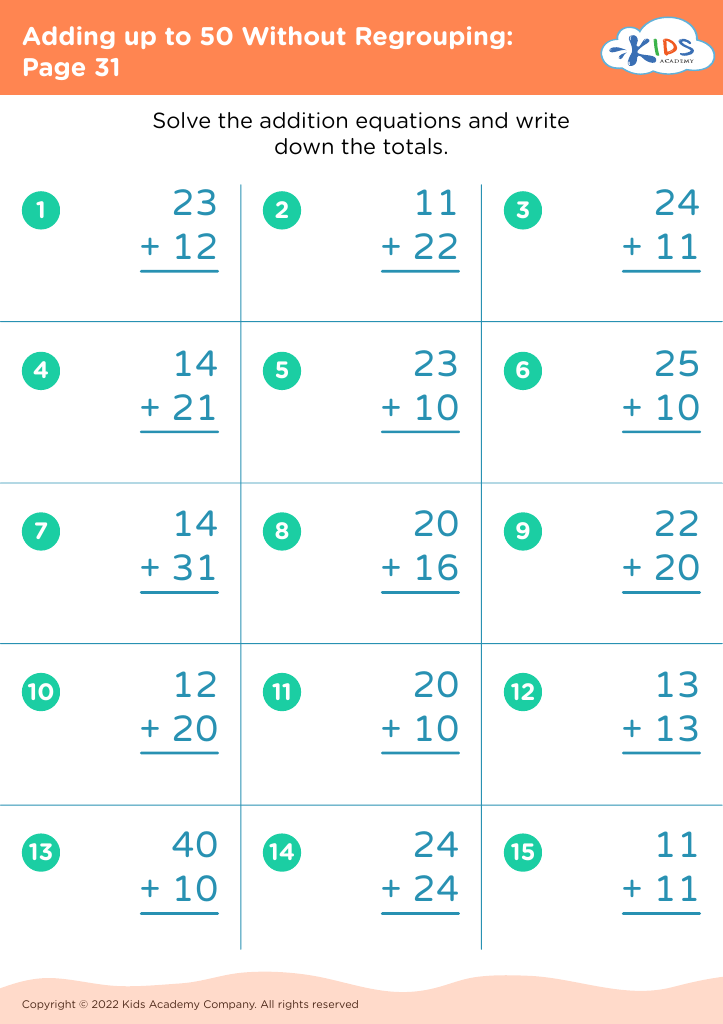
Adding up to 50 Without Regrouping: Page 31
Worksheet
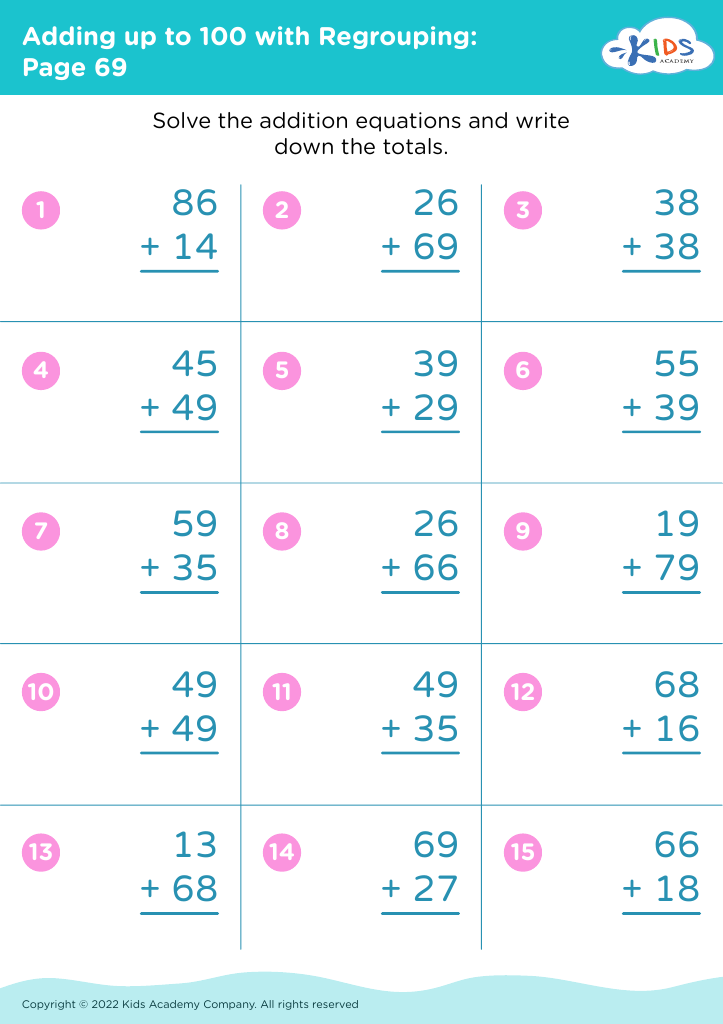
Adding up to 100 with Regrouping: Page 69
Worksheet
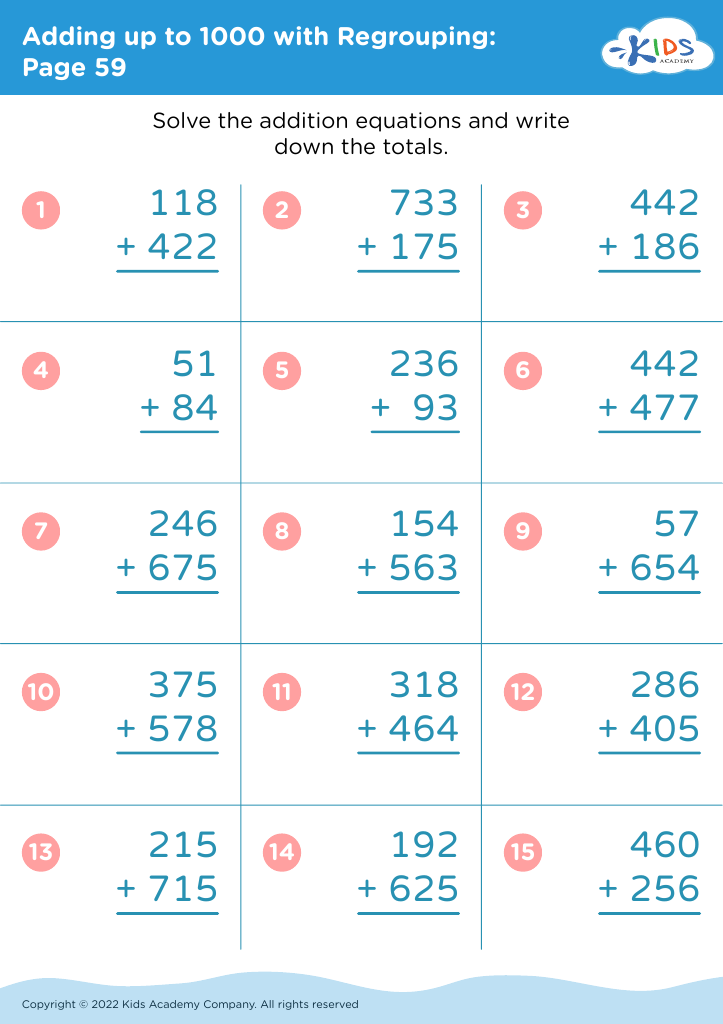
Adding up to 1000 with Regrouping: Page 59
Worksheet
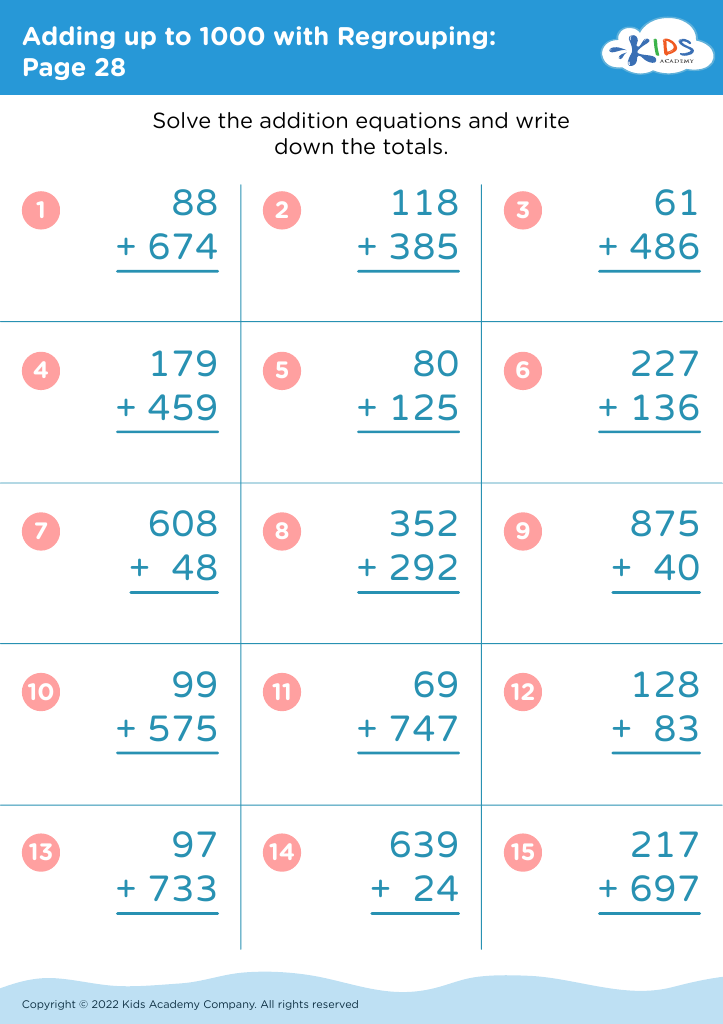
Adding up to 1000 with Regrouping: Page 28
Worksheet
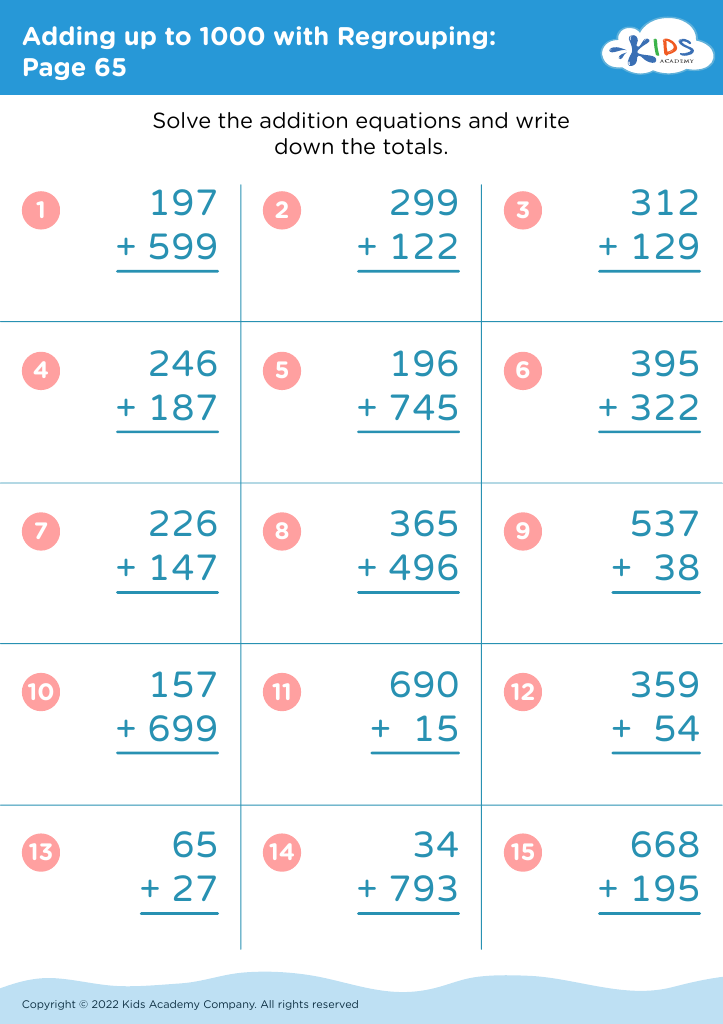
Adding up to 1000 with Regrouping: Page 65
Worksheet
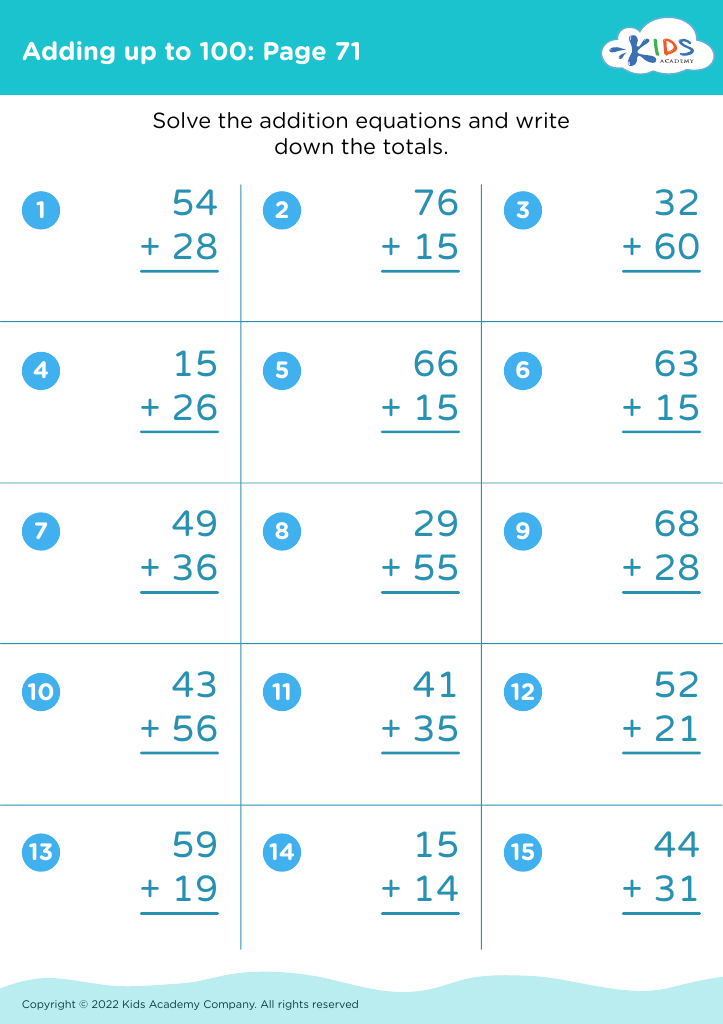
Adding up to 100: Page 71

Adding up to 100: Page 71

Adding up to 100: Page 71
Worksheet
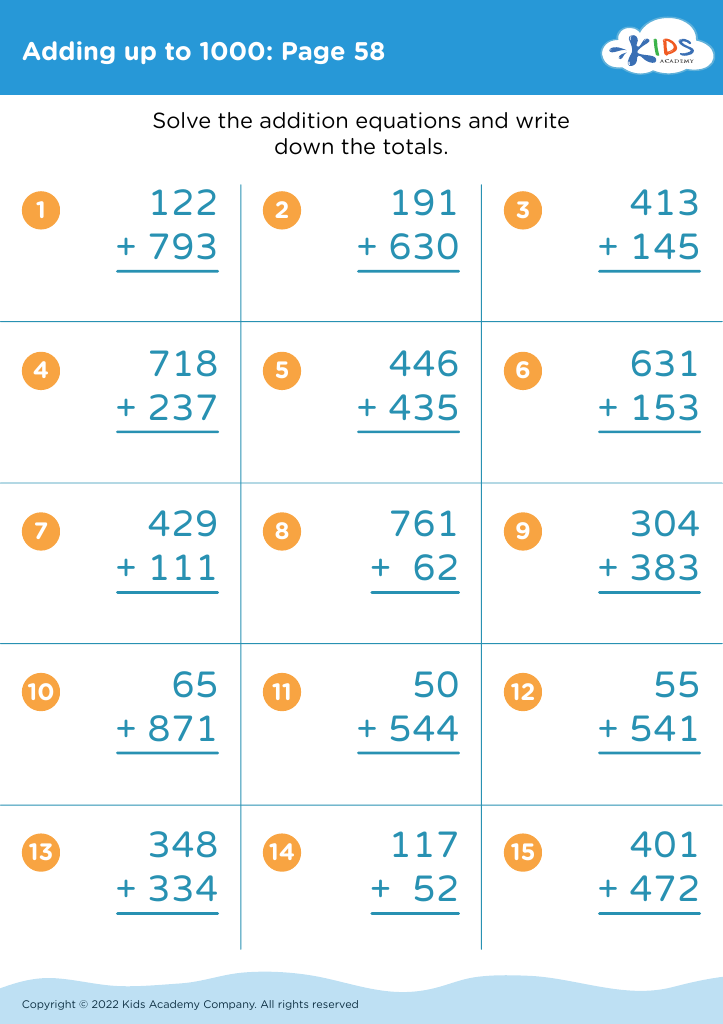
Adding up to 1000: Page 58

Adding up to 1000: Page 58

Adding up to 1000: Page 58
Worksheet
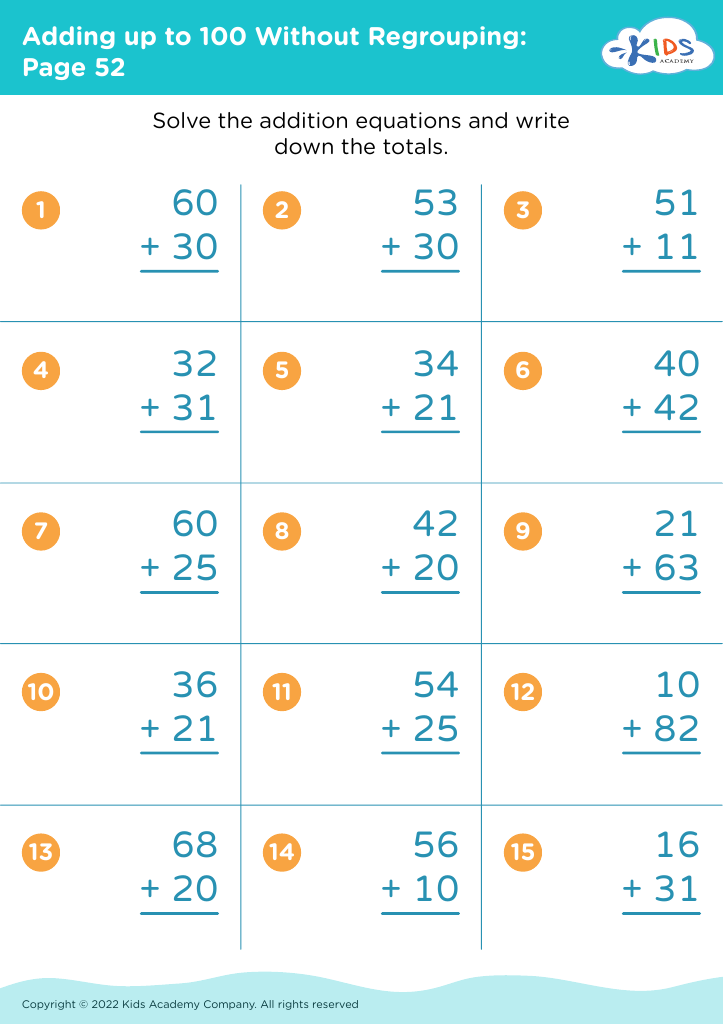
Adding up to 100 Without Regrouping: Page 52
Worksheet
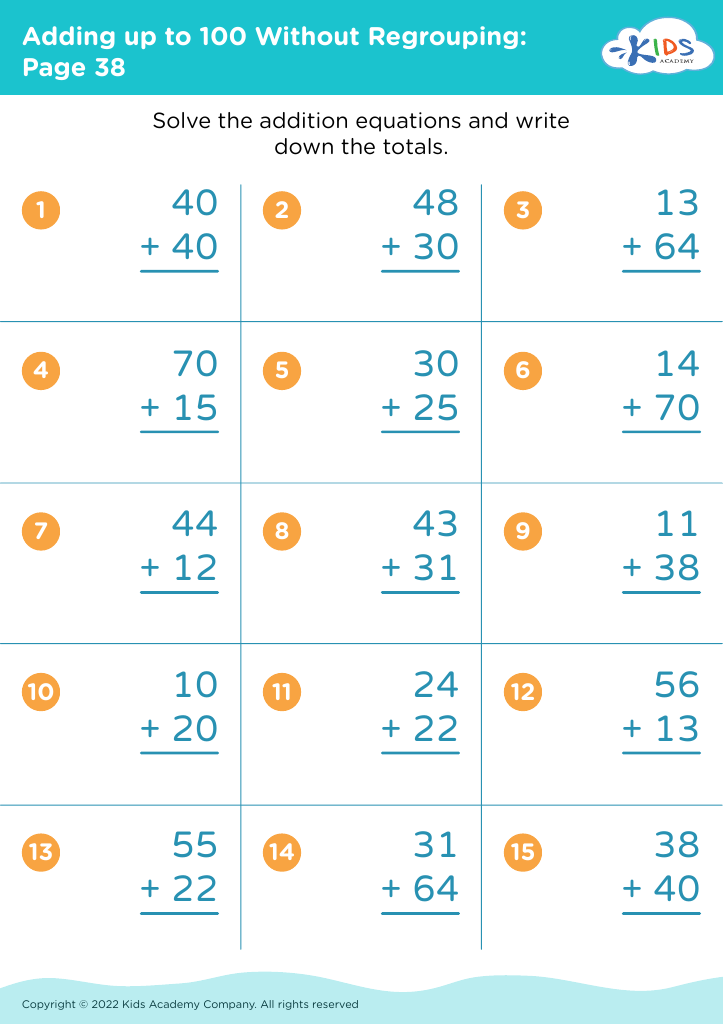
Adding up to 100 Without Regrouping: Page 38
Worksheet
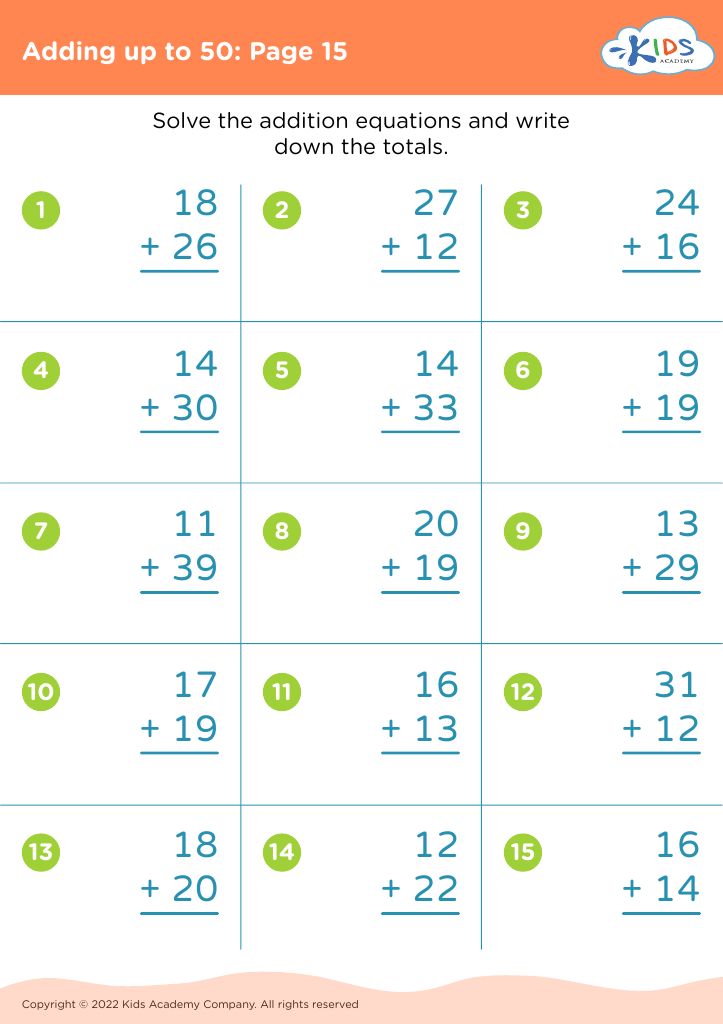
Adding up to 50: Page 15

Adding up to 50: Page 15

Adding up to 50: Page 15
Worksheet
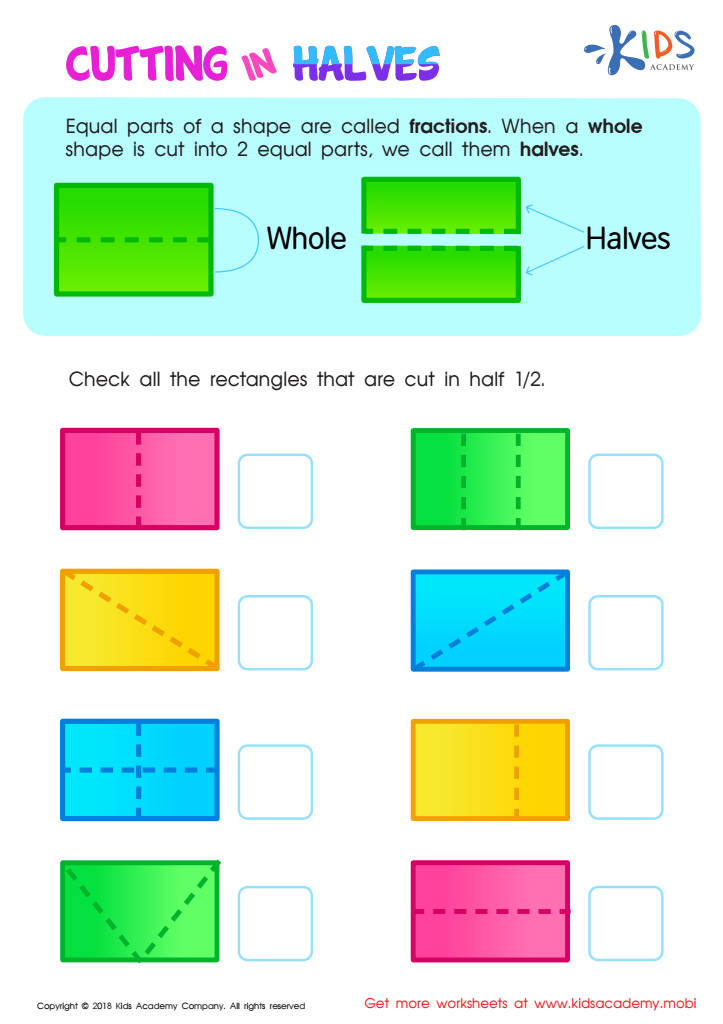
Cutting in Halves Worksheet

Cutting in Halves Worksheet

Show your child how to divide a whole shape, like a square, into smaller pieces to become fractions. Point out when a shape is divided into two equal parts, it's called a half. Look at the worksheet together, and identify all rectangles that are cut in half (½).
Cutting in Halves Worksheet
Worksheet
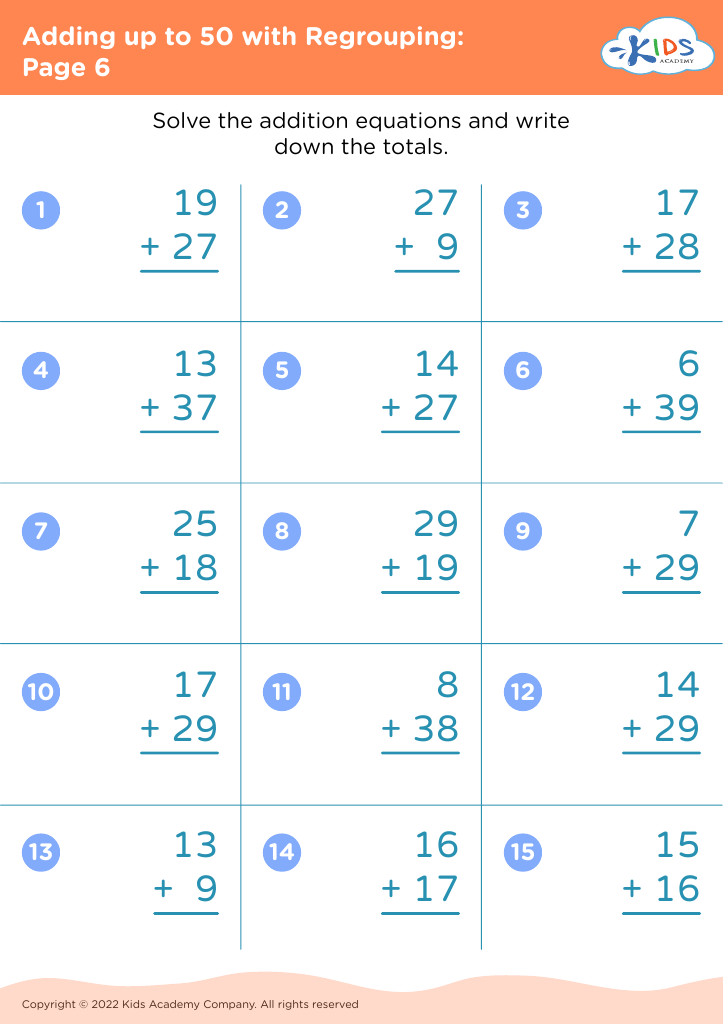
Adding up to 50 with Regrouping: Page 6
Worksheet
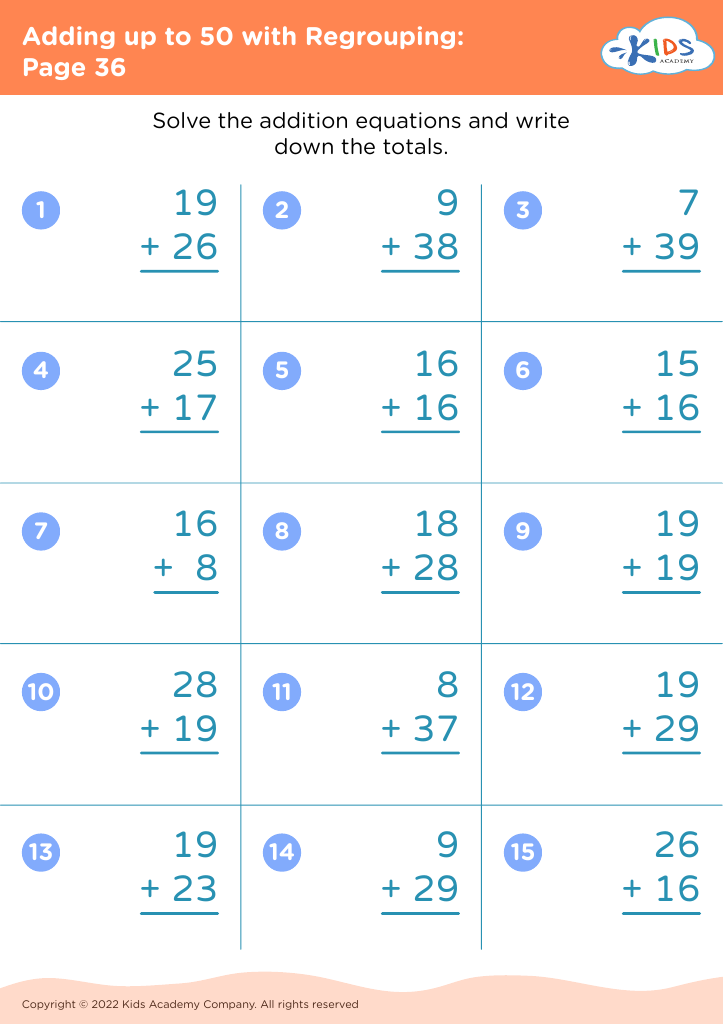
Adding up to 50 with Regrouping: Page 36
Worksheet
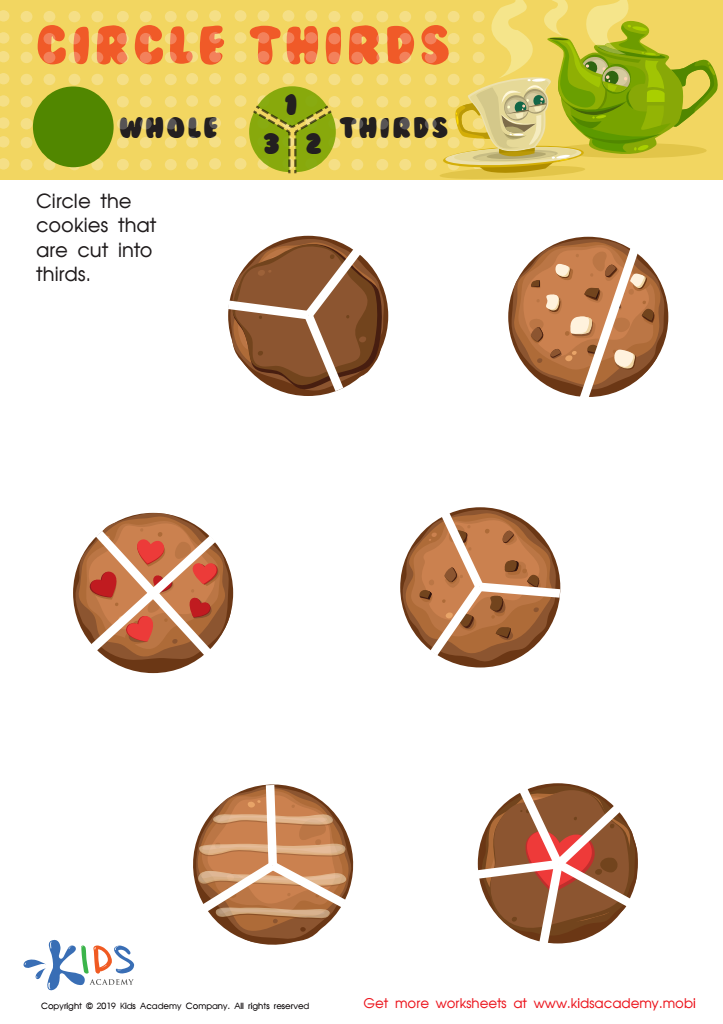
Circle Thirds Worksheet

Circle Thirds Worksheet

Remind your kids of the different ways shapes can be divided: wholes, halves, thirds, and fourths. Now, look at the shapes in the worksheet and have them circle the cookies cut into thirds.
Circle Thirds Worksheet
Worksheet
Fractions of Shapes Printable Worksheet

Fractions of Shapes Worksheet
It will also show them how fractions are represented in everyday shapes.
Fractions of Shapes Worksheet
Worksheet
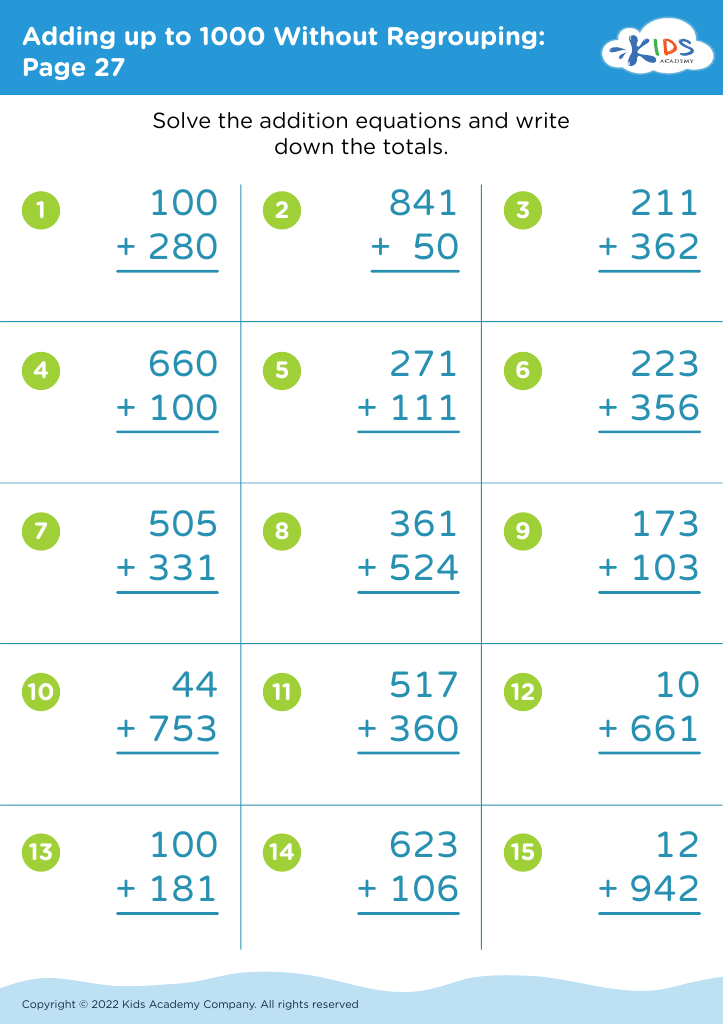
Adding up to 1000 Without Regrouping: Page 27
Worksheet
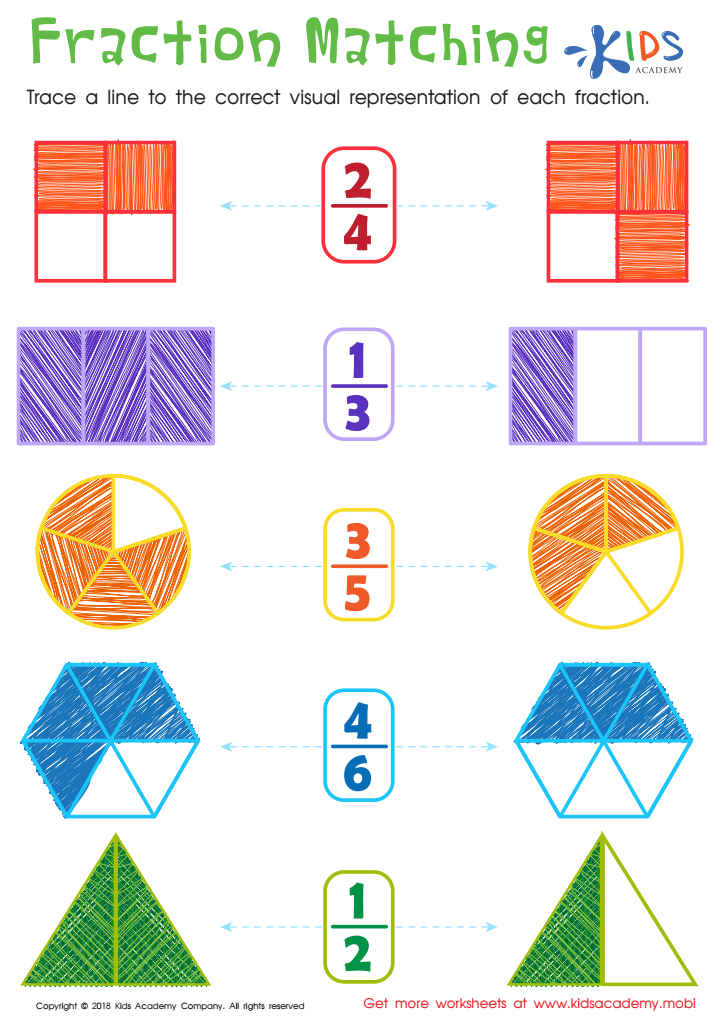
Fraction Matching Worksheet
Fraction Matching Worksheet
Teach your kindergartners fractions with this colorful worksheet. Make sure they understand numerators and denominators, then have them trace a line to the correct visual representation of each equation. There are five fractions for them to work on. With the foundation of fractions, mathematics will be much easier for them.
Fraction Matching Worksheet
Worksheet
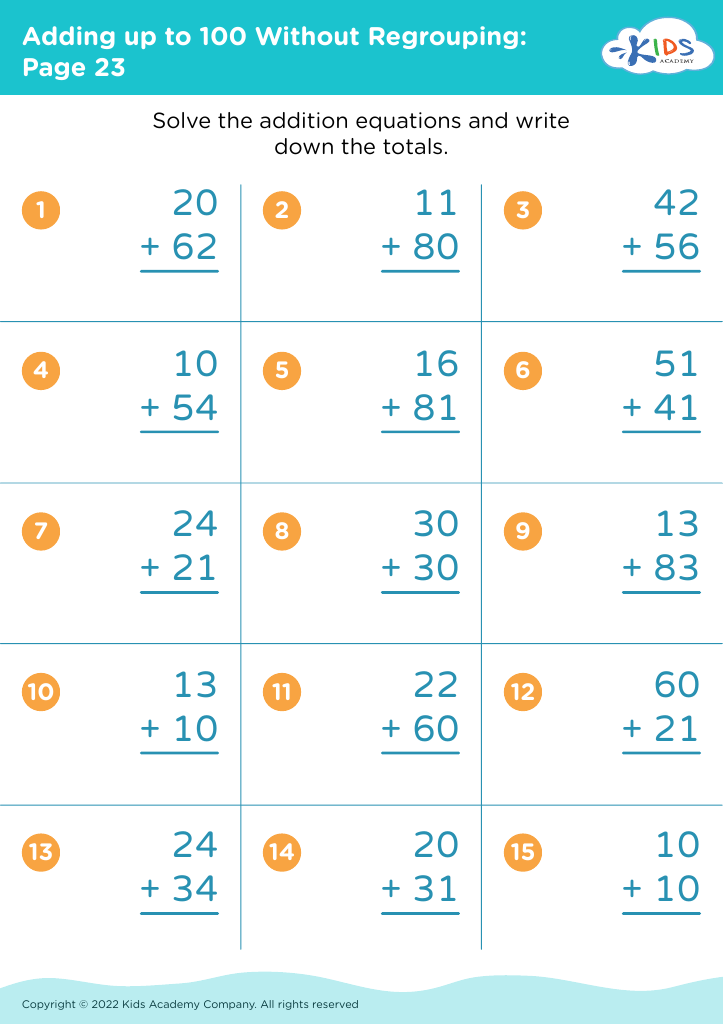
Adding up to 100 Without Regrouping: Page 23
Worksheet
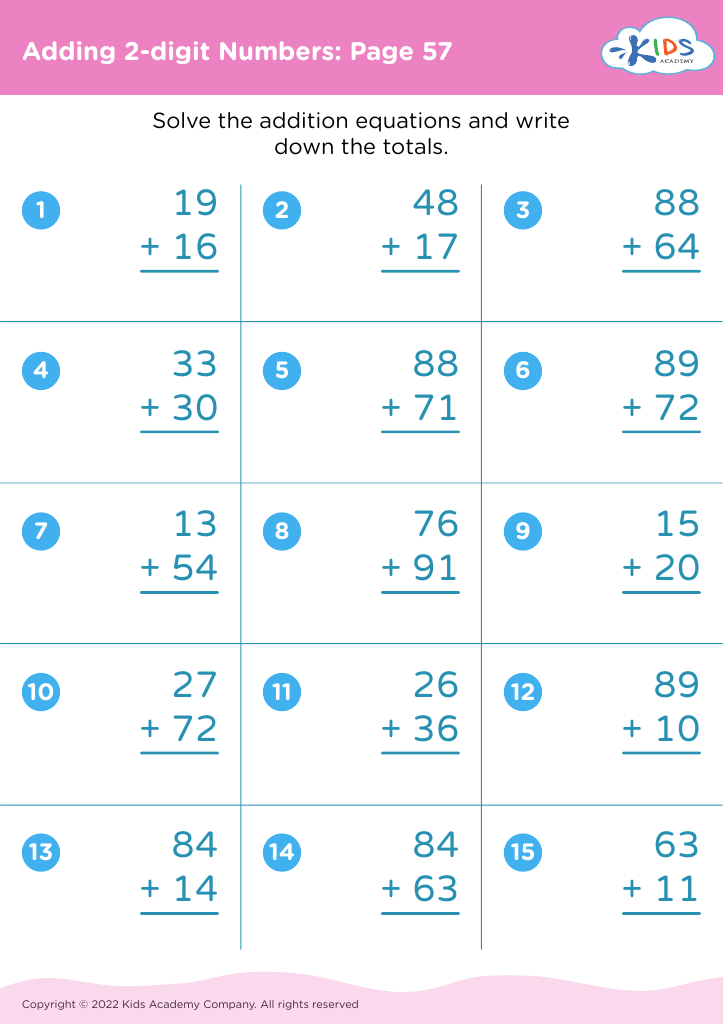
Adding 2-digit Numbers: Page 57

Adding 2-digit Numbers: Page 57

Adding 2-digit Numbers: Page 57
Worksheet
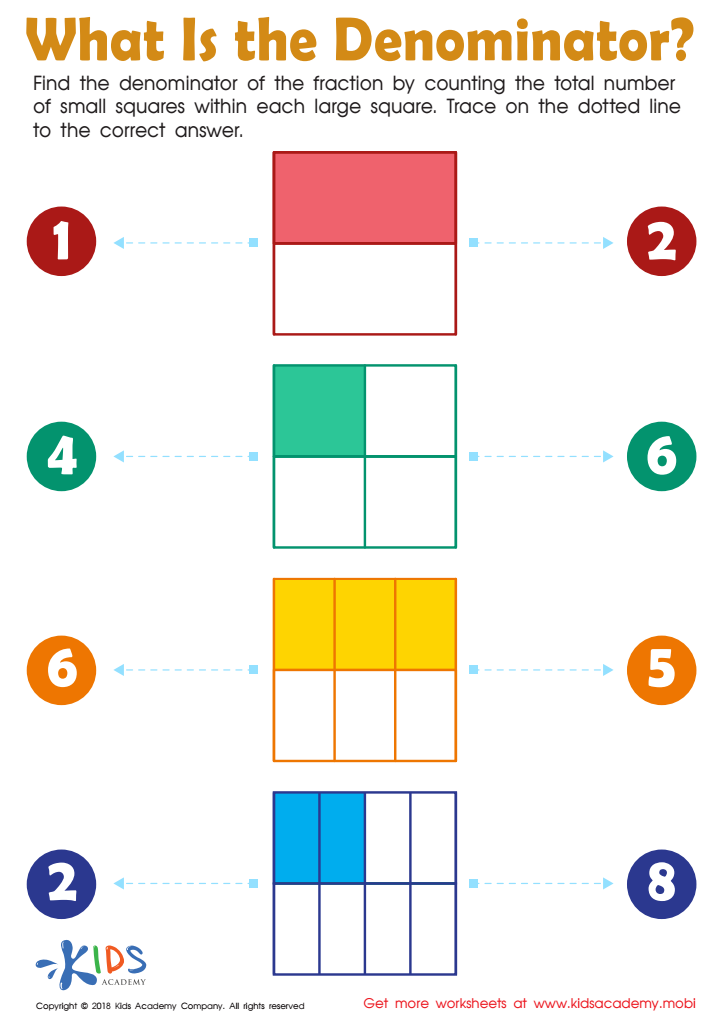
What Is the Denominator? Worksheet
What Is the Denominator? Worksheet

If your kindergartener is struggling with fractions, don't worry. Use this worksheet to help them understand better. Ask them to count the total small squares in each large square to find the denominator, then trace on the dotted line to answer. This printable tracing sheet will help them learn fractions easier.
What Is the Denominator? Worksheet
Worksheet
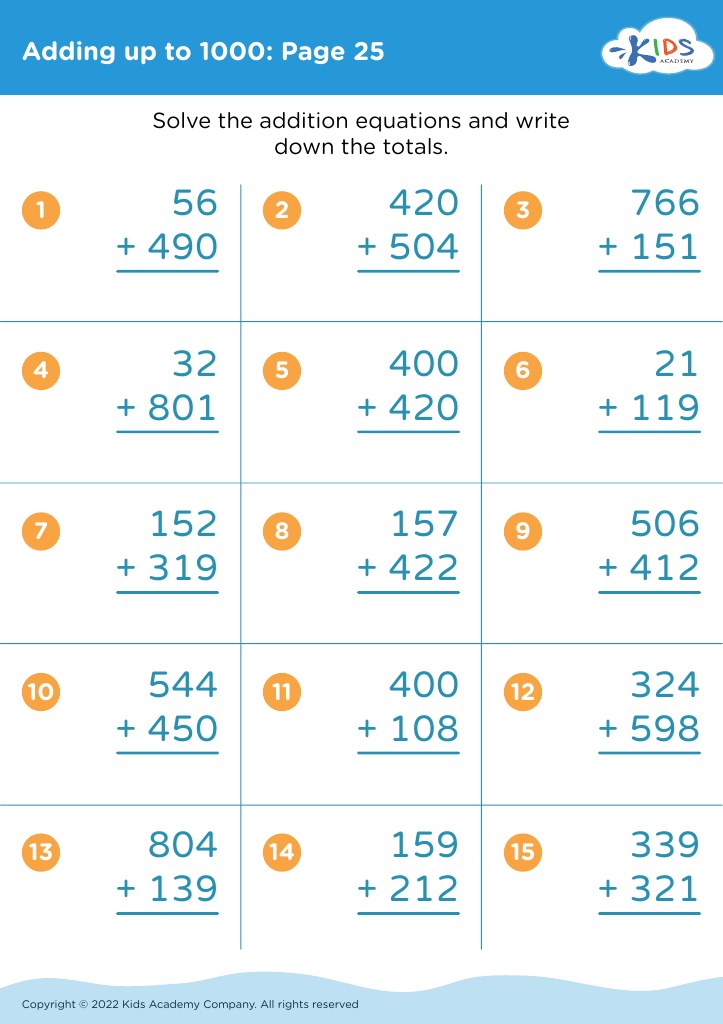
Adding up to 1000: Page 25

Adding up to 1000: Page 25

Adding up to 1000: Page 25
Worksheet
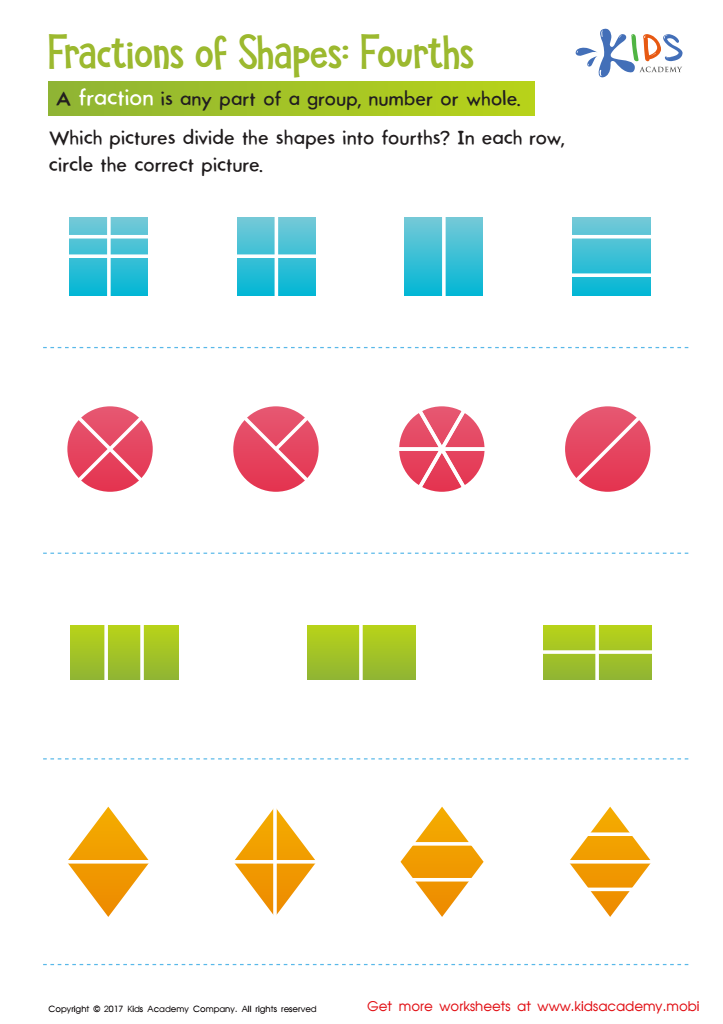
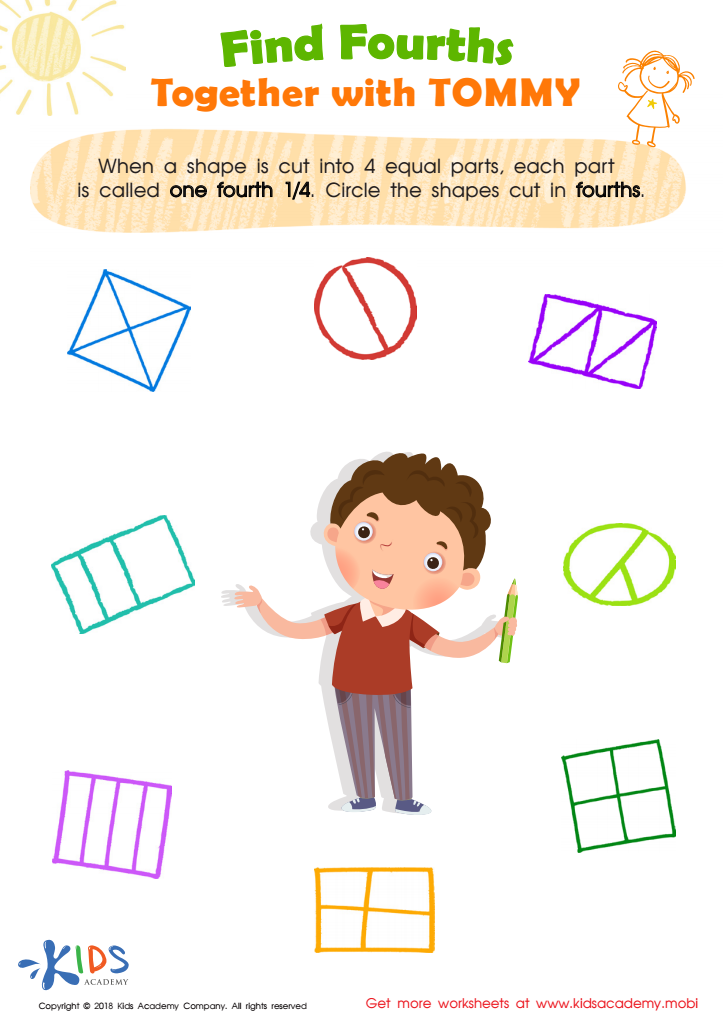
Find Fourths Together with Tommy Worksheet


Find Fourths Together with Tommy Worksheet

Teach your kids fractions with this easy and fun worksheet! They should already know that two equal parts is a half, and three is a third. Now, help them understand one fourth (¼) by asking them to circle shapes that are divided into four parts. Make fractions learning stress-free for you and your children!
Find Fourths Together with Tommy Worksheet

Worksheet


Understanding fractions is critical for children ages 8-9 because it lays down a strong mathematical foundation essential for future learning. Fractions are not just another math topic; they are a pivotal concept that aids in developing both analytical and problem-solving skills.

Firstly, fractions represent parts of a whole, an idea that translates into many real-life situations such as dividing a pizza, measuring ingredients for a recipe, or even understanding money. Grasping this concept at an early age allows children to relate math to everyday activities, making the subject less abstract and more approachable.

Secondly, mastery of fractions is often a prerequisite for advanced mathematical concepts like ratios, proportions, and algebra. These topics become significantly easier to understand if the groundwork laid down by learning fractions is strong. Proficiency in fractions boosts a child’s confidence, preparing them to tackle more complex math problems as they progress through school.

Furthermore, understanding fractions enhances cognitive abilities such as reasoning, logic, and spatial thinking. It encourages students to think critically and make connections between different pieces of information, skills that are applicable beyond math, in subjects like science and engineering.

Lastly, a solid comprehension of fractions aligns with common core education standards, ensuring children meet academic expectations. Hence, parents and teachers should actively support children in mastering fractions to equip them with essential skills for academic success and everyday life.