Understanding number sequences Math Worksheets for Ages 8-9
4 filtered results
-
From - To
Explore our engaging "Understanding Number Sequences" math worksheets tailored for children ages 8-9. Designed to enhance comprehension of numerical patterns, these worksheets provide a fun and interactive approach to learning. Kids will delve into identifying, extending, and creating number sequences, building essential skills for future mathematical success. Our versatile resources encourage critical thinking and reinforce logic through a variety of challenges. Ideal for classroom use or home study, these printable worksheets cater to diverse learning styles, making math enjoyable. Perfect for aspiring mathematicians, our materials instill confidence and a solid foundation in number sequences, crucial for overall math proficiency. Start your child’s learning journey today!
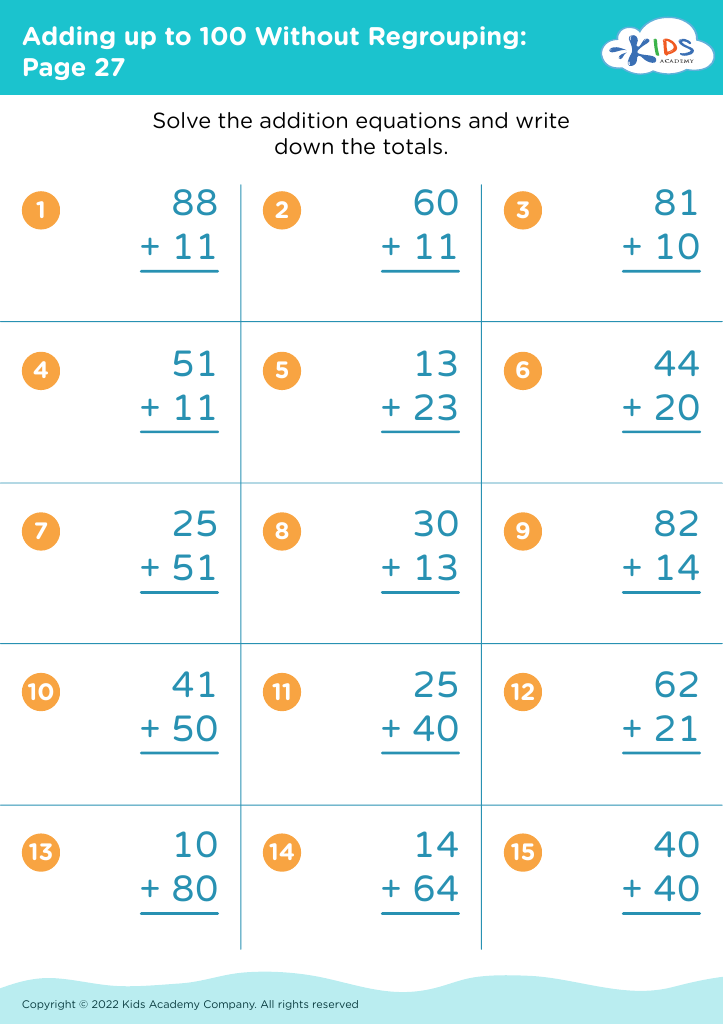
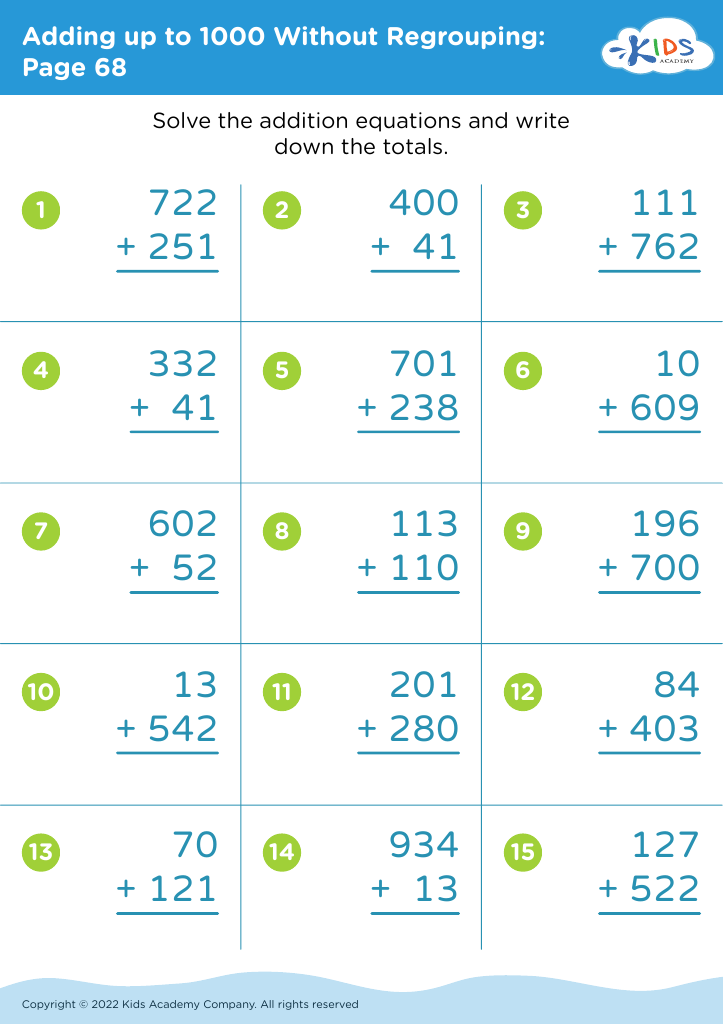
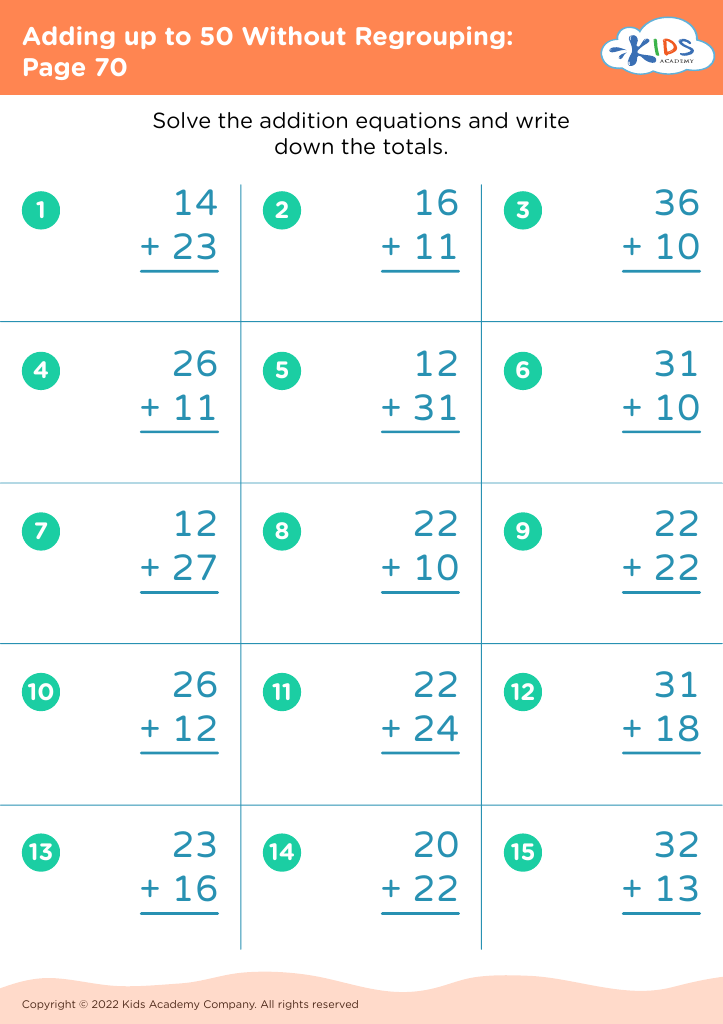
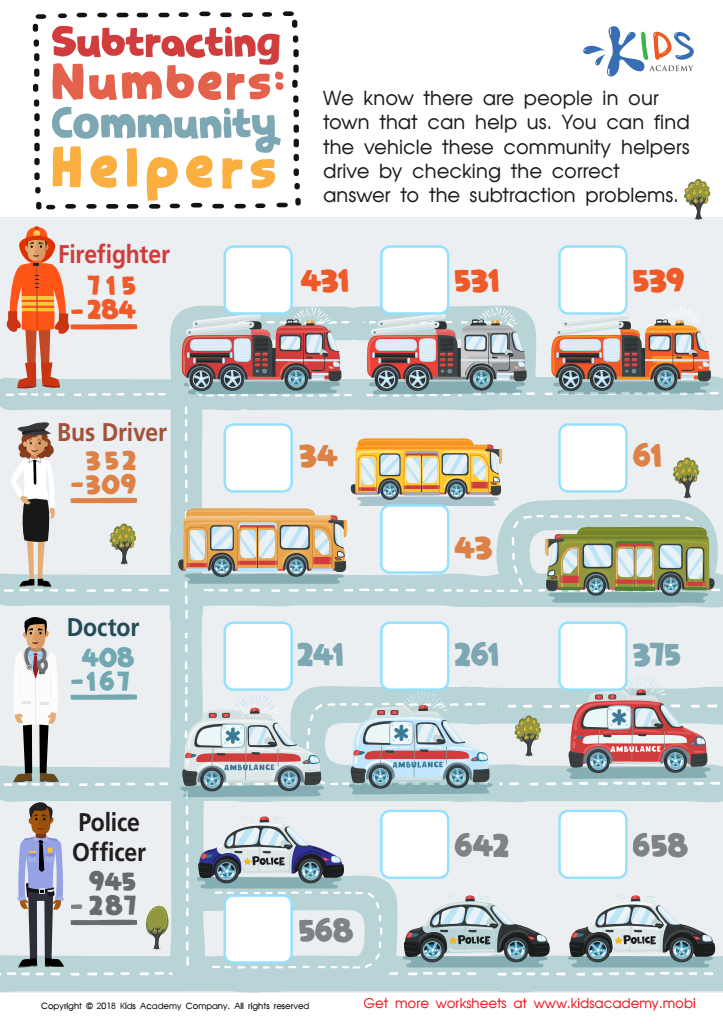
Subtracting Numbers: Community Helpers Worksheet
 Assign to My Students







Understanding number sequences is crucial for children aged 8-9 as it lays the foundation for more complex mathematical concepts they'll encounter in the future. At this age, students are typically introduced to patterns, arithmetic sequences, and numerical operations, which serve as building blocks for their overall mathematical proficiency.
Teachers and parents should prioritize this topic because it enhances critical thinking and problem-solving skills. Recognizing, creating, and extending sequences fosters logical reasoning, helping students make connections between numbers and develop a deeper understanding of math. Furthermore, a strong grasp of sequences aids in mastering skills such as addition, subtraction, multiplication, and division, ultimately enhancing students' ability to handle more advanced topics like algebra.
Additionally, understanding number sequences helps prepare students for real-world applications. Mathematics is everywhere—whether in budgeting, planning, or analyzing patterns—and sequences are fundamental to these tasks. Encouraging children to explore and appreciate math through sequences can instill a lifelong love for learning.
Overall, by supporting children's understanding of number sequences, parents and teachers empower them to navigate mathematical concepts with confidence and lay a strong groundwork for future academic success.








