
Vocabulary Building Math Worksheets for Ages 8-9
8 filtered results
Difficulty Level
Grade
Age
-
From - To
Subject
Activity
Standards
Enhance your child's mathematical understanding with our Vocabulary Building Math Worksheets designed for ages 8-9. These engaging activities introduce key math vocabulary through fun and interactive exercises, ensuring your child not only learns important terms but also comprehends their practical applications. Each worksheet focuses on developing critical thinking and problem-solving skills by integrating new terminology with math concepts. Ideal for both classroom and home use, our worksheets make learning math exciting and comprehensible. Help your child gain confidence and proficiency in math today by incorporating exceptional vocabulary-building resources into their study routine.
Favorites
With answer key
Interactive
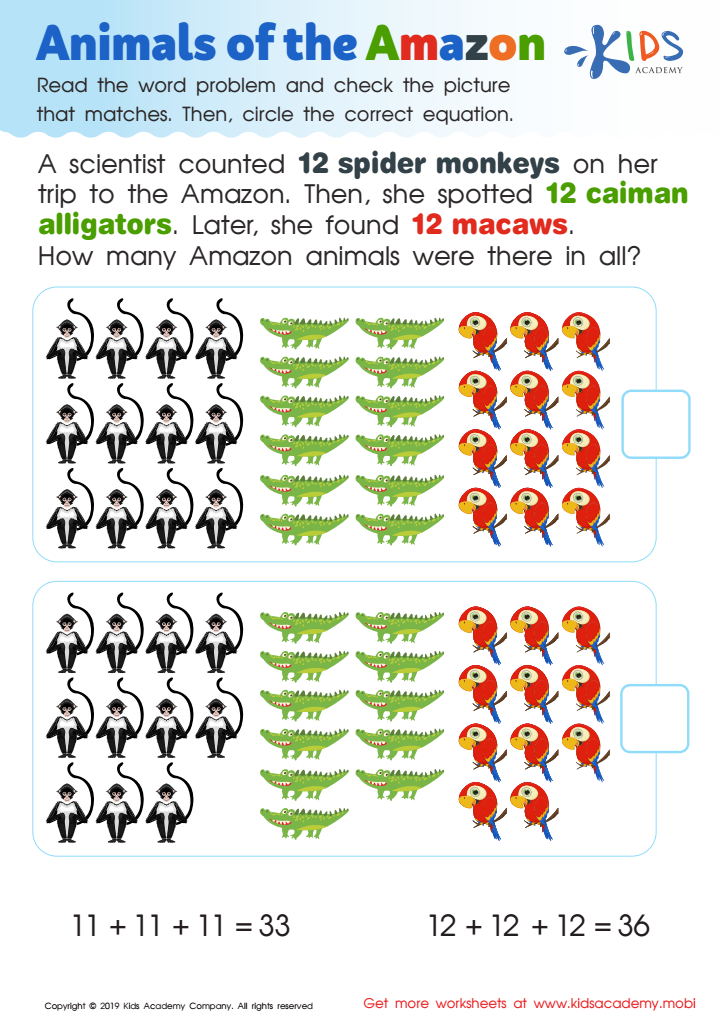
Animals of Amazon Worksheet
Kids will love exploring the Amazon while solving addition problems on this colorful PDF worksheet. They need to pay attention to the bolded info in each word problem to figure out the equation picture that matches. It's an exciting way to learn about the Amazon and practice adding multiple numbers!
 Assign to My Students
Animals of Amazon Worksheet
Worksheet
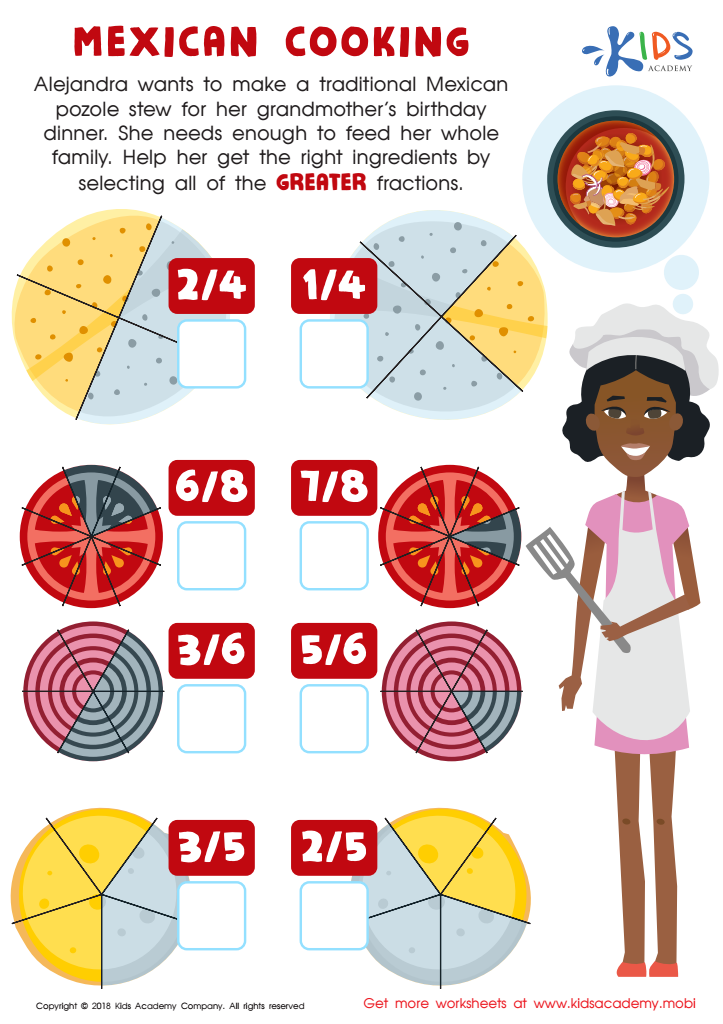
Mexican Cooking Worksheet
Alejandra needs to make a traditional Mexican pazole stew that will feed her whole family. Help her select the right ingredients by choosing the greater fractions in this worksheet. Mexicans have an amazing culture with many unique holidays, customs and dishes - explore it with your kids in your local neighbourhood!
Mexican Cooking Worksheet
Worksheet
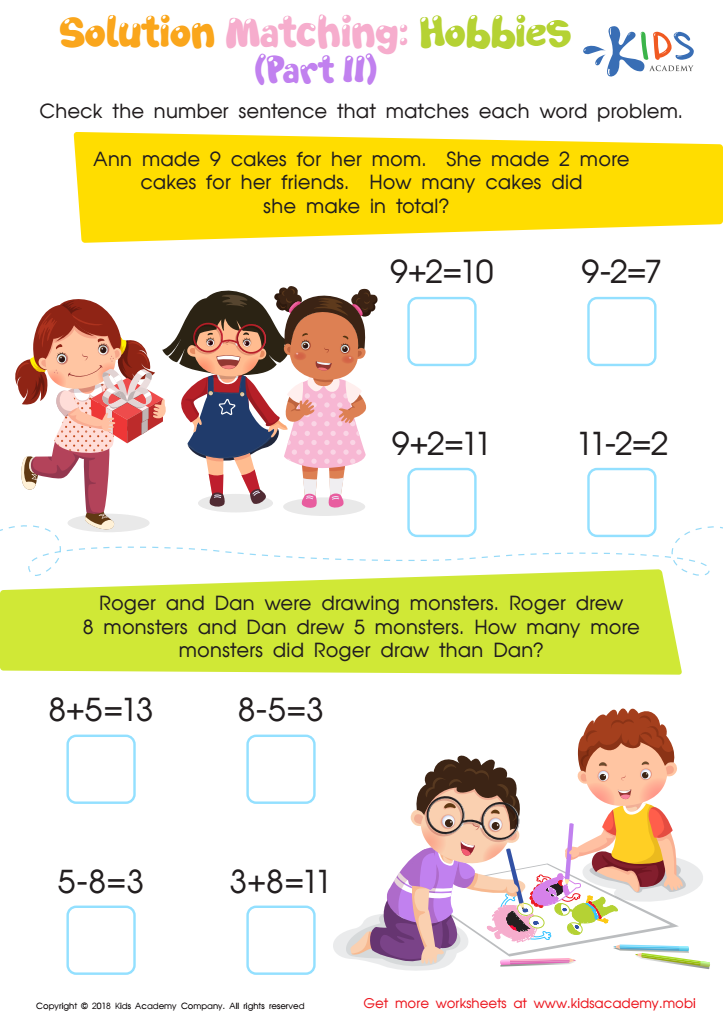
Solution Matching: Hobbies. Part 2 Worksheet
This fun printable worksheet has word problems featuring hobbies your children enjoy! With your child, read through each problem, understanding the numbers and key phrases indicating addition or subtraction. Then, match the correct equation with the solution by checking the box. Math problems are more enjoyable to solve when they’re realistic and engaging!
Solution Matching: Hobbies. Part 2 Worksheet
Worksheet
Join Kids Academy for Free
Who is primarily going to use this learning content?







Vocabulary Building in Math for ages 8-9 is pivotal not just for academic success but for fostering overall cognitive development. During these formative years, children’s brains are highly receptive to new information, making it an ideal period for developing foundational skills.
Firstly, a strong math vocabulary helps children comprehend and follow instructions accurately. Words like "addition," "subtraction," "difference," and "sum" are linked to specific mathematical concepts. Understanding these terms ensures children can grasp more complex problems as they progress.
Secondly, expanding their math vocabulary enhances their problem-solving skills. When children understand and correctly use math terminology, they articulate their thought processes more clearly and logically. This sharpens critical thinking and boosts confidence in their ability to tackle diverse challenges.
Third, integrating vocabulary building with math instruction supports language development. Engaging with math terms enriches their overall linguistic capability, aiding in reading comprehension and communication. This dual benefit promotes a well-rounded education.
Finally, a robust math vocabulary empowers children in standardized testing and later stages of education, where specialized terms are used frequently. Parents and teachers investing in math vocabulary building provide a stable grounding for their children’s academic future, ultimately nurturing intellectually curious and capable learners ready for advanced studies.
In essence, focusing on math vocabulary at ages 8-9 acts as a multidimensional tool enhancing comprehension, problem-solving, and language skills, laying down a strong foundation for lifelong learning.








