Practical math application Measurement Worksheets for Ages 8-9
4 filtered results
-
From - To
Unlock your child's potential with our Practical Math Application Measurement Worksheets designed specifically for ages 8-9! These engaging printable worksheets guide young learners through essential measurement concepts, promoting hands-on exploration of real-world scenarios. From understanding length and volume to mastering weight, these resources enhance critical thinking and problem-solving skills. Each worksheet is crafted to make mathematics fun and relatable, helping children apply their knowledge in everyday situations. Ideal for classroom or home use, our worksheets provide a unique opportunity for practice and mastery. Invest in your child's math journey today and watch their confidence and skills soar!
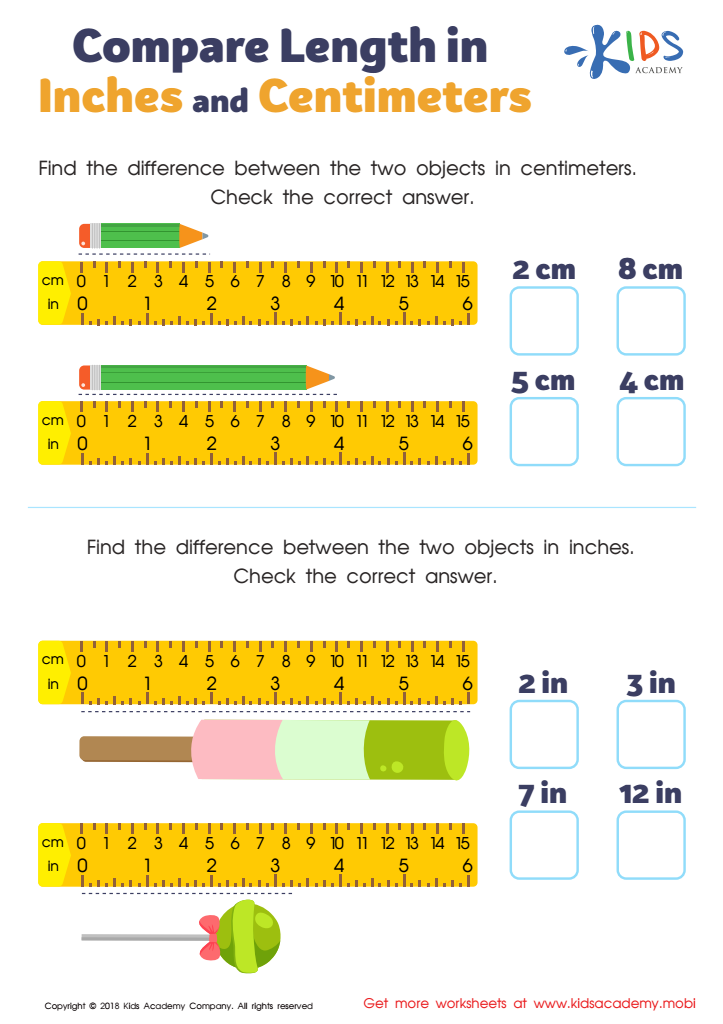
Compare Length in Inches and Centimeters Worksheet
 Assign to My Students
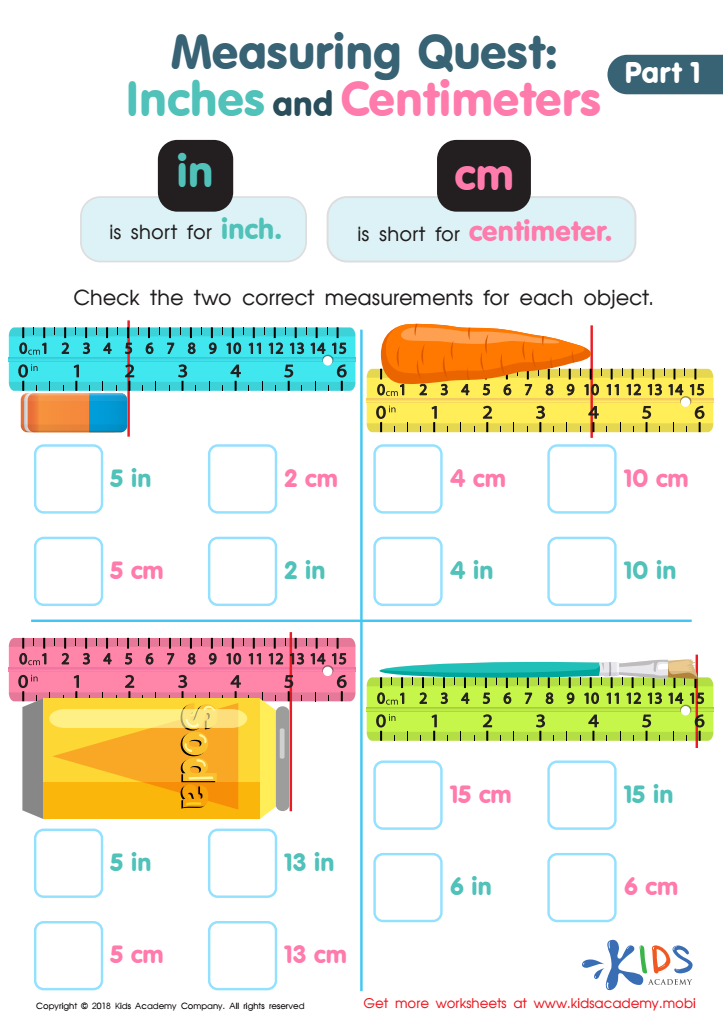
Measuring Quest: Inches and Centimeters Worksheet
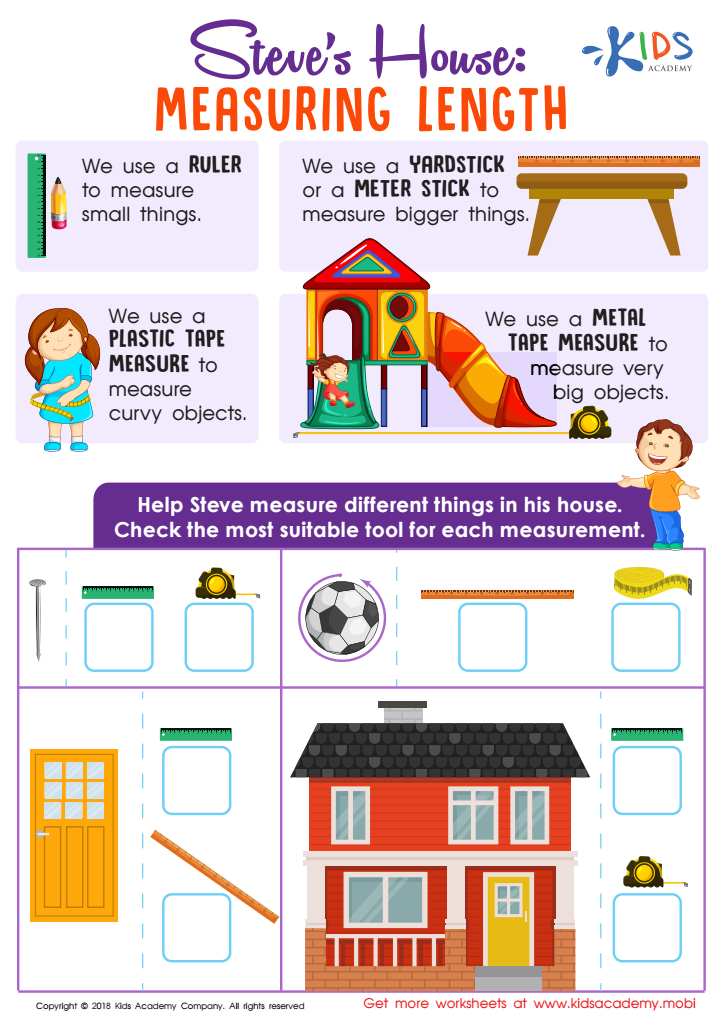
Steve's House: Measuring Length Worksheet
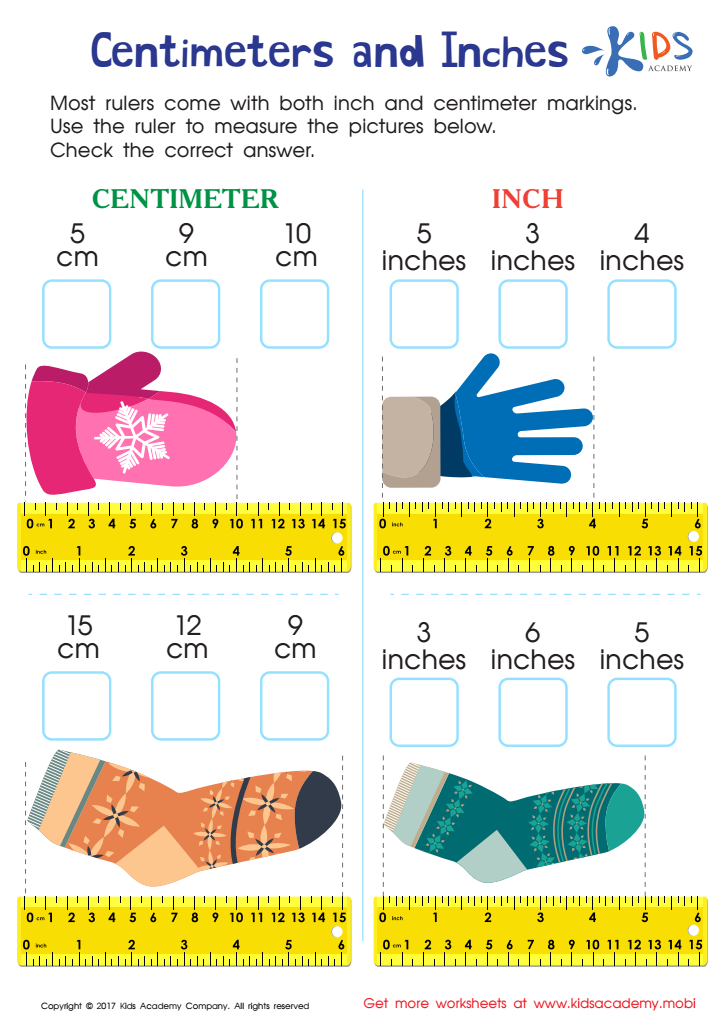
Centimeters and Inches Worksheet








Practical math application, particularly measurement, is crucial for children aged 8-9 as it lays a foundational understanding of mathematical concepts in real-world contexts. At this developmental stage, children are naturally curious and eager to explore their environment, making it an ideal time to engage them in measuring various objects and spaces.
Understanding measurement helps children develop critical thinking and problem-solving skills. They learn to estimate, compare, and analyze sizes, lengths, volumes, and areas, which enriches their cognitive abilities. This knowledge is applicable in daily life, whether it’s baking, gardening, or building projects, where measuring ingredients or materials becomes essential.
Moreover, incorporating measurement into lessons fosters a sense of confidence and independence. Children discover that math extends beyond the classroom, enhancing their engagement and enthusiasm for learning. Parents and teachers should emphasize practical applications to cultivate a positive attitude toward math, showing children that it's both useful and fun. This early exposure not only supports academic achievement but also nurtures essential life skills, preparing students for future challenges in various contexts. Ultimately, measurement empowers children, bridging the gap between theoretical knowledge and practical, everyday problem-solving.








