
Time recognition Measurement Worksheets for Ages 8-9
3 filtered results
Difficulty Level
Grade
Age
-
From - To
Subject
Activity
Standards
Enhance your child's math skills with our Time Recognition Measurement Worksheets designed specifically for ages 8-9. These engaging worksheets offer a variety of exercises that help young learners master telling time, reading clocks, and understanding time concepts. Perfect for reinforcing classroom learning at home, each worksheet features colorful visuals and fun activities that keep children motivated. From analog to digital clocks, our resources cater to different learning styles, ensuring a comprehensive understanding of time measurement. Encourage your child to develop essential life skills through our thoughtfully crafted materials, making learning both enjoyable and effective. Explore our collection today and watch their confidence soar!
Favorites
With answer key
Interactive
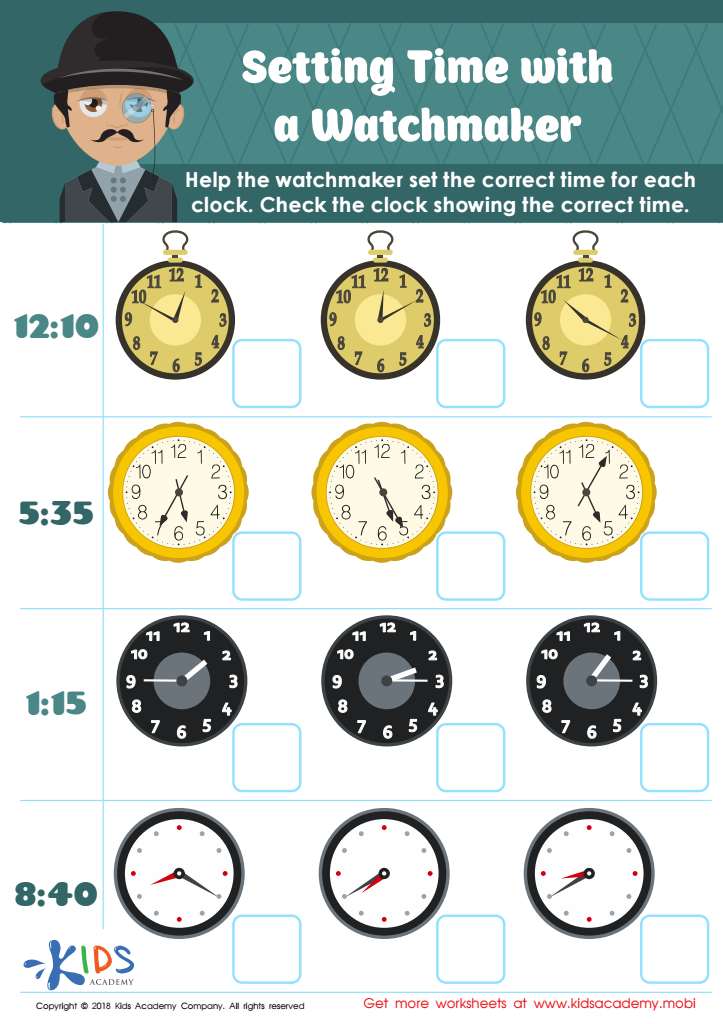
Setting Time with Watchmaker Worksheet
Can your kids tell the time? If so, this worksheet should be easy. Help them set the time for each clock: look at the time written on the left side and find the clock on the right side that matches.
 Assign to My Students
Setting Time with Watchmaker Worksheet
Worksheet
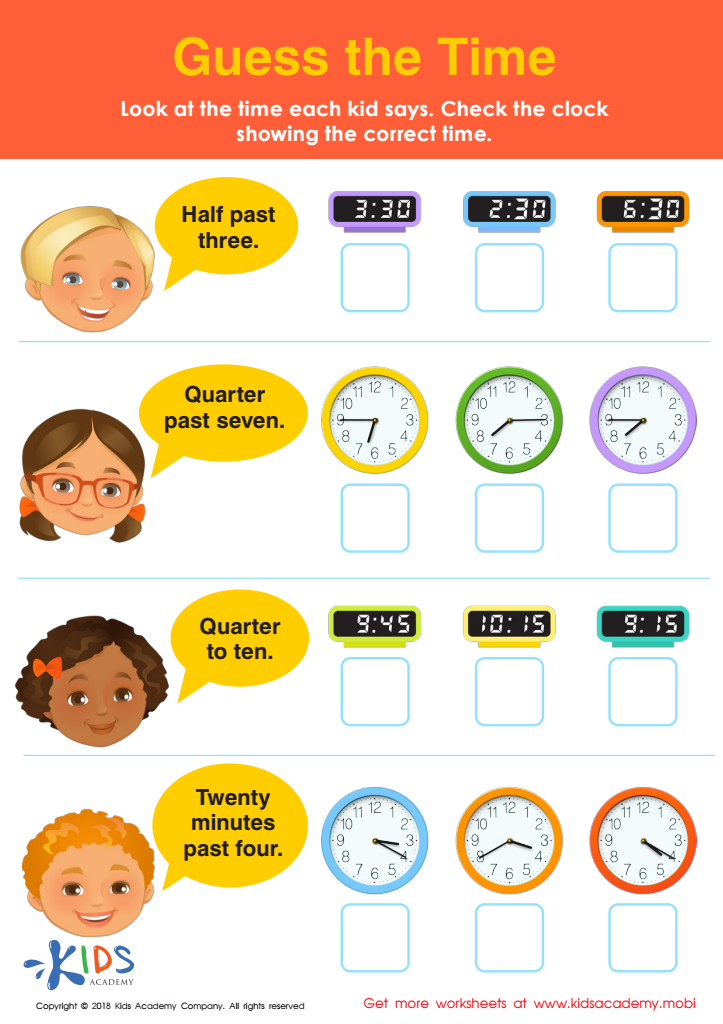
Guess the Time Worksheet
Help students tell the time accurately with this fun exercise. Read the time each person says and find the corresponding clock. Check the options on the left and have students guess the right time. This worksheet is sure to sharpen their time-telling skills.
Guess the Time Worksheet
Worksheet
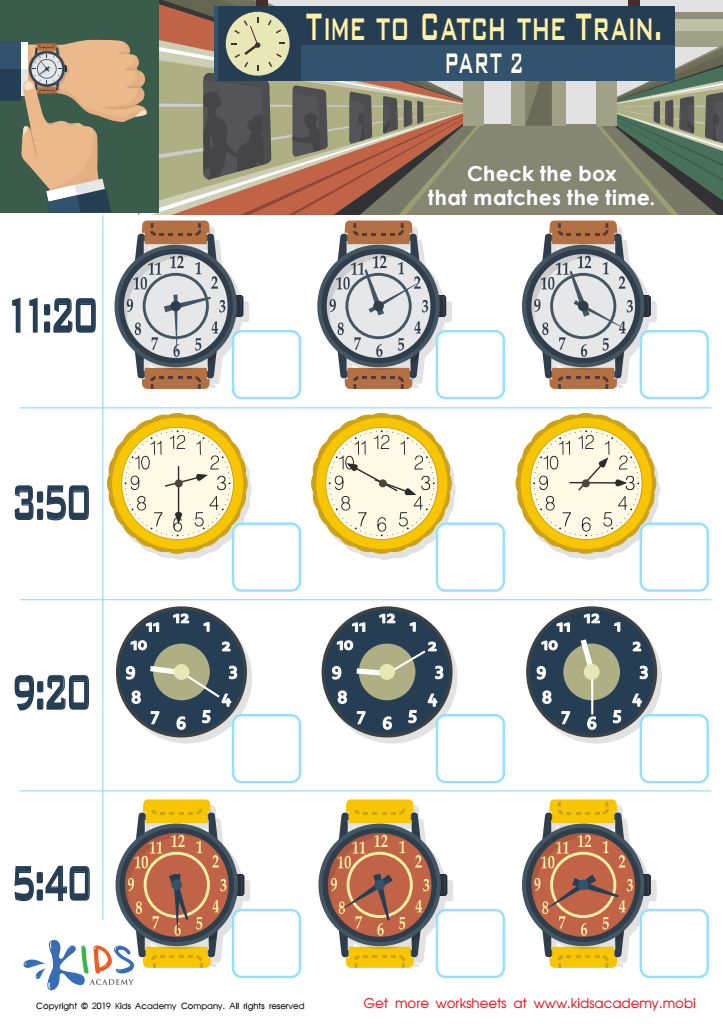
Time to Catch the Train Part 2 Worksheet
Teach your kids the importance of telling time and how to do it. Explain that there are multiple ways to show the time, such as written on the left side or watches in the picture. Guide them to check the box that matches the time. Knowing the time is essential to get things done and create order. Ensure your kids understand this and they will reap the benefits.
Time to Catch the Train Part 2 Worksheet
Worksheet
Join Kids Academy for Free
Who is primarily going to use this learning content?








Time recognition and measurement are critical skills for children ages 8-9, making it essential for parents and teachers to prioritize them. At this age, children transition from basic time-telling to understanding more complex concepts such as elapsed time, schedules, and time management. Mastery of these skills supports their independence and self-regulation, enabling them to plan their day and prioritize tasks.
Understanding time is also fundamental for academic success. The ability to read clocks, calculate time intervals, and comprehend time zones can aid students in subjects such as math and science, where timing is often a factor, thereby reinforcing their problem-solving skills. Additionally, time measurement teaches children the concept of patience and the importance of punctuality, which are crucial life skills.
Furthermore, these skills enhance social-emotional development. When children can manage their time effectively, they experience reduced anxiety and increased confidence in their ability to meet deadlines and responsibilities. Ultimately, fostering time recognition and measurement positively impacts children's organizational skills and can shape their future academic and personal achievements. Thus, investing time and effort in teaching these skills will yield long-term benefits for children’s overall development.








