Reading comprehension Nursery Rhymes Worksheets for Ages 8-9
3 filtered results
Difficulty Level
Grade
Age
-
From - To
Subject
Activity
Standards
Enhance your child's reading skills with our "Reading Comprehension Nursery Rhymes Worksheets" designed specifically for ages 8-9. These engaging worksheets aim to boost comprehension, retention, and critical thinking by exploring familiar nursery rhymes. Through a variety of exercises, children will identify key ideas, infer meanings, and analyze characters and plot. Developed by educational experts, our worksheets offer age-appropriate challenges that make learning fun and effective. They are perfect for use at home or in the classroom to complement any reading program. Equip your young learner with the skills they need for academic success in a fun and stimulating way!
Favorites
With answer key
Interactive
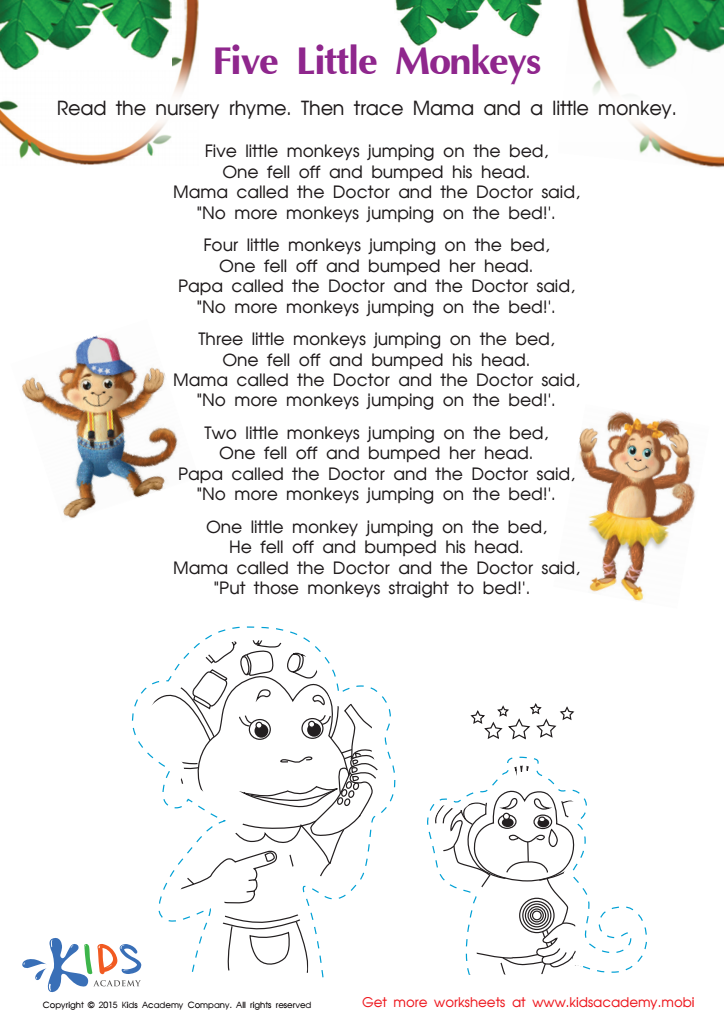
The Five Little Monkeys Nursery Rhyme Worksheet
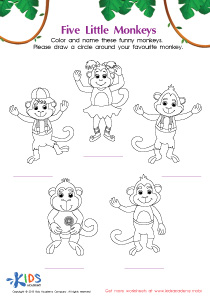
Sing the beloved nursery rhyme "Five Little Monkeys" with your child, and add a finger play for extra fun! After a few times, encourage them to join in and fill the songs with laughter. Also, have fun coloring the worksheet featuring the monkeys and their Mama.
 Assign to My Students
The Five Little Monkeys Nursery Rhyme Worksheet
Worksheet
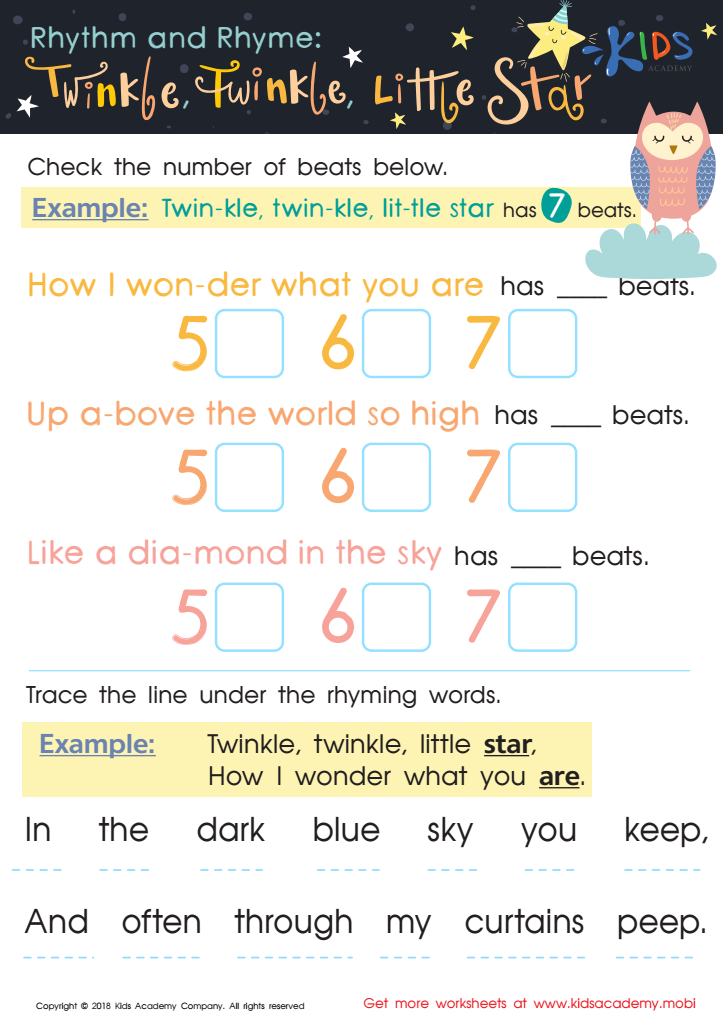
Rhythm and Rhyme: Twinkle, Twinkle, Little Star Worksheet
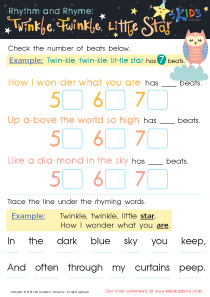
Kids will love learning about syllables in words with a fun children's song! Use the song Twinkle, Twinkle, Little Star to explain that each word has at least one beat. Have them clap out the beats in each word and check the boxes on this cute worksheet to identify the syllables.
Rhythm and Rhyme: Twinkle, Twinkle, Little Star Worksheet
Worksheet
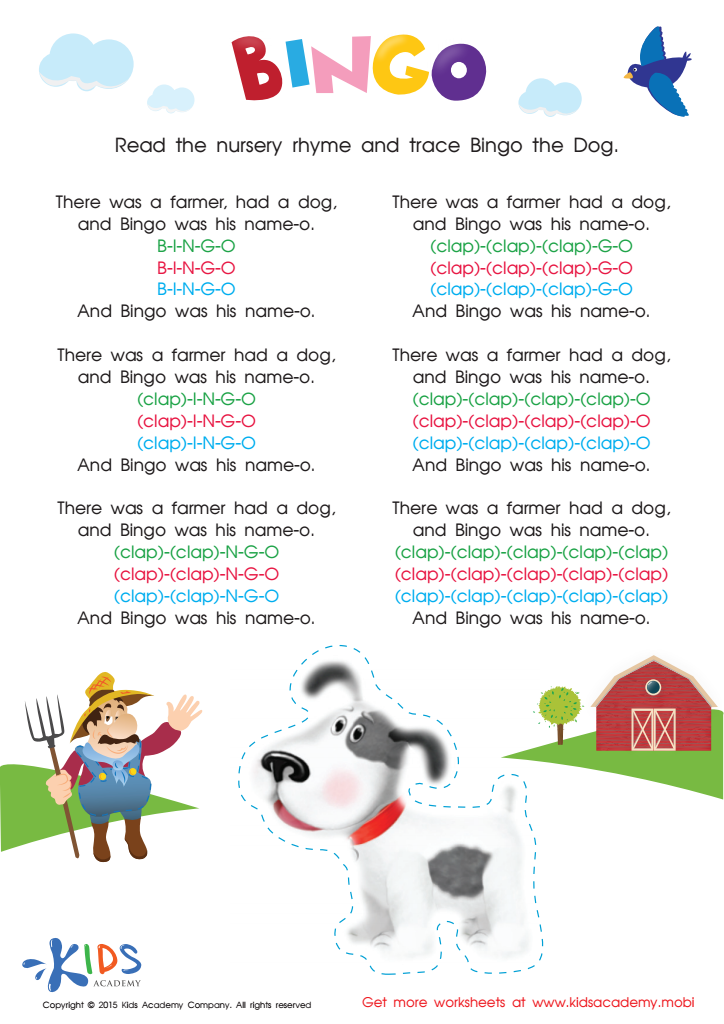
Nursery Rhymes: The Bingo Song Worksheet
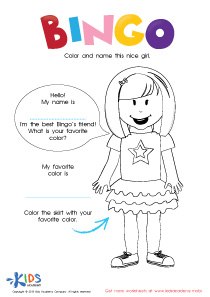
Introduce The Bingo Song to your little ones. Have your kids sing some words and lines aloud, while you replace letters with claps. Add other activities: tapping, patting, jumping, and use your imagination. Print our free Bingo Song Coloring Pages and let your kids color them. Get more free worksheets at our website Kids Academy.
Nursery Rhymes: The Bingo Song Worksheet
Worksheet
Join Kids Academy for Free
Who is primarily going to use this learning content?







Reading comprehension is a fundamental skill that serves as a cornerstone for future academic success and lifelong learning. For children ages 8-9, who bridge the later stage of primary education, emphasis on this skill is particularly crucial. Nursery rhymes, often considered foundational, can extend their role into helping older children enhance reading comprehension.
Firstly, nursery rhymes inherently contain rhythmic and repetitive elements that facilitate language processing and retention. For second and third graders, these rhythmic patterns become mnemonic devices that aid in decoding words, recognizing context, and understanding narrative flow. This strengthens their ability to grasp and infer meanings in more complicated texts.
Additionally, nursery rhymes introduce a wide array of vocabulary and language structures within simple, digestible narratives. This extends children's lexicon and helps them become more adept at encountering and understanding new words they come across in diverse reading materials, bolstering their linguistic confidence and curiosity.
Furthermore, the cultural and thematic richness contained within many nursery rhymes sparks imagination and curiosity, making reading an enjoyable and engaging activity. This engagement promotes a positive attitude towards reading, which is paramount for cultivating motivated and proficient readers.
Parents and teachers alike should regard nursery rhymes as versatile tools that not only support the enjoyment of literature but also crucially undergird more advanced reading comprehension skills in young learners.