Improve vocabulary Reading Worksheets for Ages 8-9
4 filtered results
-
From - To
Enhance your child's vocabulary with our engaging reading worksheets designed specifically for ages 8-9. These interactive resources focus on essential language skills, helping young learners enrich their word bank and comprehension. Featuring fun exercises, thoughtful activities, and captivating stories, our worksheets promote critical thinking and context understanding, making vocabulary expansion enjoyable. Perfect for both classroom and home learning, these printables encourage independent exploration and skill development. Empower your child to express themselves better and develop a love for reading while boosting their academic success. Explore our collection of vocabulary worksheets today and watch your child's language skills thrive!
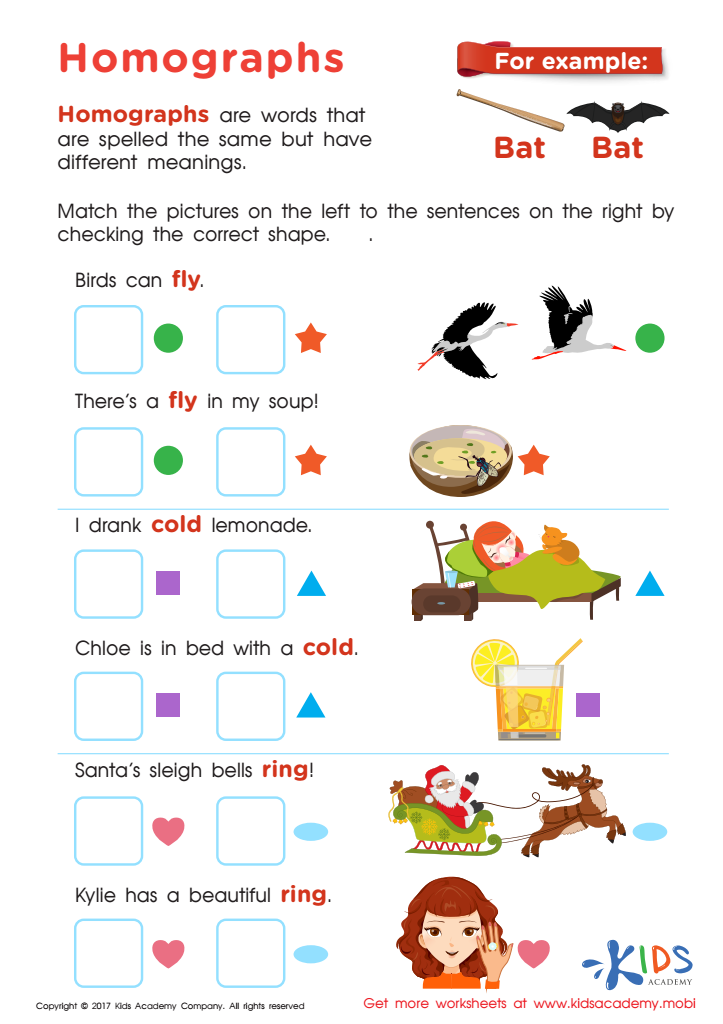
Homographs Free Printable Worksheet
 Assign to My Students
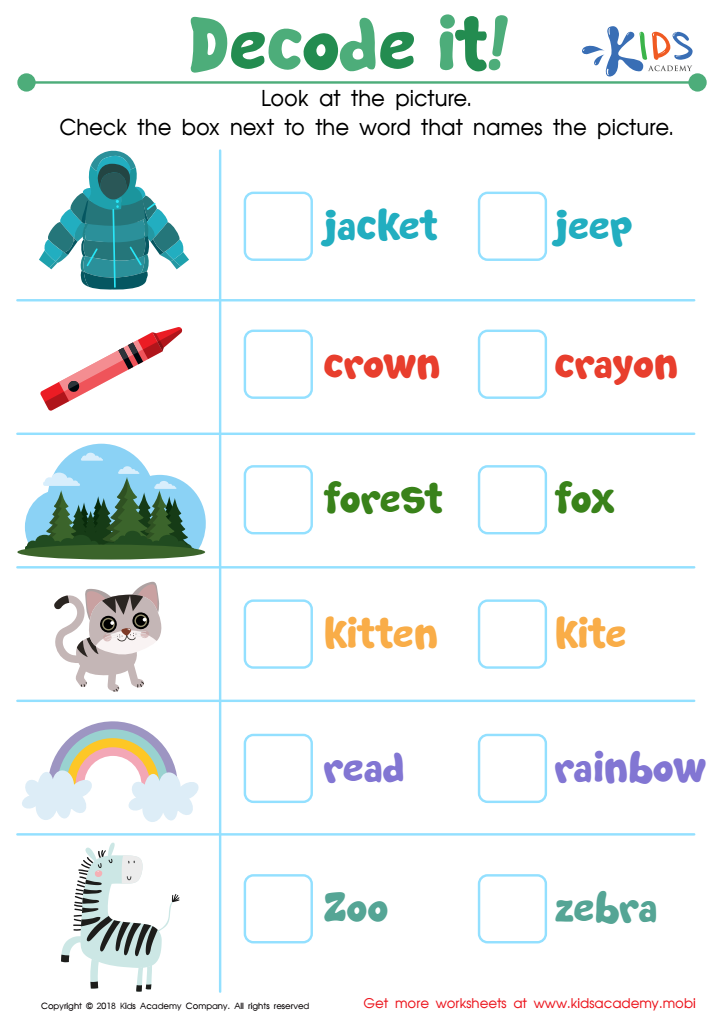
Reading: Decode It Worksheet
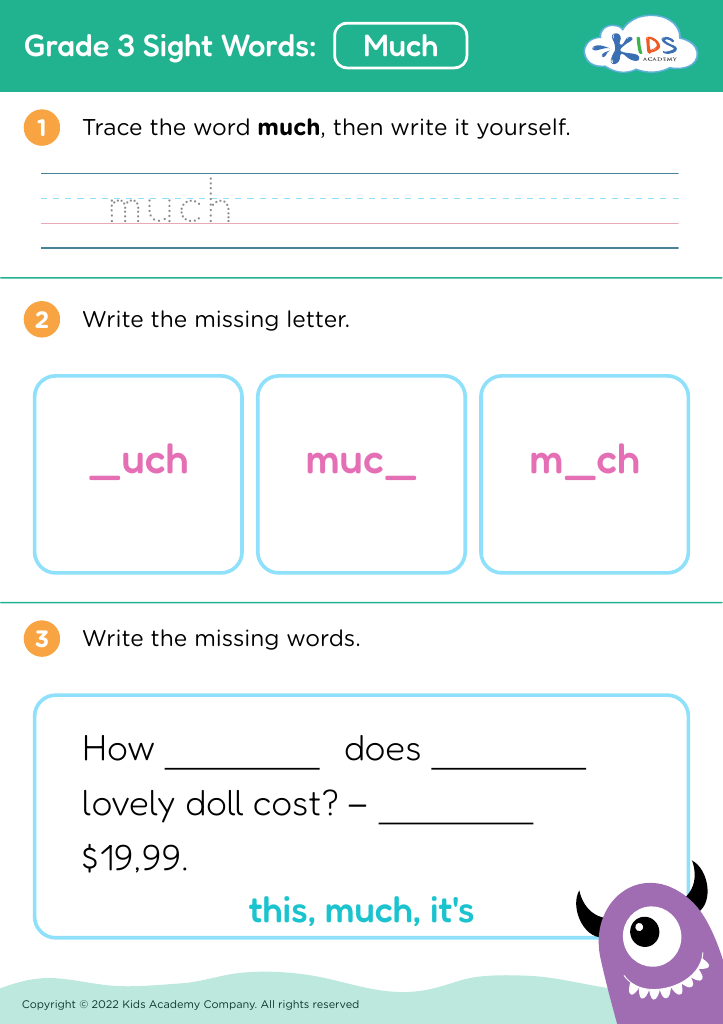
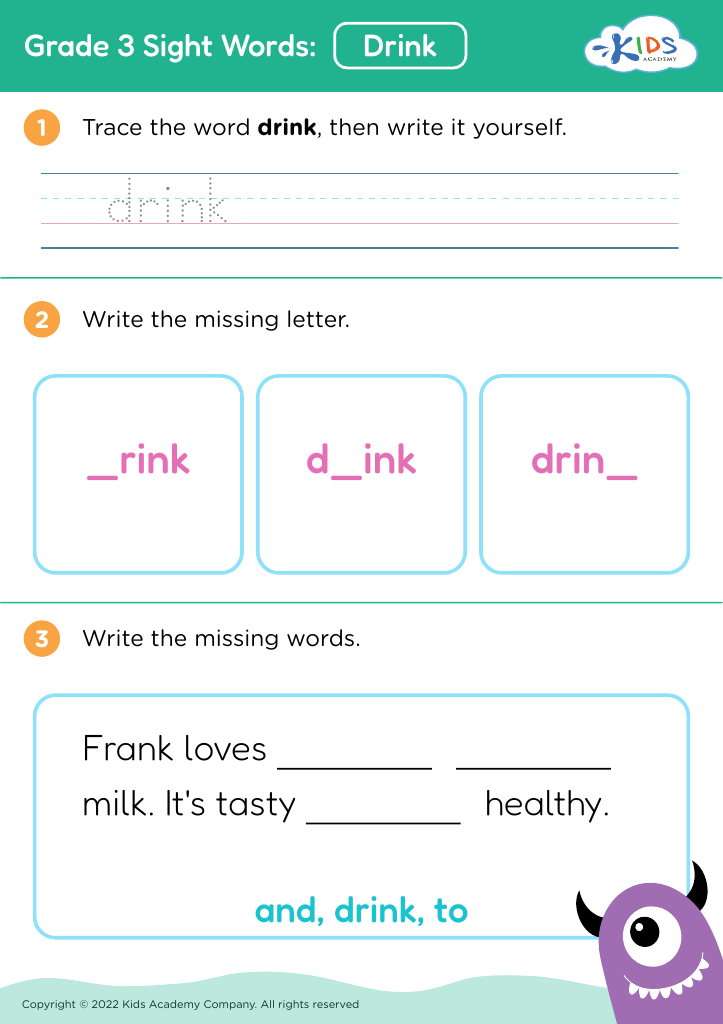





.jpg)

Improving vocabulary and reading skills for children aged 8-9 is crucial for their overall academic development and lifelong learning success. At this age, children are transitioning from learning to read to reading to learn, meaning that a strong vocabulary foundation enables them to comprehend more complex texts across various subjects. Enhanced vocabulary not only enhances their understanding of what they read but also improves their ability to express ideas clearly in both spoken and written forms.
Parents and teachers play a pivotal role in fostering a rich language environment. Engaging children in discussions about new words, reading diverse texts aloud, and encouraging them to write stories or journal entries can significantly expand their vocabulary. This not only boosts their confidence but fosters a love for reading and learning.
Moreover, stronger vocabulary skills correlate closely with academic performance. Children with an extensive vocabulary tend to perform better on standardized tests, engage more thoughtfully in classroom discussions, and exhibit critical thinking skills. Supporting vocabulary growth equips children with essential tools to tackle future challenges both in and out of the classroom, paving the way for success in their educational journey and beyond. Therefore, investing time in enhancing vocabulary skills is a fundamental responsibility for both parents and teachers.








