
Rhyming skills Reading Worksheets for Ages 8-9
3 filtered results
Difficulty Level
Grade
Age
-
From - To
Subject
Activity
Standards
Our Rhyming Skills Reading Worksheets for Ages 8-9 are designed to boost your child’s reading and phonemic awareness. These engaging worksheets provide creative activities that help kids identify and generate rhyming words, enhancing their literacy foundations. Perfect for 3rd graders, each worksheet builds on familiar words to spark curiosity and improve comprehension. Fun illustrations and interactive elements keep learning enjoyable. Strengthen your child's reading journey with our well-crafted tools focused on rhyming skills, available exclusively at Kids Academy. Get started today to make phonics practice engaging and effective!
Favorites
With answer key
Interactive
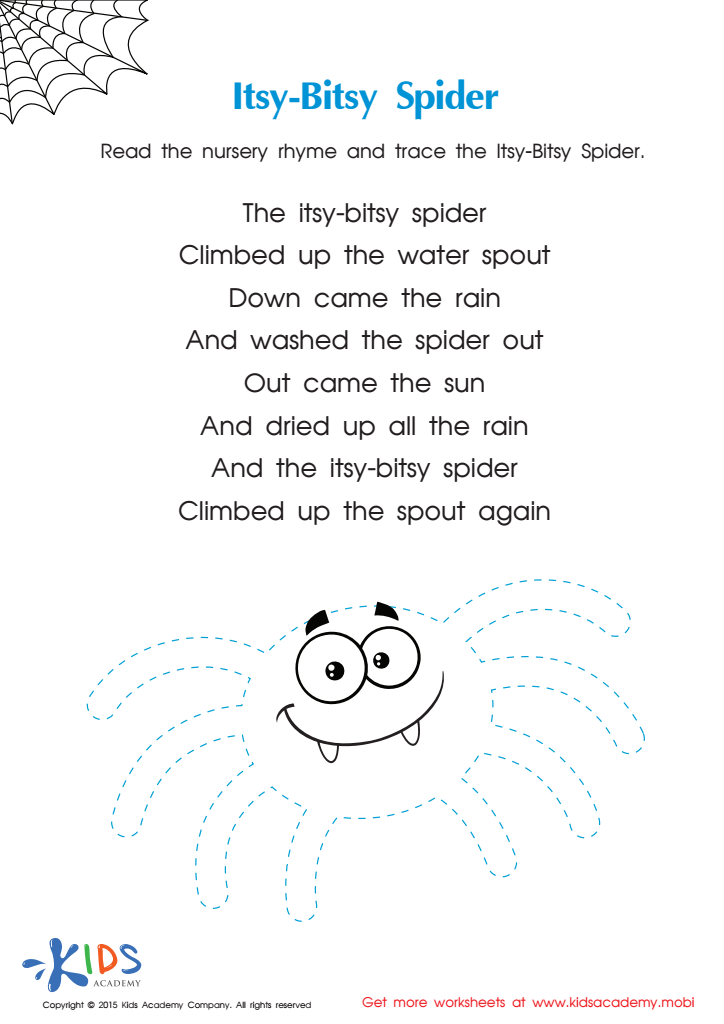
Itsy Bitsy Spider Nursery Rhyme PDF Worksheet
Introduce your child to the classic nursery rhyme with this worksheet. They'll learn the song, develop their motor skills, and find and count the letters 'A'. Pick up your crayons and add some color to the missing spider!
 Assign to My Students
Itsy Bitsy Spider Nursery Rhyme PDF Worksheet
Worksheet
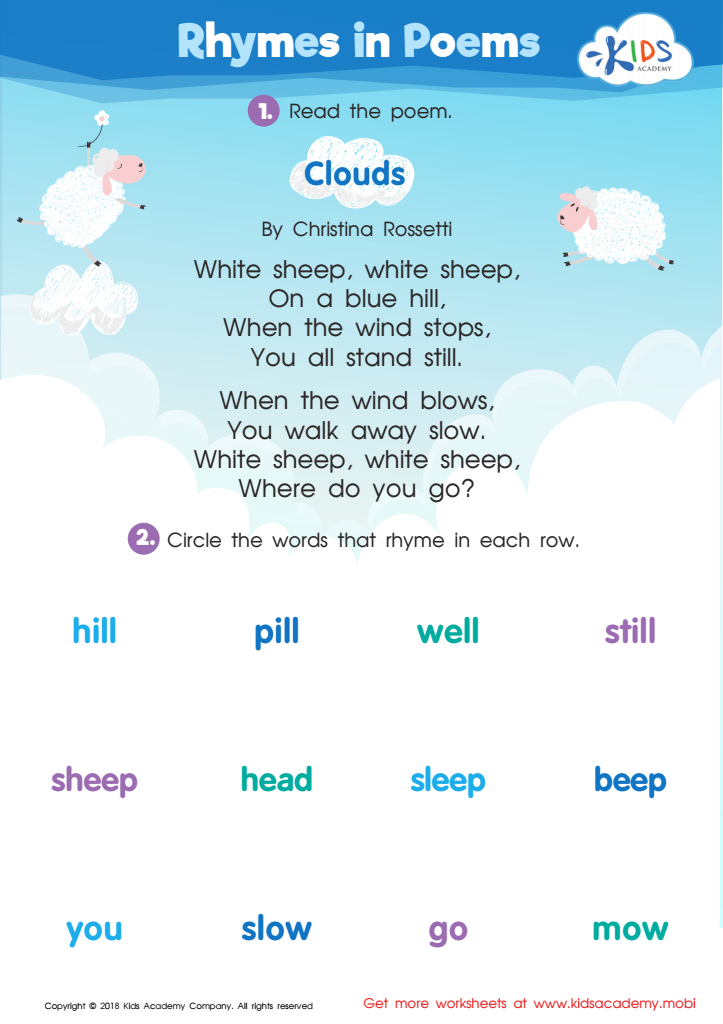
Rhymes in Poems Worksheet
Poems are lovely works of literature; some with rhymes, and some without. This poem for kids is full of rhymes and tells the tale of a sheep. Read it aloud to your kids, then help them circle the rhyming words.
Rhymes in Poems Worksheet
Worksheet
Join Kids Academy for Free
Who is primarily going to use this learning content?







Rhyming skills are crucial for children aged 8-9 as they significantly influence their literacy development. When children learn to recognize and generate rhymes, they enhance their phonological awareness—the ability to hear, identify, and manipulate sounds in words—a foundational skill for reading and spelling. Mastering rhyme helps them predict word patterns, aiding in decoding unfamiliar words and increasing their reading fluency.
Furthermore, rhyming nurtures a child’s love for language through playful interactions with words, making reading an enjoyable activity rather than a chore. It fosters a creative and engaging learning environment, which is integral for promoting a sustained interest in reading.
On a cognitive level, rhyming engagements enhance memory and attention span as the repetitive and rhythmic structures of rhymes are easier to remember. They also expand a child’s vocabulary by exposing them to new words in a context that's easy to grasp and fun to recall.
Socially, rhyming activities often involve collaborative play, promoting communication skills and teamwork. As children share and create rhymes, they practice verbal expression and listening, which are critical for effective communication.
In summary, promoting rhyming skills in 8-9-year-olds not only bolsters their reading foundations but also enriches their cognitive, social, and emotional development, setting a strong stage for academic and personal growth.








