Fine Motor Skills Reading Fiction Worksheets for Ages 8-9
6 filtered results
-
From - To
Unlock your child's creativity and learning experience with our "Fine Motor Skills Reading Fiction Worksheets" designed specifically for ages 8-9. These engaging worksheets seamlessly blend the joy of storytelling with essential fine motor skill practice, making learning fun and effective. Each worksheet includes interactive activities that encourage writing, cutting, and pasting, helping young learners master their hand coordination and dexterity while exploring captivating fiction stories. Perfect for at-home practice or classroom activities, our resources aim to foster a love for reading while enhancing critical motor skills. Explore our collection and watch your child's learning soar!
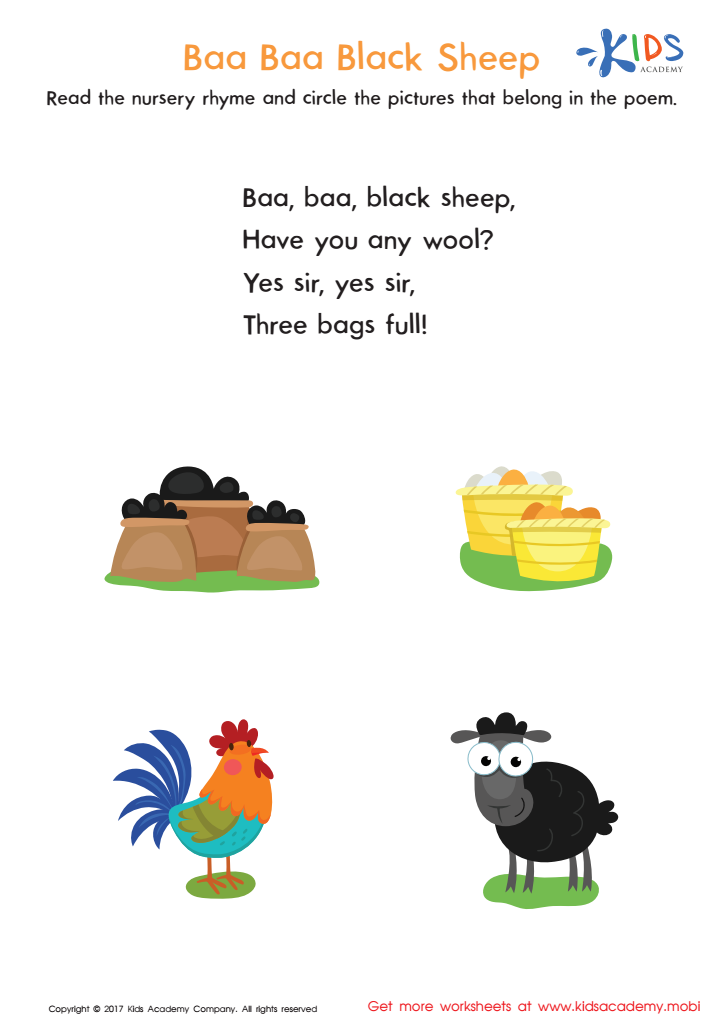
Baa Baa Black Sheep Printable

Twinkle Twinkle Little Star Coloring Page
 Assign to My Students

The Dog and His Bone Worksheet
Hickory Dickory Dock Coloring Page
Assign to My Students

Red Riding Hood Coloring Page
Assign to My Students
Big Bad Wolf Printable Coloring Page
Assign to My Students








Fine motor skills are crucial for children aged 8-9, especially when tailored to reading fiction. At this developmental stage, children's hand-eye coordination, dexterity, and finger strength significantly impact their writing, drawing, and ultimately their reading ability. Engaging with fiction helps foster these skills through associated activities like turning pages, using bookmarks, and crafting creative projects inspired by stories.
Moreover, reading fiction enhances cognitive development, supports imagination, and improves language skills, all of which can simultaneously strengthen fine motor control. Storytelling often encourages hands-on activities such as creating puppets, crafting dioramas, or re-enacting scenes, which require fine motor precision. These playful avenues bridge fine motor skill development and comprehension, making learning more engaging.
For parents and teachers, nurturing fine motor skills through fiction not only supports literacy but fosters creativity and critical thinking. It opens doors for children to express their thoughts visually, leading to improved confidence and willingness to tackle more complex narratives in the future. Prioritizing fine motor skills within the realm of fiction reading will equip children with essential tools for school success and enjoyable, transformative learning experiences. Thus, attendance to these skills should be part of any holistic educational approach for this age group.








