Critical Thinking Animals Worksheets for Ages 8-9
4 filtered results
-
From - To
Unlock the power of critical thinking with our engaging "Critical Thinking Animals Worksheets for Ages 8-9." Designed specifically for young learners, these worksheets challenge children to explore various animal topics while enhancing their analytical skills. From problem-solving activities to thought-provoking questions, each worksheet encourages creativity and exploration. Students will love investigating animal habits, habitats, and unique traits while improving their reasoning abilities. Perfect for classroom learning or at-home practice, these worksheets provide a fun, educational experience that promotes deeper understanding and curiosity about the animal kingdom. Join us in fostering the next generation of critical thinkers today!
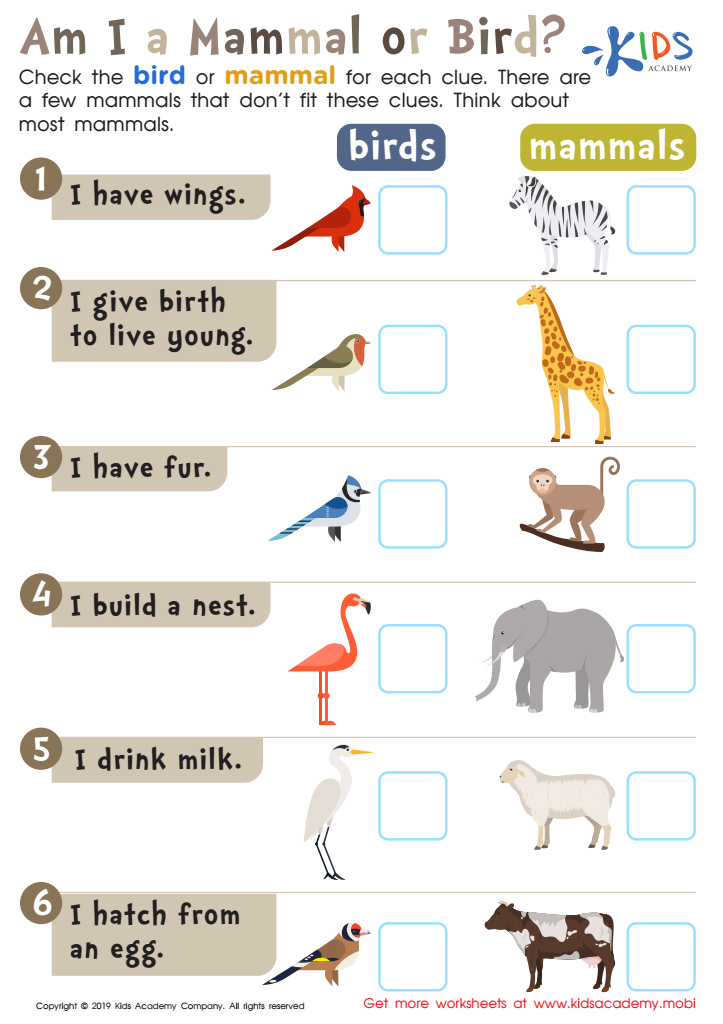
Am I a Mammal or Bird? Worksheet
 Assign to My Students
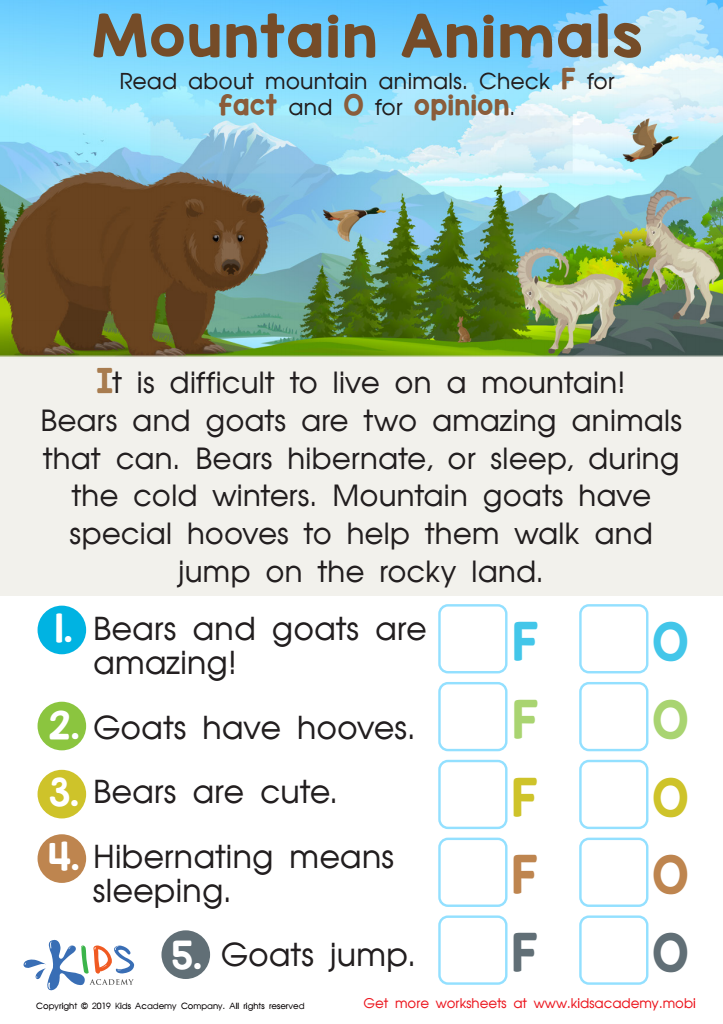
Mountain Animals Worksheet
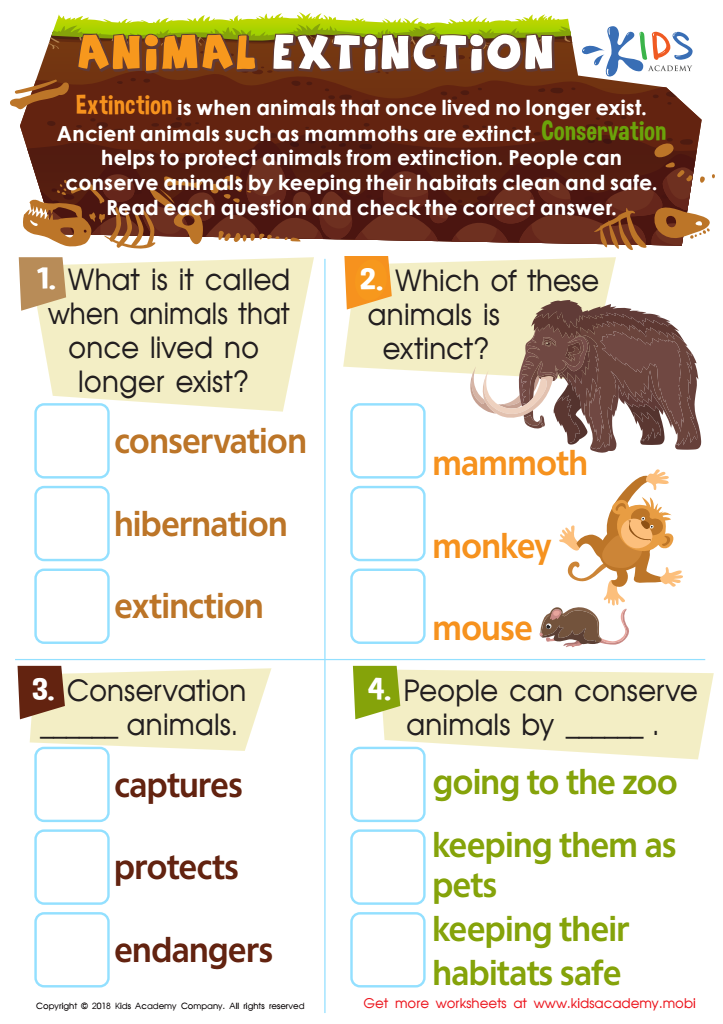
Animal Extinction Worksheet
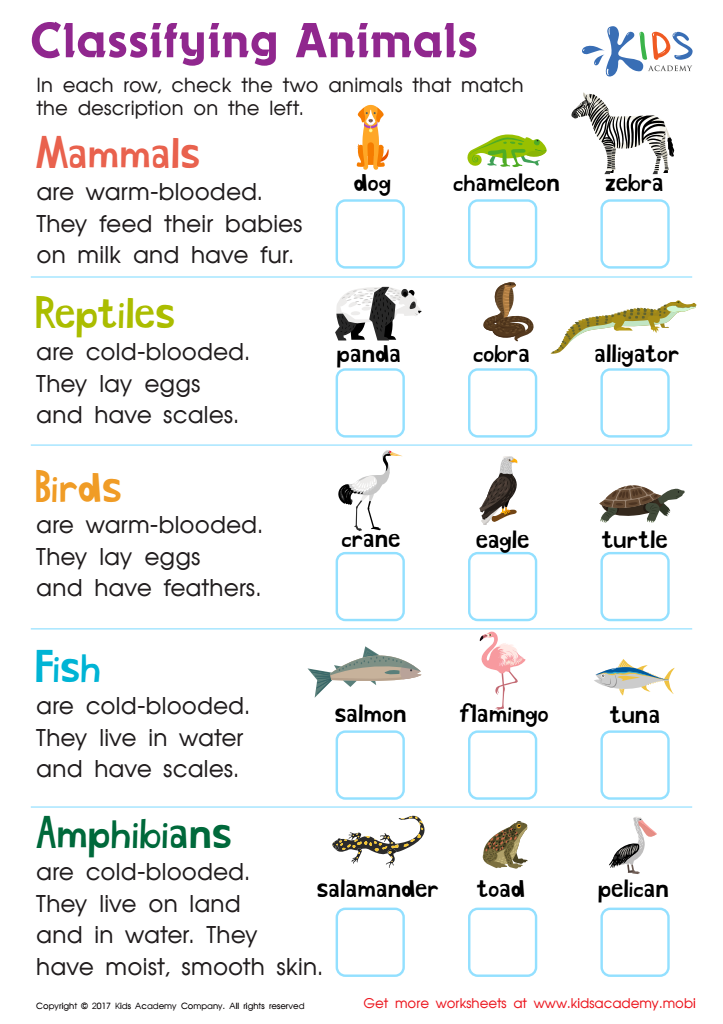
Classifying Animals Worksheet








Parents and teachers should prioritize Critical Thinking Animals for children ages 8-9 as it helps develop essential cognitive skills crucial for their overall growth. At this age, children are curious and eager to explore the world around them. Critical Thinking Animals offers engaging stories and dilemmas that challenge young minds, fostering skills such as problem-solving, logical reasoning, and decision-making.
These activities encourage kids to think beyond surface-level lessons, guiding them to analyze different scenarios, ask probing questions, and understand multiple perspectives. This not only enhances their academic performance but prepares them for real-life situations, teaching them to evaluate evidence, trace cause and effect, and draw well-supported conclusions.
Moreover, sharpening critical thinking skills cultivates self-confidence and independence in children. As they navigate complex tasks and communicate their ideas effectively, they become more adept at understanding themselves and others. By sparking curiosity and engagement, Critical Thinking Animals nurtures a love for learning that extends beyond the classroom.
In a rapidly changing world, the ability to think critically is integral for success, enabling children to adapt and innovate. Therefore, investing time in these resources benefits children's intellectual, social, and emotional development, equipping them for future challenges.








