Understanding food chains Animals Worksheets for Ages 8-9
3 filtered results
-
From - To
Empower your 8-9 year old with our "Understanding Food Chains" animal worksheets, designed to enrich their knowledge of essential ecosystems. These interactive and engaging resources introduce young learners to the hierarchy of predators and prey, simplifying complex ecological concepts. Through fun activities featuring diverse animals, children will explore producers, consumers, and decomposers, grasping how energy flows in nature. Our worksheets foster critical thinking, analytical skills, and a love for science, making learning enjoyable and effective. Ideal for classroom use or at-home education, set your child on a path to appreciating and understanding the intricate web of life around us.
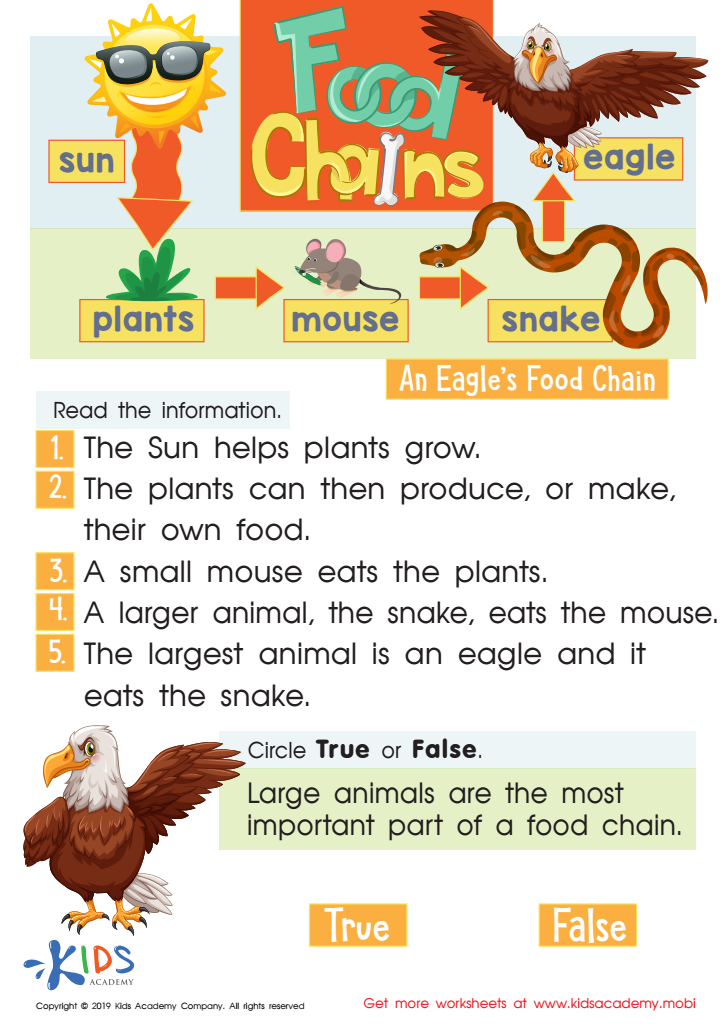
Food Chains Worksheet
 Assign to My Students
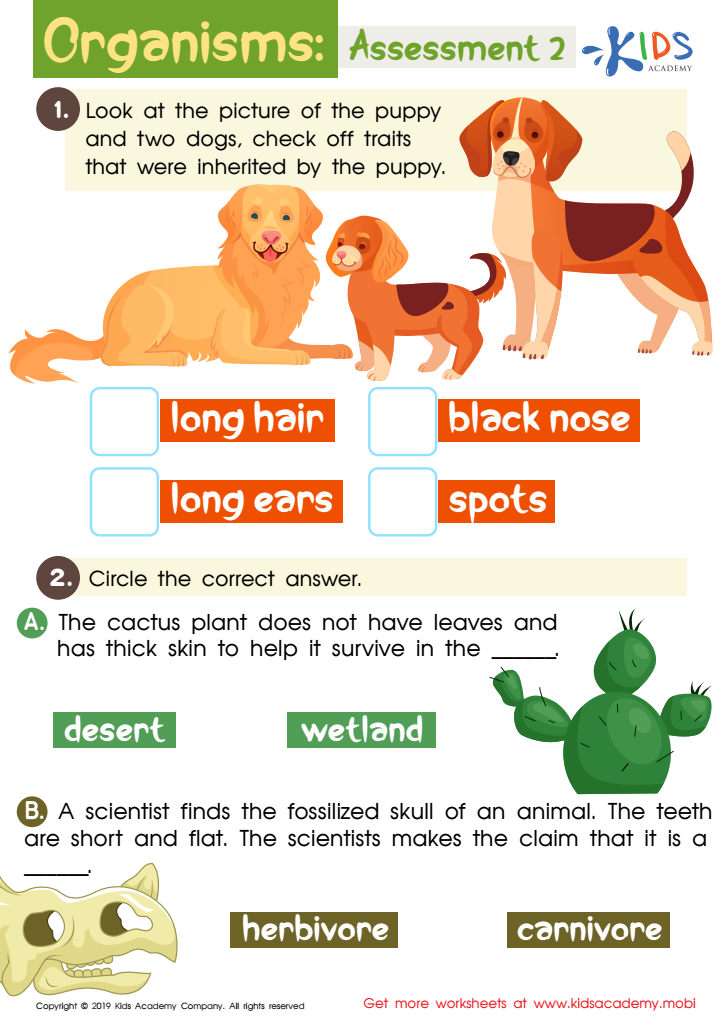
Organisms: Assessment 2 Worksheet
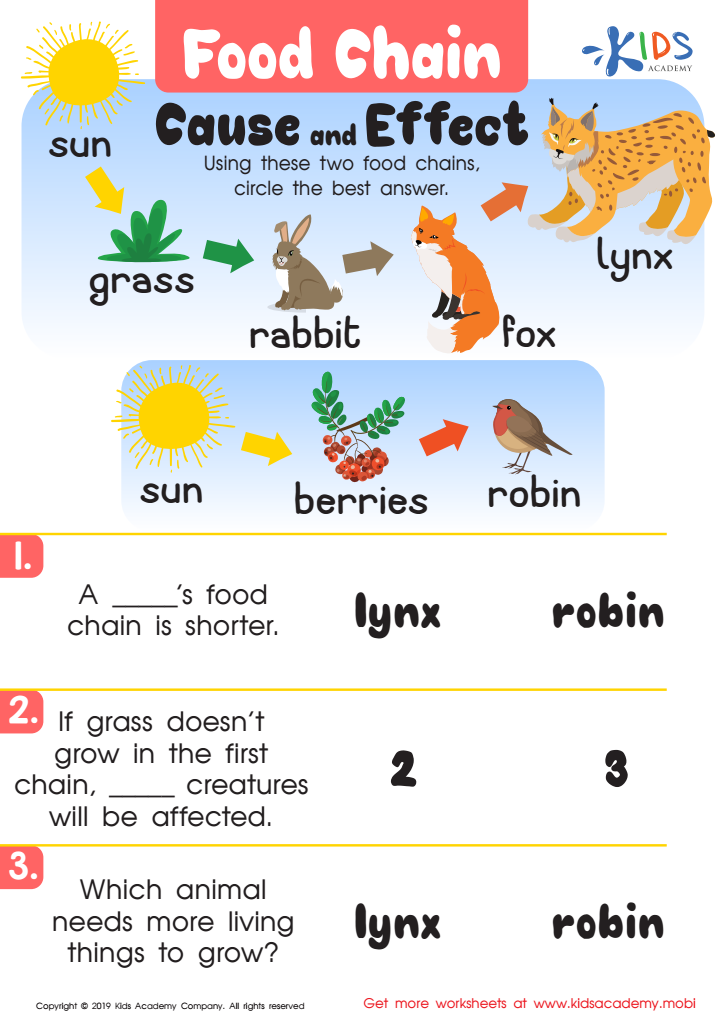
Food Chain Cause Worksheet








Understanding food chains is vital for young children, particularly those around ages 8-9, for several reasons. Learning about food chains introduces them to the concept of ecosystems and the interdependence of organisms. It helps them grasp how energy flows from one living thing to another, beginning with the sun and plants (producers) and moving through herbivores (primary consumers) to predators (secondary and tertiary consumers).
When children comprehend these relationships, they develop an appreciation for nature and the delicate balance that sustains life. This knowledge fosters environmental awareness and a sense of responsibility toward protecting habitats and conserving wildlife.
Moreover, understanding food chains connects to broader scientific concepts and critical thinking. Children learn to categorize animals based on their roles (producers, consumers, decomposers), sharpen observational skills, and understand the impacts of human activities like deforestation and pollution on ecosystems.
Additionally, using food chains as a teaching tool can be very engaging. Activities such as building food web diagrams, exploring local ecosystems, and conducting simple experiments make learning interactive and fun. Instilling these core scientific principles early on sets the foundation for more complex ecological studies and cultivates a lifelong curiosity about science and the natural world. Therefore, integrating lessons about food chains into education is paramount for well-rounded development.