
Animal Classification Science Worksheets for Ages 8-9
4 filtered results
Difficulty Level
Grade
Age
-
From - To
Subject
Activity
Standards
Explore our engaging Animal Classification Science Worksheets designed specifically for children ages 8-9! These worksheets aim to introduce young learners to the fascinating world of animal classification, enriching their understanding of different species and their habitats. Activities include sorting animals into categories, identifying characteristics of vertebrates and invertebrates, and exploring the animal kingdom's diversity. With vibrant illustrations and interactive tasks, students can enhance their critical thinking and observational skills while having fun. Perfect for both classroom use and home learning, these worksheets foster a love for science and encourage students to become budding biologists. Dive into the animal kingdom with us today!
Favorites
With answer key
Interactive
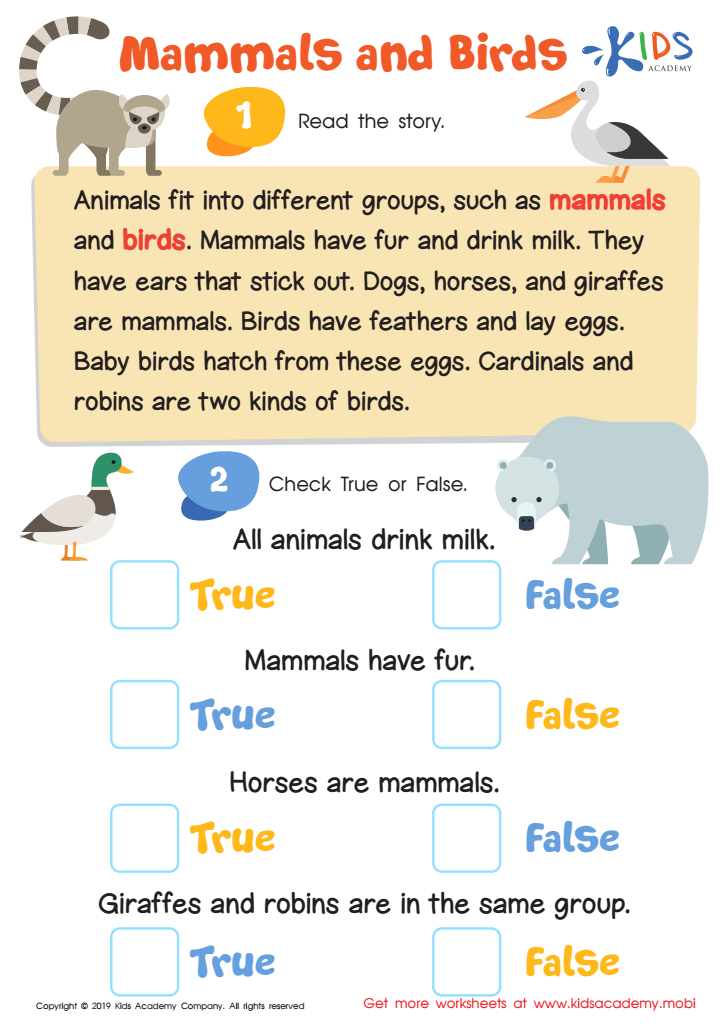
Mammals and Birds Worksheet
This worksheet challenges kids to read an informational text and review science facts about mammals and birds. Have them read the passage then mark statements true or false. Remind them to go back to the text if they get stuck! Get started now and help your child enhance multiple skills in one go!
 Assign to My Students
Mammals and Birds Worksheet
Worksheet
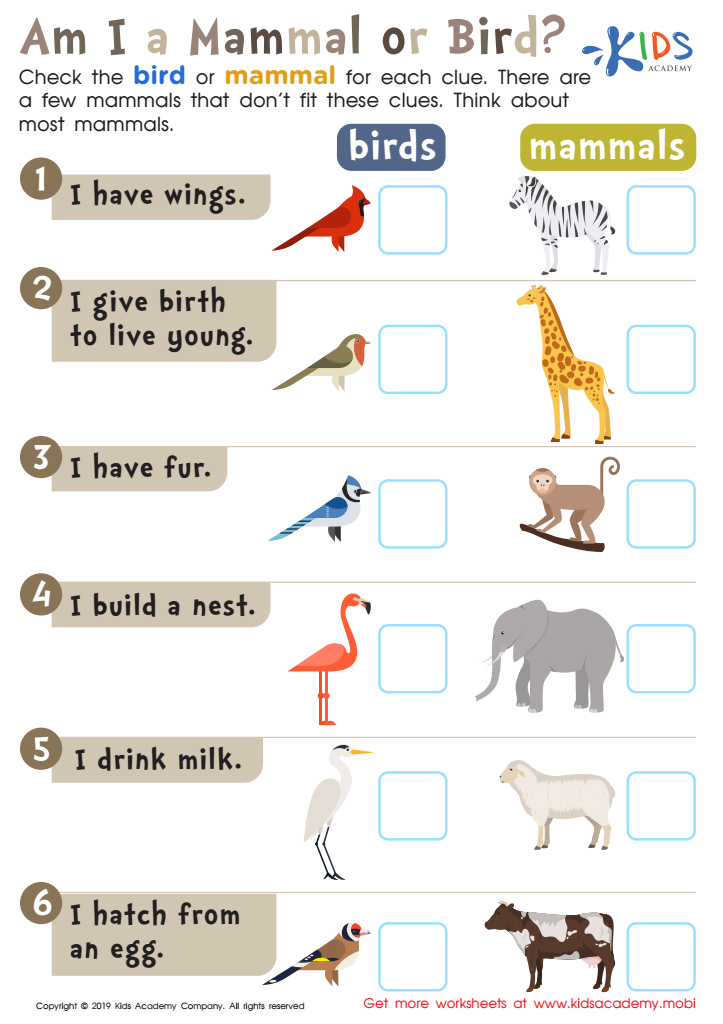
Am I a Mammal or Bird? Worksheet
We categorize animals into groups such as mammals, birds, reptiles, etc. This worksheet helps kids understand the difference between birds and mammals. Read through the clues and think about each one. Then decide if it describes a bird or mammal, check the box and complete!
Am I a Mammal or Bird? Worksheet
Worksheet
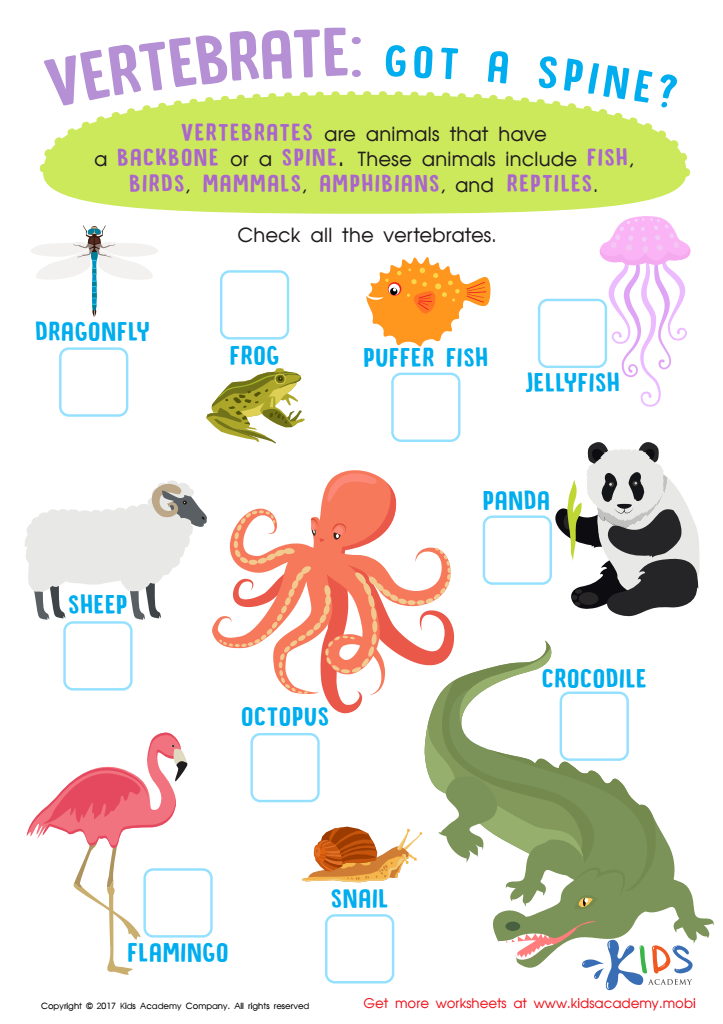
Vertebrates Animals Worksheet for 3rd Grade
This 3rd grade worksheet introduces your child to the wonders of vertebrate animals. They will have fun sorting them from those without a spine, while learning more about the animal kingdom!
Vertebrates Animals Worksheet for 3rd Grade
Worksheet
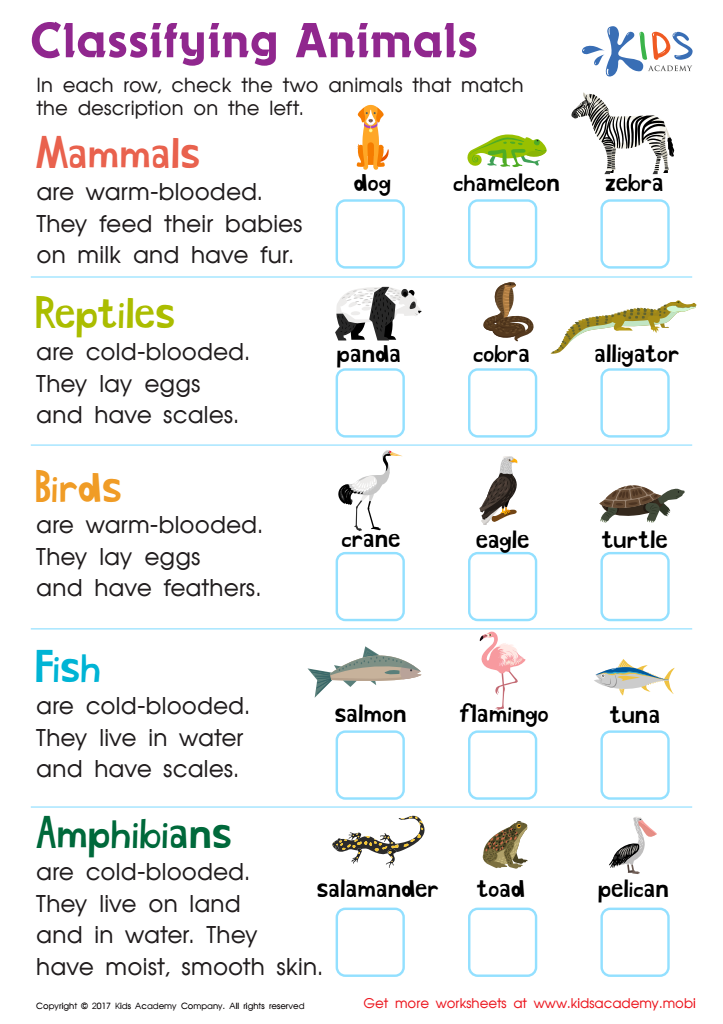
Classifying Animals Worksheet
Print the 2nd grade animal classification worksheet and help kids study the differences between mammals, reptiles, birds, fish and amphibians. Let them pick two examples from the options given.
Classifying Animals Worksheet
Worksheet
Join Kids Academy for Free
Who is primarily going to use this learning content?







Animal classification is a vital component of science education for children aged 8-9, and both parents and teachers should prioritize it for several reasons. First, understanding how animals are categorized fosters critical thinking and observational skills in children. By learning about taxonomic groups like mammals, birds, amphibians, and reptiles, kids develop the capacity to analyze differences and similarities in the natural world, thus enhancing their analytical abilities.
Moreover, exposure to animal classification nurtures a sense of curiosity and wonder about biodiversity. This intrinsic interest can lead to a lifetime appreciation for the environment, prompting young learners to become aware of conservation issues impacting various species. By engaging with topics of classification, children are encouraged to ask questions and seek out information, promoting a love for learning.
Additionally, animal classification aligns with broader educational goals, such as improving literacy in scientific vocabulary and concepts. Familiarizing young learners with terms like "habitat," "ecosystem," and "endangered species" will enrich their language skills while also building a solid groundwork for future science education.
In summary, investing time in animal classification science cultivates critical thinking, fosters curiosity, enhances vocabulary, and promotes environmental awareness—essential skills for child development and future learning.







