Number Recognition Science Worksheets for Ages 8-9
4 filtered results
-
From - To
Unleash your child's mathematical potential with our Number Recognition Science Worksheets, designed specifically for ages 8-9 at Kids Academy! These engaging, printable worksheets blend science and math, giving children a fun way to enhance their number recognition skills. As they explore scientific concepts, kids effortlessly identify and work with numbers, building a strong foundation for future math success. Each worksheet is expertly crafted to challenge and delight young minds, promoting critical thinking and problem-solving. Perfect for classroom or at-home use, our worksheets make learning an adventure. Start boosting your child's number confidence today!
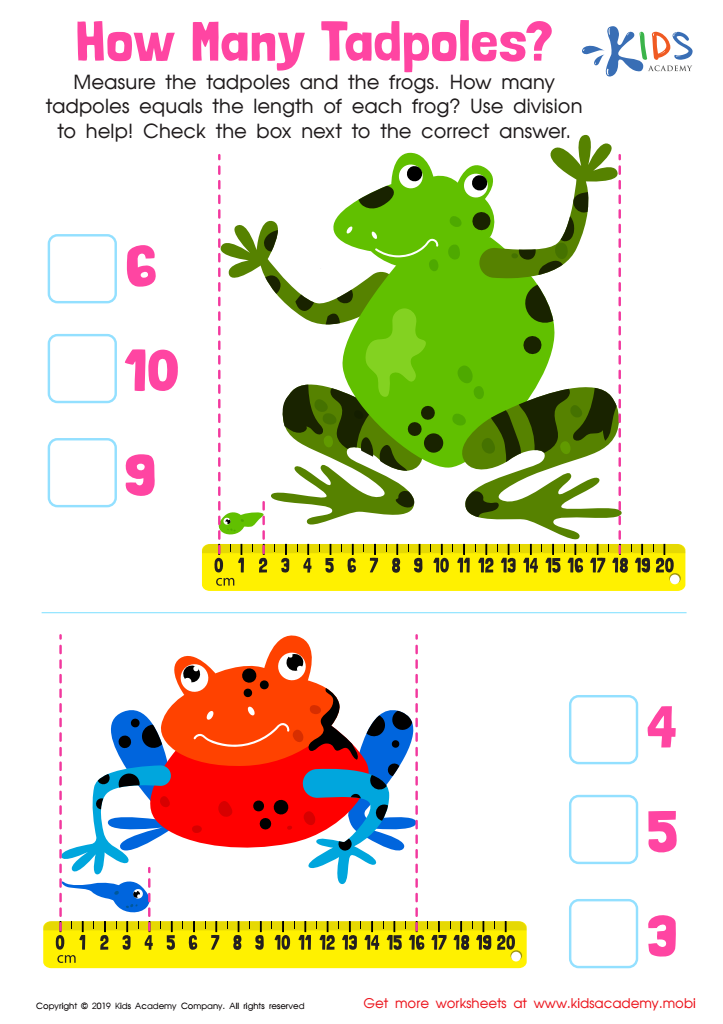
How Many Tadpoles Worksheet
 Assign to My Students
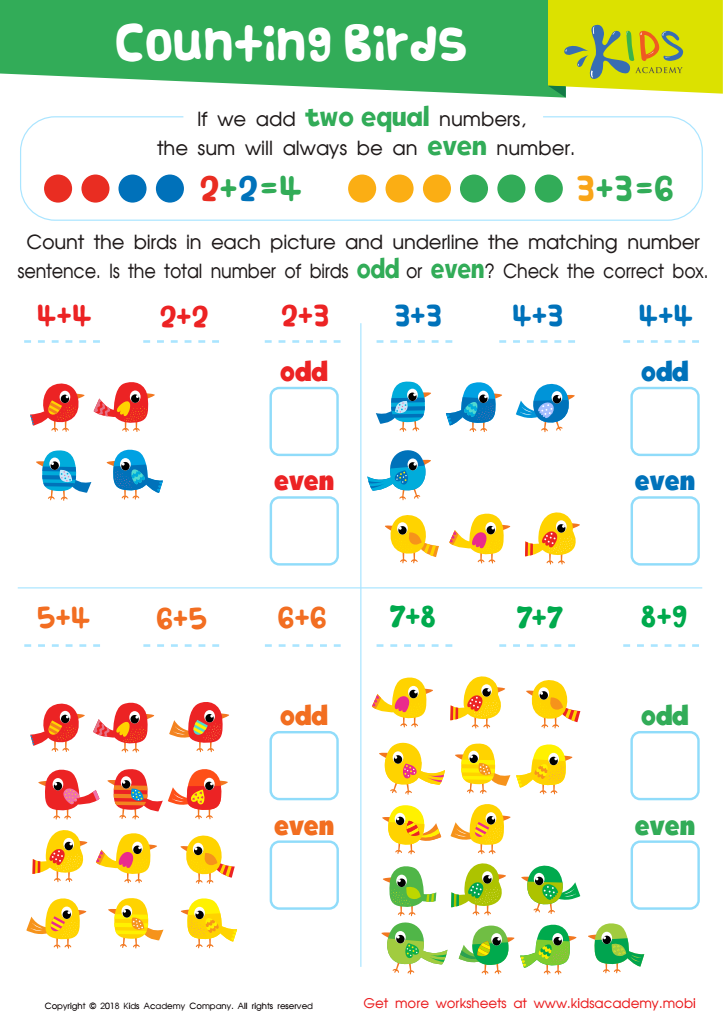
Counting Birds Worksheet
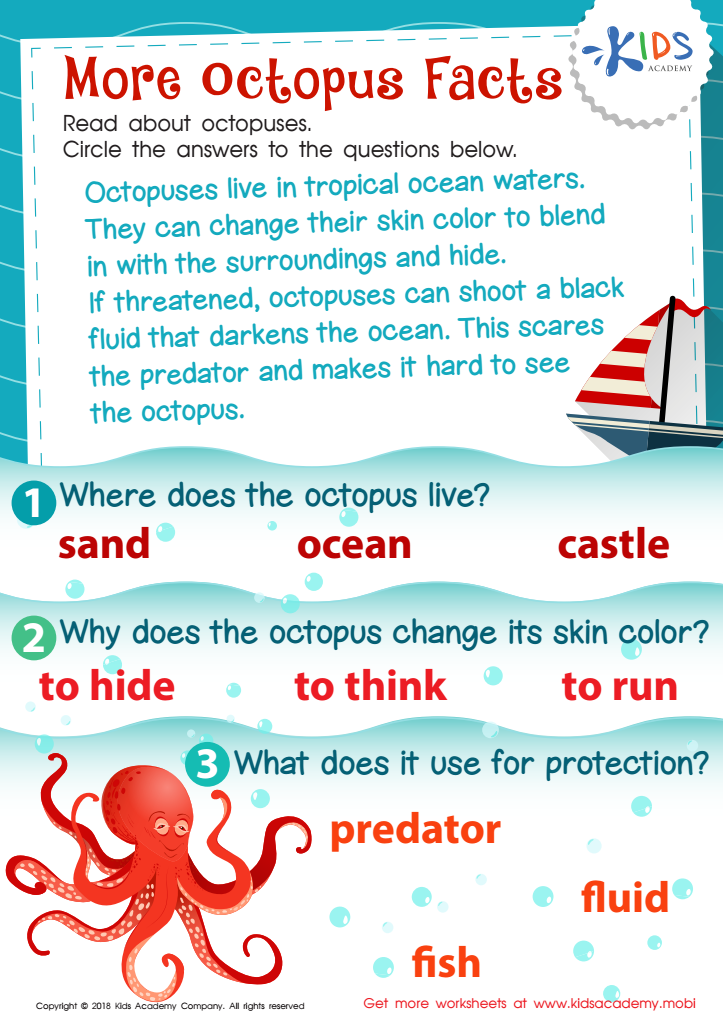
More Octopus Facts Worksheet
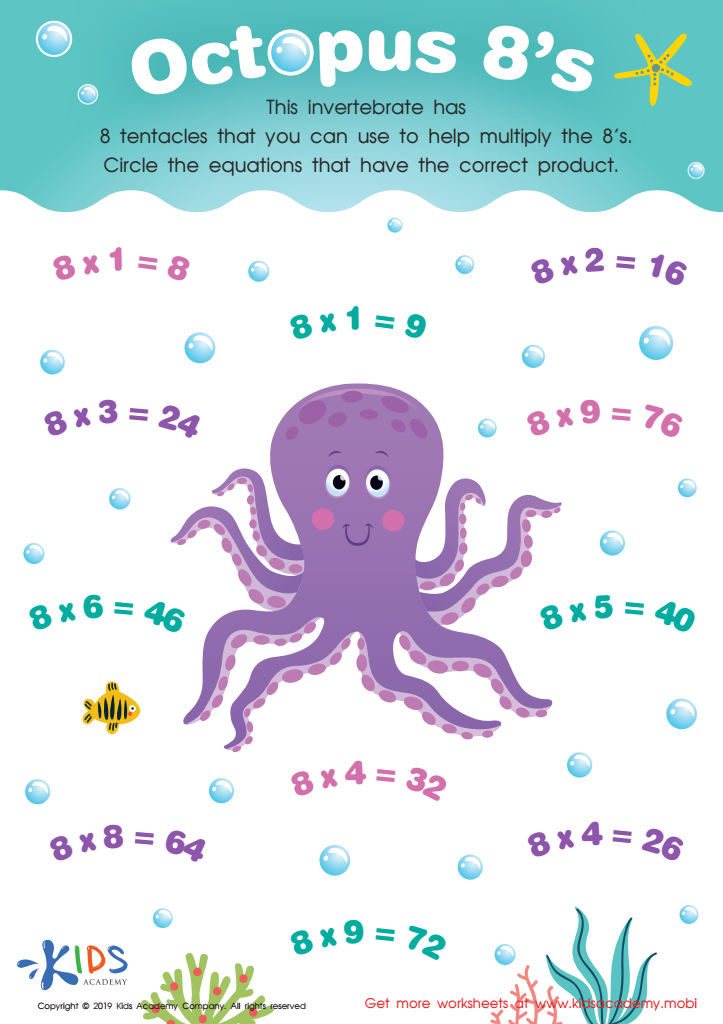
Octopus 8’s Worksheet







Number recognition is a cornerstone of early mathematical learning and plays a critical role in a child's development. For children ages 8-9, being proficient in number recognition goes beyond simply identifying digits; it sets the foundation for more complex mathematical concepts.
Parents and teachers should prioritize number recognition because it directly affects their child's ability to perform basic arithmetic operations such as addition, subtraction, multiplication, and division. Proficiency in these operations is essential for everyday problem-solving and lays the groundwork for more advanced topics like fractions, decimals, and eventually algebra.
Moreover, number recognition contributes to developing cognitive skills such as memory and pattern recognition. It also plays a role in fostering logical thinking and problem-solving abilities, skills that are not only crucial for mathematics but are employed across other subjects and real-life situations.
Recognizing numbers with ease diminishes math anxiety, leading to a more positive attitude toward the subject. This encourages a mindset geared towards curiosity and learning, as opposed to a fear of math. Lastly, it allows for better classroom engagement and interaction, as students who struggle less with basic concepts can more confidently participate in more complex discussions, enriching the learning environment for everyone.
In summary, a strong base in number recognition is vital for ongoing educational growth and cognitive development, making it a crucial area of focus for both parents and teachers.







