
Observation skills Science Worksheets for Ages 8-9
3 filtered results
Difficulty Level
Grade
Age
-
From - To
Subject
Activity
Standards
Enhance your child's scientific exploration with our Observation Skills Science Worksheets designed specifically for ages 8-9. These engaging worksheets foster critical thinking and encourage young learners to observe, analyze, and record their findings in various scientific contexts. Each worksheet features fun, hands-on activities that promote keen observation, whether in nature or through classroom experiments. By honing these skills, children will gain confidence in their ability to explore the world around them. Perfect for use at home or in educational settings, our observation skills worksheets provide a solid foundation for budding scientists and encourage a lifelong love of learning!
Favorites
With answer key
Interactive
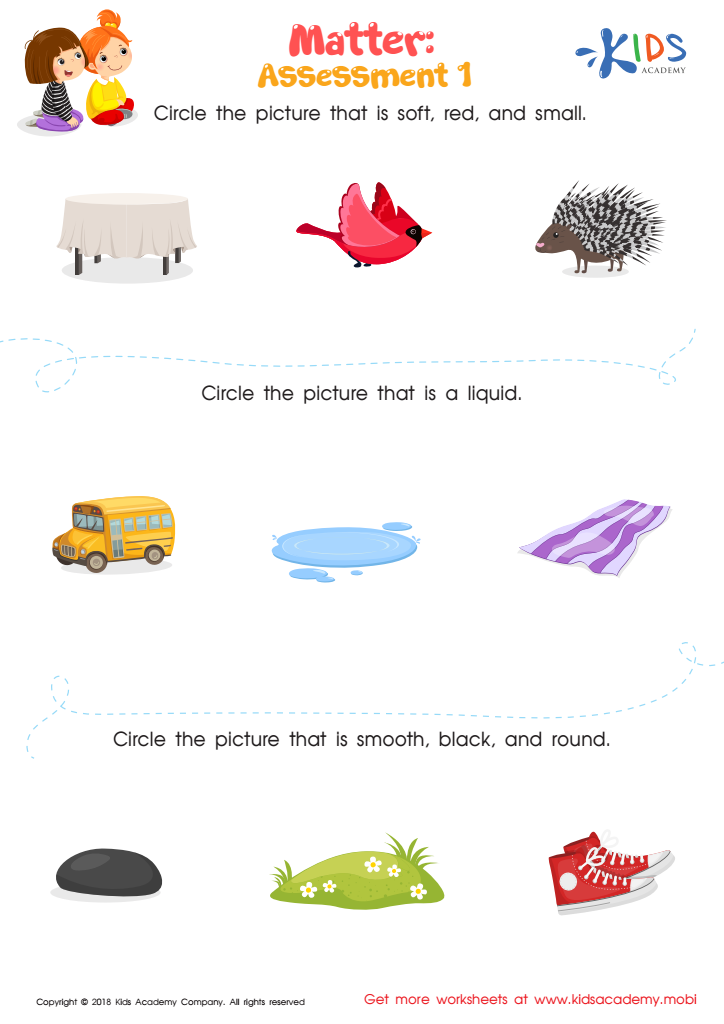
Matter: Assessment 1 Worksheet
Have your children learn that anything that has weight and takes up space is matter. Examples include buses, tables, people, animals, and more. Use this worksheet to help them identify the objects and circle the soft, red, and small one; the liquid; and the smooth, black, and round one.
 Assign to My Students
Matter: Assessment 1 Worksheet
Worksheet
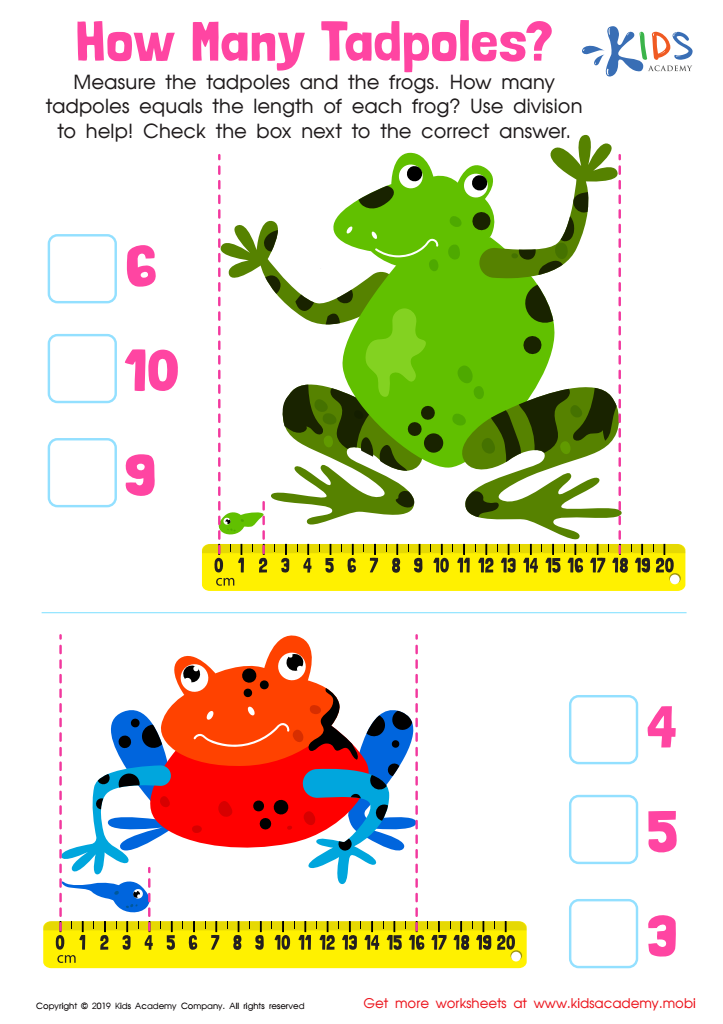
How Many Tadpoles Worksheet
Kids love tadpoles! They'll have fun using them to work out the measurements of their frog friends. By dividing the length of the frogs by the length of the tadpoles, children can deduce how many tadpoles it takes to equal a frog. With the use of 'how many' and 'each' they'll solve math problems without realizing it!
How Many Tadpoles Worksheet
Worksheet
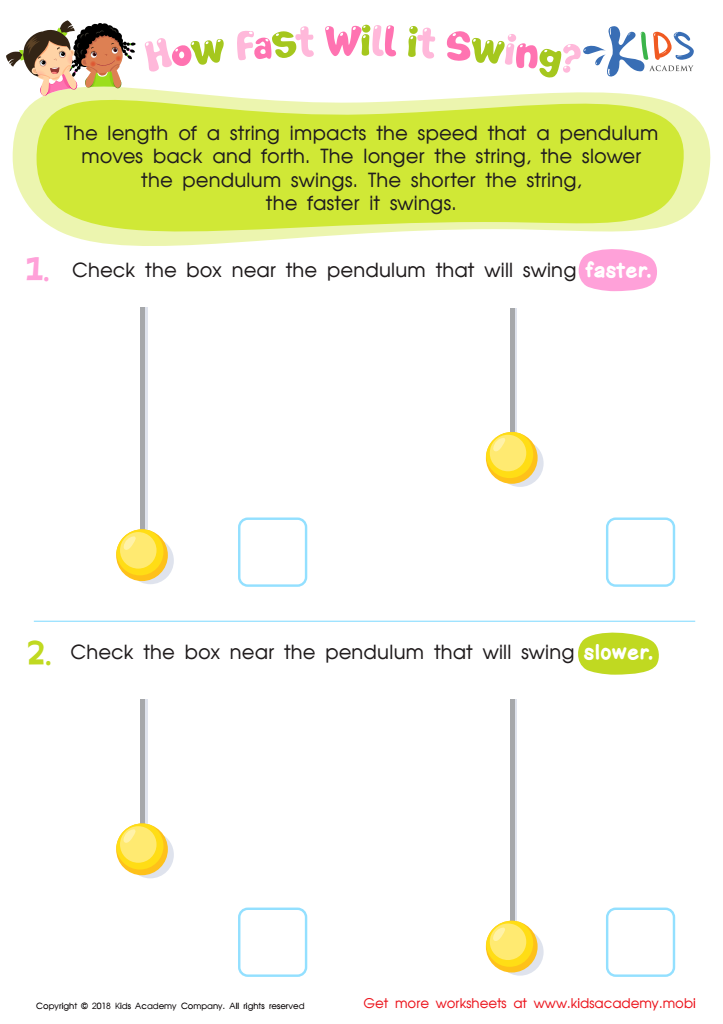
Pendulum Experiment Worksheet For 3rd Grade
Time to flex those science muscles! A pendulum's speed depends on its string length. Complete this 3rd grade pendulum experiment worksheet and experiment with a yo-yo at home! Read the description to answer the questions correctly.
Pendulum Experiment Worksheet For 3rd Grade
Worksheet
Join Kids Academy for Free
Who is primarily going to use this learning content?





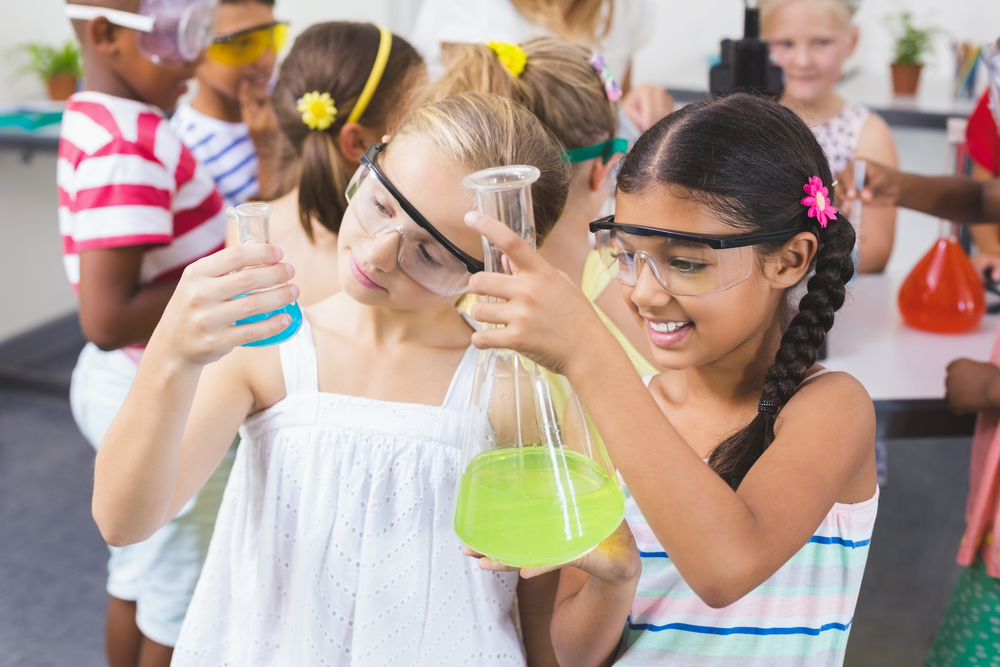


Observation skills are crucial for children ages 8-9, particularly in the realm of science. At this developmental stage, children are naturally curious and eager to explore their environment, making it an ideal time to cultivate their observation abilities. By honing these skills, children learn to notice details in their surroundings, develop critical thinking, and enhance their ability to make predictions based on what they observe.
When parents and teachers encourage observation, they help children engage with scientific concepts meaningfully. Students can investigate plant growth, weather patterns, or animal behaviors, allowing them to connect theoretical knowledge with real-world phenomena. Observational activities instill a sense of wonder and inquiry, promoting a lifelong love of learning.
Moreover, strong observation skills support problem-solving and analytical thinking, which are essential in today’s data-driven world. These skills also nurture students' communication abilities, as they learn to articulate their findings and insights clearly.
Ultimately, fostering observation skills not only builds a foundational understanding of science but also equips children with competencies critical for academic success and informed citizenship. By prioritizing science observation skills, parents and teachers play a vital role in shaping inquisitive and informed thinkers ready to tackle future challenges.







