Analytical thinking History Worksheets for Ages 8-9
3 filtered results
Difficulty Level
Grade
Age
-
From - To
Subject
Activity
Standards
Our "Analytical Thinking History Worksheets for Ages 8-9" are designed to enhance young learners' critical thinking skills while exploring key historical events and figures. These engaging worksheets encourage children to analyze information, draw inferences, and deepen their understanding of history. With activities that challenge their reasoning abilities, kids will develop the foundational skills essential for academic success. Perfect for both classroom and home learning, these worksheets promote intellectual curiosity and a love of history. Empower your children to become independent thinkers with worksheets crafted to make history both fun and educational, boosting their problem-solving skills for future learning.
Favorites
With answer key
Interactive
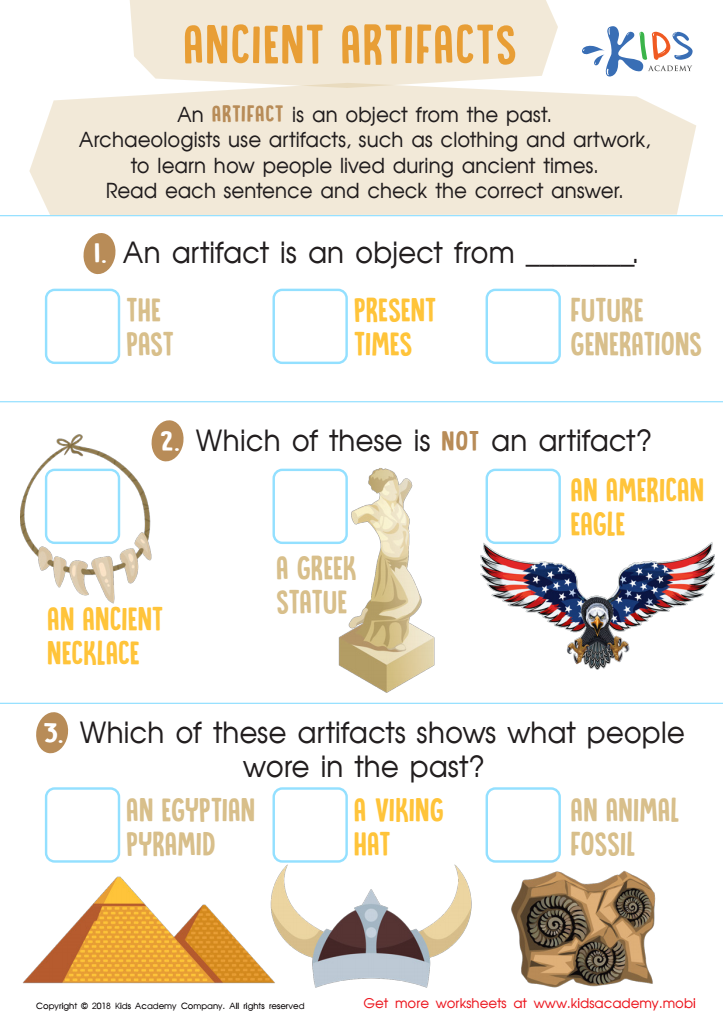
Ancient Artifacts Worksheet
This free worksheet helps kids understand ancient artifacts, from statues to necklaces to fossils. They'll read comprehension questions and select answers from multiple choice options, with pictures to help them grasp the concept. It's a great way for children to learn about artifacts and what they may look like.
 Assign to My Students
Ancient Artifacts Worksheet
Worksheet
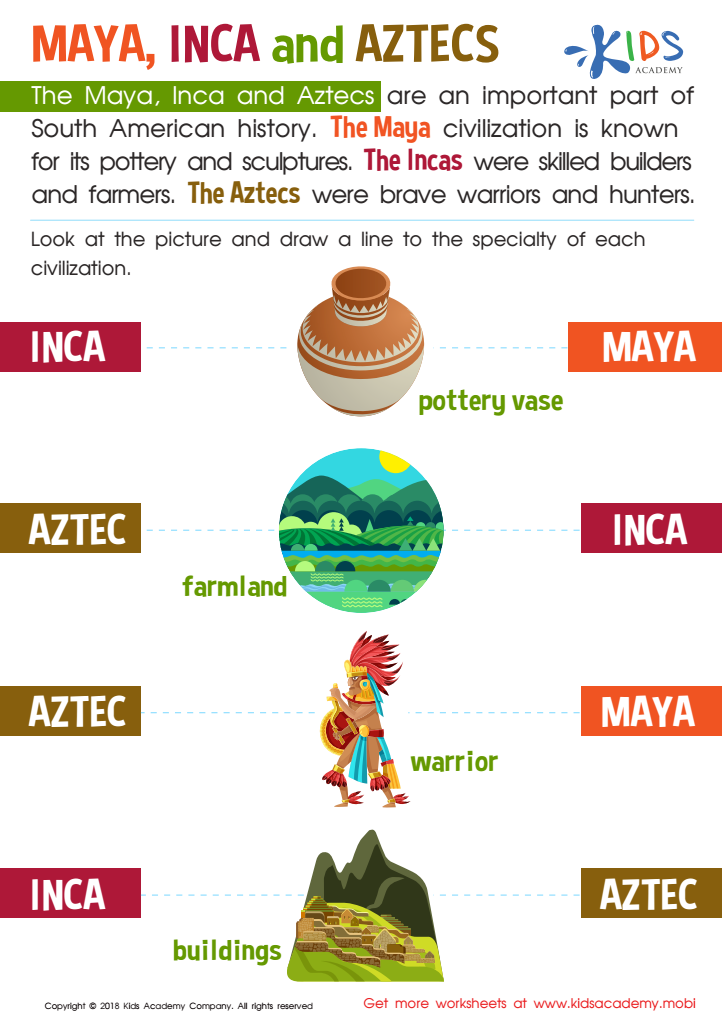
Maya, Inca and Aztecs Worksheet
This worksheet introduces your child to the thrilling histories of the Mayan, Incan and Aztec cultures, teaching them about their warriors, sculptors and farmers. With traceable lines and colorful imagery, they'll connect each culture with its correct associated picture - great for cementing concepts!
Maya, Inca and Aztecs Worksheet
Worksheet
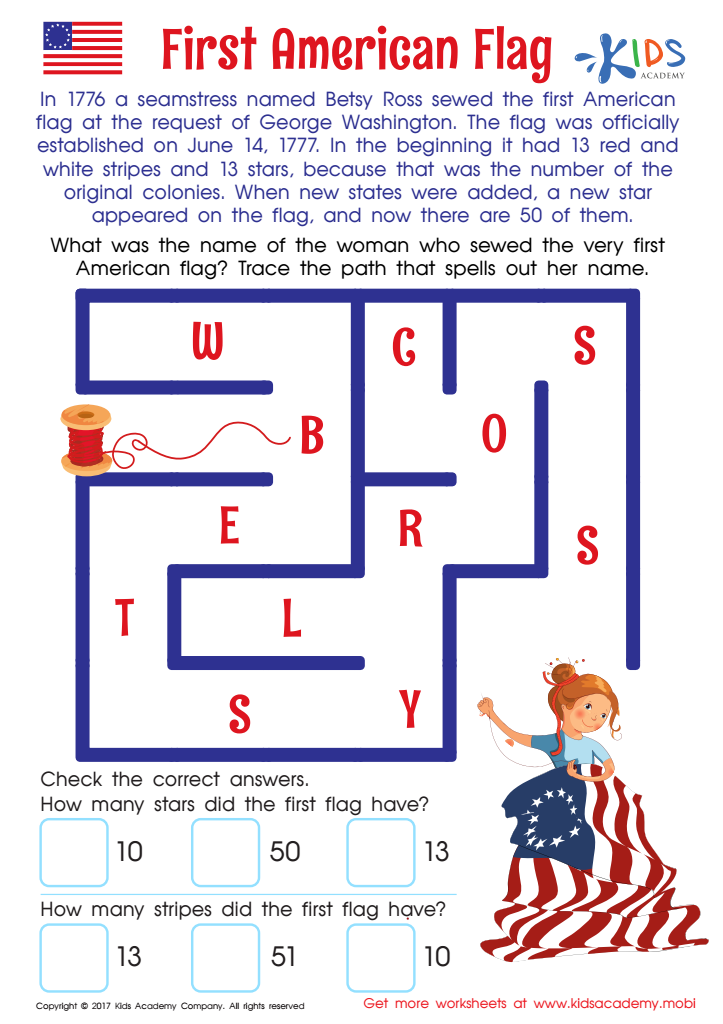
First American Flag Worksheet
Betsy Ross sewed the first American flag at the request of George Washington. This worksheet helps kids learn about this milestone in U.S. history, plus the design and origins of the flag.
First American Flag Worksheet
Worksheet
Join Kids Academy for Free
Who is primarily going to use this learning content?








Analytical thinking is vital for young children because it forms the foundation for their cognitive development and problem-solving abilities. For ages 8-9, fostering this skill helps children enhance their ability to process information logically and make informed decisions. Teaching children the history of analytical thinking allows them to understand how rational thought has shaped societies and cultures through time. By examining historical events and figures who utilized analytical thinking, such as scientists, inventors, and leaders, children gain a broader perspective on the importance of critical thinking.
When parents and teachers emphasize this aspect of history, children learn to approach problems systematically, considering various factors before reaching conclusions. This method of thinking not only improves their academic skills in subjects like math and science but also empowers them to tackle everyday challenges efficiently. Analytical thinking promotes curiosity and the persistent quest for understanding, which is crucial for lifelong learning.
Furthermore, understanding the development and application of analytical thought helps children appreciate the cultural and intellectual advancements that have been made throughout history. This awareness can inspire them to contribute meaningfully to society. Hence, parents and teachers should prioritize this learning to cultivate well-rounded, intelligent individuals who are capable of critical and independent thinking.