Map reading skills Social Studies Worksheets for Ages 8-9
4 filtered results
Difficulty Level
Grade
Age
-
From - To
Subject
Activity
Standards
Enhance your child’s geographical knowledge with engaging "Map Reading Skills Social Studies Worksheets" designed for ages 8-9! Our comprehensive worksheets foster essential skills in map interpretation, including understanding legends, key symbols, and cardinal directions. Each activity is crafted to stimulate curiosity and critical thinking, making learning an exciting adventure. Perfect for both classroom and home study, these worksheets provide a solid foundation in social studies, supporting academic growth and a love for exploration. Discover the world through maps and empower your young learner with the tools they need for success in geography. Explore our dynamic collection today!
Favorites
With answer key
Interactive
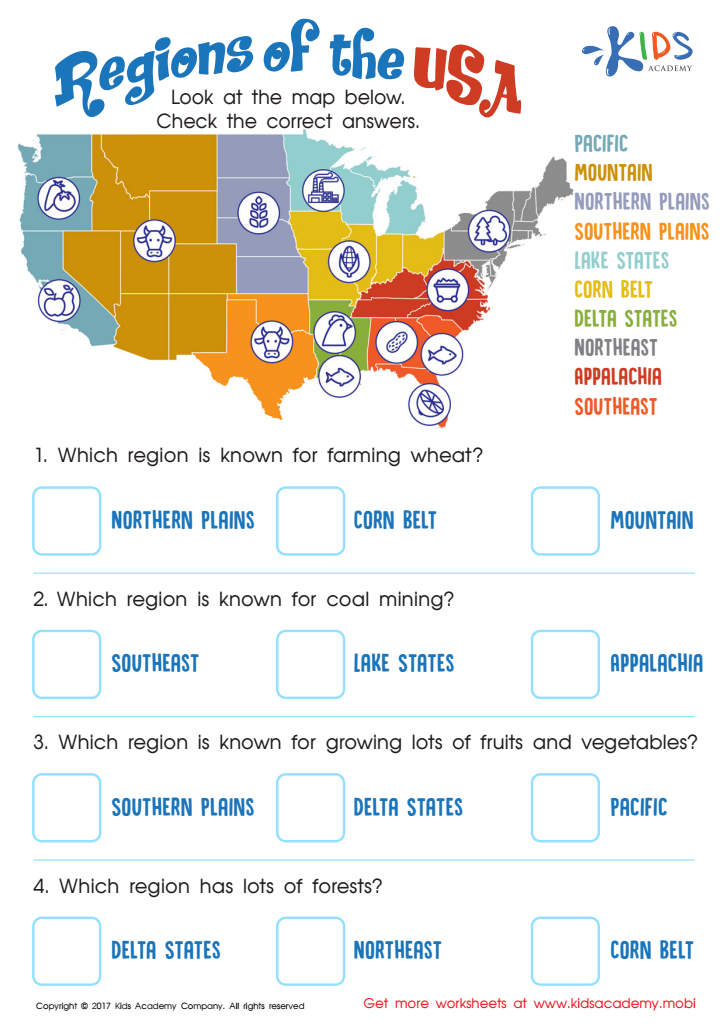
Regions of the USA Worksheet
Help your child explore the US with this regions of the United States worksheet! They'll learn about the diverse cultures, climates and purposes of each region. Make geography and US history fun with this educational exercise!
 Assign to My Students
Regions of the USA Worksheet
Worksheet
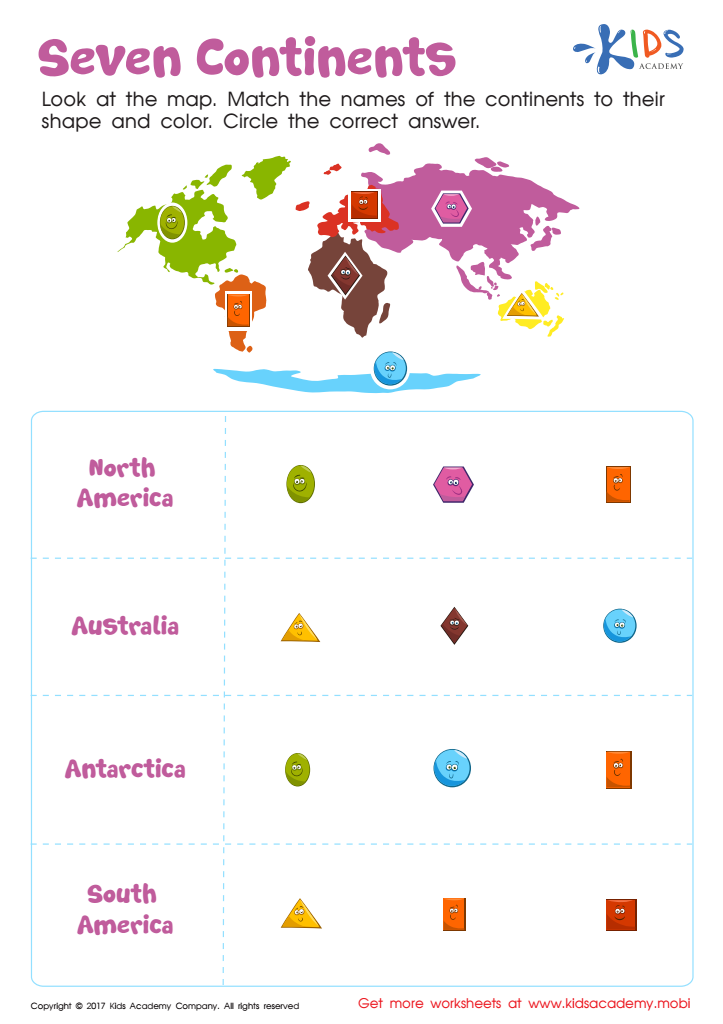
Seven Continents Worksheet
Geography teaches kids about the world! Encourage exploration with a seven continents worksheet - it'll help your child identify each continent using fun shapes.
Seven Continents Worksheet
Worksheet
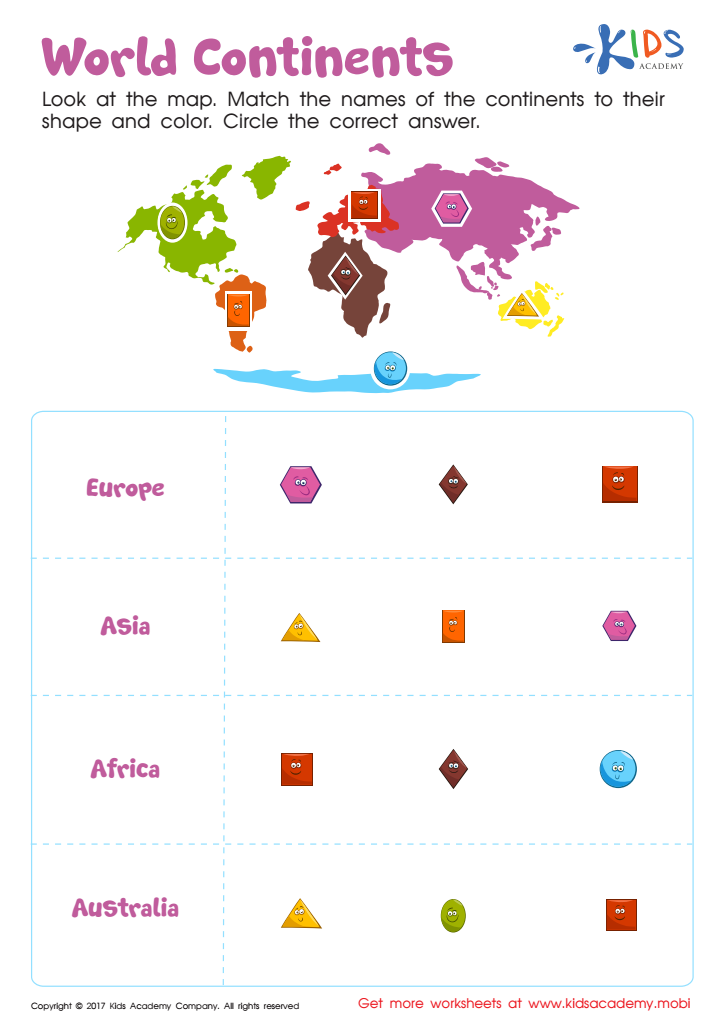
World Continents Worksheet
Help expand your child's knowledge of the world with this fun worksheet! It features goofy shapes to identify each continent, making learning the seven continents fun and memorable.
World Continents Worksheet
Worksheet
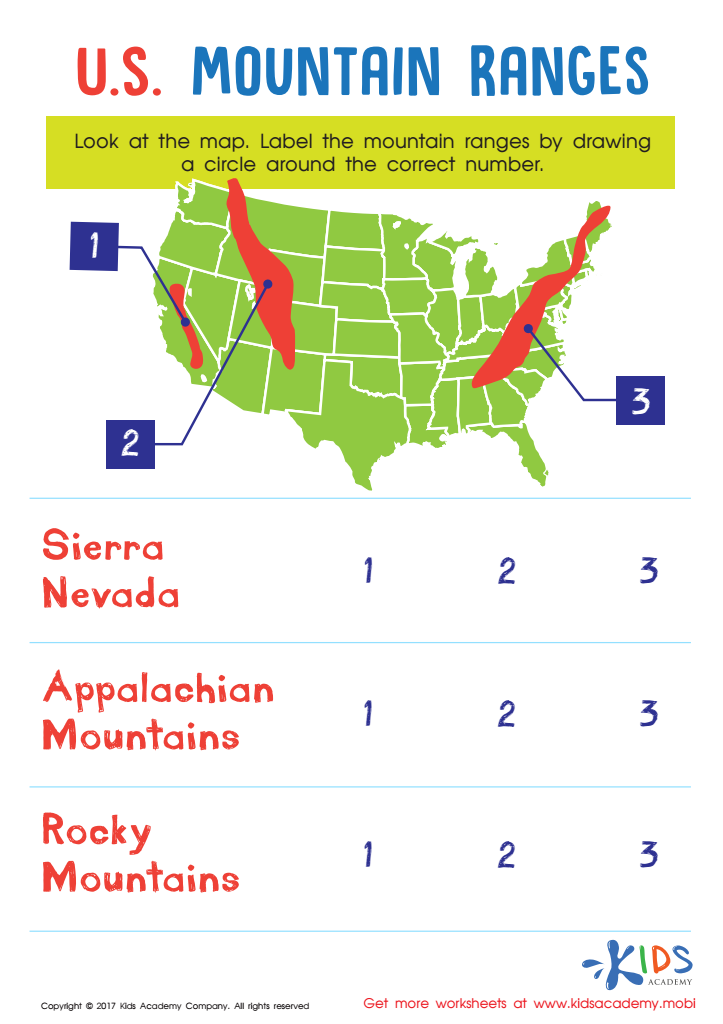
US Mountain Ranges Worksheet
Introduce your little one to the U.S. with this Mountain Ranges worksheet! It'll help them recognize the major ranges and locate them on a map, sharpening their map skills.
US Mountain Ranges Worksheet
Worksheet
Join Kids Academy for Free
Who is primarily going to use this learning content?






Teaching map reading skills to children aged 8-9 in social studies is essential for several reasons. Firstly, map reading fosters spatial thinking, which is the ability to visualize and understand the locations and spatial relationships between objects. This skill is foundational not just for geography, but also for mathematics, science, and everyday problem-solving.
Furthermore, map reading enhances a child's awareness and understanding of the world. It helps them grasp the concepts of distance, direction, and scale, and promotes cultural awareness by introducing them to different places and communities. Knowing how to read maps allows children to see how countries, cities, and environments are interconnected, broadening their perspective beyond their immediate surroundings.
In addition, developing map reading skills promotes critical thinking and navigational abilities. Children will learn to interpret symbols, legends, and keys, honing their ability to extract information and make informed decisions. These skills are vital for developing autonomy and confidence in exploring the world around them.
Lastly, map reading is a practical skill in the digital age. Despite the prevalence of GPS technology, understanding traditional map usage reinforces the fundamentals of navigation and ensures children can comprehend and utilize various forms of geographic information. Engaging children in map reading sets a foundation for lifelong learning and curiosity about the world.