Reading comprehension Grammar Worksheets for Ages 8-9 - Page 3
49 filtered results
-
From - To
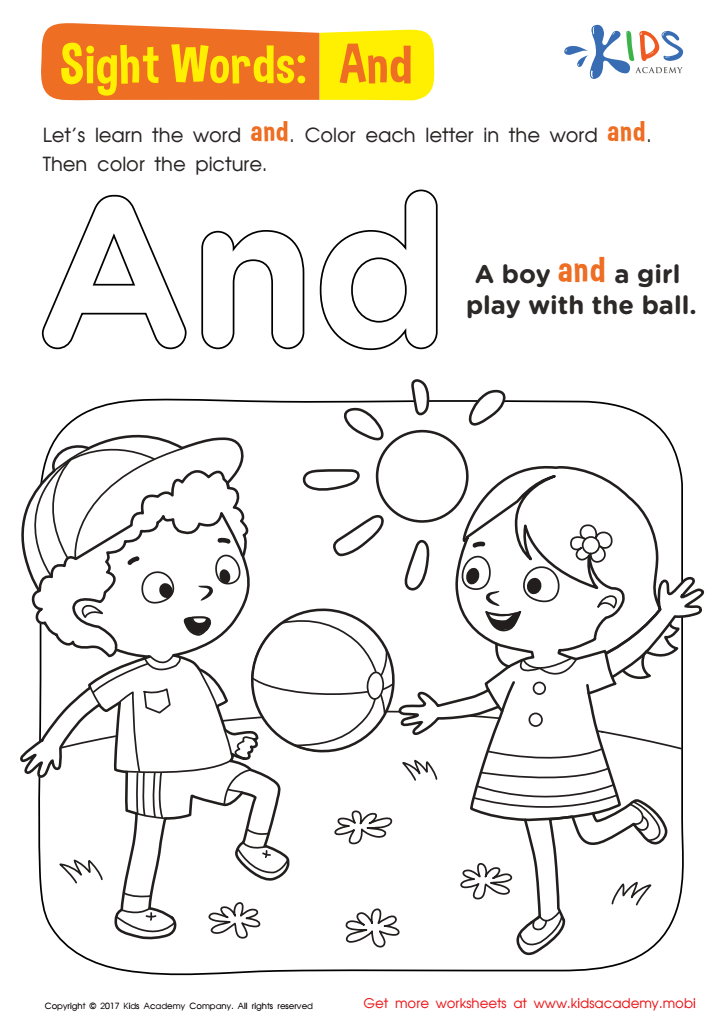
And Worksheet Sight Words Worksheet
 Assign to My Students



.jpg)


Reading comprehension and grammar are foundational to a child's academic success and overall development, particularly at ages 8-9. During this period, children transition from learning to read to reading to learn, making comprehension essential for understanding more complex texts across all subjects. Strong reading comprehension skills enable children to grasp not only the literal meaning but also inferential and critical aspects of a text, promoting critical thinking and problem-solving abilities.
Grammar, on the other hand, acts as the structural foundation of language. Proficient use of grammar aids in clear communication, both in writing and speaking. Mastery of grammatical rules allows children to construct coherent sentences and convey their ideas effectively, which is crucial for academic assignments and everyday interactions.
Moreover, proficiency in grammar enhances reading comprehension. Understanding sentence structure, punctuation, and proper syntax helps children decipher meanings more accurately and efficiently. This dual focus empowers students to become confident readers and articulate communicators, impacting their performance across all subjects, including math and science, where word problems and instructions require precise comprehension.
Ultimately, prioritizing reading comprehension and grammar at these ages helps cultivate lifelong learners who can navigate academic challenges adeptly and communicate their thoughts with clarity and confidence, laying the groundwork for future success.








