Word identification Grammar Worksheets for Ages 8-9
6 filtered results
-
From - To
Discover our engaging "Word Identification Grammar Worksheets" designed for ages 8-9. These printable resources from Kids Academy help young learners master grammar through fun and interactive activities. Each worksheet focuses on critical skills such as recognizing parts of speech, identifying word relationships, and improving vocabulary. Perfect for classroom use or homeschool environments, our expertly crafted materials support children in building a strong foundation in language arts. Empower kids to excel in their writing with exercises that make learning enjoyable and effective. Explore our collection today to propel your child's grammar skills to the next level!
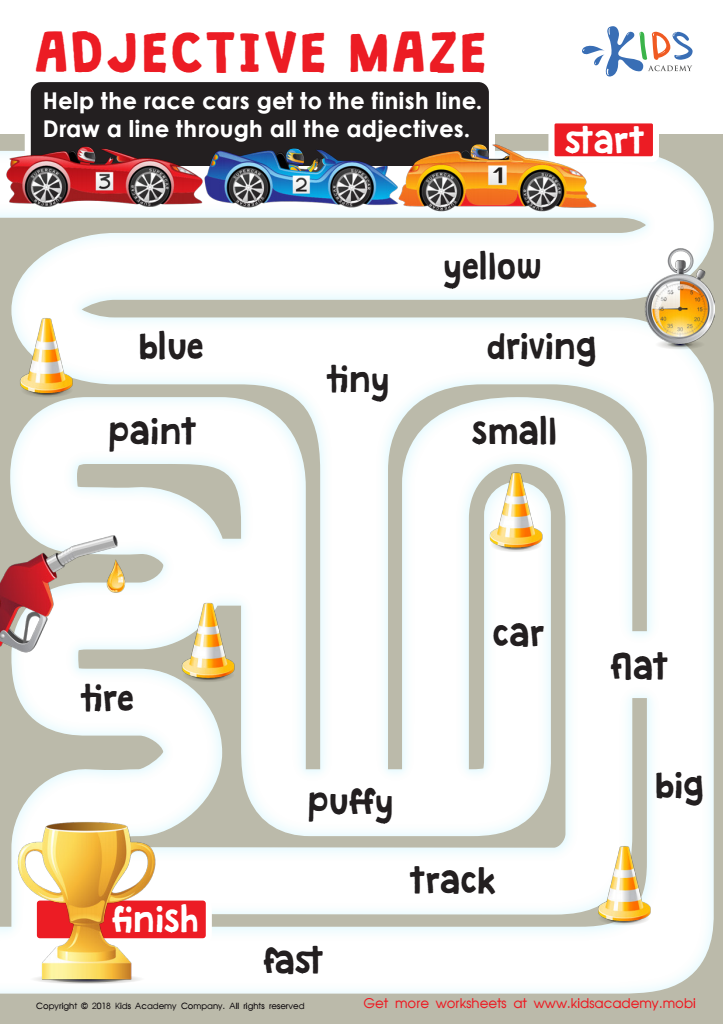
Adjective Maze Worksheet
 Assign to My Students
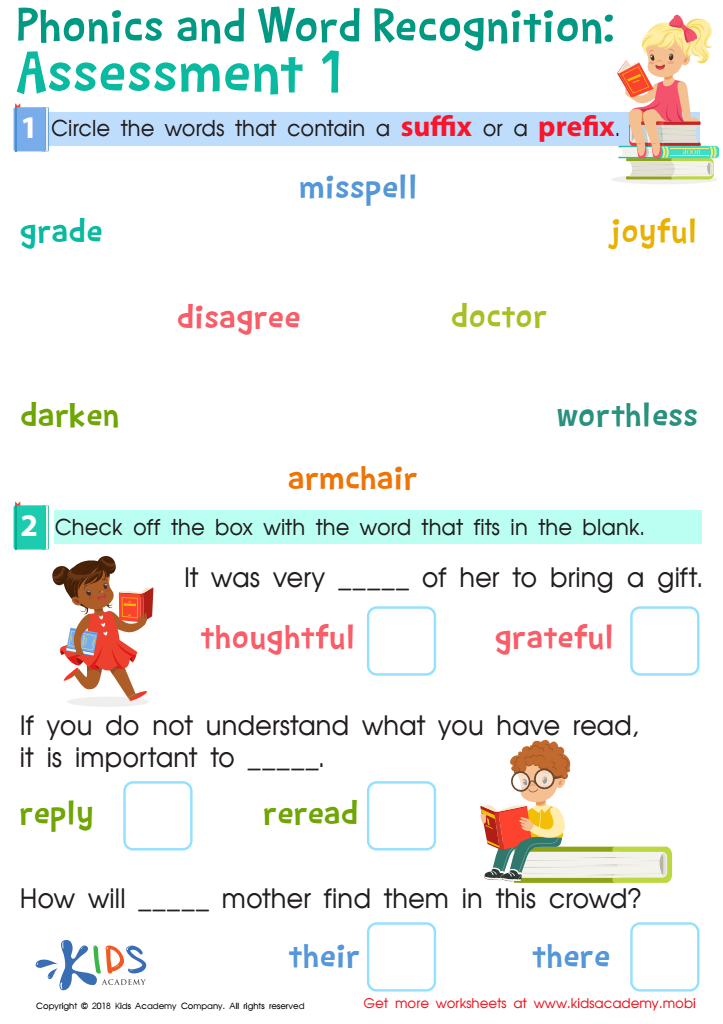
Phonics and Word Recognition: Assessment 1 Worksheet
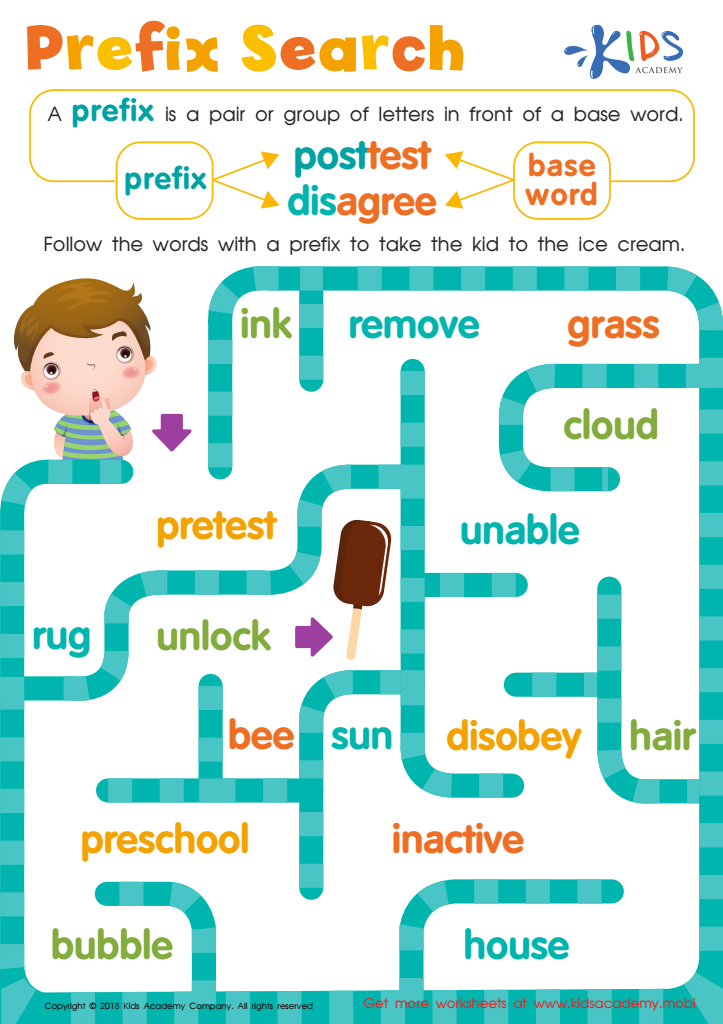
Reading: Prefix Search Worksheet
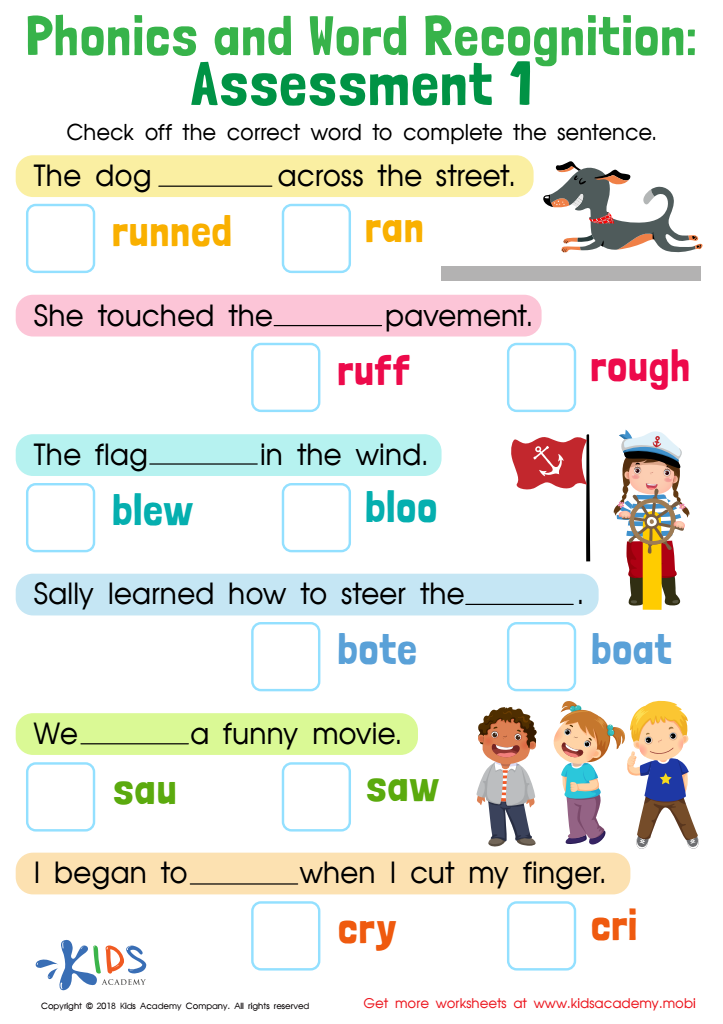
Phonics and Word Recognition: Assessment 1 Worksheet
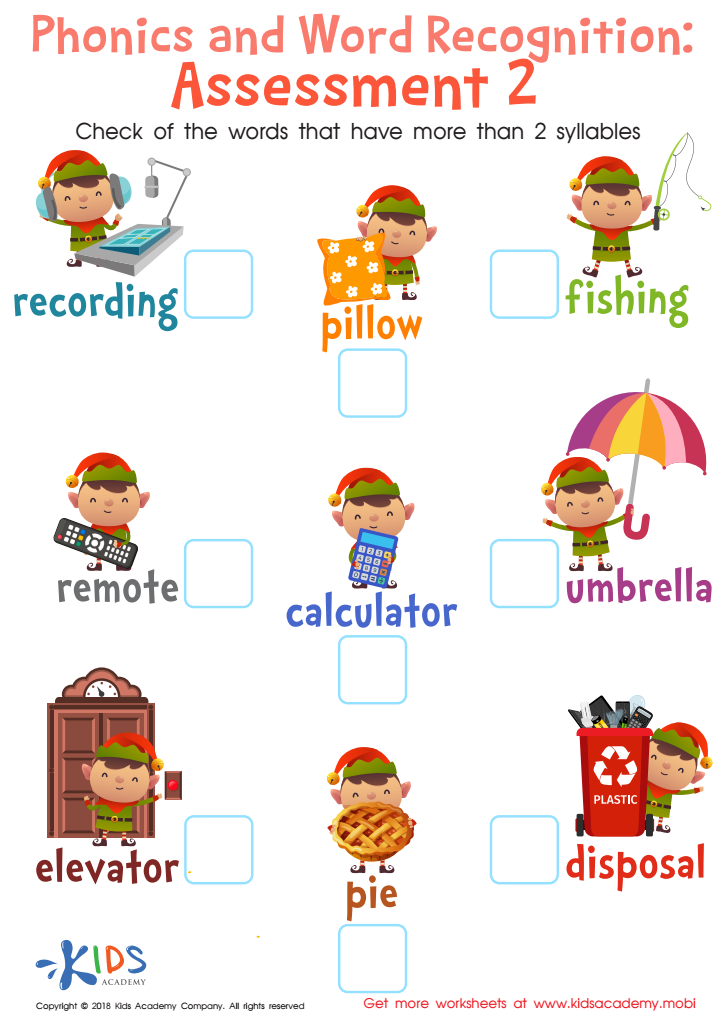
Phonics and Word Recognition: Assessment 2 Worksheet
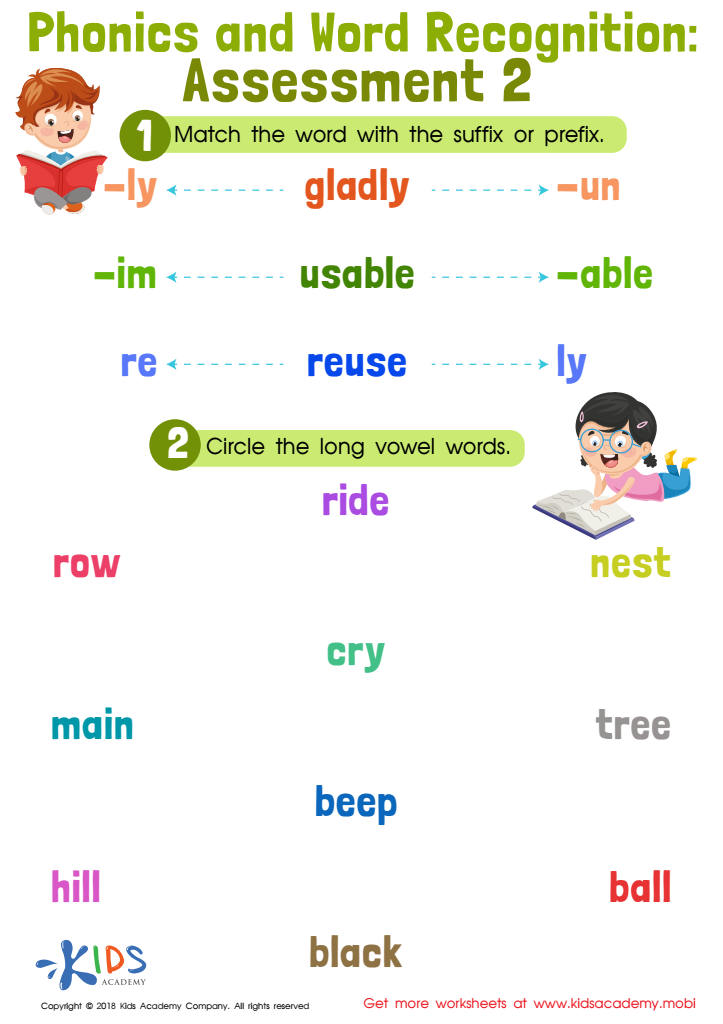
Phonics and Word Recognition: Assessment 2



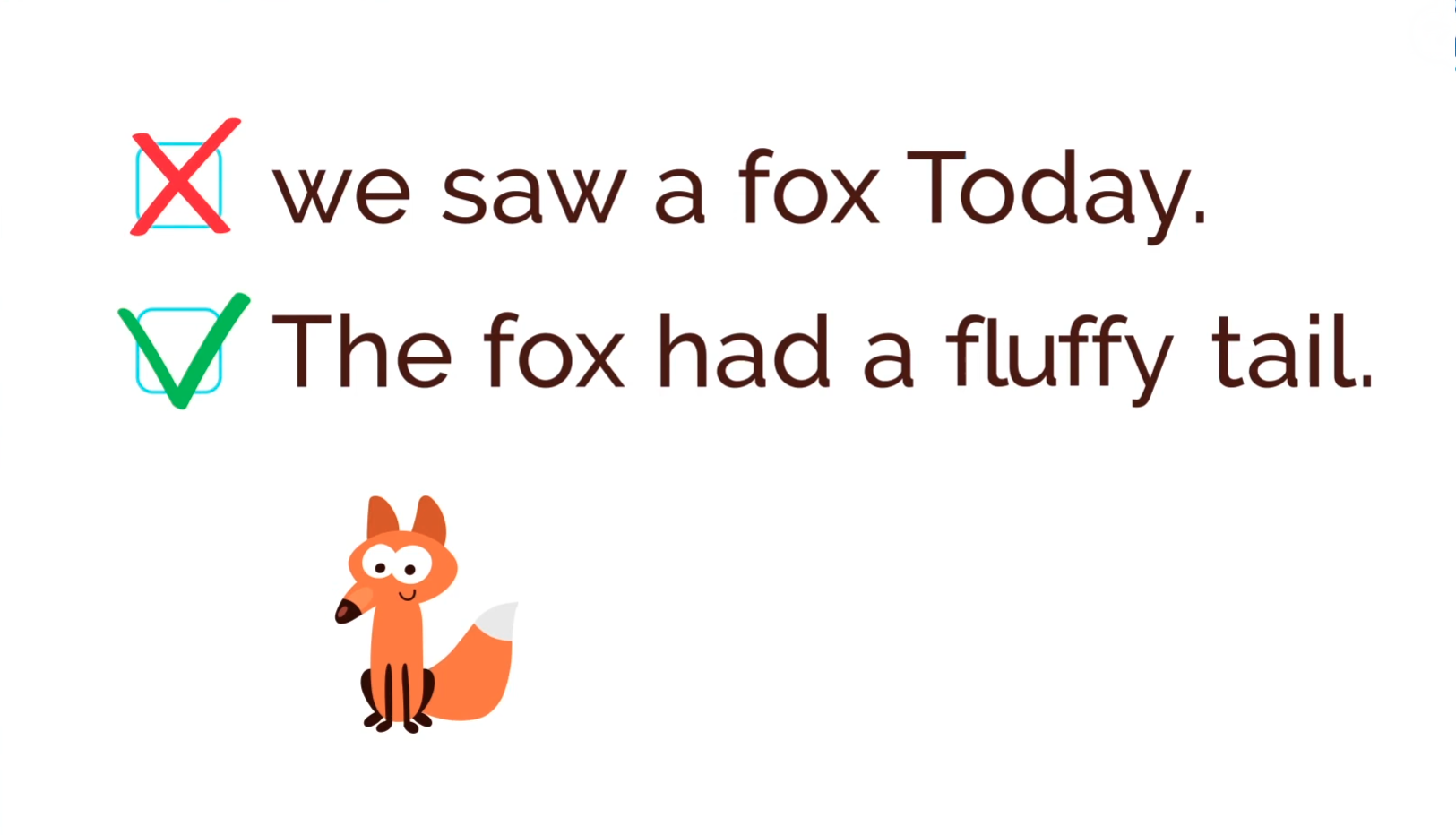
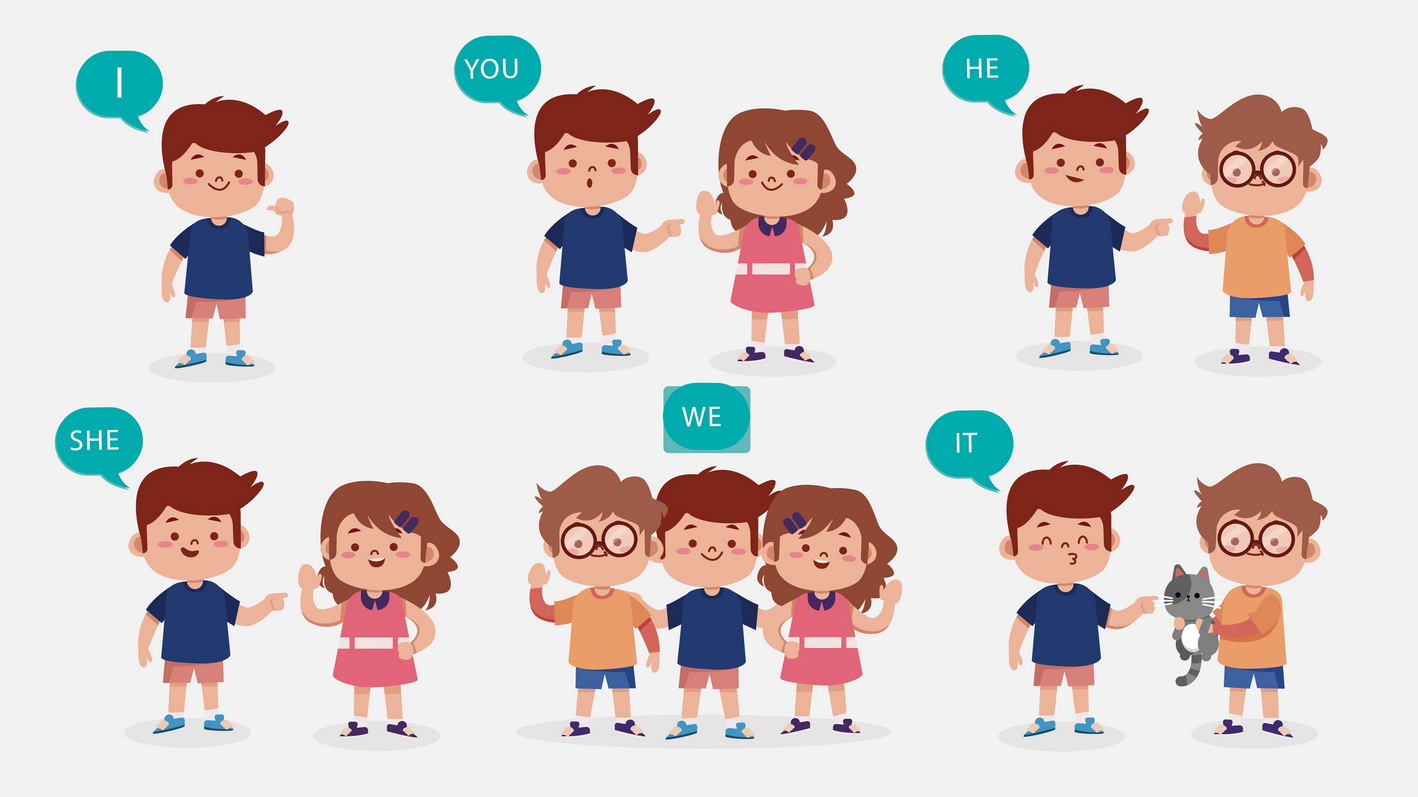


.jpg)
Word identification and grammar are crucial building blocks in the early stages of literacy for children aged 8-9. At this critical educational phase, children are transitioning from learning to read to reading to learn. Proficient word identification skills enable young learners to recognize and understand words rapidly, fostering reading fluency and comprehension. When students can decode and identify words effortlessly, they can pay more attention to understanding the content, which enhances their overall learning experience.
Grammar, on the other hand, allows children to grasp the structure and meaning of sentences, contributing to effective communication skills. A solid understanding of grammar helps students construct clear, coherent sentences and grasp more complex reading materials. Proper grammar usage also aids in writing skills, enabling children to express their thoughts accurately and creatively.
For parents and teachers, nurturing these skills means investing in a child's academic future. It ensures that students build a strong foundation that supports more advanced literacy skills, critical thinking, and academic success in later years. By prioritizing word identification and grammar at this formative age, educators and parents can significantly enhance a child's confidence and capacity for lifelong learning.








