Critical Thinking Writing Worksheets for Ages 8-9
4 filtered results
-
From - To
Unlock your child's potential with our specially designed "Critical Thinking Writing Worksheets for Ages 8-9." These engaging, age-appropriate worksheets from Kids Academy stimulate young minds by encouraging critical thinking through fun, hands-on writing tasks. Ideal for enhancing problem-solving skills, creativity, and independent thinking, they help children analyze situations, express ideas coherently, and create well-thought-out narratives. Perfect for both classroom and home use, our printable worksheets are great tools to advance your child's academic journey while keeping learning enjoyable and interactive. Give your child the advantage they deserve with Kids Academy's critical thinking resources.
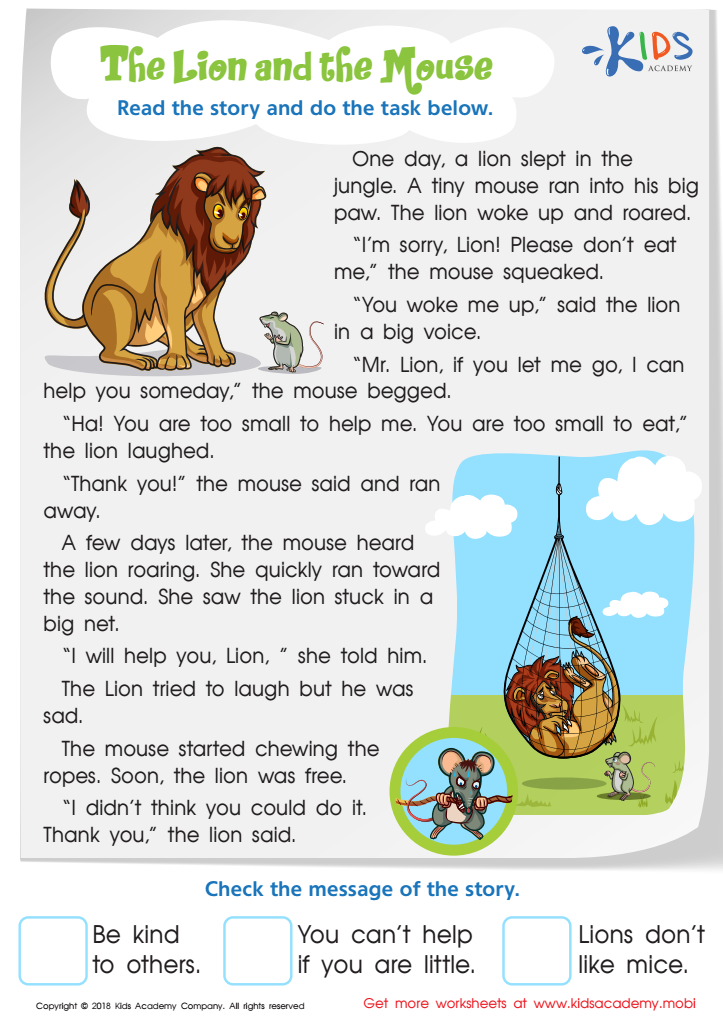
The Lion and the Mouse Worksheet
 Assign to My Students

Capitalization: Fix the Story Worksheet
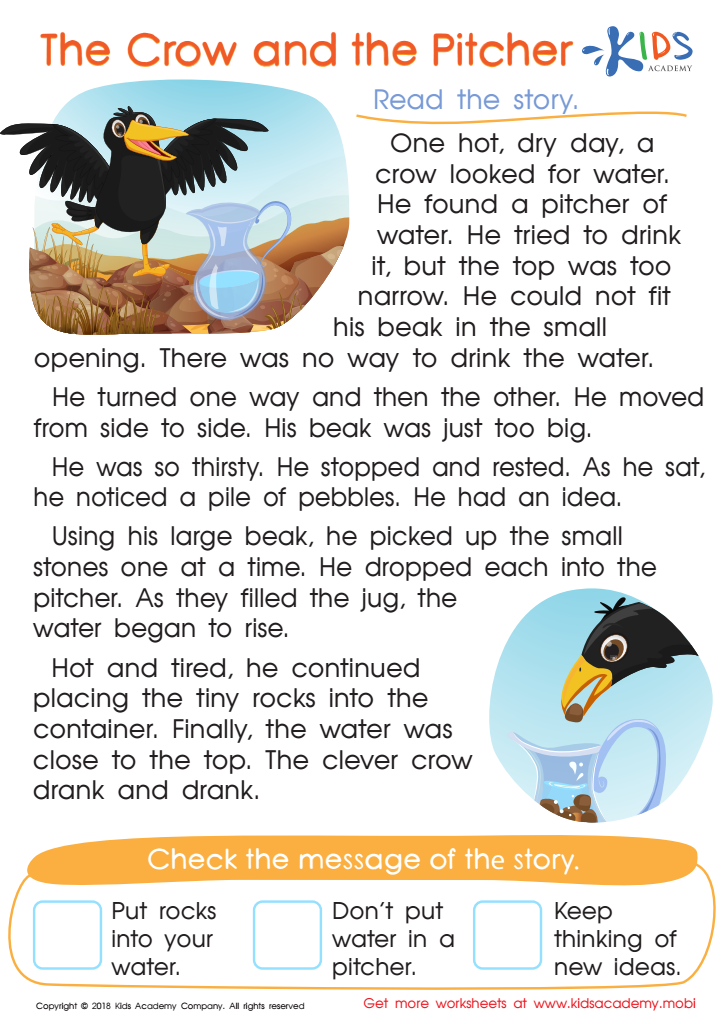
The Crow and the Pitcher Worksheet
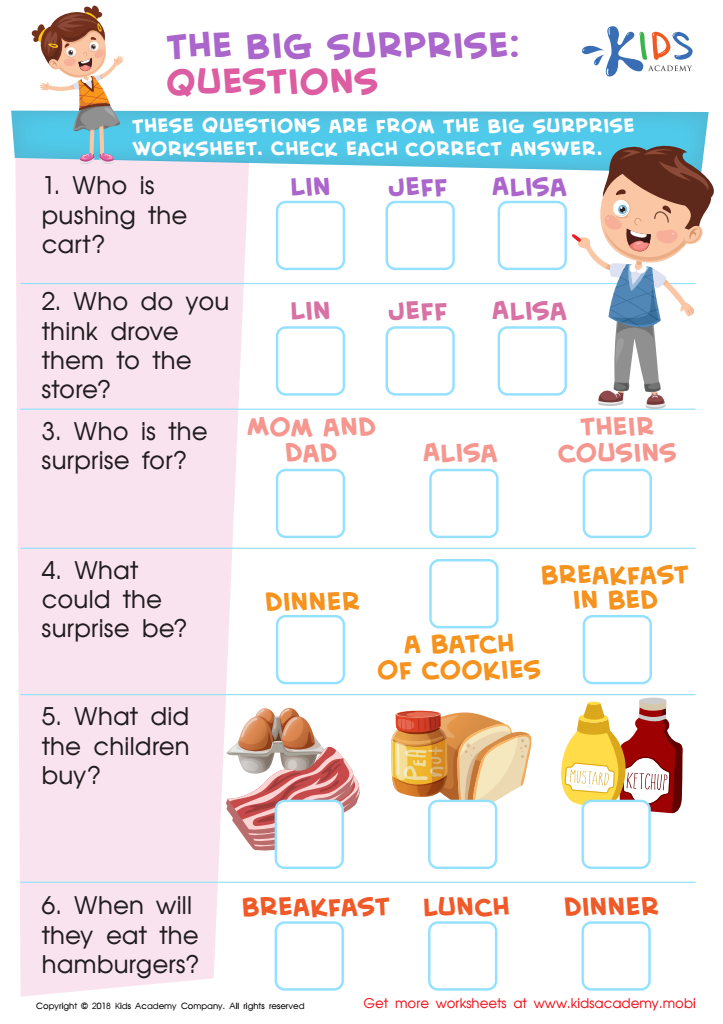
The Big Surprise: Questions Worksheet








Parents and teachers should prioritize critical thinking writing for children aged 8-9 because it lays the foundation for lifelong cognitive and analytical skills. During this developmental stage, children are adept at absorbing information, but equally important is their ability to question, analyze, and synthesize what they learn.
When children engage in critical thinking writing, they practice organizing their thoughts coherently and reasoning through problems, enhancing both their written and verbal communication skills. This work also nurtures creativity as children learn to approach topics from multiple perspectives. By encouraging evidence-based writing, where children support their ideas with facts, adults help young learners recognize the importance of substantiated opinions and build a framework for academic integrity.
Moreover, critical thinking writing fosters emotional resilience and confidence. When children express their thoughts and subsequently reflect on their writing, they gain a deeper understanding of their ideas and refine their viewpoints. This process can make them more empathetic and socially aware, improving interpersonal skills.
Ultimately, by prioritizing critical thinking writing at a young age, parents and teachers equip children with essential tools that not only enhance their academic performance but also their ability to navigate an increasingly complex world. Investing in these skills now ensures that they grow into well-rounded, thoughtful, and proactive individuals.








