
Alphabetical understanding Worksheets for 8-Year-Olds
3 filtered results
Difficulty Level
Grade
Age
-
From - To
Subject
Activity
Standards
Enhance your 8-year-old's alphabetical skills with our engaging worksheets designed to boost their understanding of the alphabet. Our resources focus on key concepts such as letter recognition, alphabetical order, and phonetic awareness. Each worksheet provides fun activities, including sorting letters, filling in the blanks, and matching, all tailored to foster learning through play. These worksheets aim to improve vocabulary and reading readiness by making alphabetical learning enjoyable. Perfect for homeschoolers and classroom use, they empower children to navigate letters confidently. Start supporting your child's literacy journey today with our creative and educational alphabetical understanding worksheets!
Favorites
With answer key
Interactive
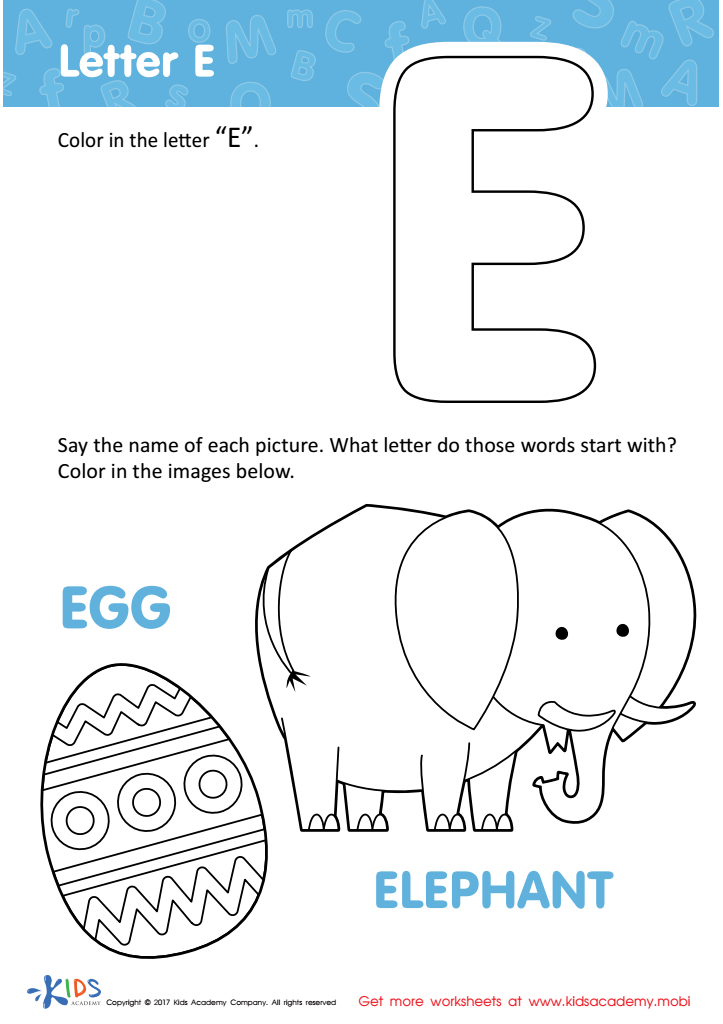
Letter E Coloring Sheet
Coloring pages are great for teaching kids the alphabet and words! This "E" page features a cute elephant and Easter egg. Kids will love it and learn the letter "E" at the same time. 80 words
Download (PDF)
 Assign to My Students
Assign to My Students
Letter E Coloring Sheet
Worksheet
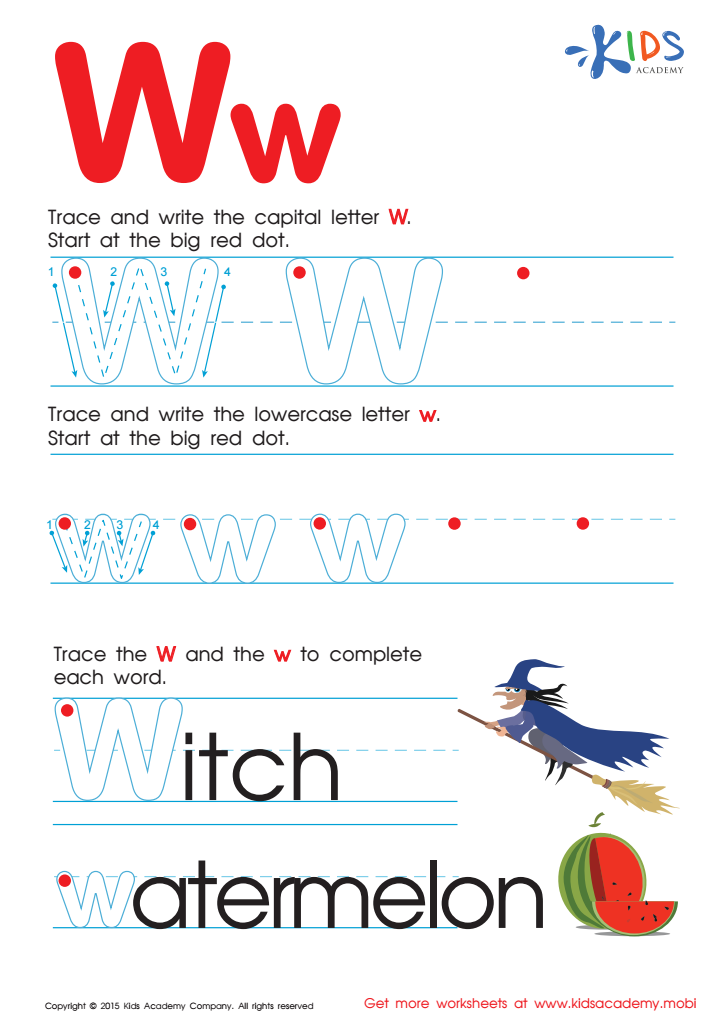
Letter W Tracing Page
Trace and write the capital and lowercase letter W with this free letter tracing worksheet by Kids Academy. Complete the words "Witch" (capital) and "watermelon" (lowercase). Check out our other kindergarten alphabet worksheets!
Letter W Tracing Page
Worksheet
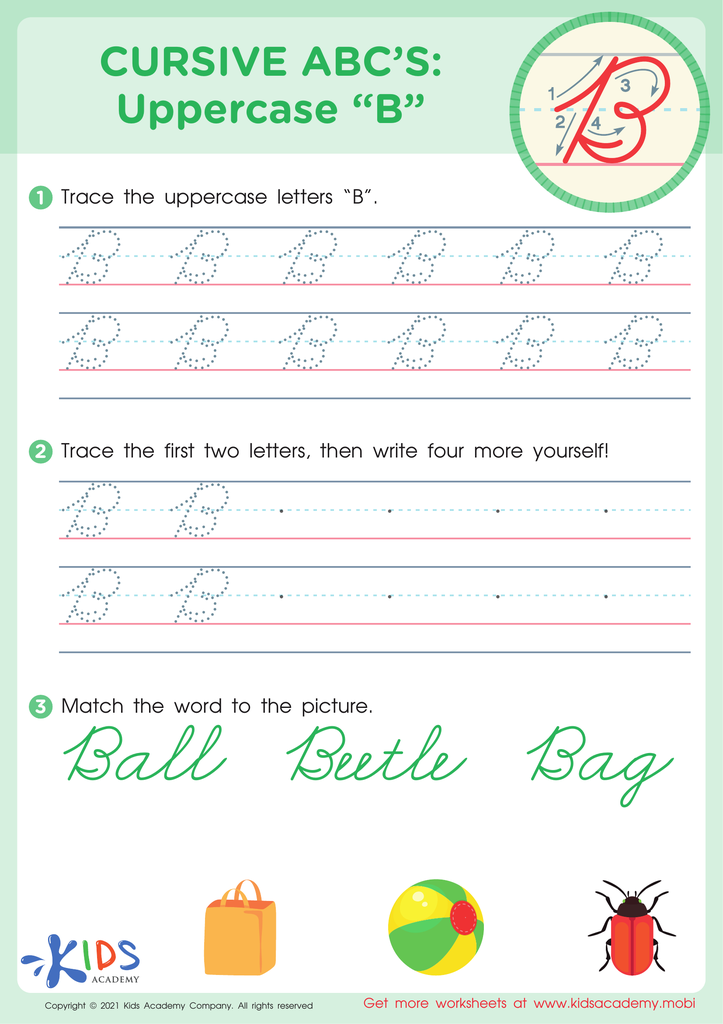
Cursive ABCs: Uppercase B
Help your kids learn the alphabet: have them identify, give examples and sound out letters, then use tracing worksheets to perfect cursive uppercase writing. Show them how to trace the letter ‘B’, then watch them write it on their own. This will give them the skills needed for further writing!
Cursive ABCs: Uppercase B
Worksheet
Join Kids Academy for Free
Who is primarily going to use this learning content?






Alphabetical understanding is crucial for 8-year-olds as it lays the foundation for reading and writing skills essential for academic success. At this age, children are transitioning from learning to read to reading to learn, making letter recognition and phonemic awareness pivotal. Understanding the alphabet helps children decode words, which improves their reading fluency and comprehension.
Moreover, a strong grasp of the alphabet enhances spelling abilities, empowering children to express their thoughts more effectively. With a good command of the alphabet, kids can also engage with a broader range of literature, cultivating a love for reading that can last a lifetime. This love for reading fosters curiosity and a desire for lifelong learning.
Additionally, as children interact with the world around them, understanding the alphabetical order aids in organizing information, navigating books, and utilizing resources like dictionaries and encyclopedias. Parents and teachers who prioritize alphabetical understanding create a supportive environment that encourages language development and critical thinking skills. Ultimately, this foundational knowledge is not just about literacy; it's a vital aspect of cognitive development that equips children to succeed in school and beyond. Engaging with the alphabet gives children the tools to understand and navigate their world more effectively.








