Check out this FREE "Basic Addition" Trial Lesson for age 8!

Bar Graphs

Favorites
With answer key
Interactive
  • 8
  • Basic Addition
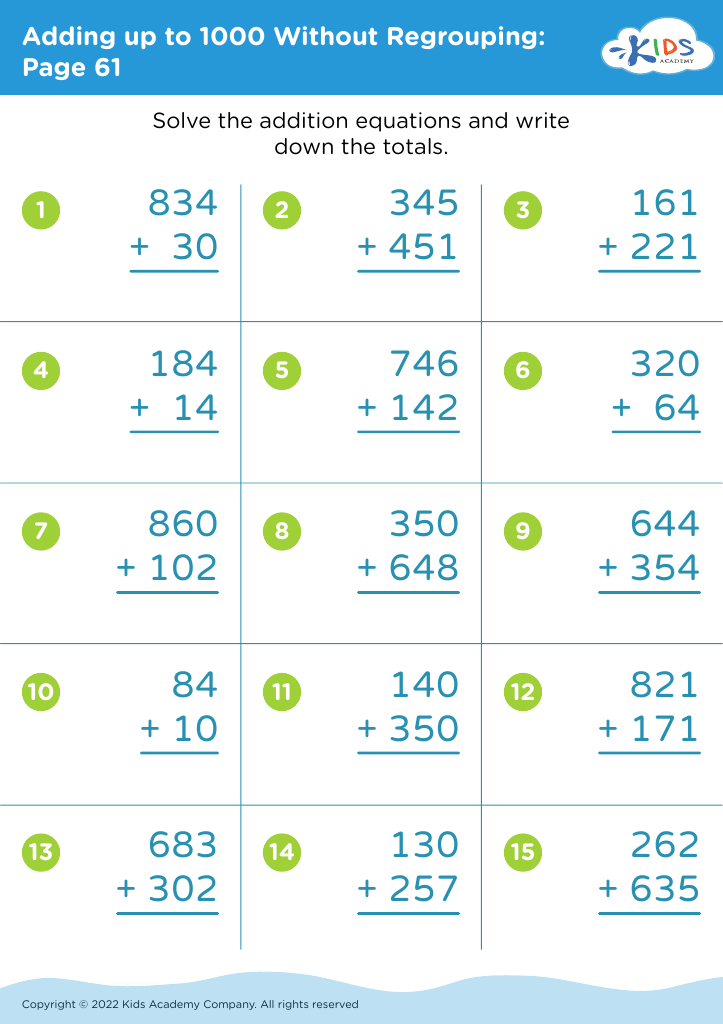
Adding up to 1000 Without Regrouping: Page 61
Worksheet
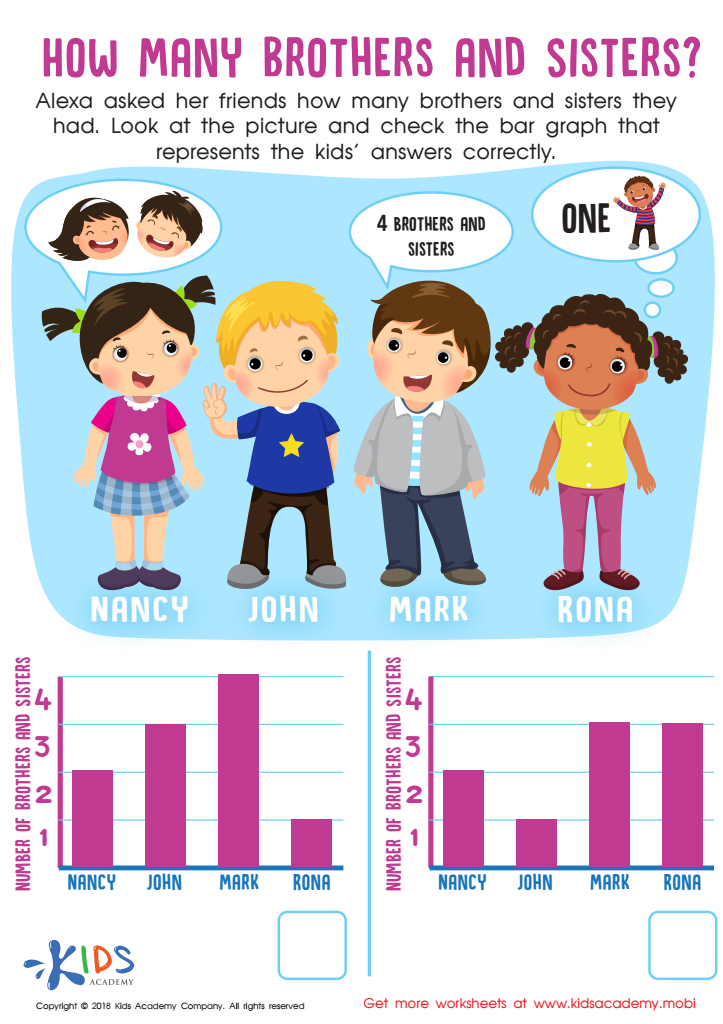
How Many Brothers and Sisters? Worksheet

How Many Brothers and Sisters? Worksheet

With this worksheet, Alexa has asked her friends how many siblings they have. Have your child look at the picture and use it to answer the bar graph correctly. Can they tell you how many siblings their friends have? See if they can get it right!
How Many Brothers and Sisters? Worksheet
Worksheet
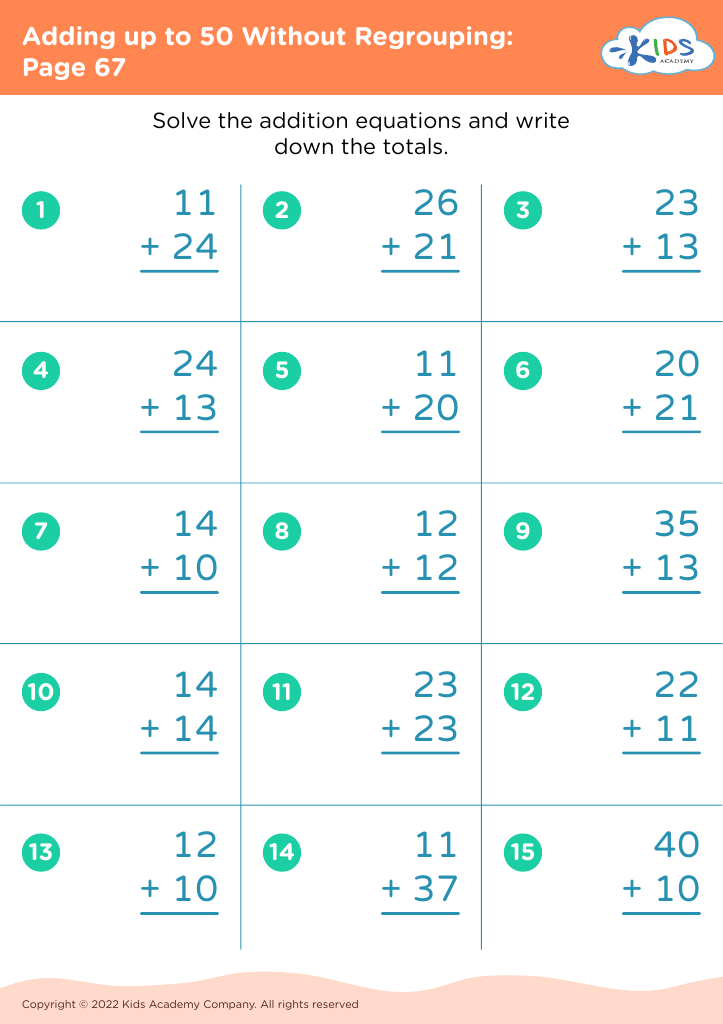
Adding up to 50 Without Regrouping: Page 67
Worksheet
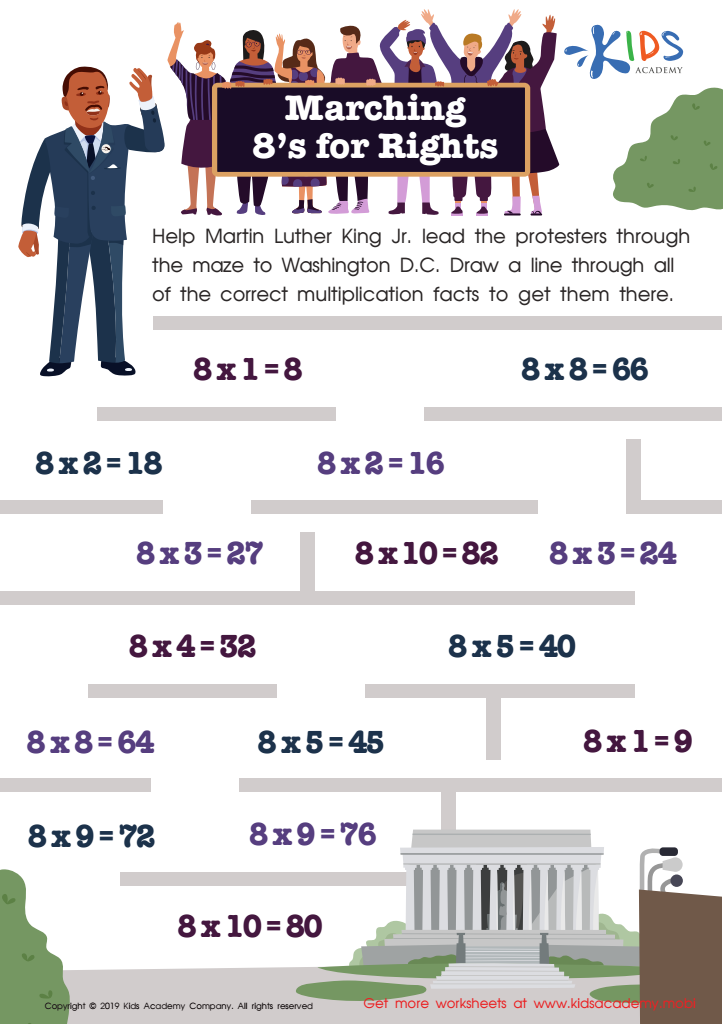
Marching 8’s for Rights Worksheet

Marching 8’s for Rights Worksheet

Encourage your students to explore MLK's history! This worksheet provides the perfect opportunity. Help them understand his contributions by having them "march" MLK from the starting point to Washington D.C. Have them draw a line through the correct multiplication facts to get there. It's an enjoyable way for kindergartners to learn about a key part of history.
Marching 8’s for Rights Worksheet
Worksheet
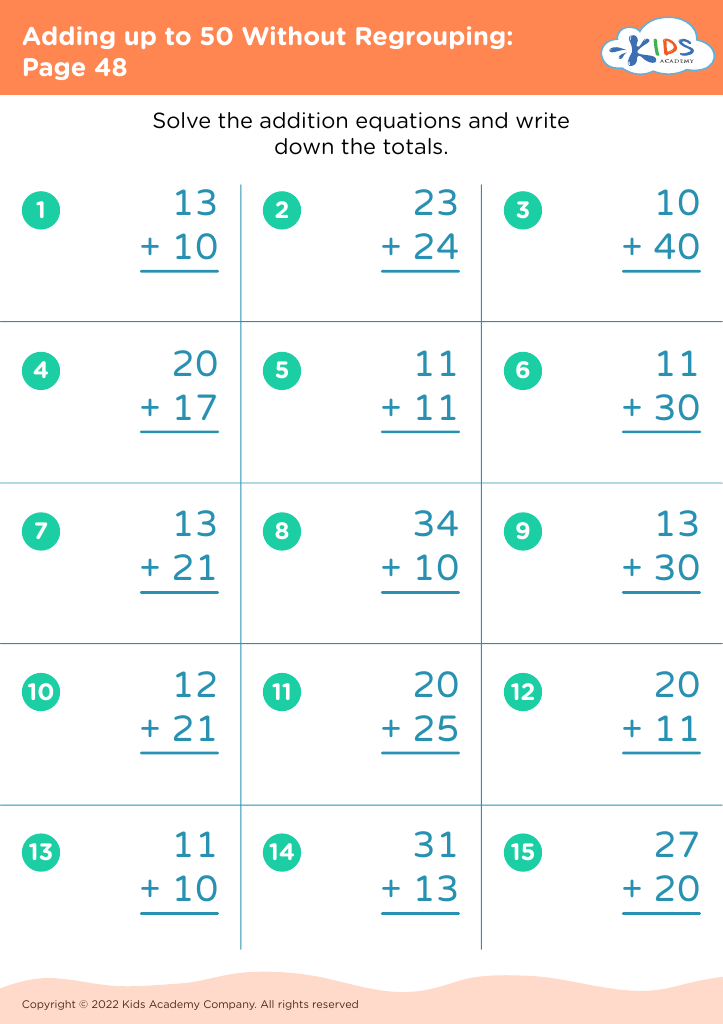
Adding up to 50 Without Regrouping: Page 48
Worksheet
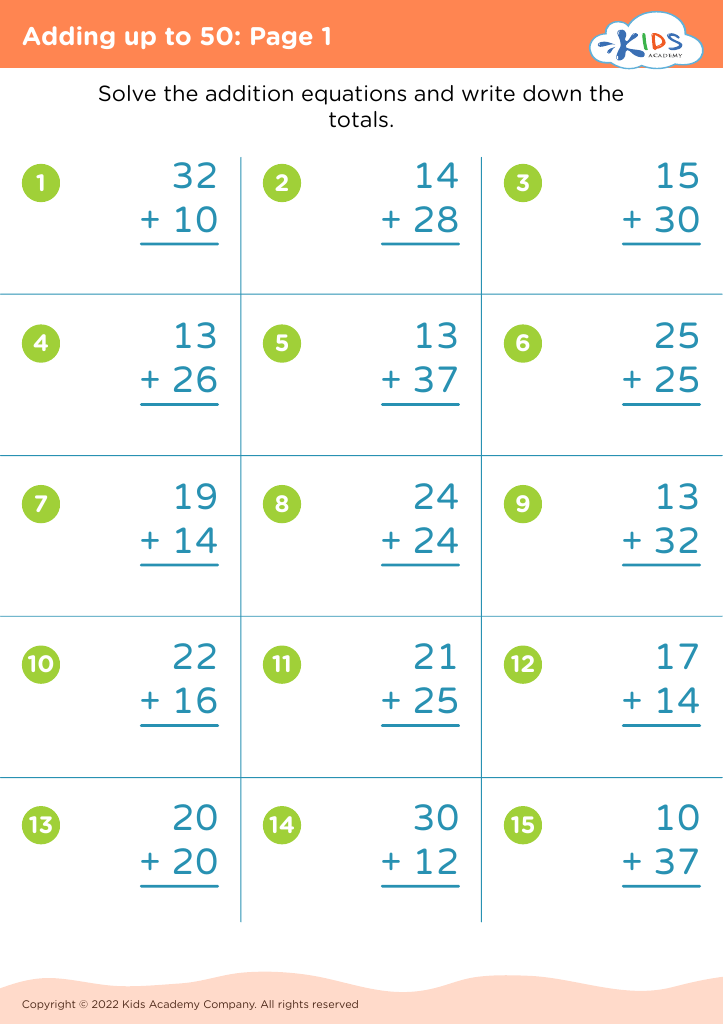
Adding up to 50: Page 1

Adding up to 50: Page 1

Adding up to 50: Page 1
Worksheet
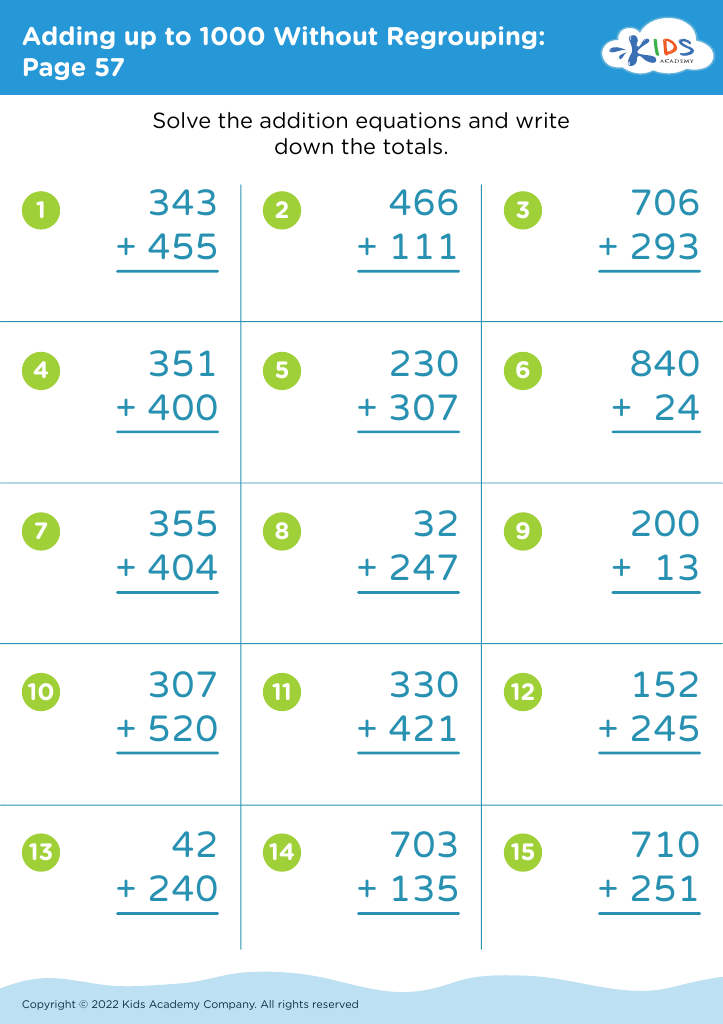
Adding up to 1000 Without Regrouping: Page 57
Worksheet
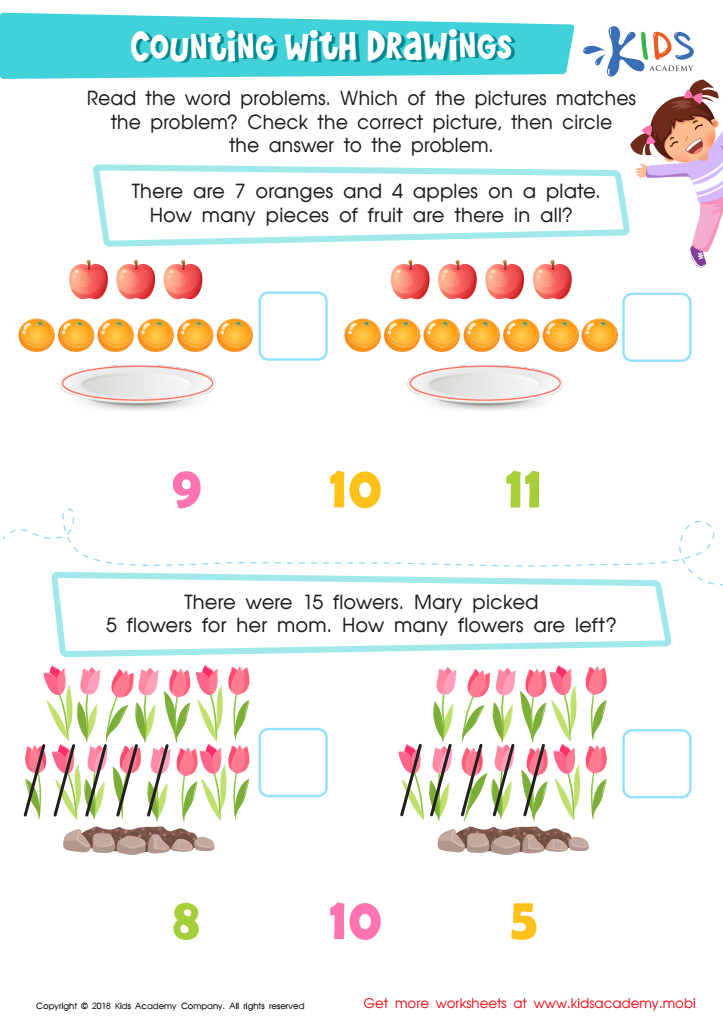
Counting with Drawings:Fruits & Flowers Worksheet

Counting with Drawings:Fruits & Flowers Worksheet

At Kids Academy, we know pictures make math come alive and make sense. This worksheet is perfect for early learners to practice word problems. Kids read each problem and count the images that represent the numbers, then solve the problem with addition or subtraction to get the right answer.
Counting with Drawings:Fruits & Flowers Worksheet
Worksheet
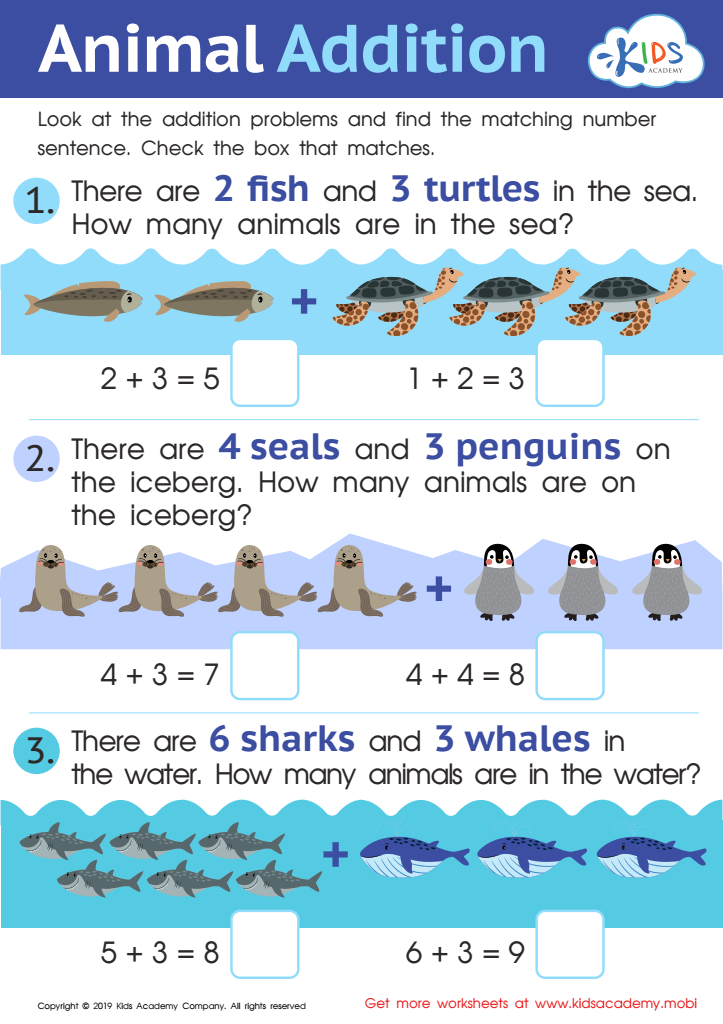
Animal Addition Worksheet


Animal Addition Worksheet
Get your kids learning addition and subtraction with this fun worksheet! Show them that solving equations can be enjoyable and help them match number sentences to the correct boxes. By doing this together, you'll create a positive learning experience that your kids won't forget.
Animal Addition Worksheet
Worksheet
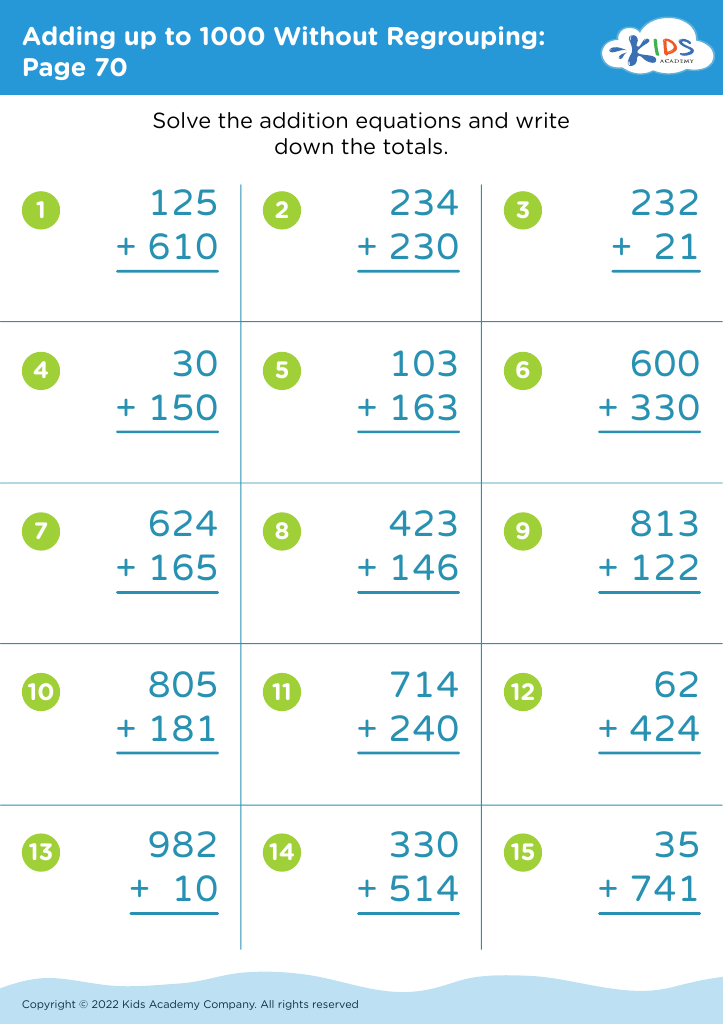
Adding up to 1000 Without Regrouping: Page 70
Worksheet
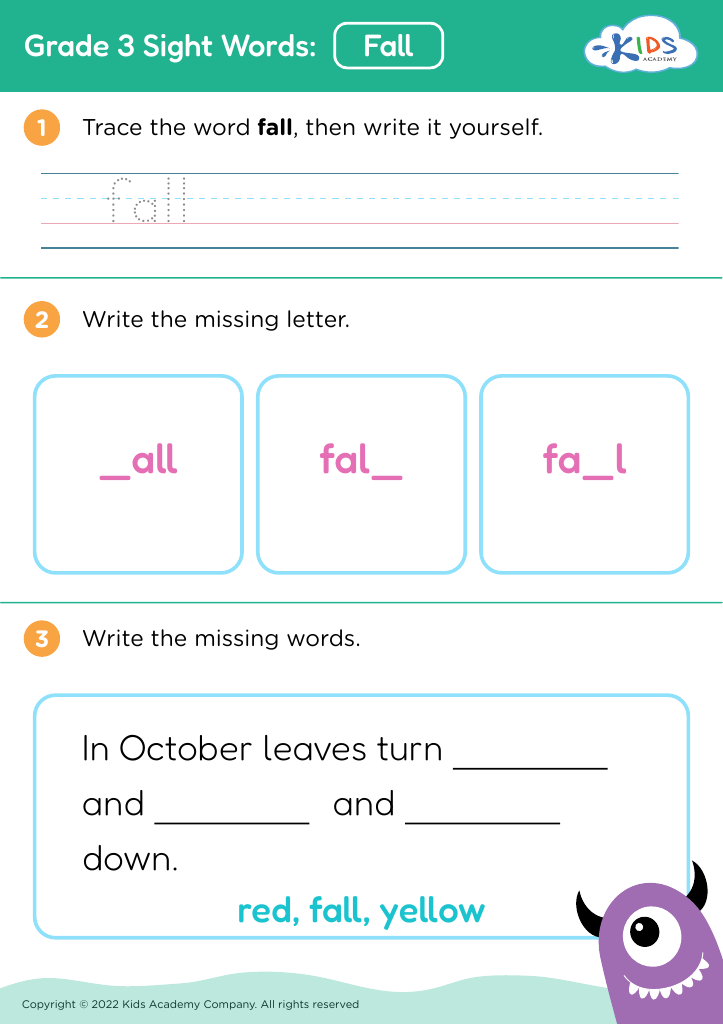
Grade 3 Sight Words: Fall

Grade 3 Sight Words: Fall

Grade 3 Sight Words: Fall
Worksheet


Understanding basic addition is crucial for 8-year-olds because it serves as the foundation for their future mathematical learning and cognitive development. At this age, children enter a stage where they can grasp more abstract concepts, and a solid grasp of addition lays the groundwork for more advanced mathematical operations like subtraction, multiplication, and division.

Basic addition helps develop problem-solving skills, logical thinking, and the ability to break down complex tasks into simpler steps. These skills are not only essential for math but are also transferable to other areas of learning and daily life. For example, when children understand addition, they can better manage real-world scenarios, such as counting change, telling time, or dividing tasks evenly among friends.

Moreover, achieving proficiency in basic addition boosts children’s confidence and fosters a positive attitude toward mathematics. This, in turn, can curb math anxiety and encourage a proactive approach to learning new concepts. Early proficiency in math can also open doors to later opportunities in STEM (Science, Technology, Engineering, and Mathematics) fields, which are increasingly important in today's job market.

Ultimately, by prioritizing basic addition at this critical stage, parents and teachers equip children with essential tools that facilitate academic success and practical life skills, fostering a holistic environment for their growth and development.