Building vocabulary Worksheets for 8-Year-Olds
3 filtered results
-
From - To
Enhance your 8-year-old’s language skills with our engaging Building Vocabulary Worksheets! Designed specifically for young learners, these worksheets provide fun and interactive activities that promote word recognition, comprehension, and usage. From matching words to pictures to fill-in-the-blank exercises, your child will enjoy expanding their vocabulary in a creative way. Ideal for classroom use or home study, these worksheets cater to various learning styles, ensuring every child can thrive. Encourage a love of language and bolster confidence in communication skills while your child explores new words. Discover the perfect resources to support your child’s educational journey today!
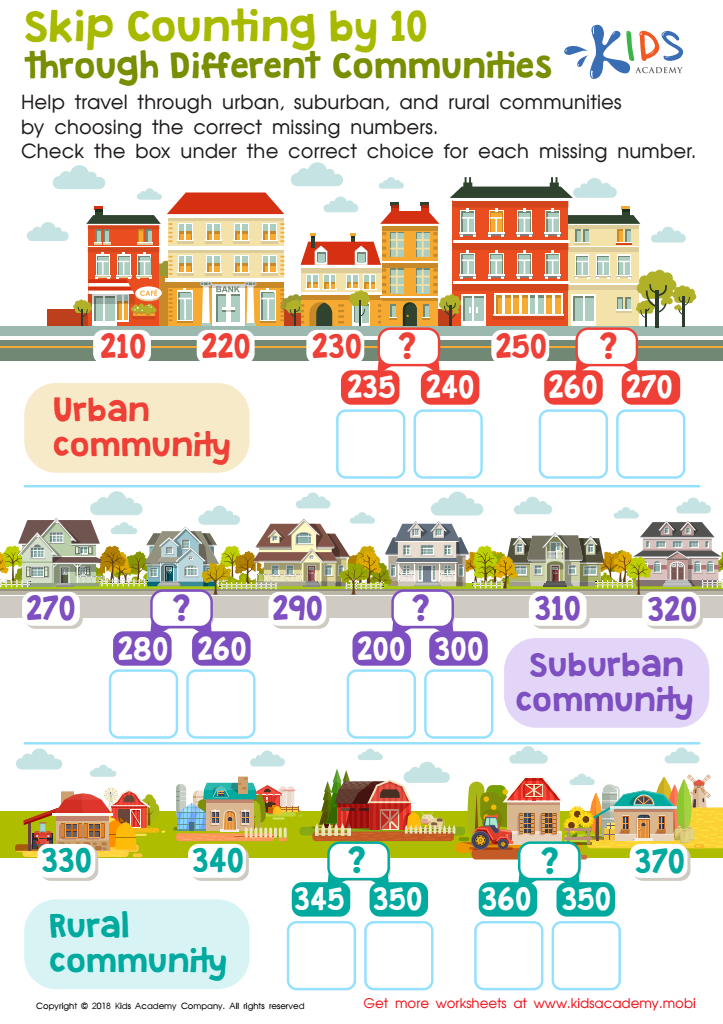
Skip Counting by 10 through Different Communities Worksheet
 Assign to My Students








Building vocabulary for 8-year-olds is crucial for several reasons. At this age, children are honing their language skills and beginning to engage more deeply with reading and writing. A robust vocabulary enhances their ability to understand and communicate complex ideas, which is essential for academic success. When children have a rich vocabulary, they are better equipped to comprehend what they read, participate in discussions, and express themselves clearly. This skill not only influences their performance in school but also shapes their self-esteem and confidence in social interactions.
Moreover, a strong vocabulary lays the foundation for future learning. It supports school subjects that require critical thinking and comprehension, such as science and mathematics, where specific terminology is essential. Teachers and parents can foster vocabulary growth by providing diverse reading materials, engaging in conversations, and encouraging children to explore new words and their meanings.
Additionally, vocabulary development at such a formative stage helps children become lifelong learners and effective communicators. By caring about and actively supporting vocabulary building, parents and teachers contribute to their overall intellectual and emotional development, setting the stage for a successful and enriched educational journey.








