Comparing shapes Worksheets for 8-Year-Olds
4 filtered results
-
From - To
Explore our engaging "Comparing Shapes Worksheets for 8-Year-Olds," designed to enhance your child's understanding of geometric shapes and their properties. These fun, interactive worksheets encourage kids to recognize, sort, and compare different shapes, fostering early math skills with a hands-on approach. Each activity challenges learners to identify similarities and differences among shapes, improving critical thinking and problem-solving abilities. Perfect for classroom use or at-home practice, these worksheets align with educational standards, ensuring your child develops a solid foundation in geometry. Nurture your child's budding math skills today with our vibrant and supportive learning resources!
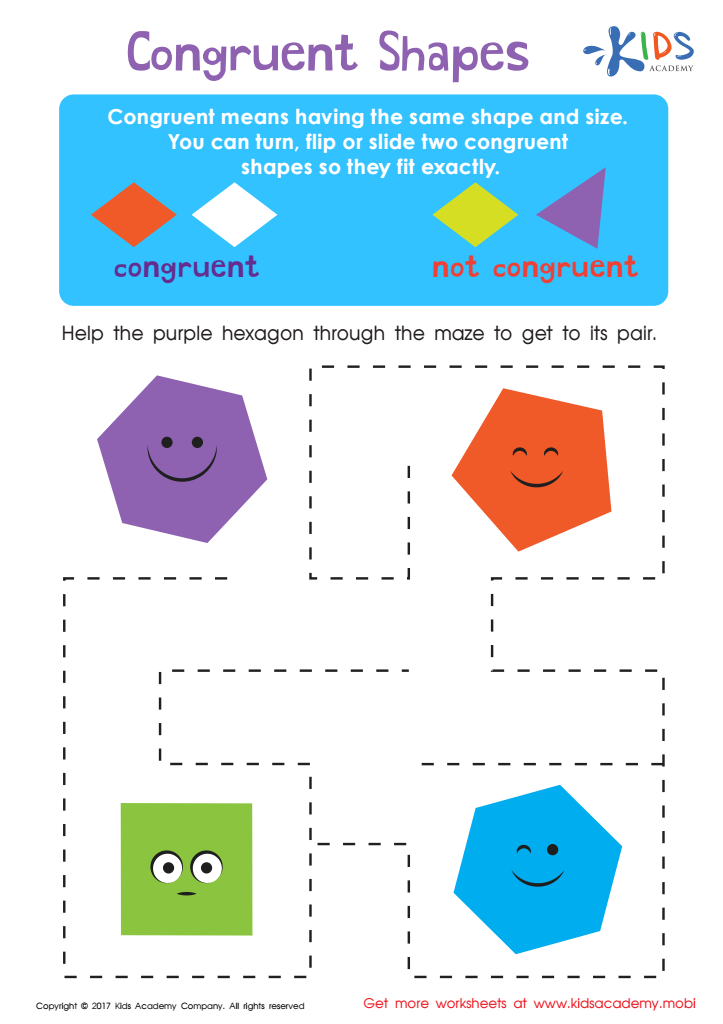
Congruent Shapes Worksheet
 Assign to My Students
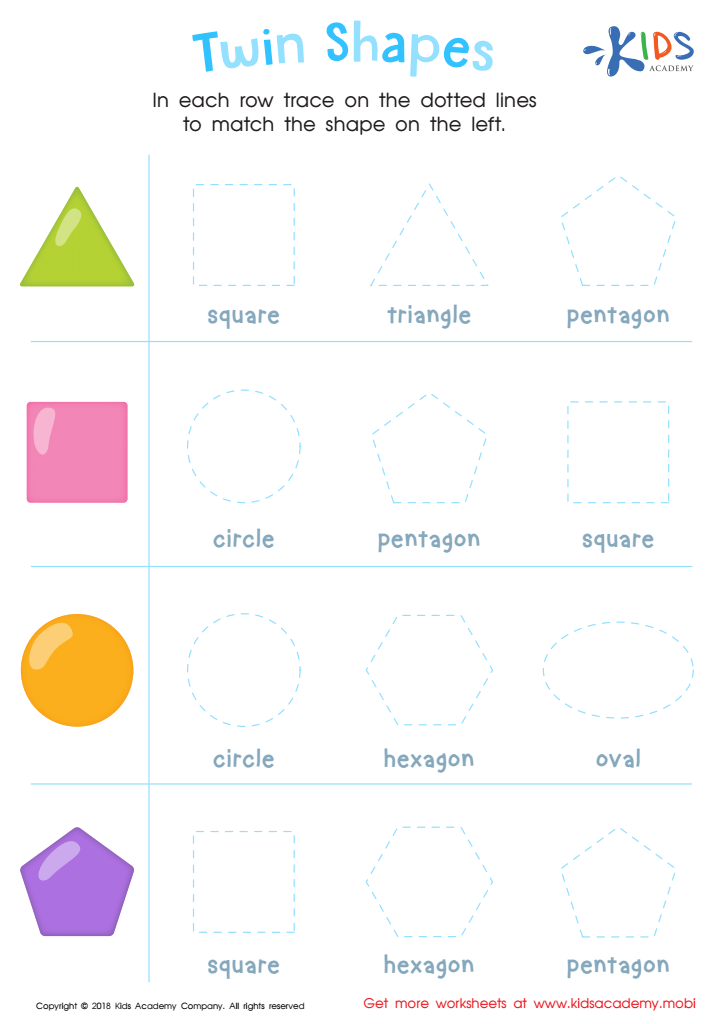
Twin Shapes Dot-to-Dot Worksheet


.jpg)



Parents and teachers should prioritize learning about comparing shapes for 8-year-olds because this foundational skill is crucial for various aspects of a child's development. At this age, children are beginning to refine their understanding of geometry and spatial reasoning, which are essential for overall mathematical proficiency. By learning to compare shapes, children enhance their ability to identify similarities and differences, promoting critical thinking and analytical skills.
Additionally, shape comparison helps in developing vocabulary and comprehension. When children describe and categorize shapes, they expand their language skills and learn to articulate mathematical concepts clearly. This knowledge is not only applicable in mathematics but also transcends into daily life, as children utilize geometric understanding in activities like art, construction, and even understanding natural phenomena.
Moreover, encouraging an interest in shapes can foster a sense of curiosity and creativity. Integrating shape comparison into everyday activities, such as cooking or playing with building blocks, makes learning engaging and relatable. Overall, comparing shapes equips 8-year-olds with essential skills that form the basis for future learning in mathematics, science, and problem-solving, harnessing a positive mindset towards learning while boosting cognitive development.








