Comparing sizes Worksheets for 8-Year-Olds
3 filtered results
-
From - To
Explore our engaging "Comparing Sizes Worksheets" designed specifically for 8-year-olds! These interactive worksheets promote essential mathematical skills by helping young learners identify, compare, and classify sizes effectively. Each activity encourages critical thinking as children assess various objects and numbers while enhancing their understanding of comparative language, such as "bigger," "smaller," "longer," and "shorter." Tailored to suit diverse learning styles, our colorful and visually appealing worksheets make learning fun and enjoyable. Perfect for classroom use or homeschooling, these resources will empower your child to master size comparison confidently. Unlock their potential with activities that boost cognitive development and foster a love for math!
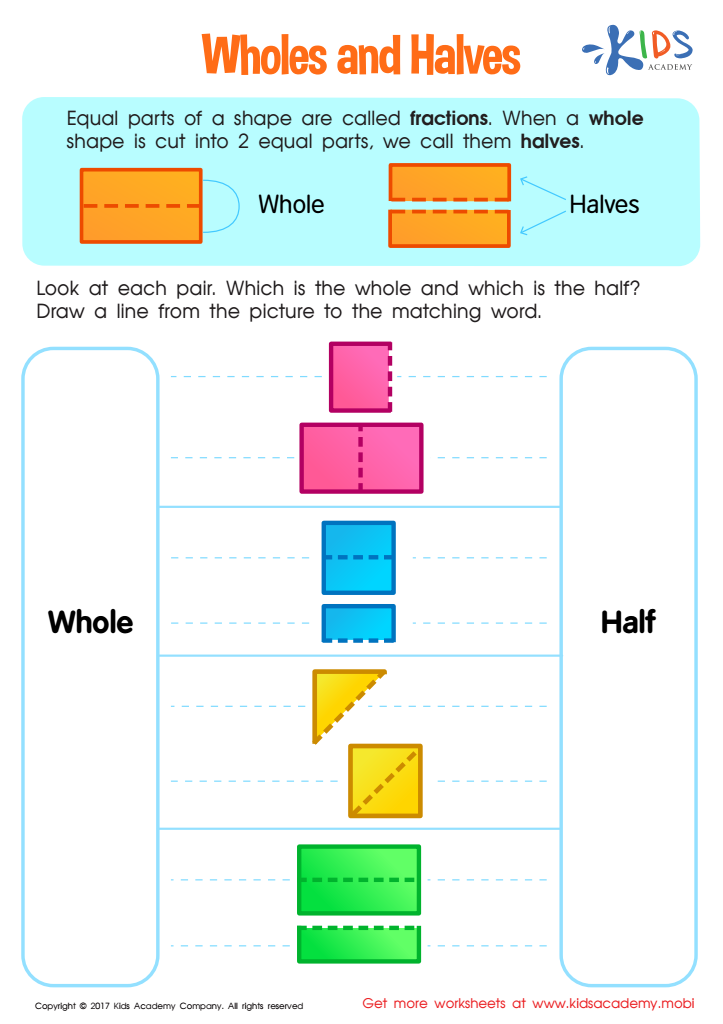
Wholes and Halves Worksheet
 Assign to My Students
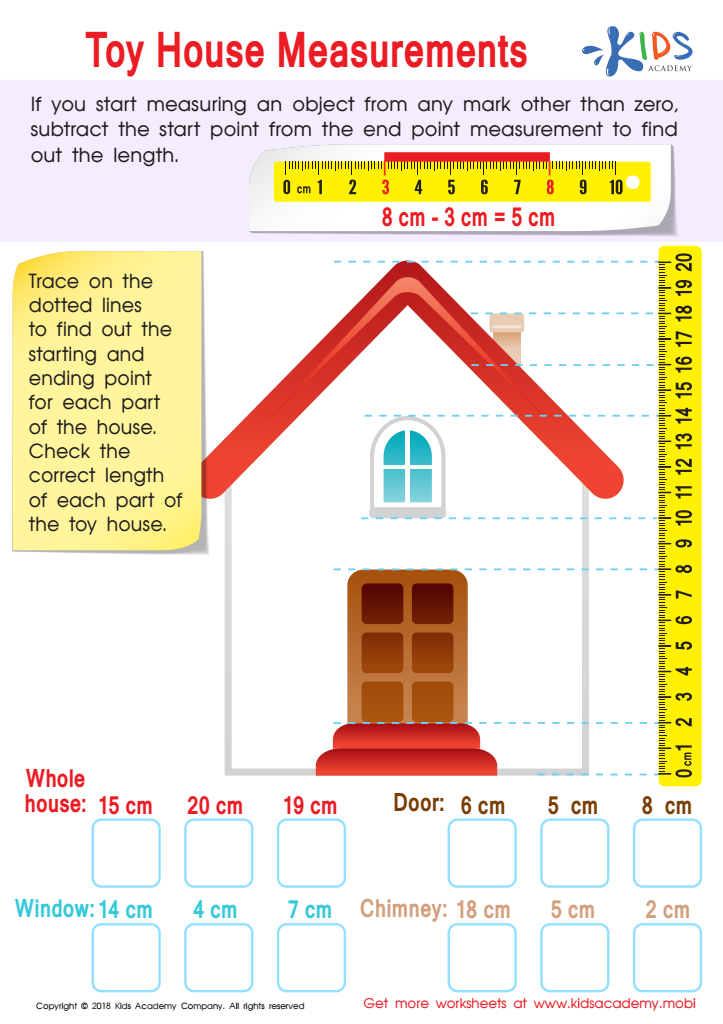
Toy House Measurements Worksheet






Comparing sizes is a fundamental skill that plays a crucial role in the cognitive and physical development of 8-year-olds. This concept, firmly rooted in mathematical understanding, helps children grasp relationships and distinctions between different objects, enhancing their observational and critical thinking abilities.
By engaging in size comparison activities, children sharpen their ability to categorize and sort, skills vital for their overall learning progression. It lays the groundwork for understanding measurements and fosters logical reasoning—skills that they will utilize throughout their education and daily life. Additionally, comparing sizes encourages spatial awareness, contributing to their ability to interact with the world effectively.
For parents and teachers, nurturing this skill fosters deeper engagement and curiosity in children. It provides a relatable way to incorporate math into everyday life, making learning more enjoyable. Activities centered around comparison, such as measuring objects or sorting by size, can be fun and hands-on. Furthermore, this skill builds a foundation for more complex mathematical concepts, such as fractions and geometry, ensuring a smoother academic journey. In essence, prioritizing size comparison can enrich a child’s learning experience, making it not only educational but also enjoyable and inherently relevant.








