Filters

86 filtered results

Clear all filters
Favorites
With answer key
Interactive

86 filtered results

Difficulty Level

Grade


Check out this FREE "Counting practice" Trial Lesson for age 8!

Understanding Place Value - Hundreds Only

Favorites
With answer key
Interactive
  • 8
  • Counting practice
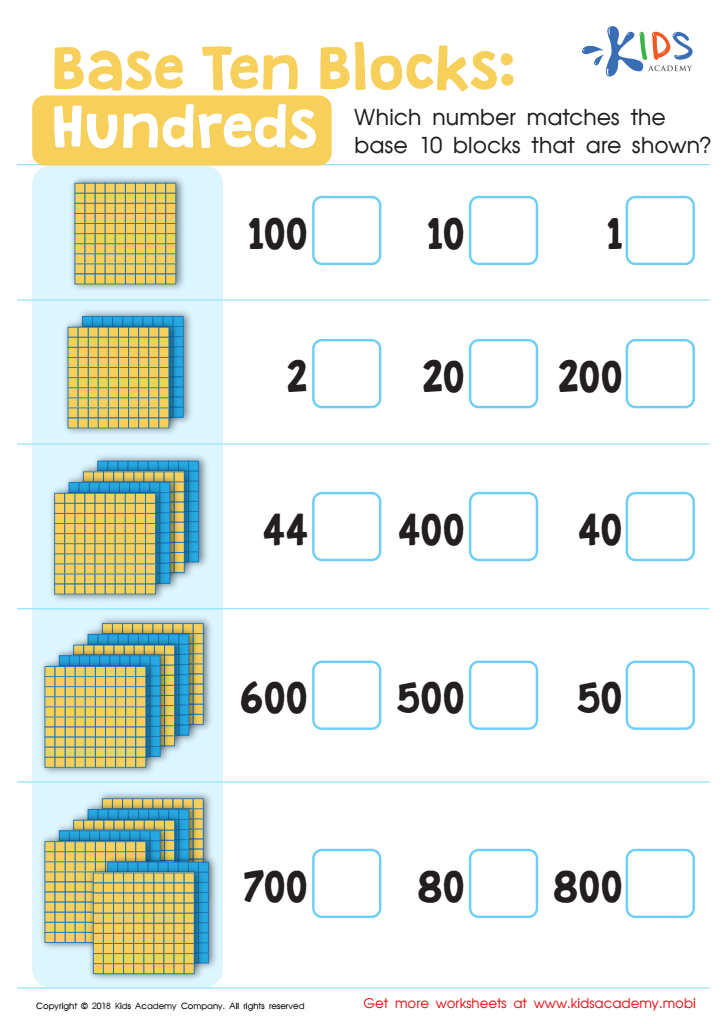
Base Ten Blocks: Hundreds Worksheet

Base Ten Blocks: Hundreds Worksheet

Help your child overcome their dislike of math by guiding them with this base ten blocks worksheet. Count the blocks and answer the questions together. Ask them which number matches the base ten blocks shown. This will help them solve math problems more easily.
Base Ten Blocks: Hundreds Worksheet
Worksheet
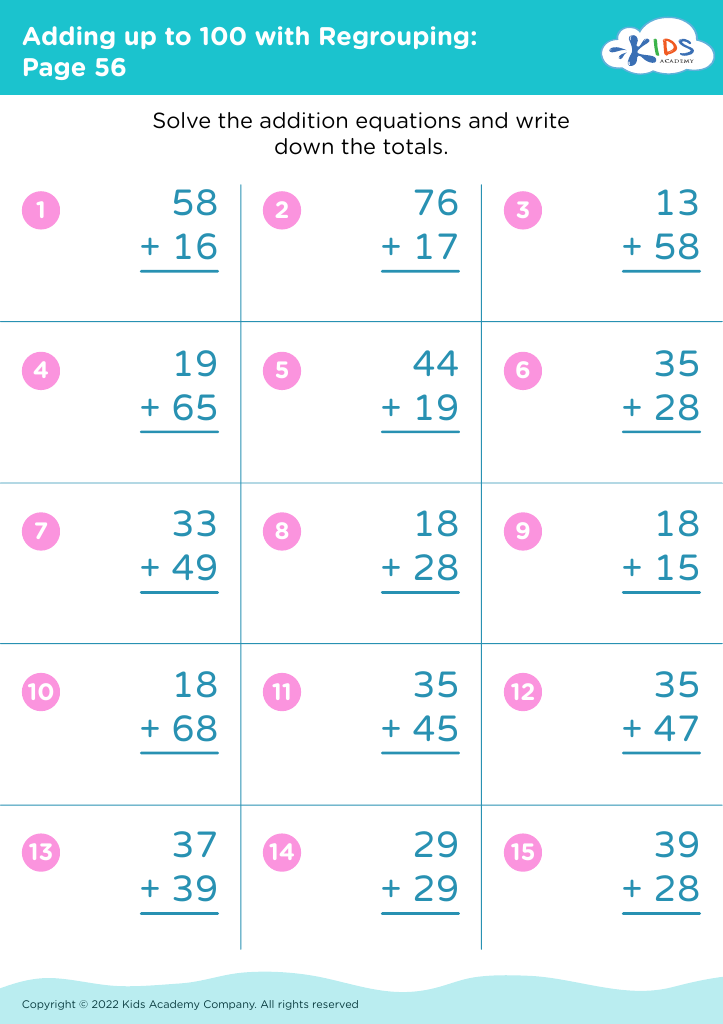
Adding up to 100 with Regrouping: Page 56
Worksheet
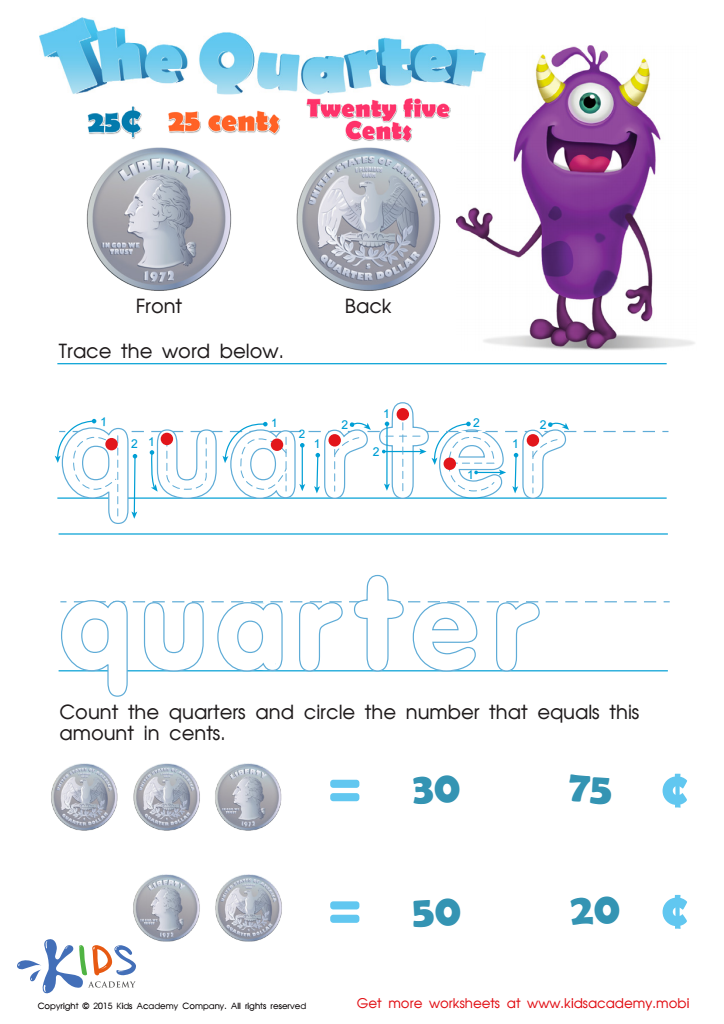
Printable Money Games and PDF Worksheets: Twenty Five Cents or the Quarter

Twenty Five Cents or the Quarter Money Worksheet
Check out our new printable money games - learn to count money easily! With quarters, trace the word, count them and calculate the amount in cents. More worksheets at our website. Give it a try!
Twenty Five Cents or the Quarter Money Worksheet
Worksheet
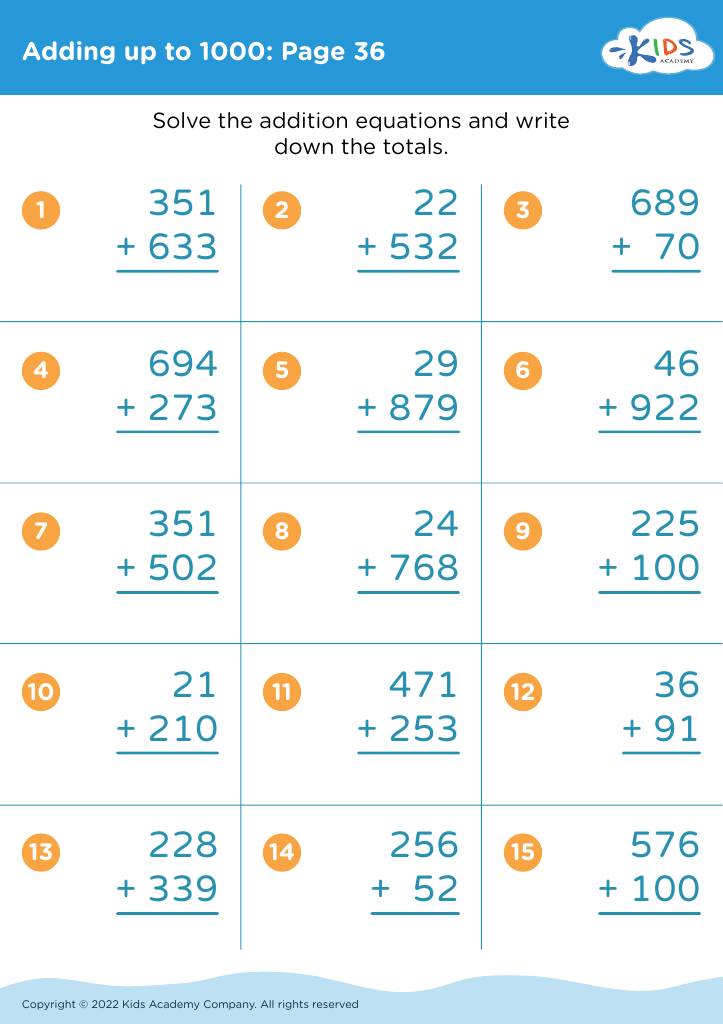
Adding up to 1000: Page 36

Adding up to 1000: Page 36

Adding up to 1000: Page 36
Worksheet
Octopus 8’s Worksheet

Octopus 8’s Worksheet

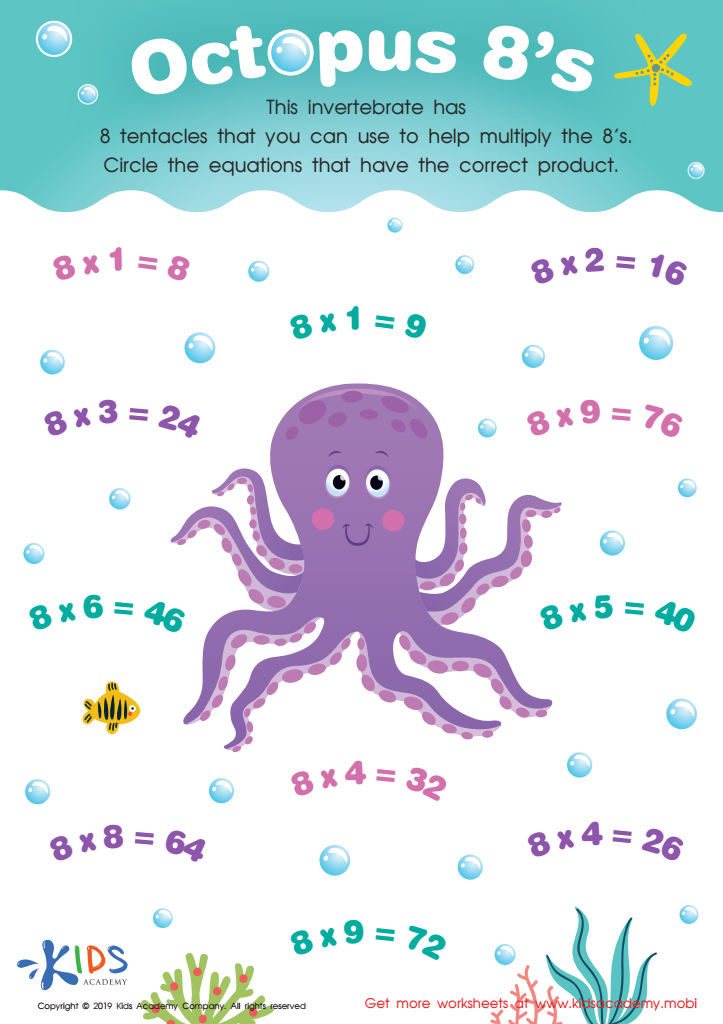
Can your child identify the octopus in the worksheet? It's an invertebrate with 8 tentacles. Have your child circle the equations with the correct products, and see if they can tell you some other features of the octopus too.
Octopus 8’s Worksheet
Worksheet
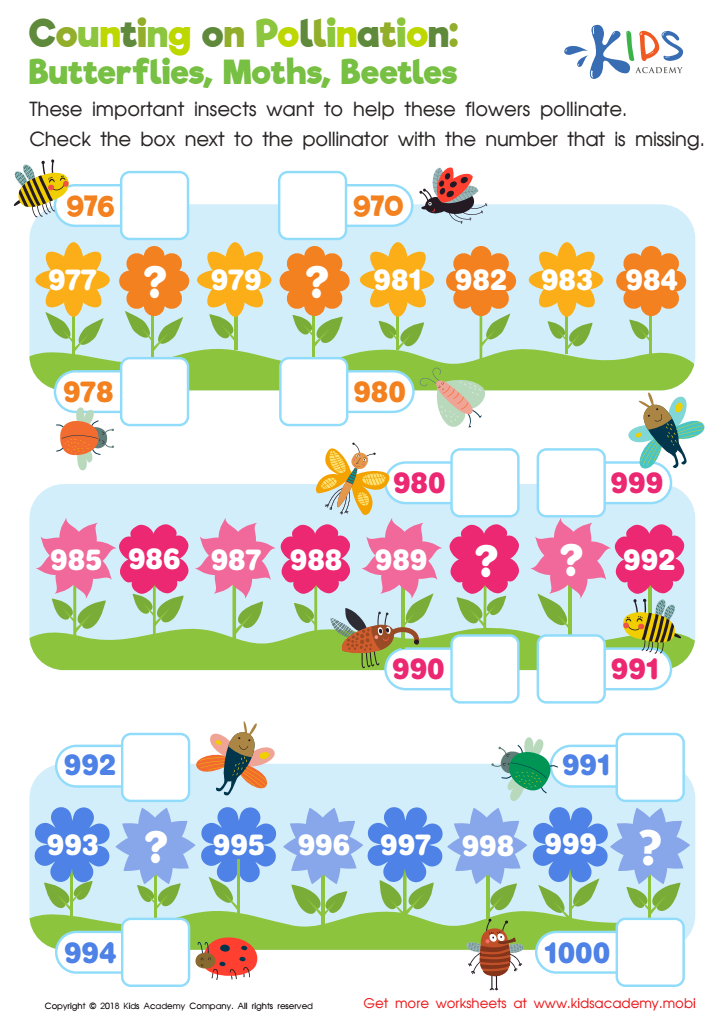
Counting on Pollination: Butterflies, Moths, Beetles Worksheet
Counting on Pollination: Butterflies, Moths, Beetles Worksheet
A number line can help boost computation accuracy and efficiency. It can also be used with more advanced numbers. Help your child practice by having them identify missing numbers in sequences. This fun worksheet lets them help the pollinators in the process, as they strengthen their number sense.
Counting on Pollination: Butterflies, Moths, Beetles Worksheet
Worksheet
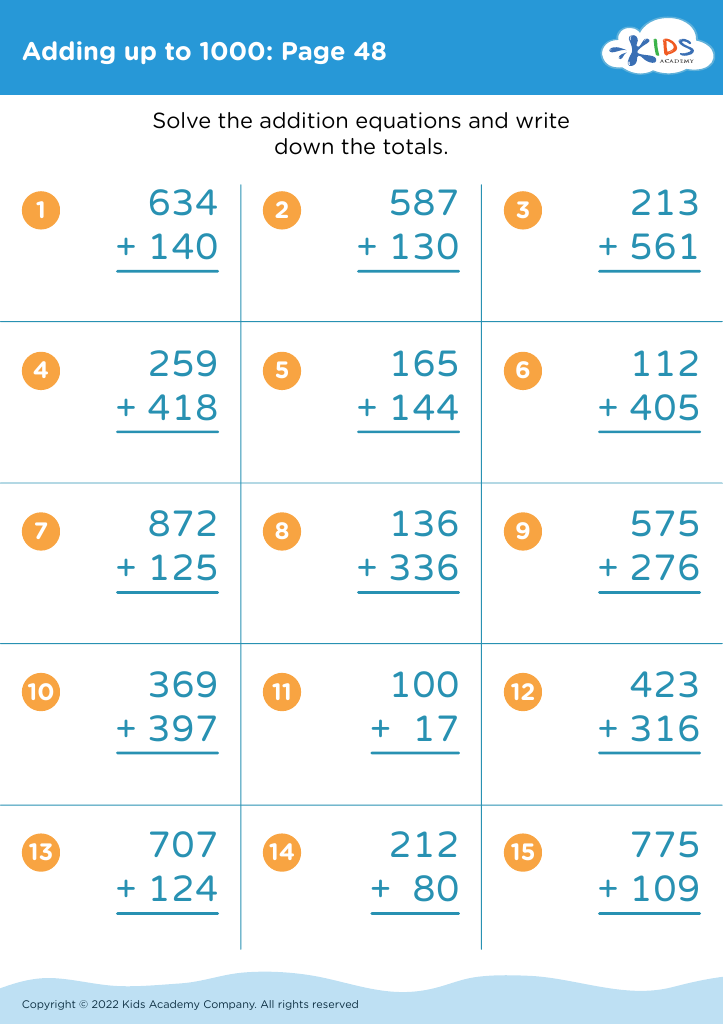
Adding up to 1000: Page 48

Adding up to 1000: Page 48

Adding up to 1000: Page 48
Worksheet
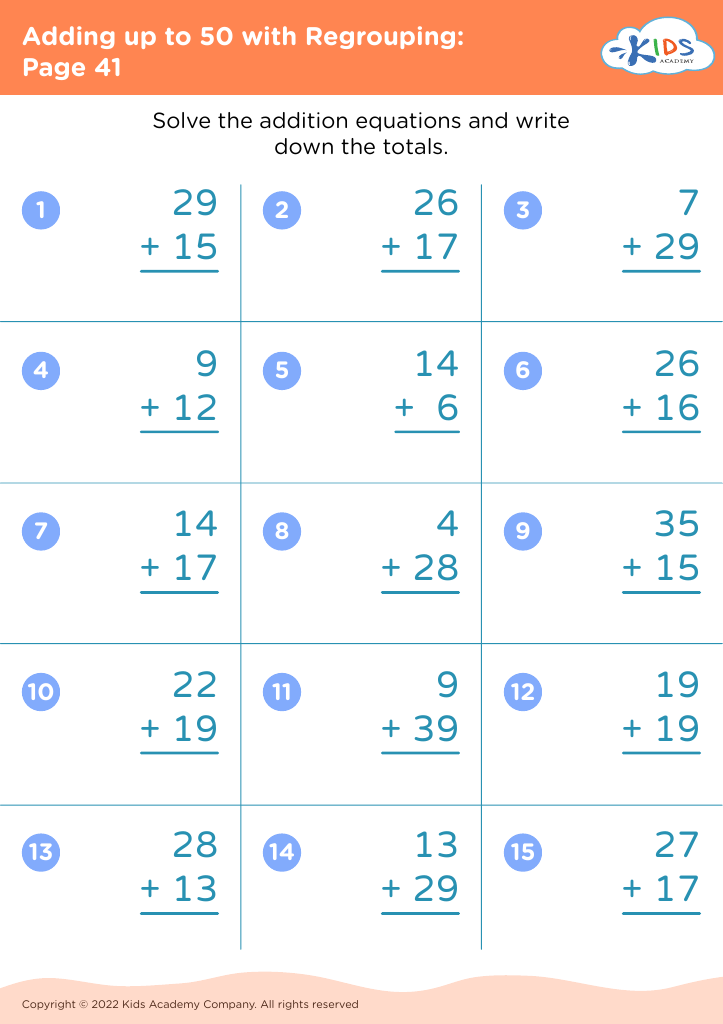
Adding up to 50 with Regrouping: Page 41
Worksheet
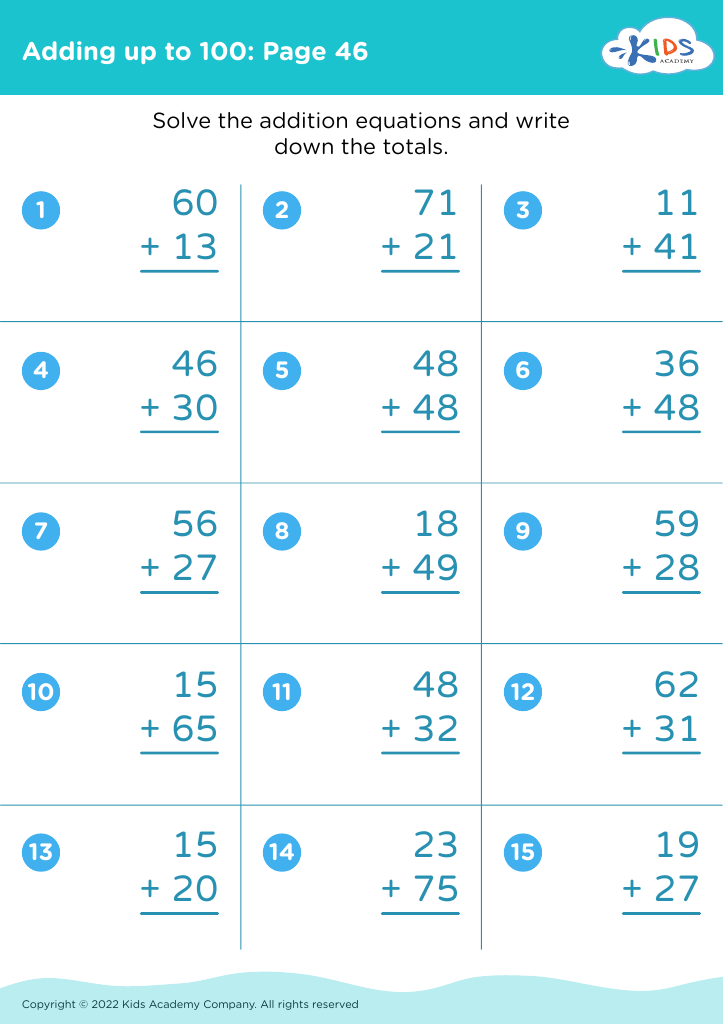
Adding up to 100: Page 46

Adding up to 100: Page 46

Adding up to 100: Page 46
Worksheet
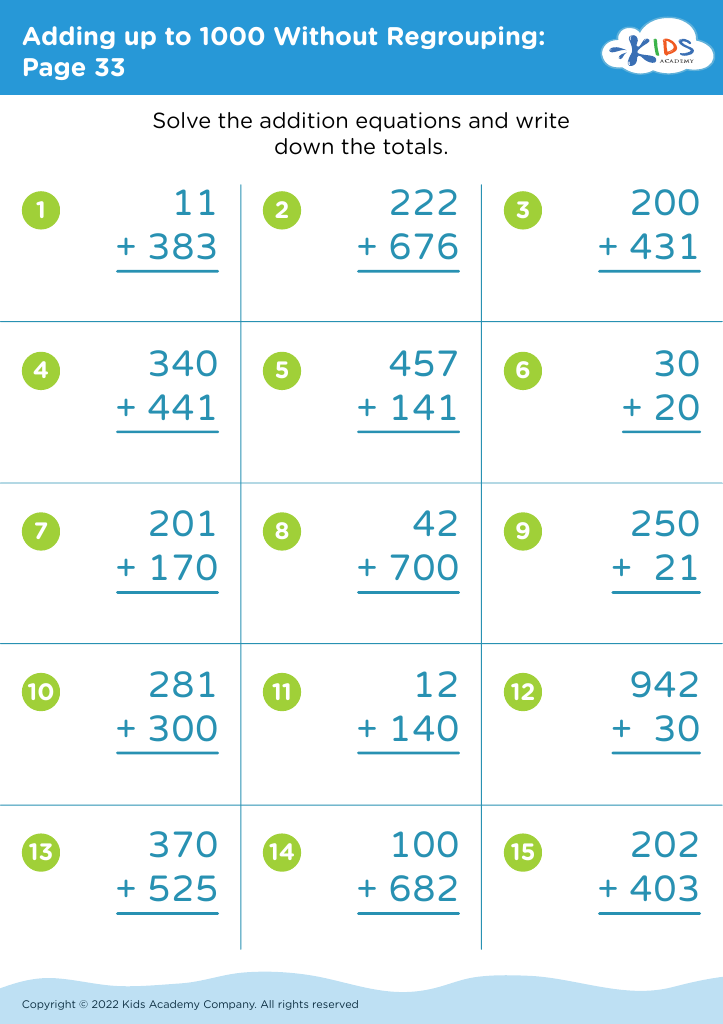
Adding up to 1000 Without Regrouping: Page 33
Worksheet
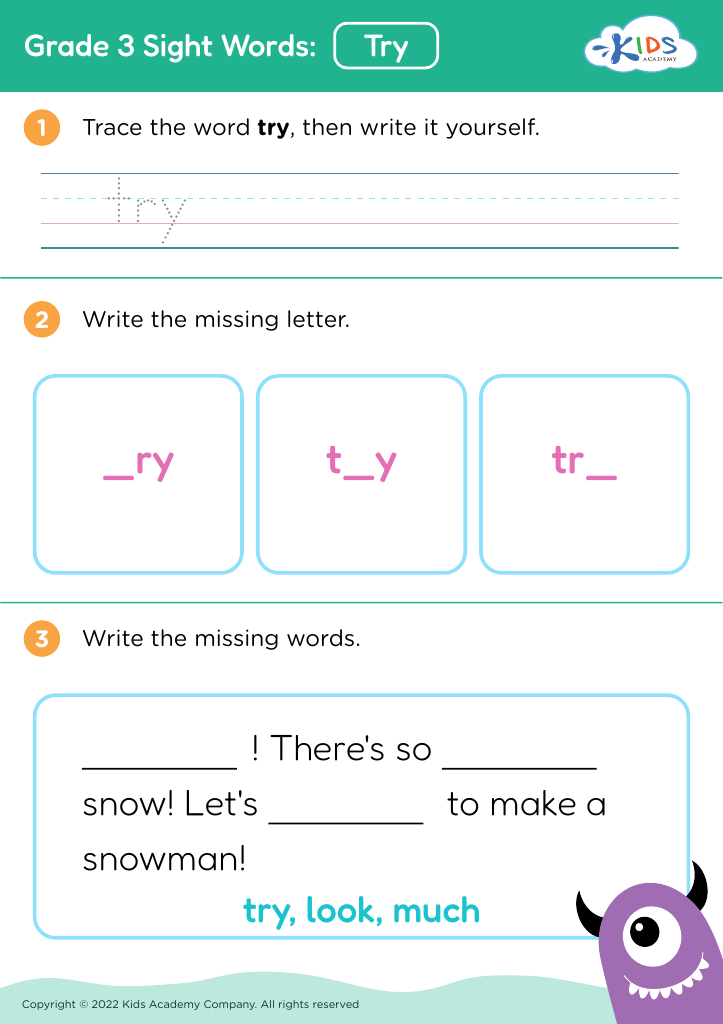
Grade 3 Sight Words: Try

Grade 3 Sight Words: Try

Grade 3 Sight Words: Try
Worksheet
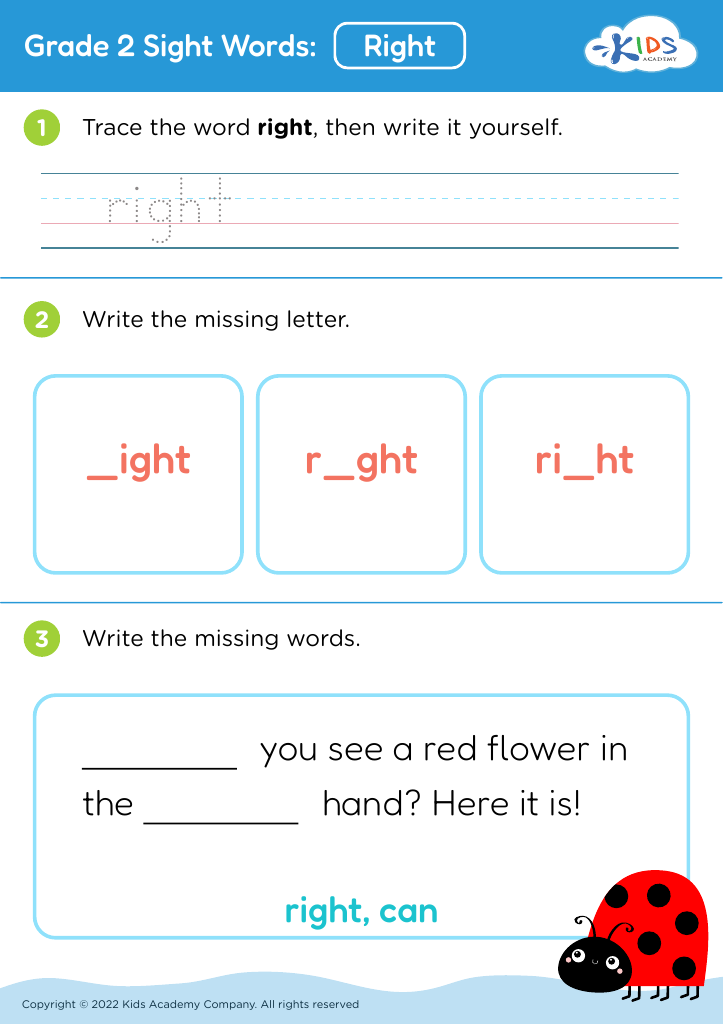
Grade 2 Sight Words: Right

Grade 2 Sight Words: Right

Grade 2 Sight Words: Right
Worksheet
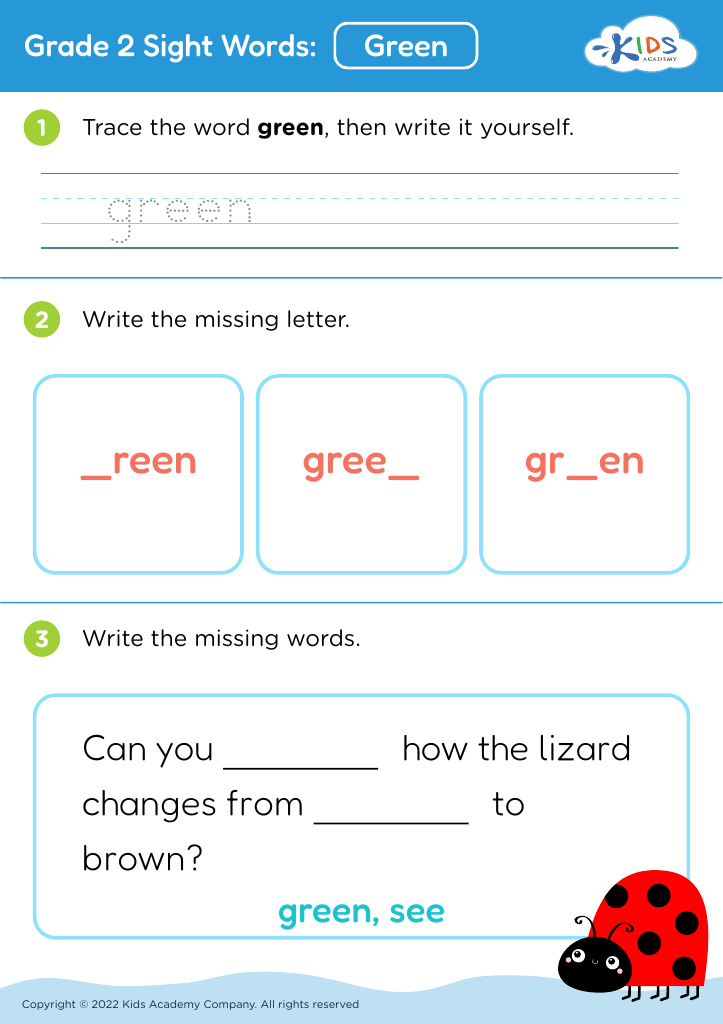
Grade 2 Sight Words: Green

Grade 2 Sight Words: Green

Grade 2 Sight Words: Green
Worksheet
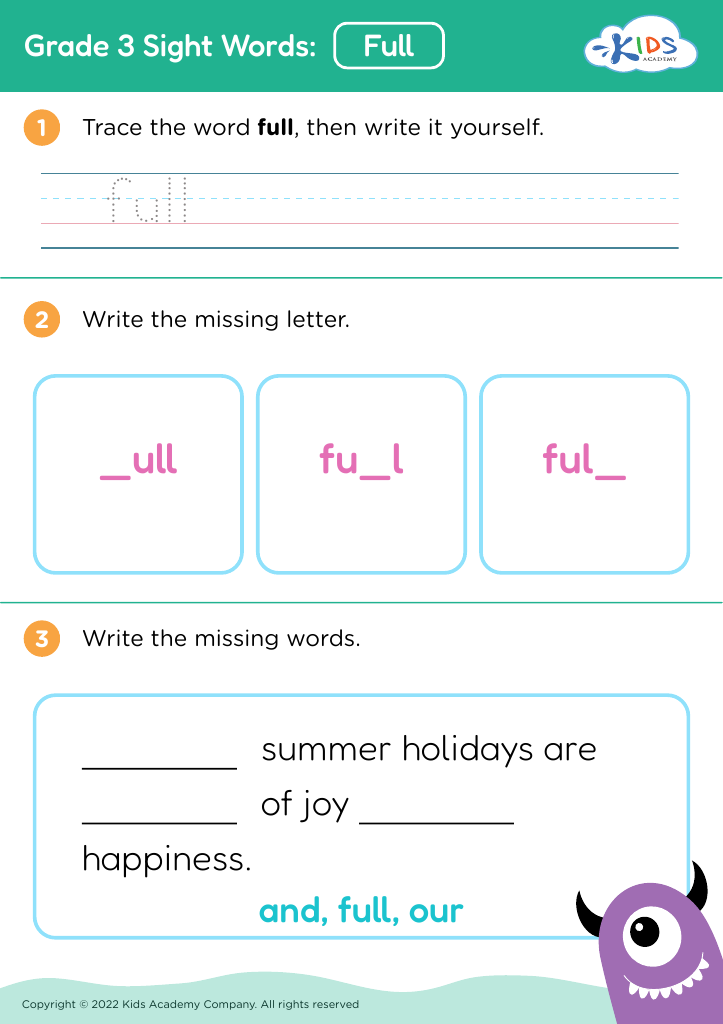
Grade 3 Sight Words: Full

Grade 3 Sight Words: Full

Grade 3 Sight Words: Full
Worksheet


... 3 4

Counting practice is fundamental for 8-year-olds because it lays the groundwork for their mathematical understanding and supports cognitive development. At this age, children transition from simple counting to more complex mathematical concepts such as addition, subtraction, and eventually multiplication and division. Counting enhances numerical literacy, enabling children to grasp the value of numbers and their relationships with one another.

For parents and teachers, ensuring consistent counting practice helps children develop problem-solving skills and logical thinking. Regular counting exercises improve memory, attention to detail, and sequencing abilities, which are vital across all areas of learning. As children become more proficient with numbers, they gain confidence in their abilities, fostering a positive attitude toward mathematics in general.

Furthermore, counting practice can be integrated into daily activities, making it a seamless part of a child’s routine rather than a tedious task. This real-world application reinforces learning and shows children the practical aspects of mathematics. For instance, parents can ask their child to count items during grocery shopping or while setting the table, turning everyday tasks into learning opportunities.

Teachers and parents who prioritize counting practice not only support academic success but also prepare children for future educational challenges, making it an essential component of early education.