Fraction representation Worksheets for 8-Year-Olds
5 filtered results
-
From - To
Explore our engaging fraction representation worksheets designed specifically for 8-year-olds! These resources provide young learners with interactive activities that simplify complex concepts of fractions. Each worksheet encourages kids to visualize and understand fractions through fun illustrations and real-world examples, making math enjoyable and accessible. Our materials come in varying levels of difficulty, ensuring that every child can find the right challenge to enhance their learning. Perfect for classroom use or at-home practice, these worksheets will help children master fraction representation while building confidence in their math skills. Download and start exploring the world of fractions today!
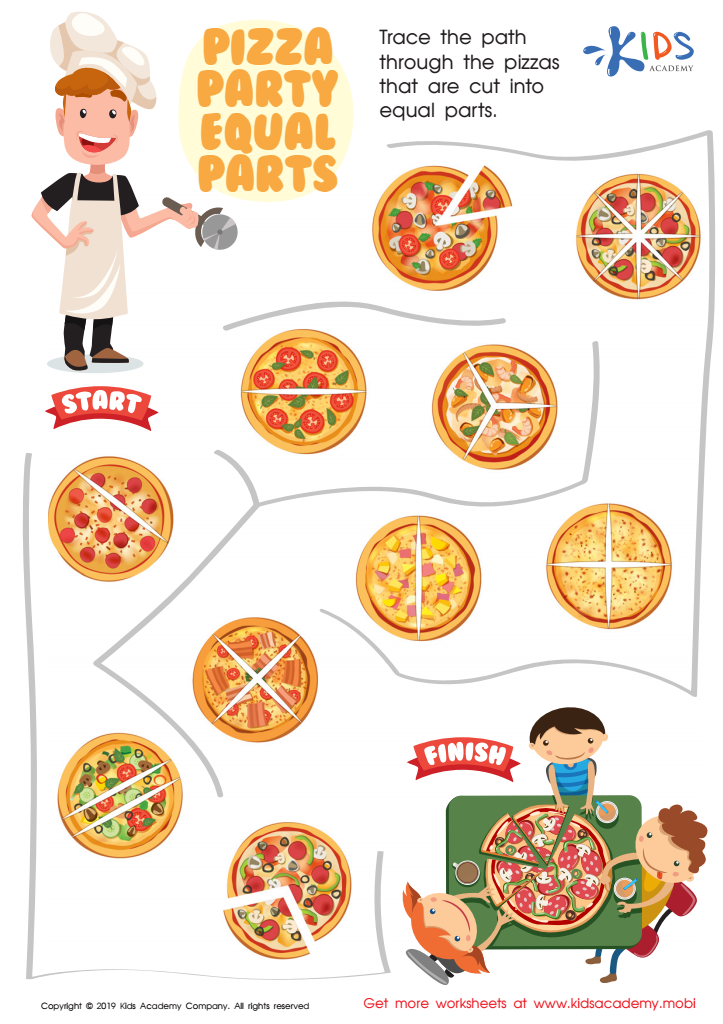
Pizza Party Equal Parts Worksheet
 Assign to My Students
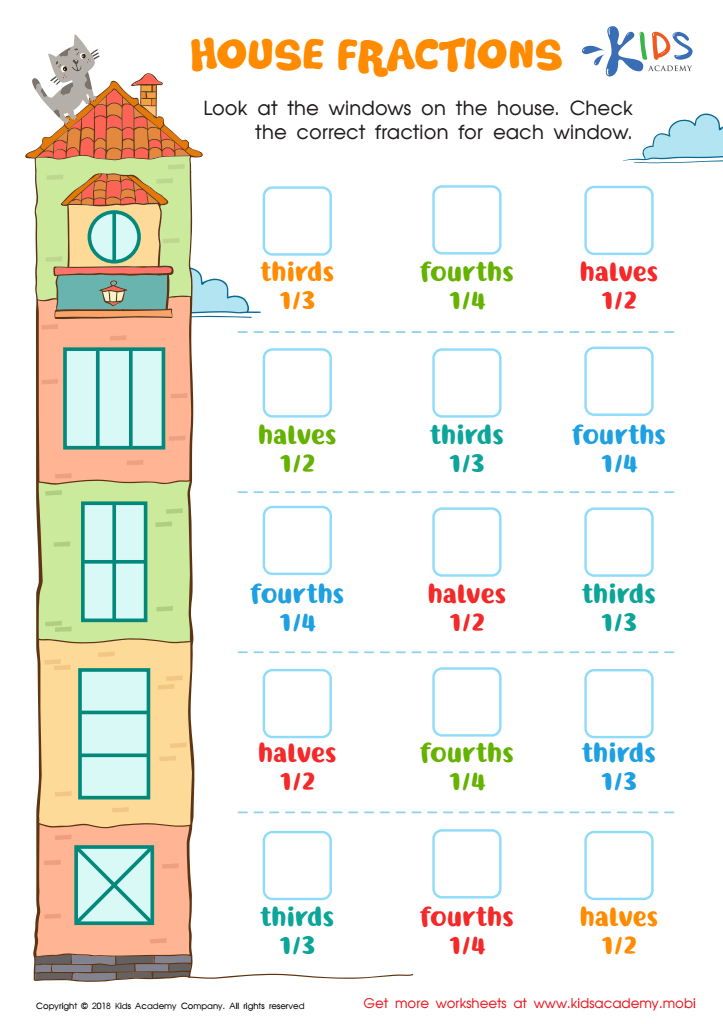
House Fractions Worksheet






Understanding fraction representation is critical for 8-year-olds, laying a strong foundation for their mathematical journey. At this age, children begin to explore basic fractions, recognizing them as parts of a whole. This crucial skill enhances their ability to understand not just numbers but also concepts such as division, ratios, and proportions, which are essential for advanced mathematics later on.
Parents and teachers should care about fraction representation because it fosters essential cognitive skills, including critical thinking and problem-solving. When children grasp fractions, they learn to visualize relationships and make connections between various mathematical concepts. Furthermore, it enhances their confidence in math, an area where many students struggle and develop anxiety.
Effective fraction representation also helps promote flexible thinking. Children learn that fractions can be depicted in different ways, such as pie charts, number lines, or visual models, encouraging creativity in their approach to problem-solving. By nurturing a solid understanding of fractions, adults help cultivate a positive attitude toward mathematics, ensuring students feel competent and engaged.
In summary, focusing on fraction representation equips 8-year-olds with vital skills that will benefit their academic progress and foster a lifelong appreciation for mathematics.








