Improving observational skills Worksheets for 8-Year-Olds
4 filtered results
-
From - To
Enhance your 8-year-old's attention to detail with our specialized worksheets designed for improving observational skills. At Kids Academy, we believe that sharp observational skills are key to academic success and overall cognitive development. Our engaging worksheets are tailored to boost your child's natural curiosity and attention to detail through fun, interactive activities such as finding differences, pattern recognition, and sequencing tasks. By making learning exciting and enjoyable, our worksheets help children enhance their focus, improve memory retention, and develop critical thinking skills. Perfect for both home and classroom use, our resources ensure that learning never has to be a dull moment.
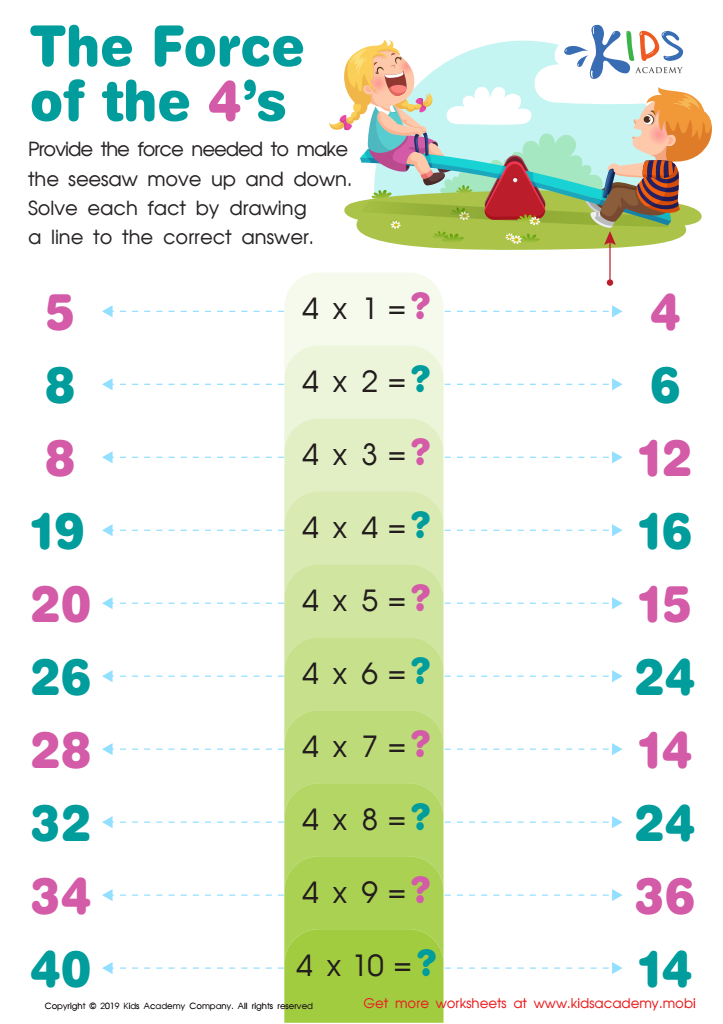
The Force of the 4's Worksheet
 Assign to My Students
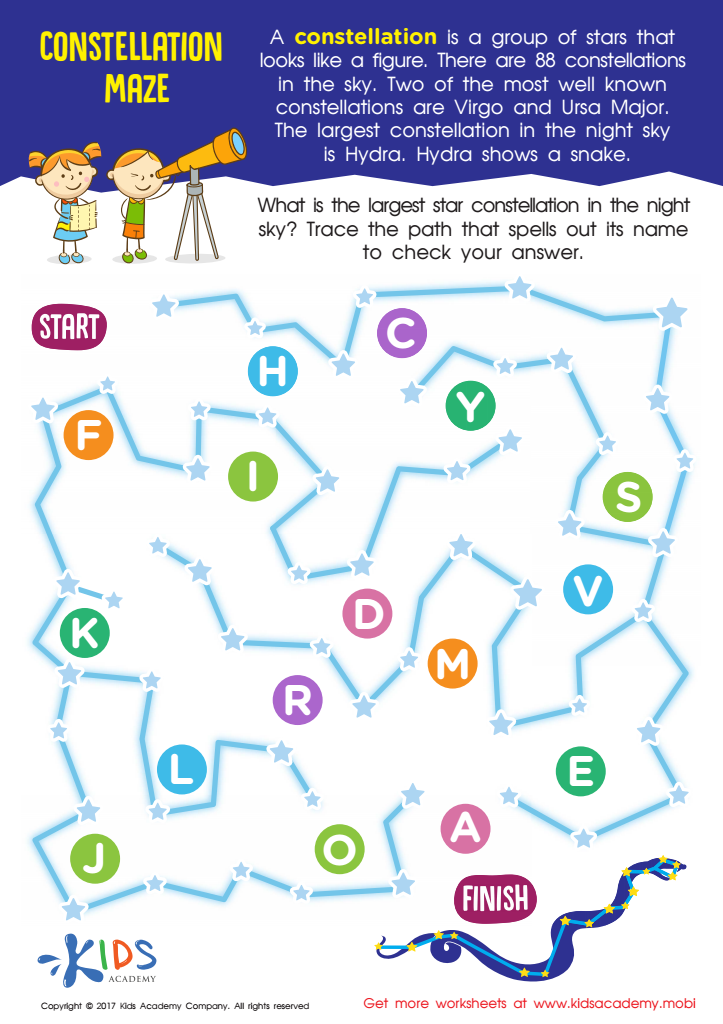
Constellations Worksheet






.jpg)

Improving observational skills in 8-year-olds is crucial for their cognitive and social development. At this age, children are naturally curious and starting to understand the world around them more deeply. Encouraging keen observation helps them become more aware of their surroundings, boosts their attention to detail, and enhances their ability to notice patterns and differences. These skills are foundational for effective learning in all subjects.
For instance, in science, being able to observe changes in an experiment is essential. In reading, recognizing subtle cues in text or illustrations aids comprehension. Math skills also benefit when children can see patterns in numbers and shapes. Good observational skills also translate into better problem-solving abilities, as children learn to gather information and think critically about what they see.
Moreover, strong observational skills foster empathy and social awareness. By noticing others' facial expressions, body language, and social cues, children can respond more appropriately to their peers, building stronger, more respectful relationships. This emotional intelligence is invaluable throughout life.
Parents and teachers should particularly focus on activities that hone these skills, like nature walks, storytelling, or simple games like "I Spy." Encouraging children to slow down and pay attention not only supports academic growth but also enriches their interactive experiences with the world and the people in it.








