Moral understanding Worksheets for 8-Year-Olds
4 filtered results
-
From - To
Our "Moral Understanding Worksheets for 8-Year-Olds" are designed to help children grasp essential ethical concepts through engaging and age-appropriate activities. These printable worksheets promote critical thinking and empathy by presenting everyday scenarios where kids can practice decision-making and reflect on morals like honesty, kindness, and responsibility. Each worksheet encourages discussions and both independent and guided learning, making it perfect for parent-child or classroom interaction. Build your child's moral compass and pave the way for thoughtful and considerate future choices by exploring our diverse, free resources on Kids Academy today.
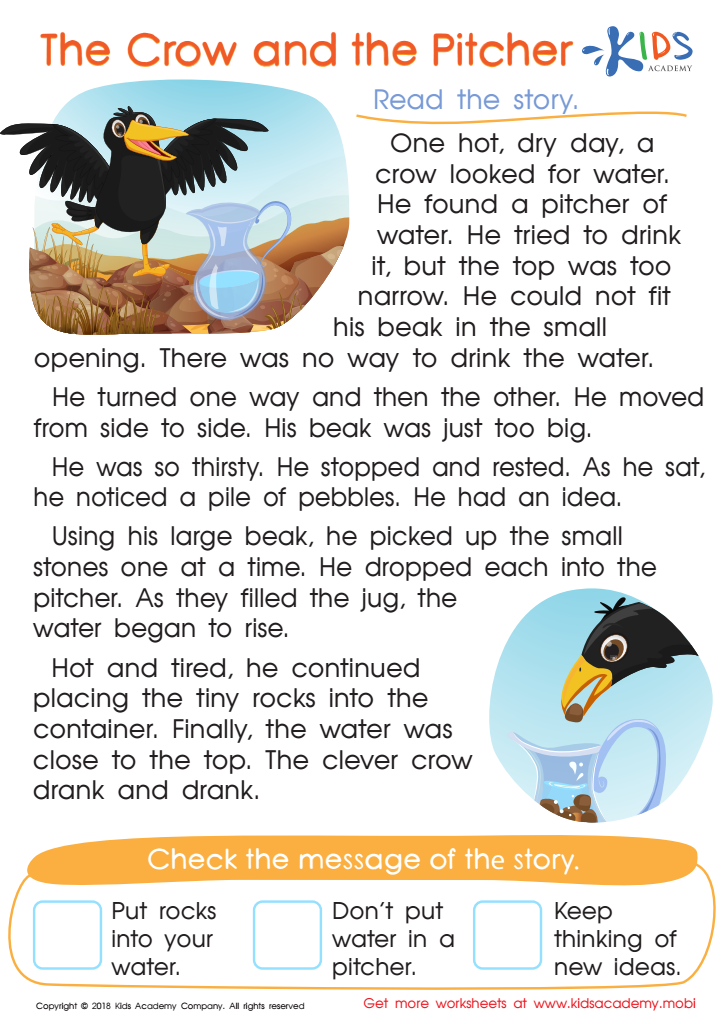
The Crow and the Pitcher Worksheet
 Assign to My Students
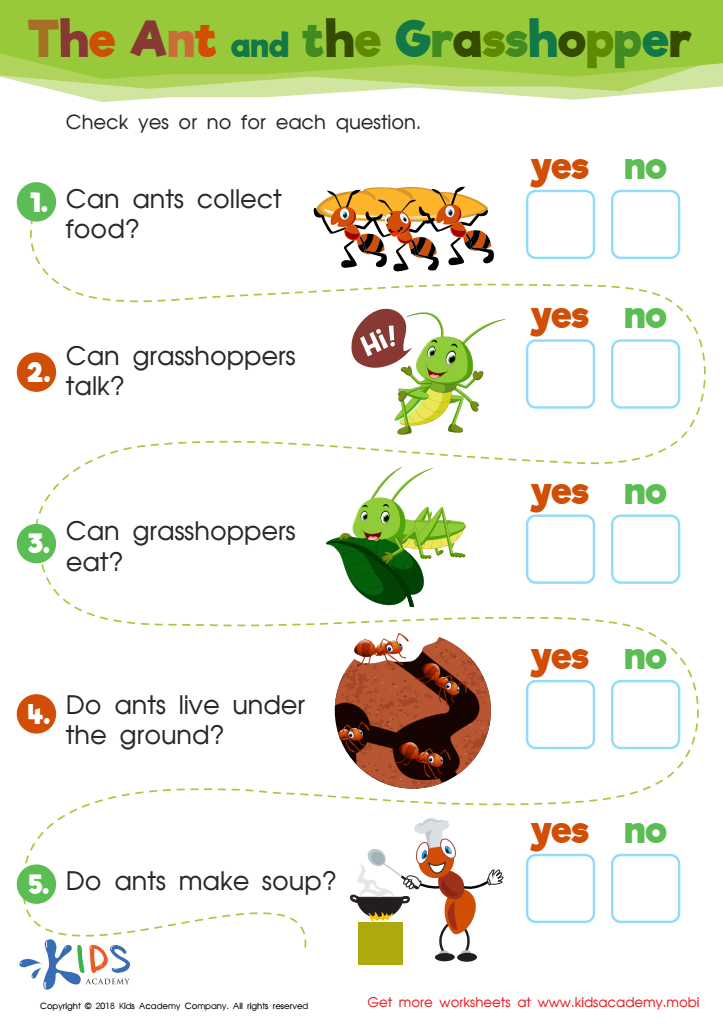
The Ant and The Grasshopper Worksheet
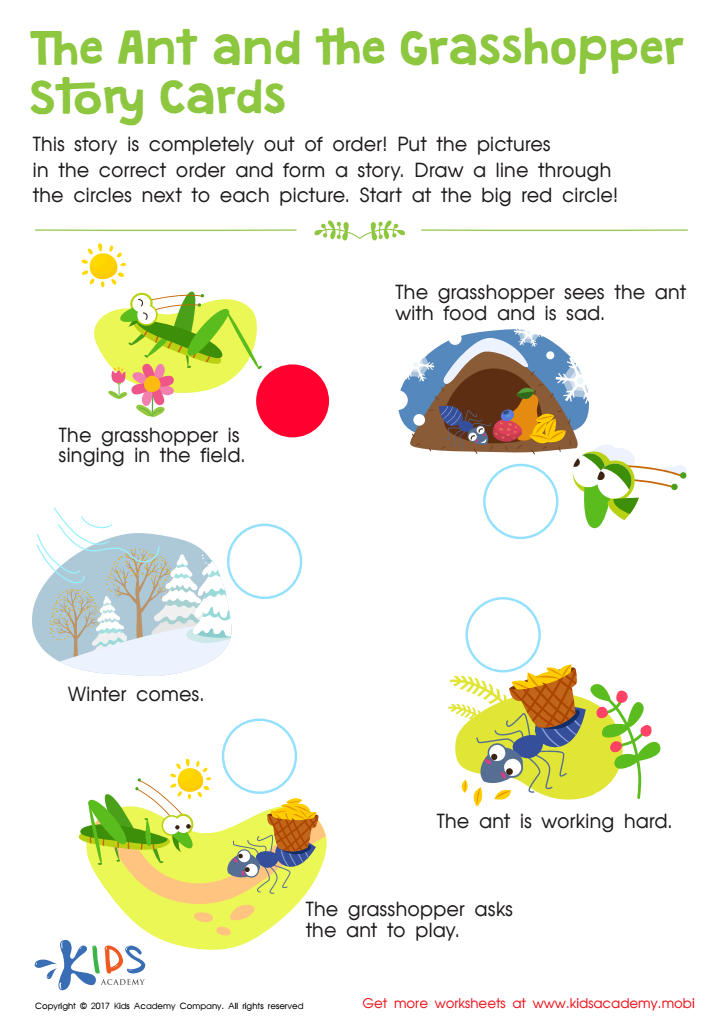
The Ant and The Grasshopper Worksheet
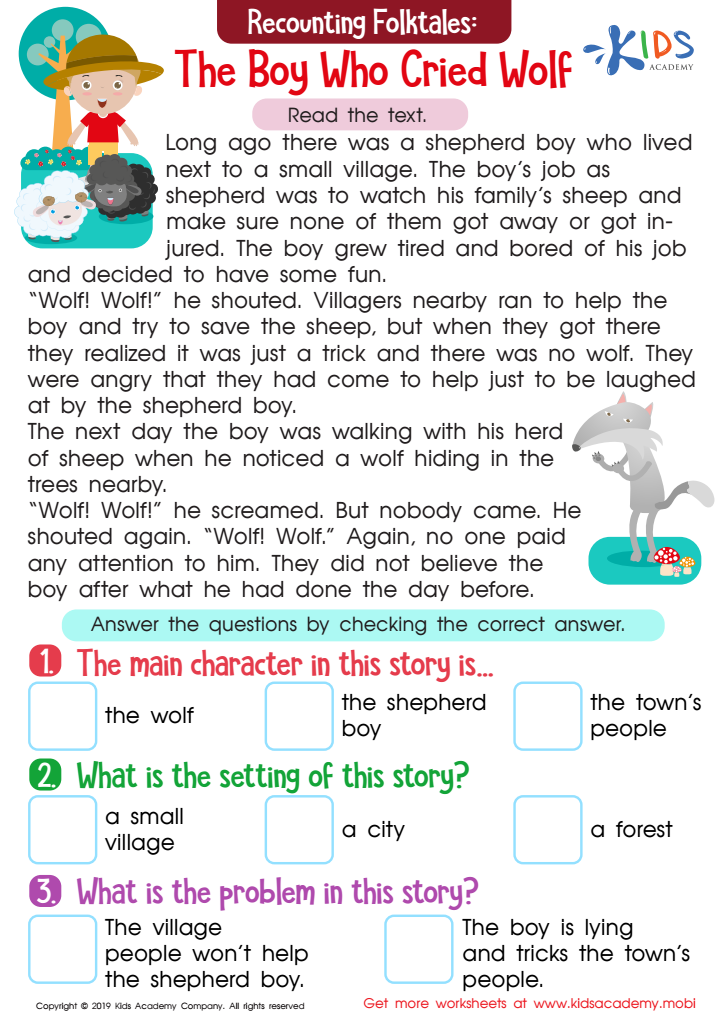
The Boy Who Cried Wolf Part 1 Worksheet








Nurturing moral understanding in 8-year-olds is essential as it lays the foundation for developing responsible, empathetic, and socially aware adults. At this age, children are ripe for learning ethical principles because they are forming their personal values and belief systems. When parents and teachers prioritize moral education, they are equipping children with crucial life skills such as empathy, honesty, fairness, and respect for others. These skills foster positive relationships and a strong sense of community.
Moral understanding helps children differentiate between right and wrong, allowing them to make thoughtful decisions even in challenging situations. It promotes self-regulation and discipline, which are important for academic and social success. In classroom and family settings, children with a well-rounded moral compass are more likely to show respect, cooperate with peers, and understand the importance of sharing and kindness.
Furthermore, moral education can reduce instances of bullying, discrimination, and other negative behaviors as children learn to value diversity and the feelings of others. Ensuring that 8-year-olds develop a solid moral framework not only benefits them individually but also contributes to a more compassionate and just society. In essence, investing in the moral growth of children sets the stage for a world built on stronger, more ethical foundations.








