Reading analog clocks Worksheets for 8-Year-Olds
5 filtered results
-
From - To
Discover engaging and educational Reading Analog Clocks Worksheets designed specifically for 8-year-olds at Kids Academy. Perfect for young learners, these worksheets focus on mastering the skill of telling time using traditional analog clocks. Through a variety of fun and interactive exercises, children will develop the ability to read and understand hour, minute, and second hands. Enhance their learning experience with colorful visuals, clear instructions, and playful themes that capture their imagination while building essential time-telling skills. Ideal for both classroom use and at-home practice, ensure your child’s proficiency in reading analog clocks with Kids Academy resources.
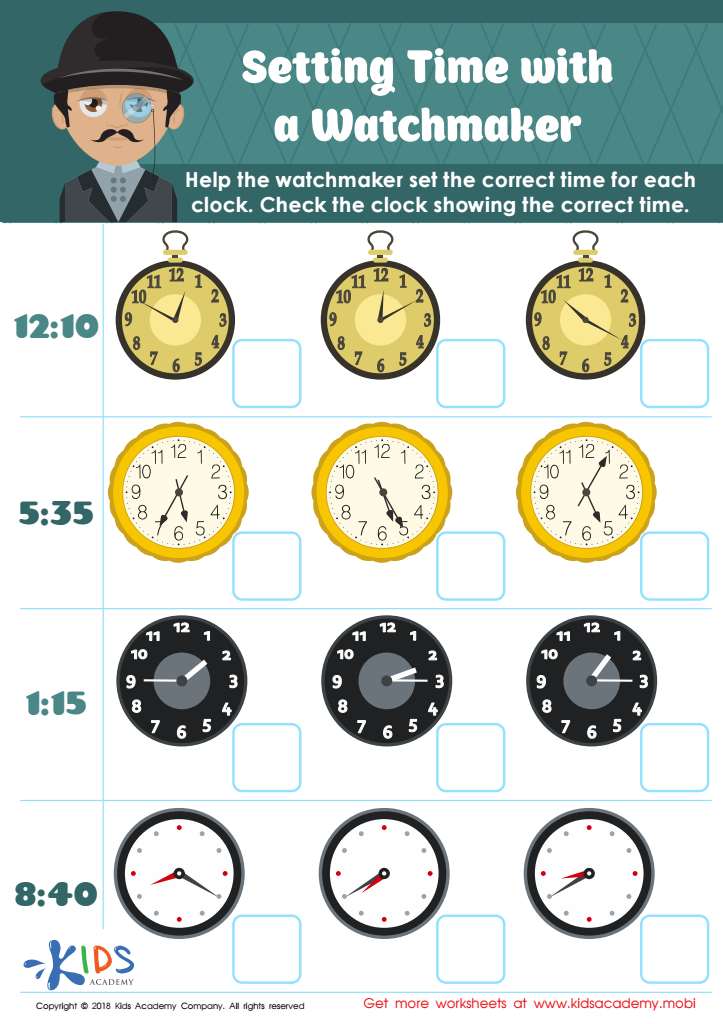
Setting Time with Watchmaker Worksheet
 Assign to My Students





Parents and teachers should prioritize teaching 8-year-olds to read analog clocks because it builds essential life skills and fosters a deeper understanding of time. Unlike digital clocks, which readily display time, analog clocks require interpretation, thus sharpening a child's cognitive abilities, such as problem-solving, critical thinking, and spatial awareness. By learning to read an analog clock, children practice counting by fives, recognizing number sequences, and understanding fractions, as these clocks visually represent minutes and hours divided into equal parts.
Familiarity with analog clocks encourages patience and focus, essential traits for academic success. For instance, understanding the passage of time can help a child break down their day into manageable activities, improving their organizational skills. This ability becomes increasingly crucial as children grow and take on more responsibilities, both academically and personally.
Furthermore, reading analog clocks connects kids with the historical and practical aspects of timekeeping. This knowledge nurtures a sense of tradition and cultural literacy. Not to be overlooked, many activities and schedules in daily life—such as sports, certain games, and some public notifications—still rely on analog time measures. Equipping children with the skill to read these clocks ensures they are not disadvantaged in these contexts. Hence, teaching 8-year-olds to read analog clocks prepares them comprehensively for various real-world experiences and fosters all-around development.








