Understanding clocks Worksheets for 8-Year-Olds
3 filtered results
-
From - To
Unlock your child's potential with our "Understanding Clocks Worksheets for 8-Year-Olds." Designed to enhance time-telling skills through engaging activities, these worksheets are perfect for young learners. Children will explore both digital and analog clocks, learn to read different times, and tackle various interactive exercises that make learning about time fun. Ideal for both classroom and home settings, our comprehensive resources ensure that kids gain confidence and mastery in understanding time concepts. Encourage critical thinking and boost your child's math skills with our well-structured worksheets. Visit our page and download your materials today to brighten your child's learning journey!
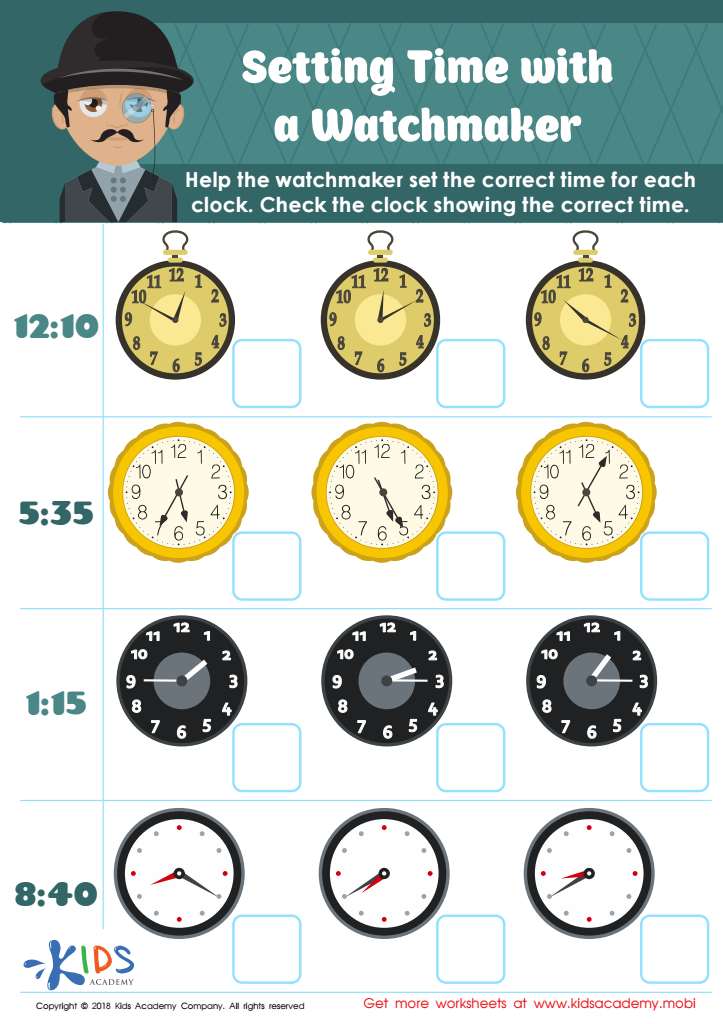
Setting Time with Watchmaker Worksheet
 Assign to My Students
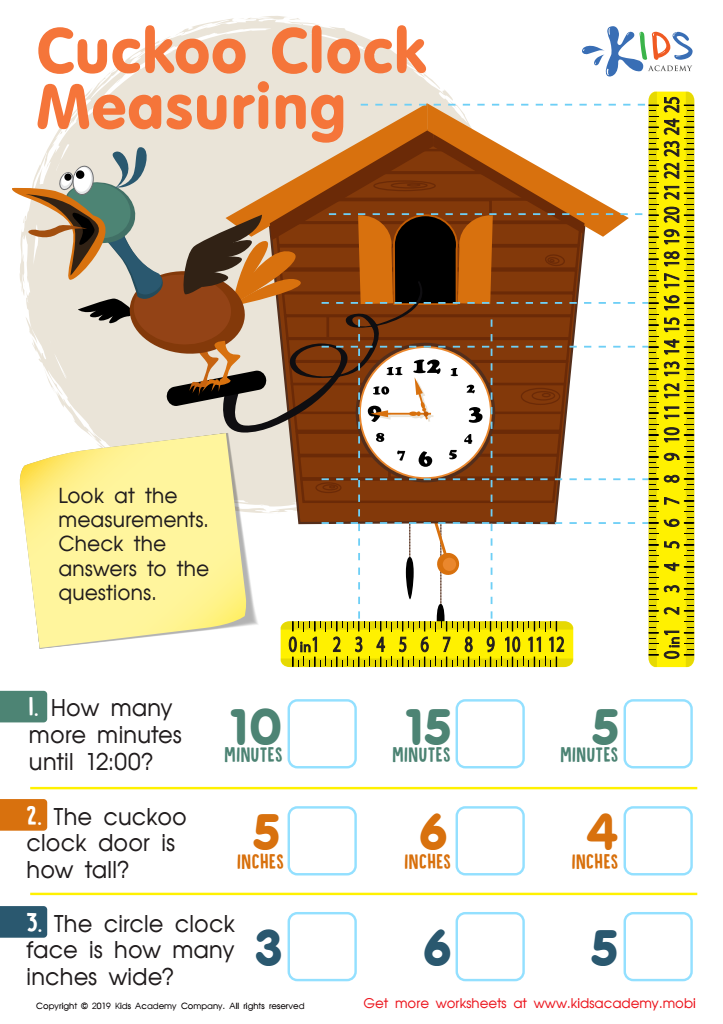
Cuckoo Clock Measuring Worksheet








Understanding clocks is crucial for 8-year-olds as it cultivates essential life skills and academic development. At this age, children are transitioning from concrete thinking to more abstract reasoning. Learning to read both analog and digital clocks helps reinforce concepts of time, space, and numeracy. It enhances their ability to perceive hour and minute increments, which can aid in performing more complex mathematical operations in the future.
Additionally, comprehension of time management is key for fostering independence. Mastering how to tell time empowers children to organize their daily routines, such as school schedules and extracurricular activities, while promoting responsibility and self-discipline. This skill supports not only academic achievement but also successful navigation of various life tasks, such as getting ready for school on time or managing homework.
Moreover, the ability to understand time contributes to social skills. Children often engage in group activities, and an understanding of time can help them develop cooperation skills by arriving at events punctually. As such, both parents and teachers should prioritize teaching clocks, recognizing it as more than just a skill—it's a vital part of fostering responsible, confident, and independent learners ready to navigate their world.








