Understanding ecosystems Worksheets for 8-Year-Olds
4 filtered results
-
From - To
Unlock a world of learning with our "Understanding Ecosystems Worksheets for 8-Year-Olds." Expertly crafted to suit young minds, these engaging worksheets offer a deep dive into the captivating world of ecosystems. Through fun and interactive activities, children will explore various habitats, food chains, and the delicate balance of nature. Perfect for curious learners, our worksheets pave the way for comprehension of complex concepts in an easy and enjoyable manner. Ideal for both classroom and home use, these resources provide a solid foundation in environmental science, fostering a lifelong fascination with the natural world. Let's make learning about ecosystems an adventure!
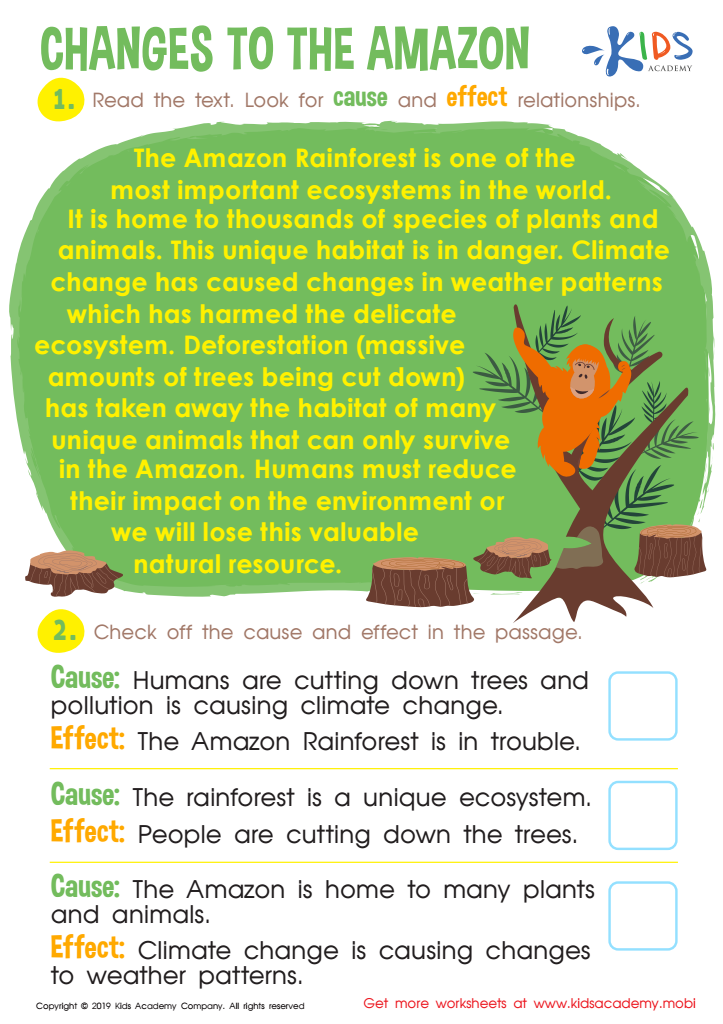
Changes to the Amazon Worksheet
 Assign to My Students
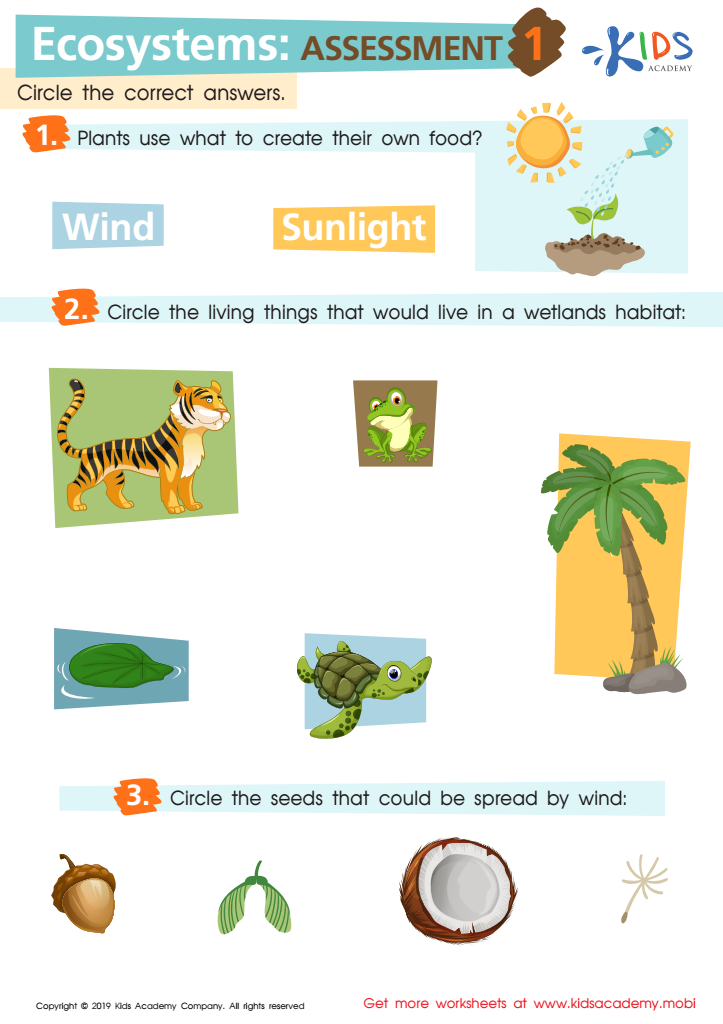
Ecosystems: Assessment 1 Worksheet
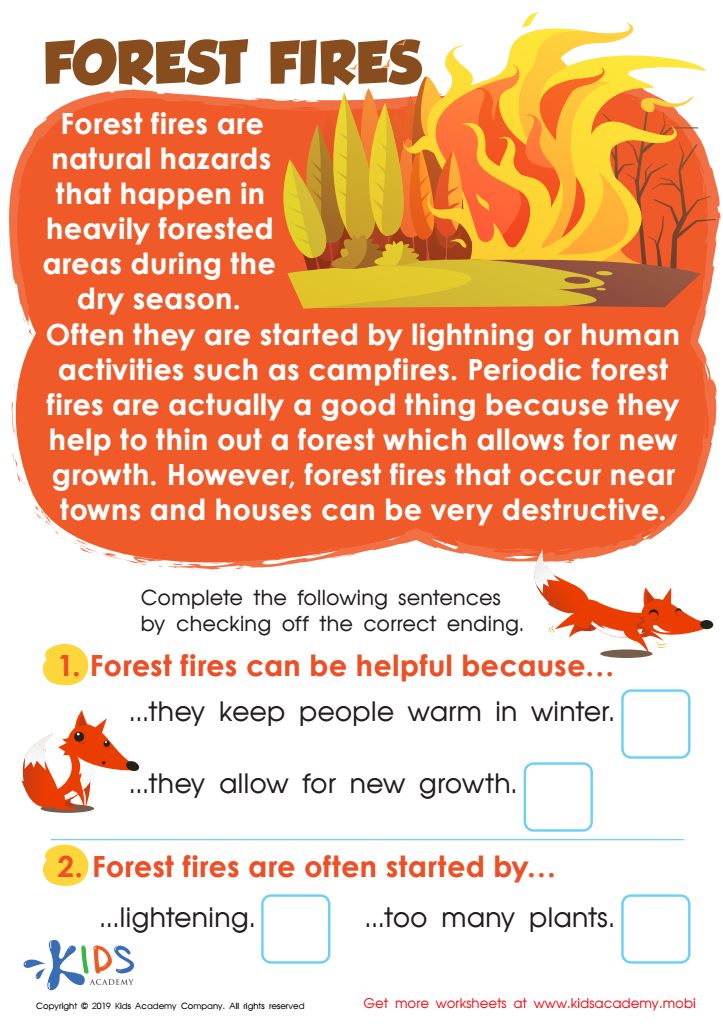
Forest Fires Worksheet
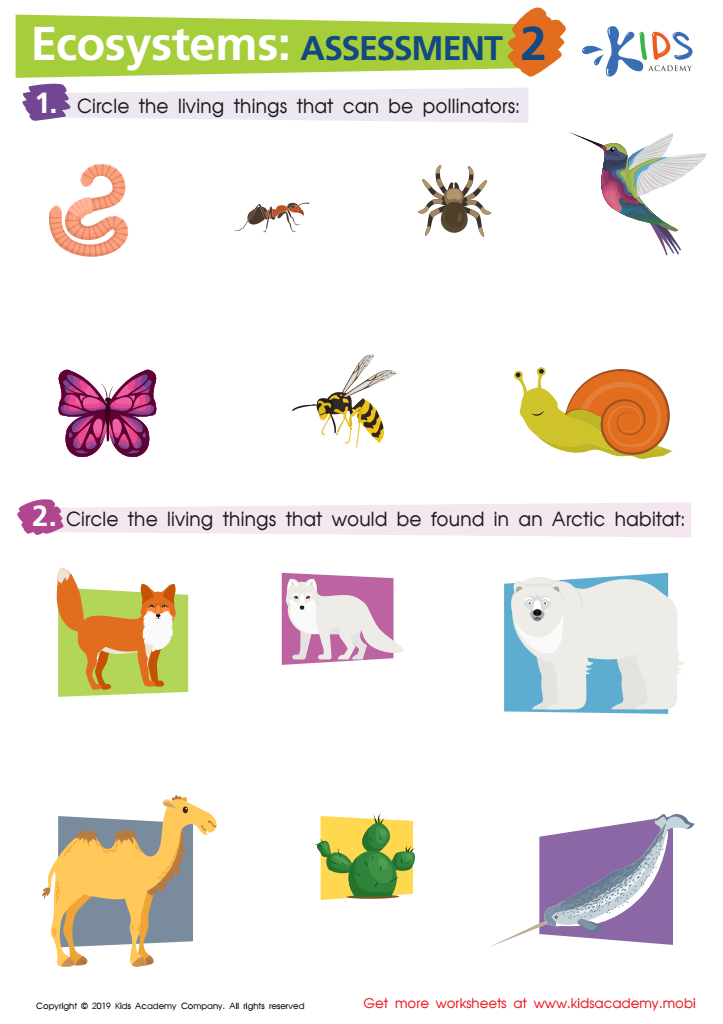
Ecosystems: Assessment 2 Worksheet







Understanding ecosystems is essential for 8-year-olds, as it cultivates both a sense of wonder and responsibility toward the natural world. At this age, children are naturally curious and eager to learn about their surroundings, making it the perfect time to introduce fundamental ecological concepts. By understanding ecosystems, children grasp how different organisms and their environments interact, fostering a holistic view of life on Earth.
For parents and teachers, emphasizing ecosystems can enhance a child's cognitive development and critical thinking skills. Learning about food chains, habitats, and the delicate balance of nature helps children develop problem-solving abilities and understand cause-and-effect relationships. This foundational knowledge is crucial for science education and can promote future interest in environmental sciences.
Moreover, instilling an appreciation for ecosystems at a young age helps nurture environmental stewardship. Children who understand the significance of ecosystems are more likely to value and protect them, growing into conscientious adults who contribute positively to sustainable living and conservation efforts.
Incorporating ecosystem education into a child’s learning experience not only supports academic growth but also builds empathy and respect for nature, laying the groundwork for a lifetime of environmental awareness and advocacy. By prioritizing ecosystem education, parents and teachers can equip children with the knowledge and values needed to face and solve ecological challenges in the future.








