
Visual discrimination Worksheets for 8-Year-Olds
8 filtered results
Difficulty Level
Grade
Age
-
From - To
Subject
Activity
Standards
Boost your child's observational skills and attention to detail with our Visual Discrimination Worksheets for 8-Year-Olds! Specially designed to enhance learning, these fun and educational worksheets help young learners differentiate between shapes, patterns, and sequences. Perfect for developing critical thinking and problem-solving abilities, these activities make learning enjoyable and stimulate cognitive growth. Ideal for both classroom use and at-home practice, our printable worksheets are a valuable resource for parents and teachers aiming to support and engage young minds. Explore our collection today and give your 8-year-old the tools they need for academic success!
Favorites
With answer key
Interactive
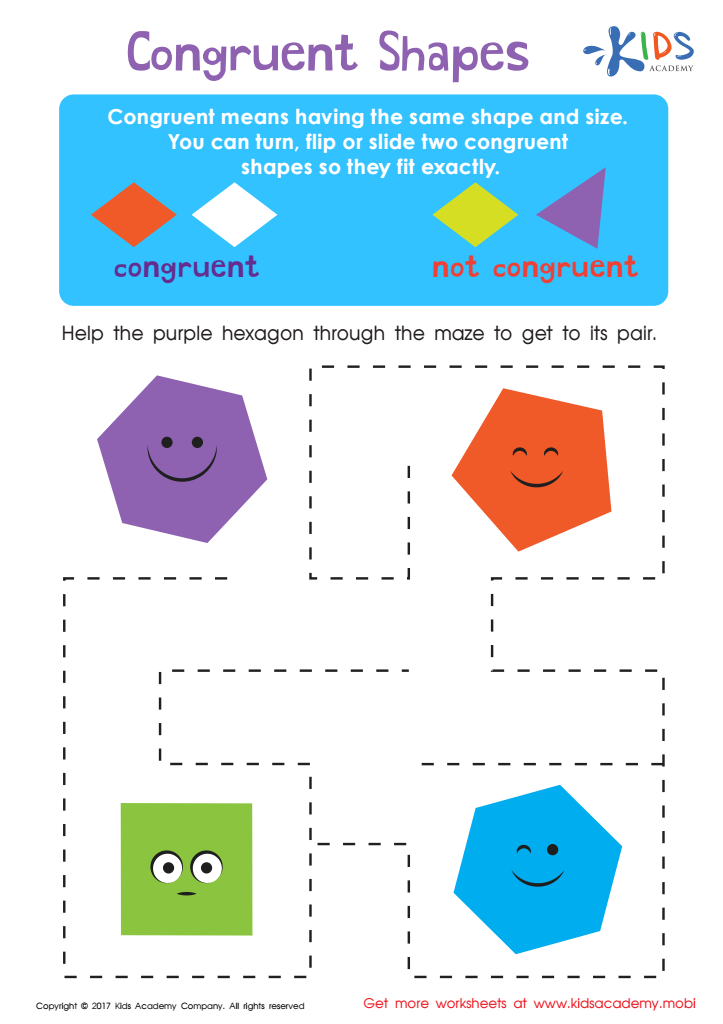
Congruent Shapes Worksheet
Help your child find the twin of the purple hexagon! This congruent shapes worksheet is great for increasing vocabulary while challenging mental rotation skills.
 Assign to My Students
Congruent Shapes Worksheet
Worksheet
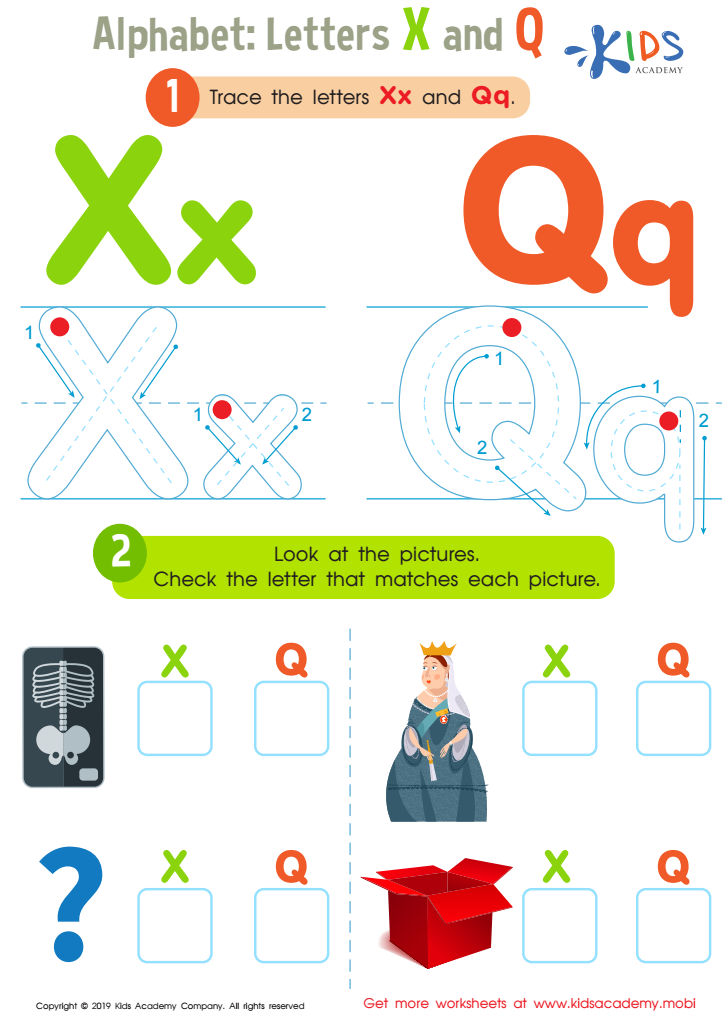
Letters X and Q Tracing Worksheet
Do you want your students to improve writing and letter recognition? This worksheet is a great place to start! Kids can trace the letters «X» and «Q» and identify pictures that match each letter. With a little encouragement, they'll do a great job!
Letters X and Q Tracing Worksheet
Worksheet
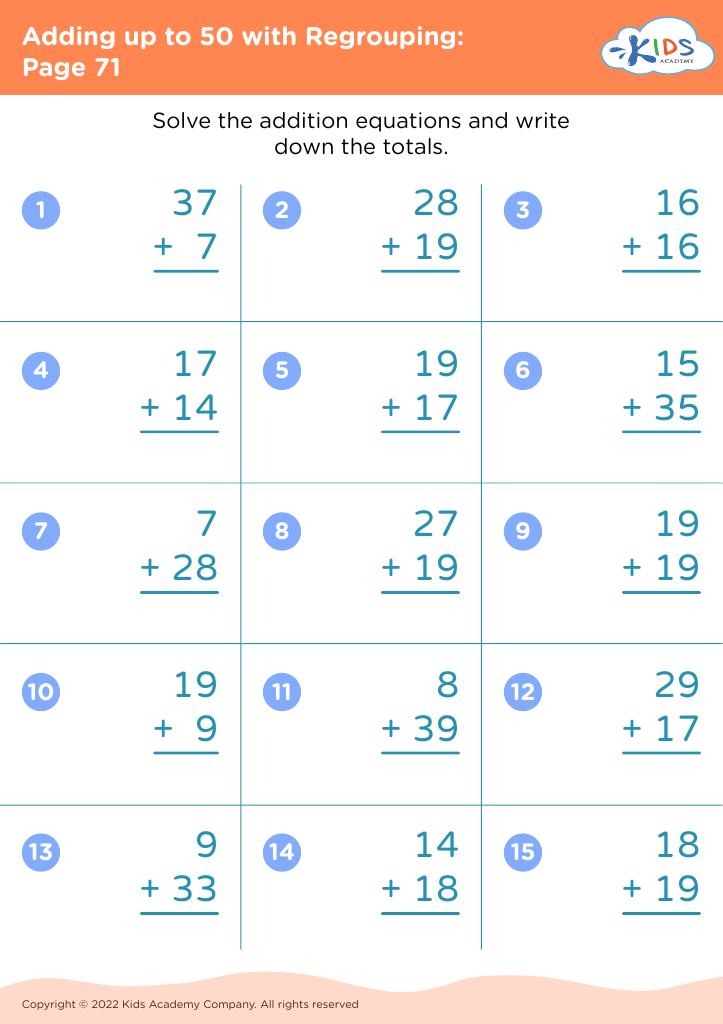
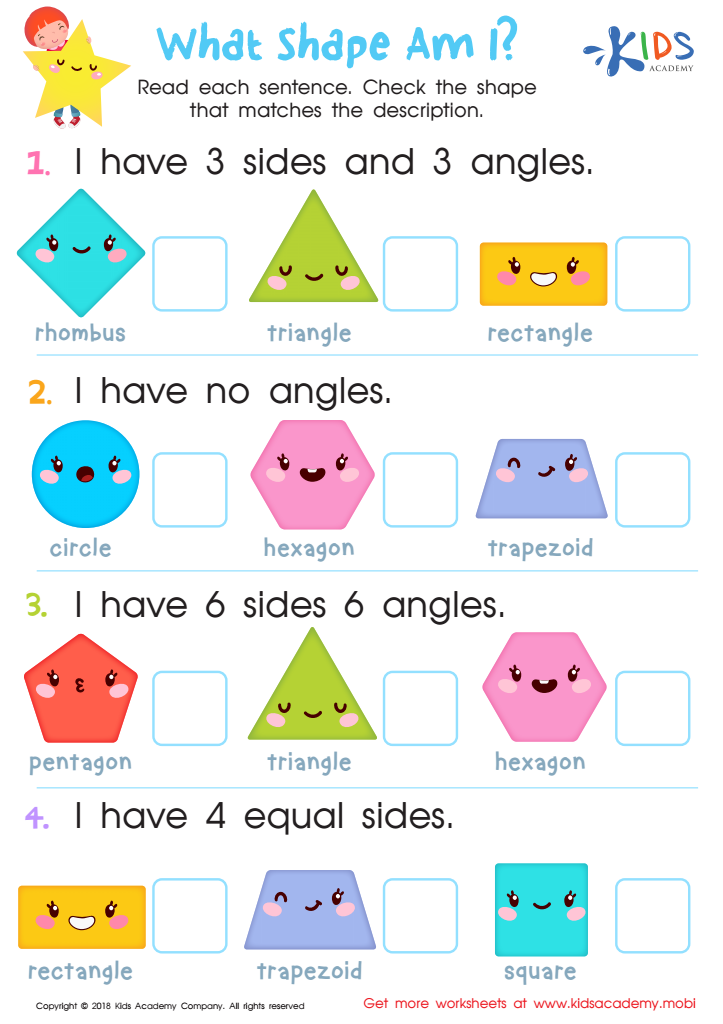
What Shape Am I? Worksheet
Help your child read each sentence in this colorful worksheet. Have them identify the shapes described and check the boxes. To prepare, ask simple questions like "How many sides does a triangle have?" and "Which shape has 4 equal sides?" Your child will become more skilled at shapes by the end of this activity.
What Shape Am I? Worksheet
Worksheet
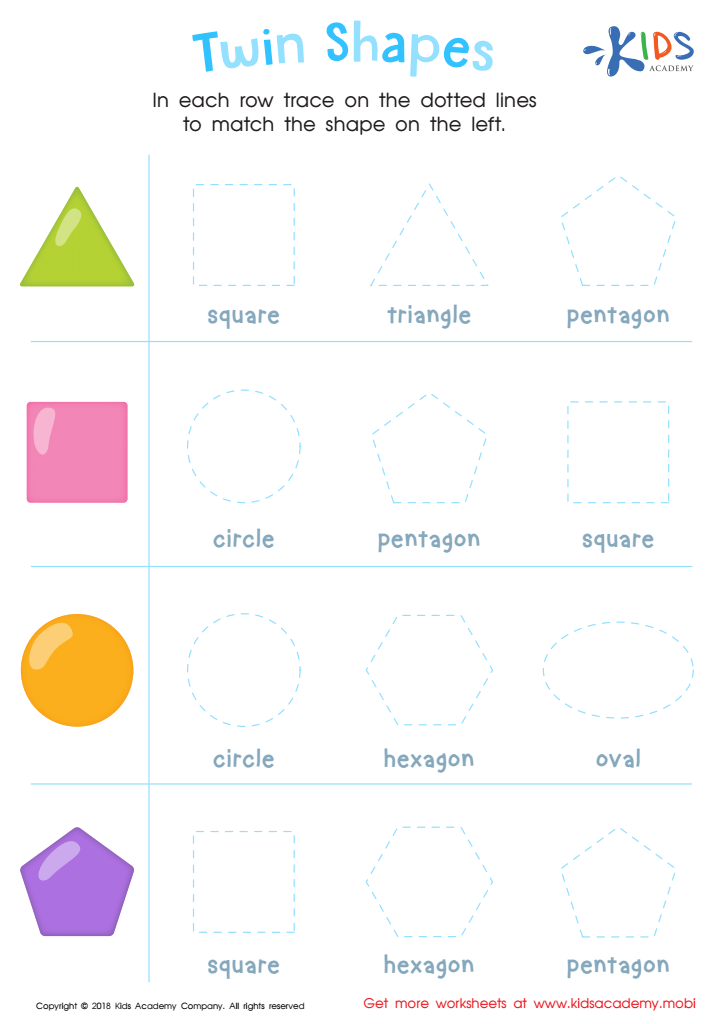
Twin Shapes Dot-to-Dot Worksheet
Test your child's ability to copy with this worksheet. Ask them to find and name the four shapes on the left. Then, they must match each with the dotted lines on the right. Help your child with all four shapes in this fun exercise.
Twin Shapes Dot-to-Dot Worksheet
Worksheet
Join Kids Academy for Free
Who is primarily going to use this learning content?







Visual discrimination is the ability to recognize differences in visual stimuli, such as shapes, patterns, symbols, and letters. It's a critical skill for 8-year-olds as it significantly impacts their academic and daily activities. Strong visual discrimination skills enable children to distinguish between letters and numbers that look similar, such as 'b' and 'd' or '3' and '8,' which is essential for reading fluency and math proficiency.
For parents and teachers, fostering this skill can lead to substantial improvements in a child's academic performance and confidence. Children with good visual discrimination are more likely to excel in reading, as they can accurately decode words and understand texts. In mathematics, they can better recognize numbers and symbols, leading to improved problem-solving abilities. Beyond academics, this skill aids in everyday tasks such as reading signs, interpreting charts, and even in play activities that involve pattern recognition.
Parents and teachers can support visual discrimination development through various activities like puzzles, matching games, and practice with letter and number recognition. With some children potentially facing learning challenges, being proactive in enhancing visual discrimination can prevent future academic difficulties. In essence, strong visual discrimination forms a foundation for effective learning, making its encouragement crucial for a child's overall development.








