
Vowel Recognition Worksheets for 8-Year-Olds
8 filtered results
Difficulty Level
Grade
Age
-
From - To
Subject
Activity
Standards
Enhance your child's reading skills with our engaging Vowel Recognition Worksheets designed specifically for 8-year-olds. These worksheets offer interactive activities that make learning about vowels fun and effective. Through a variety of exercises, including identifying, sorting, and filling in vowels, your child will strengthen their understanding of this essential component of language. Our resources align with educational standards, ensuring they are appropriate for this age group. Ideal for both classroom and homeschooling settings, these worksheets foster literacy while keeping kids motivated through colorful designs and enjoyable tasks. Start cultivating a strong foundation in reading with our printable vowel recognition activities today!
Favorites
With answer key
Interactive
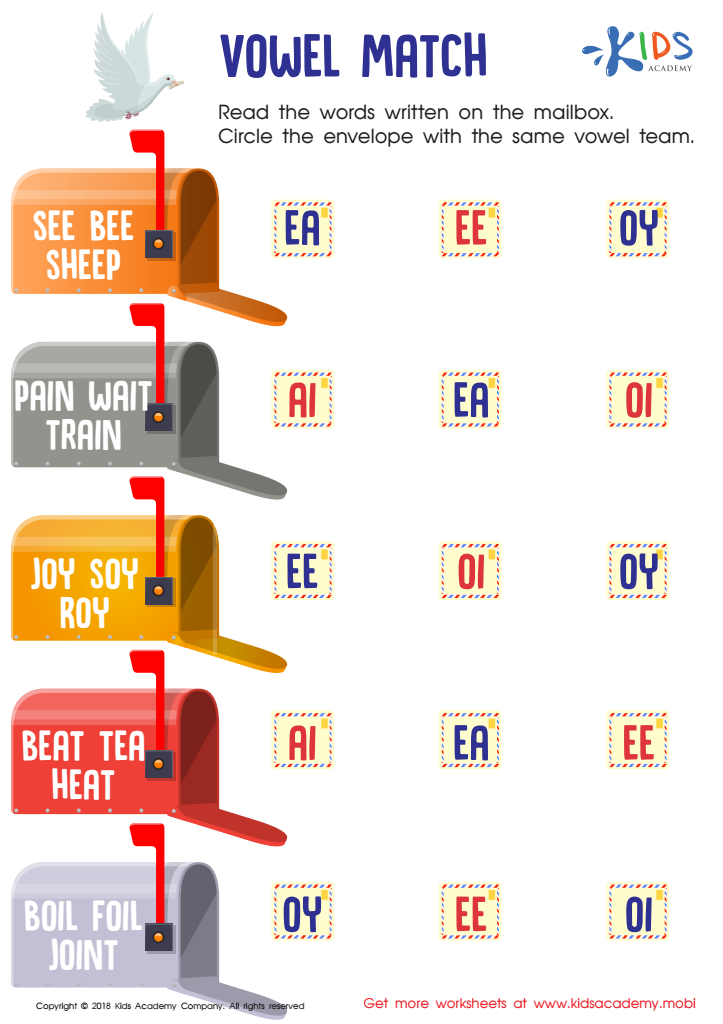
Vowel match Worksheet
Early readers can find vowel teams (digraphs) tricky. This simple worksheet helps kids match words with the right digraphs and learn to read! They'll practice reading words from different families, and linking the letters to their sounds. It's a fun way to get kids sending letters to the right addresses!
Vowel match Worksheet
Worksheet
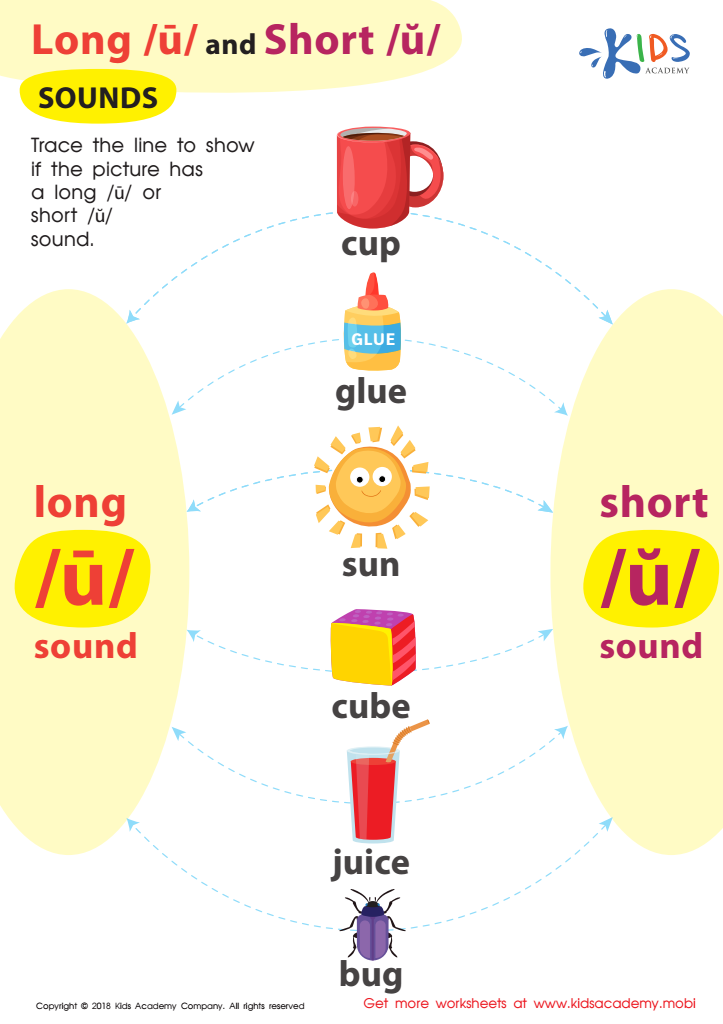
Reading: Long U and Short U Sounds Worksheet
Learning about long and short vowel sounds can be tricky, especially with the letter U. Extra practice with this worksheet is recommended for mastering this sound. Children read words with the different vowel sounds and categorize them. Great for instruction, practice and reteaching in reading classes.
Reading: Long U and Short U Sounds Worksheet
Worksheet
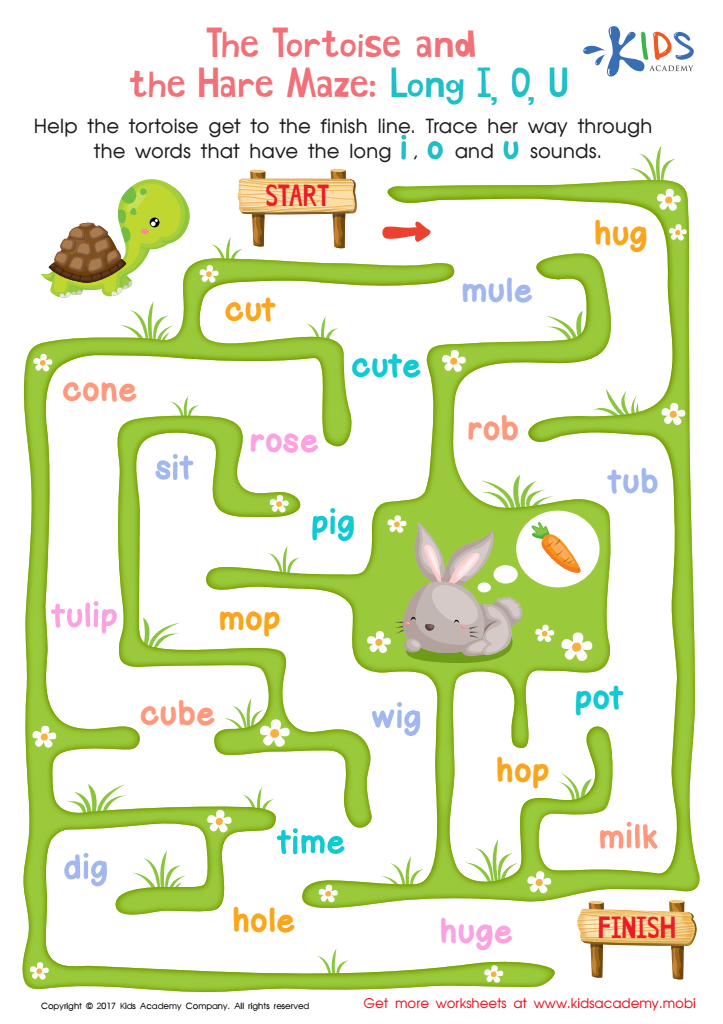
Long I, O, U Words Worksheet
This fun phonics worksheet has your child race the tortoise and hare to the finish line. Find all the long vowel sounds to win! It'll help your child's recognition of long I, O, and U words without him realizing it!
Long I, O, U Words Worksheet
Worksheet
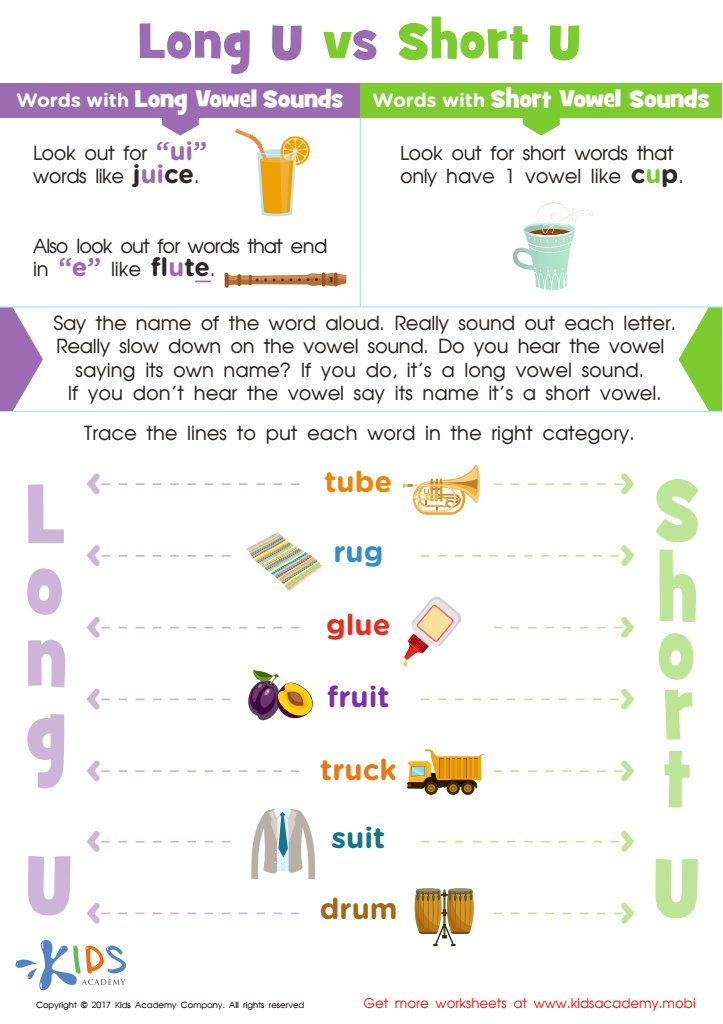
Long and Short Vowel U Spelling Worksheet
Help your child learn long and short vowel sounds with this fun long and short vowel U worksheet! Kids can become proficient spellers by mastering simple spelling tricks and sounding out letters.
Long and Short Vowel U Spelling Worksheet
Worksheet
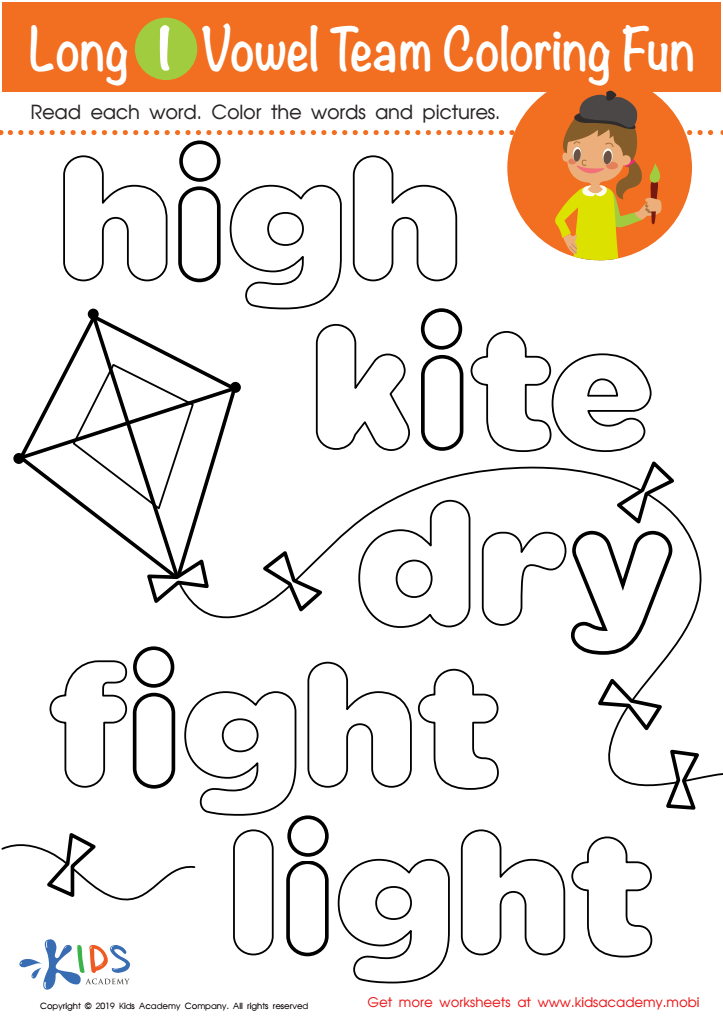
Long I Vowel Team Coloring Worksheet
This worksheet provides practice with letter combinations that make the long "i" sound while enhancing creativity and motor skills with a fun coloring activity. Unknowingly, new readers learn key phonics skills while having fun!
Download (PDF)
 Assign to My Students
Assign to My Students
Long I Vowel Team Coloring Worksheet
Worksheet
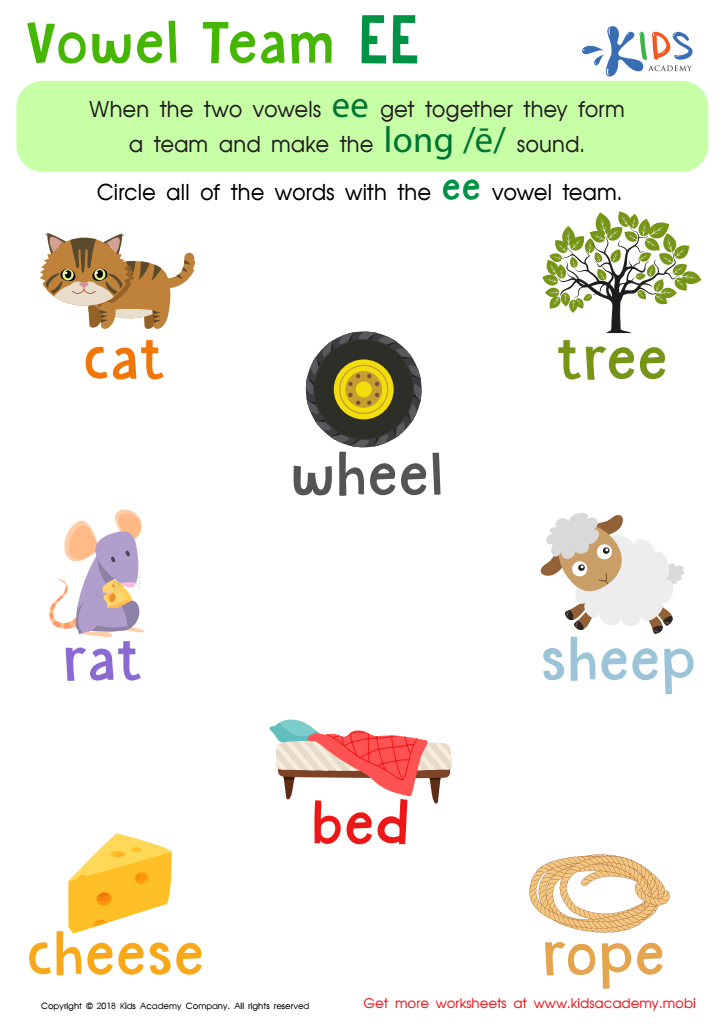
Reading: Vowel Team EE Worksheet
This worksheet is perfect for helping young learners master the /ee/ vowel team. It shows the first vowel with a long sound and the second vowel silent. It also provides pictures for unfamiliar words for readers of all levels. It's an ideal resource for teaching phonics skills.
Reading: Vowel Team EE Worksheet
Worksheet
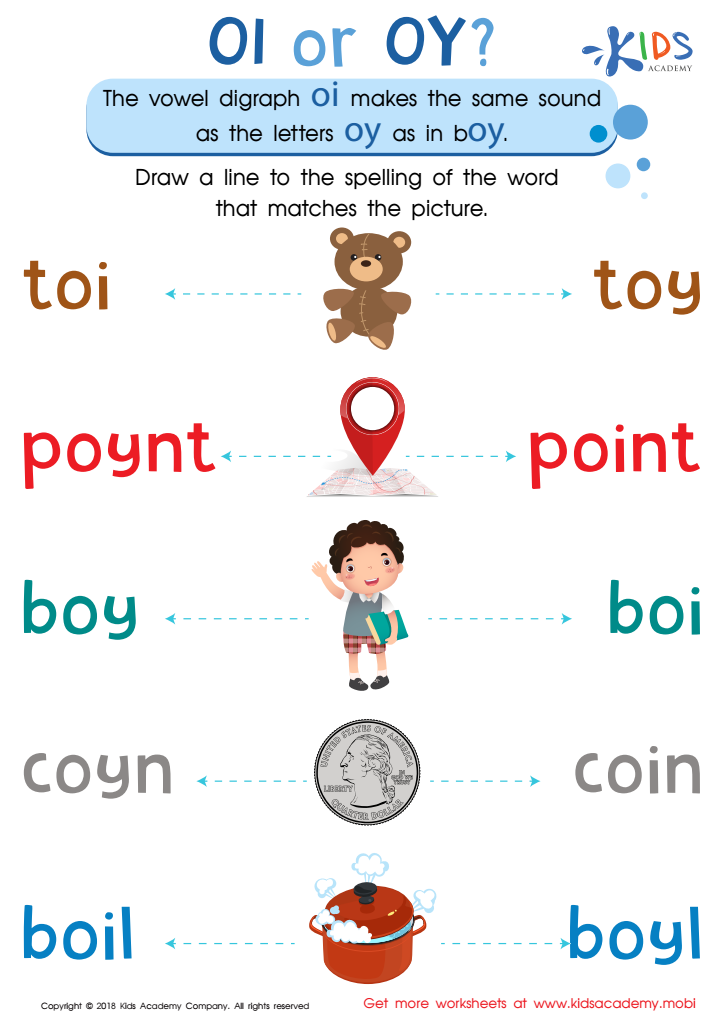
Reading: OI and OY Worksheet
Ask your students if they know the rule for words with /oi/ or /oy/ sound. If not, it's easy to learn! Rule: If /oy/ at end of word, spell with 'oy'; if /oi/ in middle of word, spell with 'oi'. Use this worksheet to help them master these digraphs and improve their ability to decode.
Reading: OI and OY Worksheet
Worksheet
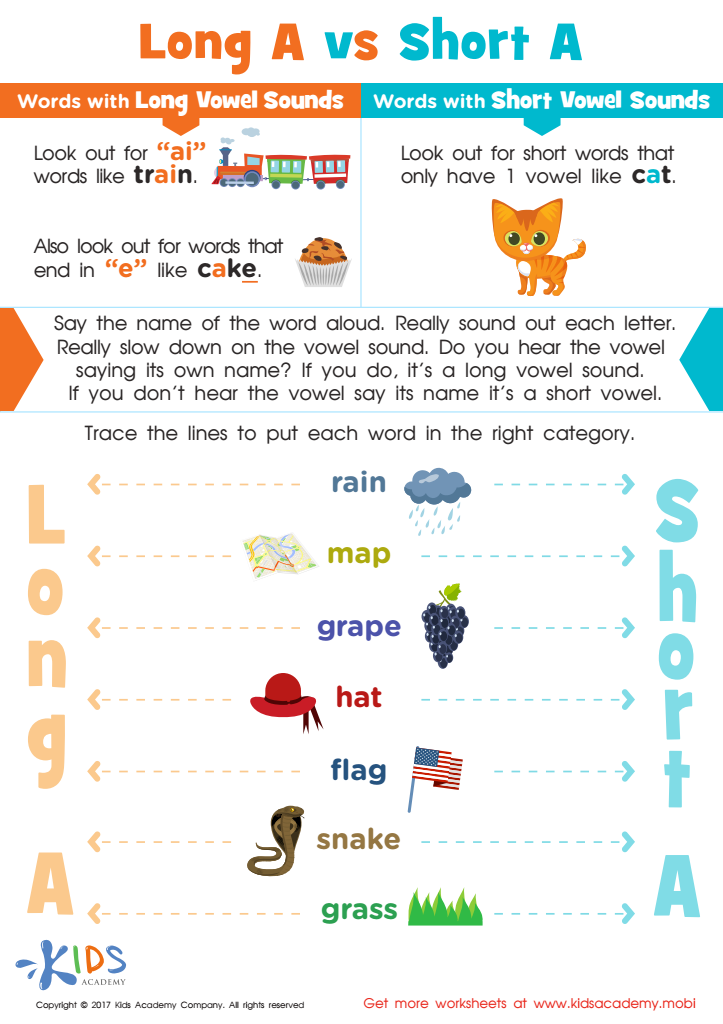
Long and Short Vowel A Spelling Worksheet
Help your child learn tricky spellings by focusing on vowel sounds. Read about each one, see examples and work through the long and short vowel A worksheet. Your child will be able to sound out words to determine if the vowel is long or short.
Long and Short Vowel A Spelling Worksheet
Worksheet
Join Kids Academy for Free
Who is primarily going to use this learning content?




.jpg)

Vowel recognition is a foundational skill crucial for the literacy development of 8-year-old children. This skill not only aids in reading proficiency but also supports proper pronunciation, spelling, and overall language comprehension. At this age, children are transitioning from learning to read to reading to learn, making understanding vowels imperative.
Firstly, vowels are the building blocks of words; they help in distinguishing meaning and sound patterns. A strong grasp of vowel recognition enables children to decode new words more effectively, fostering a love for reading and boosting their confidence. Furthermore, as children encounter increasingly complex texts, their ability to identify and manipulate vowels becomes essential for comprehension and interpretation.
Additionally, strong vowel recognition can directly impact a child's writing skills. Children equipped with an understanding of vowels are likely to improve their spelling and sentence construction, simplifying the writing process. Teachers and parents play vital roles in enhancing vowel recognition through engaging activities, games, and daily practice.
Ultimately, focusing on vowel recognition can ignite a passion for literacy, thereby setting a solid foundation for lifelong learning. This emphasis on core language skills also enhances communication, critical thinking, and cognitive development, all essential for academic success.








