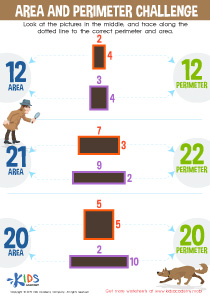
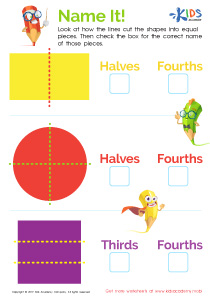
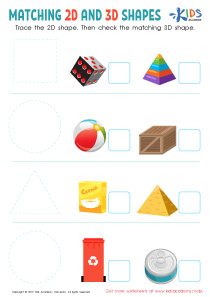
Visual discrimination 2D Shapes Worksheets for 8-Year-Olds
3 filtered results
-
From - To
Enhance your child's learning adventure with our captivating Visual Discrimination 2D Shapes Worksheets, perfect for 8-year-olds! These expertly designed worksheets cater to young learners by refining their ability to identify, compare, and differentiate between two-dimensional shapes. Engaging and educational, the activities promote essential math skills and sharpen visual perception—a fundamental readiness skill. Each worksheet blends fun illustrations with critical-thinking challenges, ensuring kids remain focused and delighted as they explore shapes in varied contexts. Available in convenient printables, these worksheets bolster classroom learning and make an invaluable addition to at-home practice, all while fostering a love for math and geometry.
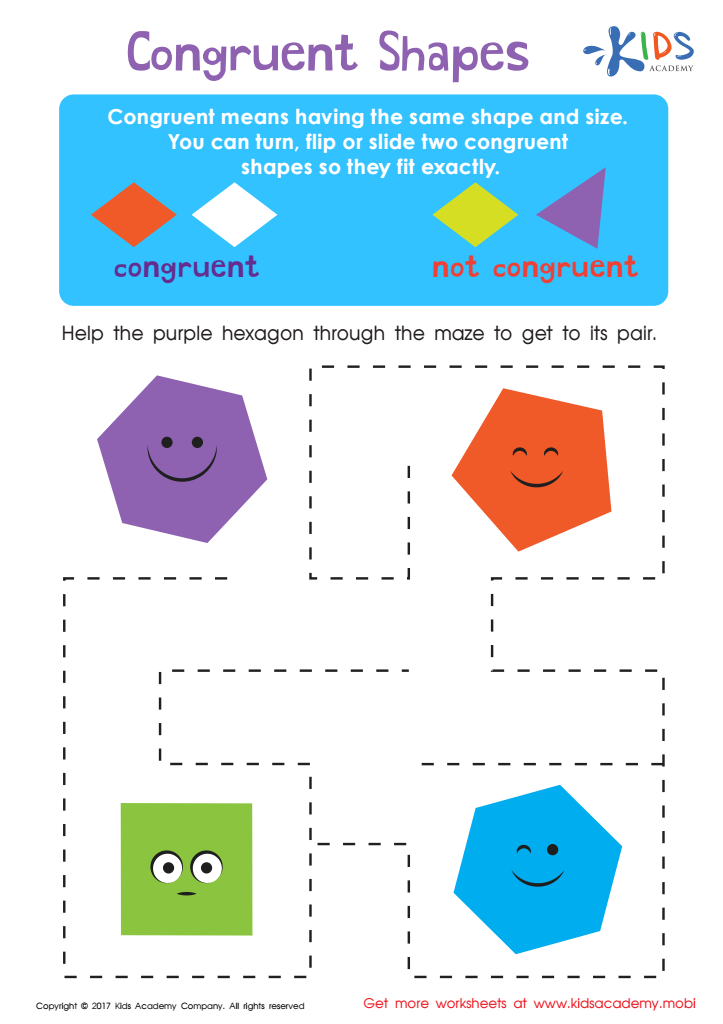
Congruent Shapes Worksheet
 Assign to My Students




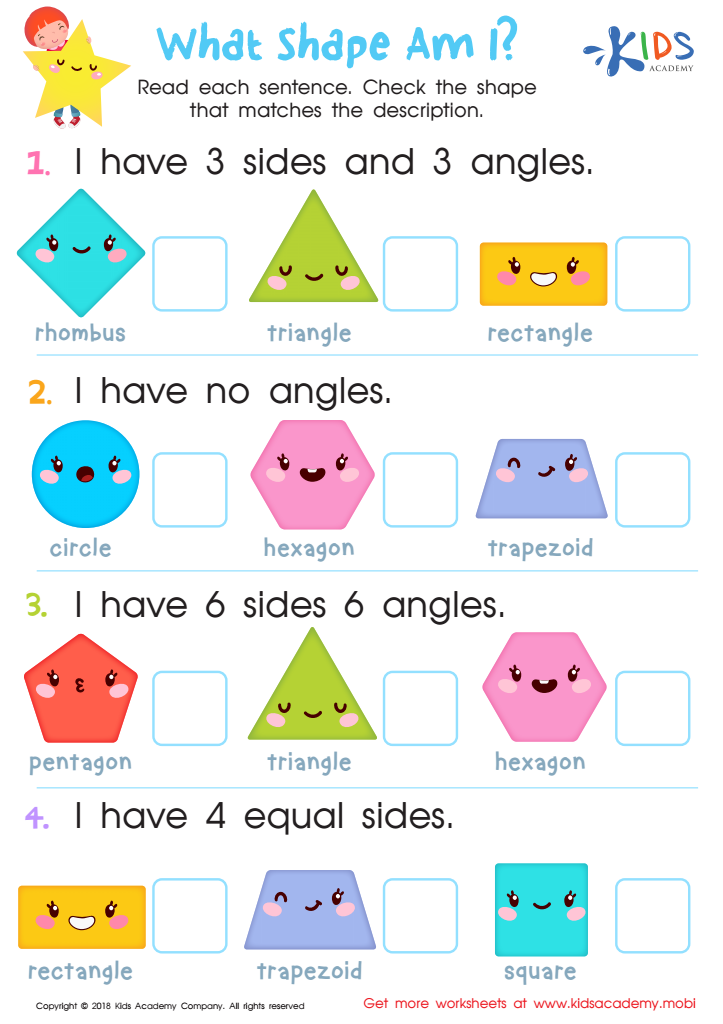
What Shape Am I? Worksheet
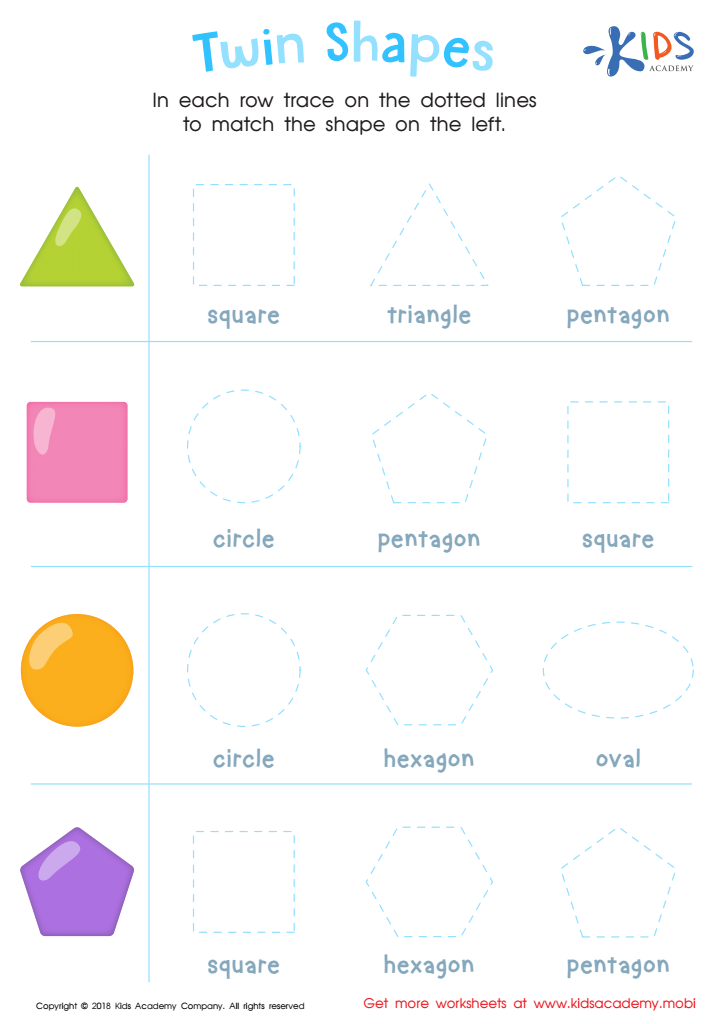
Twin Shapes Dot-to-Dot Worksheet








Visual discrimination is a crucial skill for 8-year-olds as it enhances their ability to perceive and interpret two-dimensional shapes accurately, which lays a strong foundation for both academic learning and everyday functioning. This skill enables children to differentiate between letters and numbers, a fundamental aspect of reading and mathematics. For instance, recognizing the difference between 'b' and 'd' or '6' and '9' relies heavily on visual discrimination.
Parents and teachers should prioritize the development of this skill because it fosters cognitive abilities such as attention to detail, memory, and problem-solving. When children effectively distinguish 2D shapes, they are better prepared for geometry lessons and other subjects requiring spatial awareness.
Furthermore, strong visual discrimination abilities support daily activities like following instructions, organizing personal items, and navigating their environment. Children who struggle with visual discrimination may find tasks like understanding maps, arranging objects, or participating in games more challenging, impacting their confidence and social interactions.
By incorporating activities that enhance visual discrimination skills, such as puzzles, pattern recognition games, and drawing exercises, parents and teachers can support the holistic development of children, equipping them with necessary tools for academic success and practical life skills.