Cognitive Development Adding up to 100 Worksheets for 8-Year-Olds
4 filtered results
-
From - To
Discover our "Cognitive Development Adding up to 100 Worksheets for 8-Year-Olds," expertly designed to balance fun and education! These engaging worksheets help children enhance their cognitive skills while mastering addition up to 100. Each activity, crafted with vibrant visuals and interactive problems, aims to promote critical thinking and numerical fluency. Ideal for home or classroom use, our collection supports curriculum standards and offers a solid mathematical foundation. These worksheets unlock children's potential and inspire a love for learning through practice and persistence. Propel your 8-year-old’s cognitive development journey today with our thoughtfully created resources!
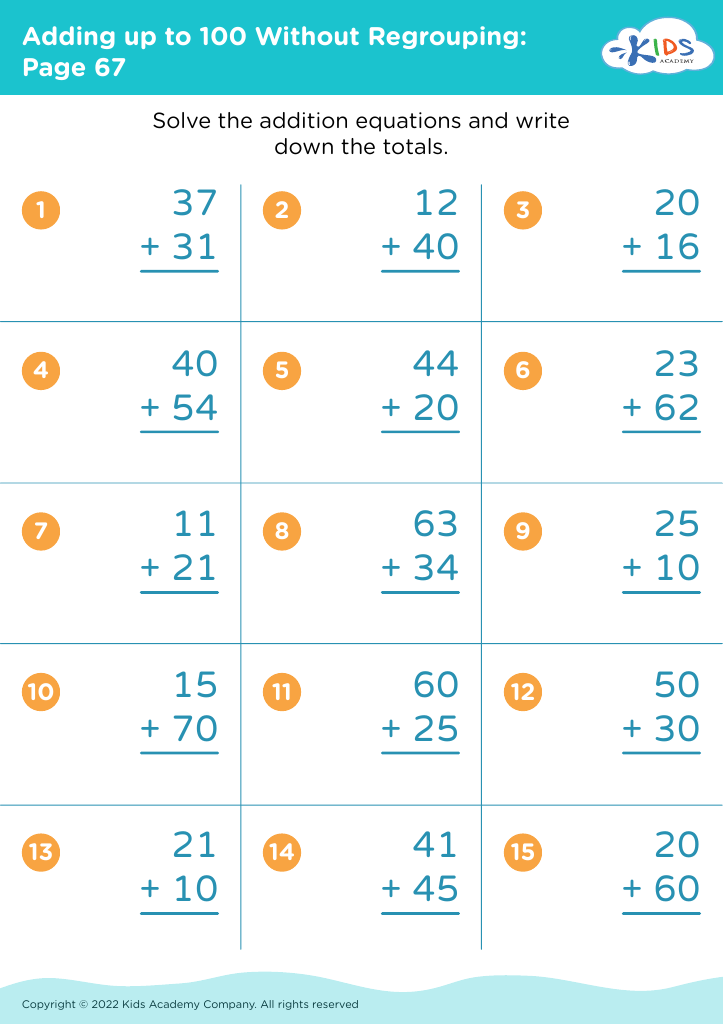
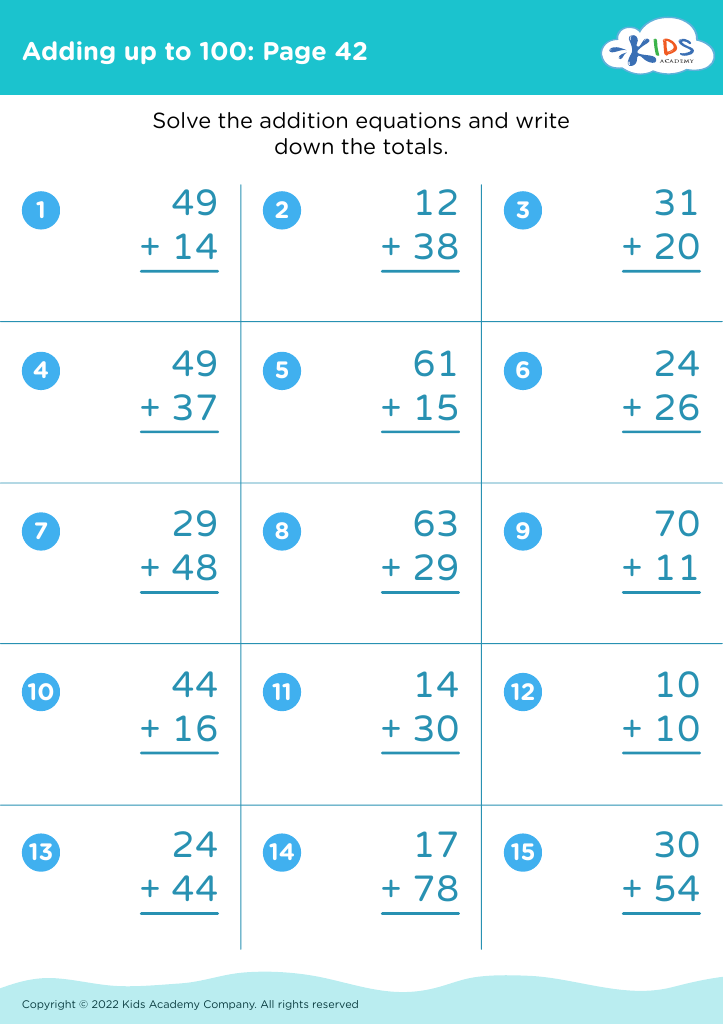
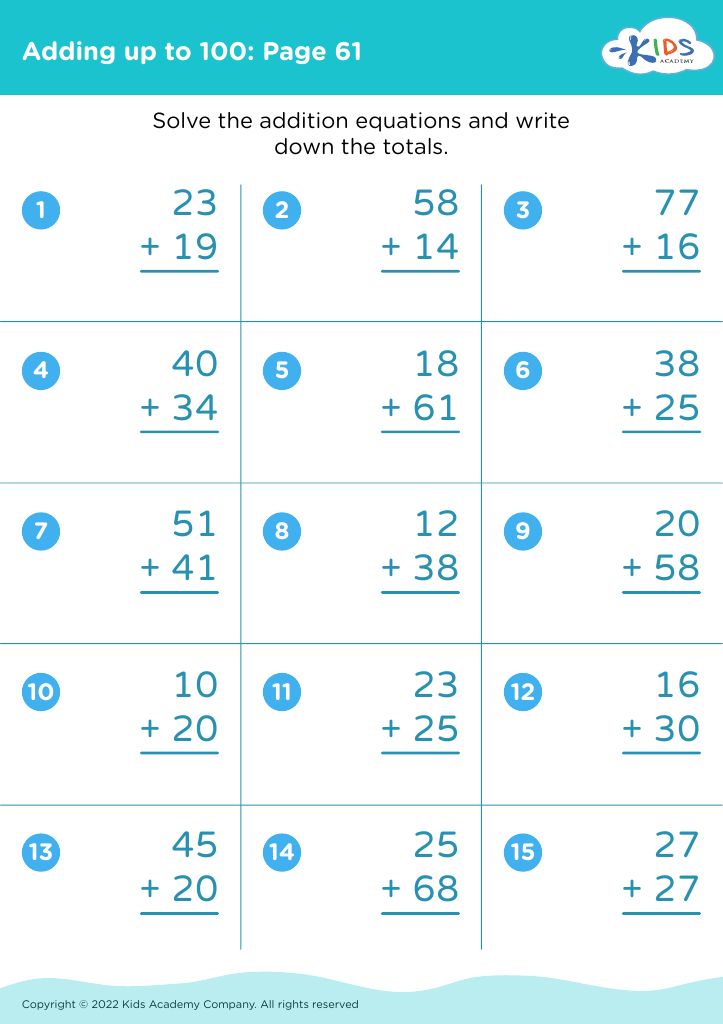
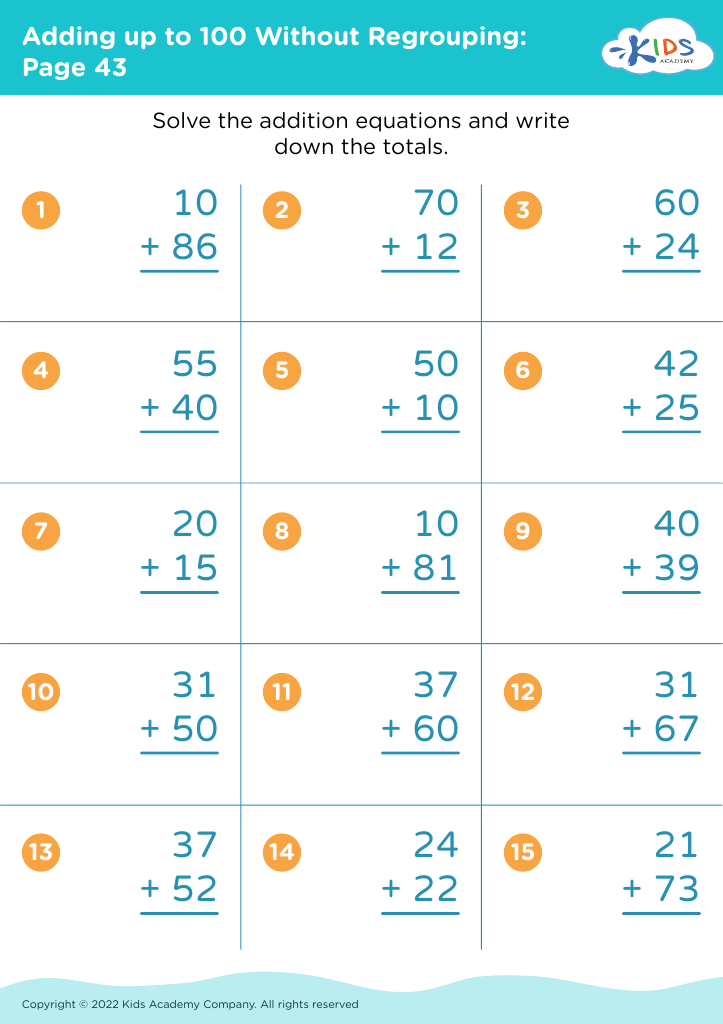



%20(1).jpg)



Cognitive development, particularly in mathematical skills like adding up to 100, is crucial for 8-year-olds as it lays a foundational framework for their future learning and academic success. At this age, children's brains are rapidly developing, and engaging in activities that challenge their cognitive abilities helps stimulate critical thinking and problem-solving skills. By mastering addition up to 100, children gain confidence in their mathematical abilities, which enhances their overall academic experience and encourages a positive attitude towards learning.
Furthermore, proficiency in basic arithmetic is essential for understanding more complex mathematical concepts that will be introduced in later grades. Without a solid grasp of these fundamental skills, children may find it challenging to keep up with their peers, potentially leading to frustration and a lack of motivation.
In addition to academic benefits, improving cognitive development through math also enhances everyday life skills such as budgeting, time management, and logical reasoning. Parents and teachers play a pivotal role in nurturing this development by providing a supportive and encouraging learning environment, offering educational resources, and incorporating practical math experiences into daily activities.
Hence, focusing on cognitive development in areas like adding up to 100 not only boosts academic achievement but also equips children with essential skills for real-world problem-solving and logical thinking, setting them up for future success.








