Enhance counting skills Adding up to 100 Worksheets for 8-Year-Olds
6 filtered results
-
From - To
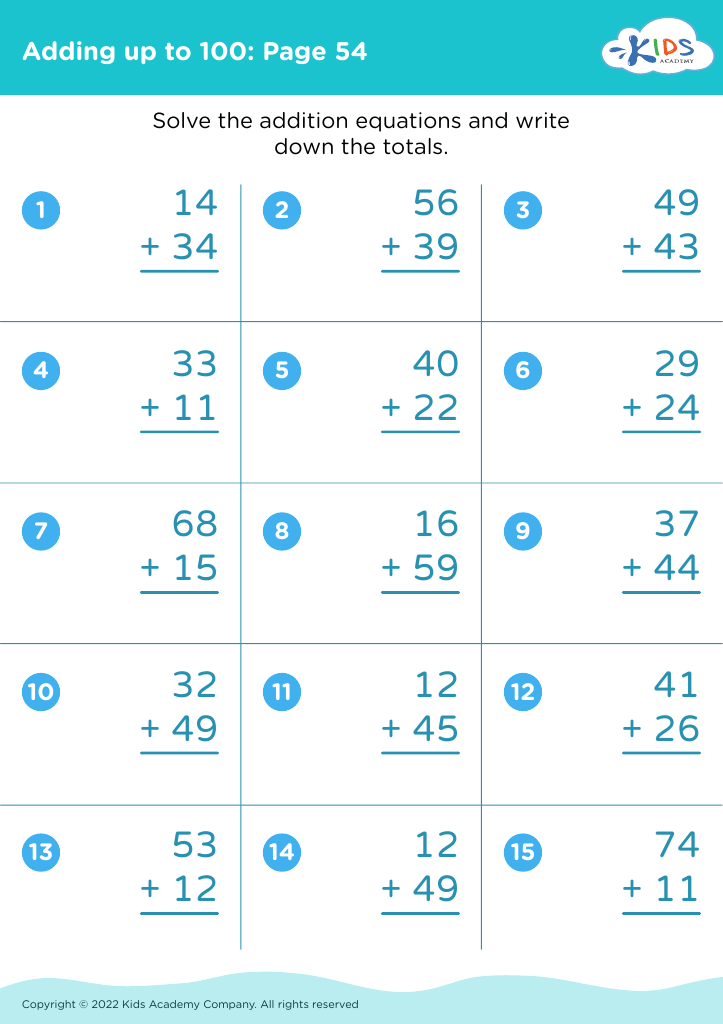
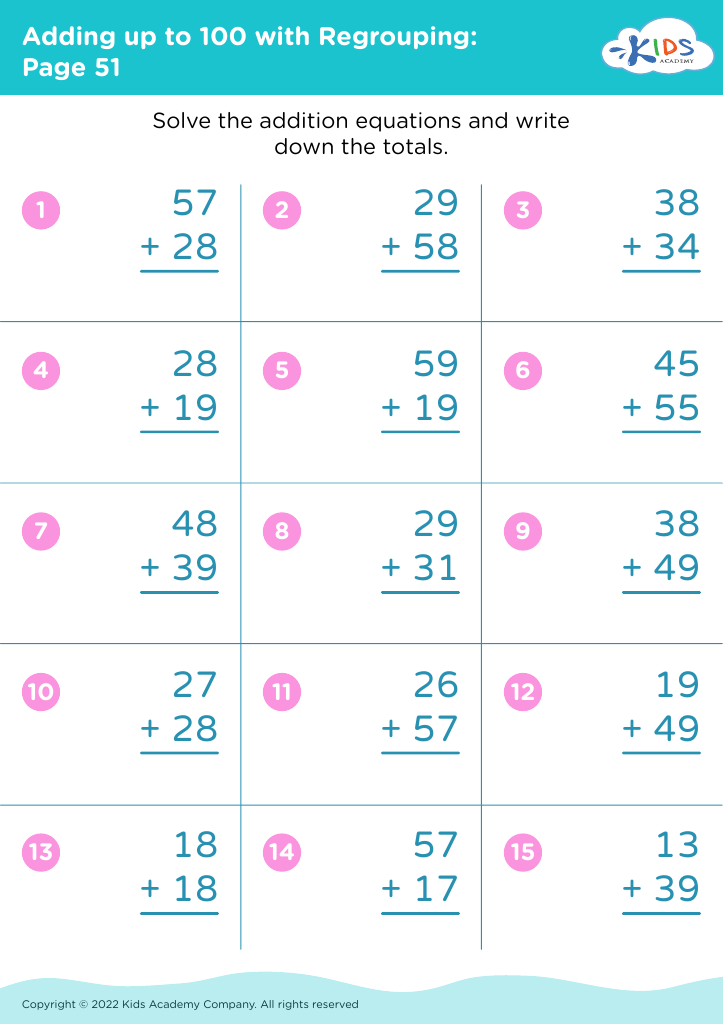
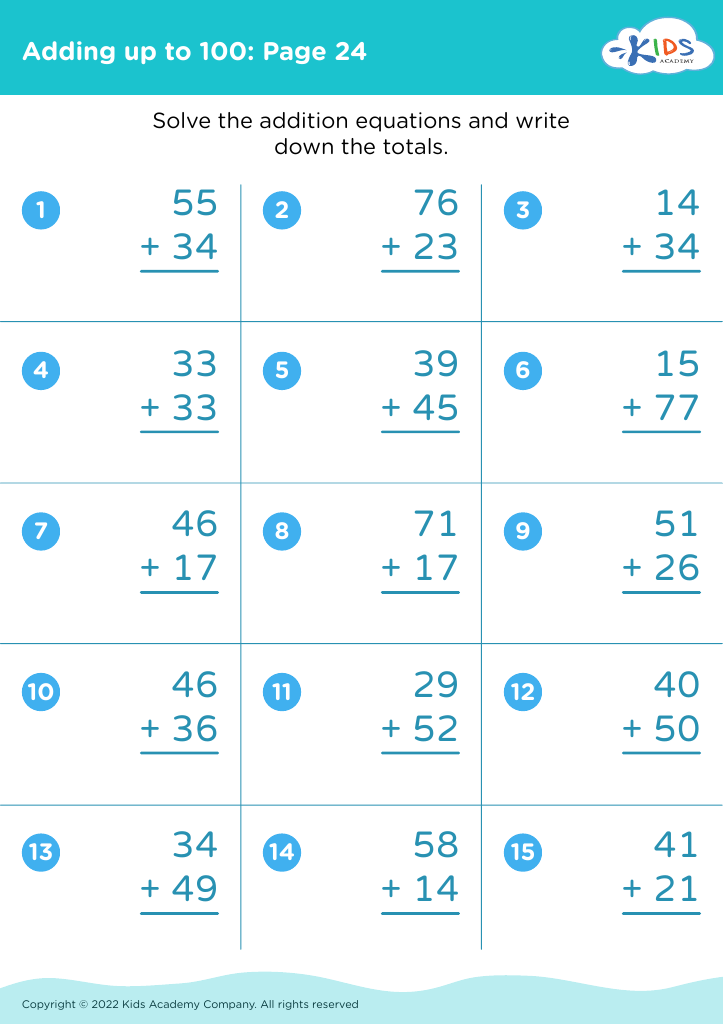
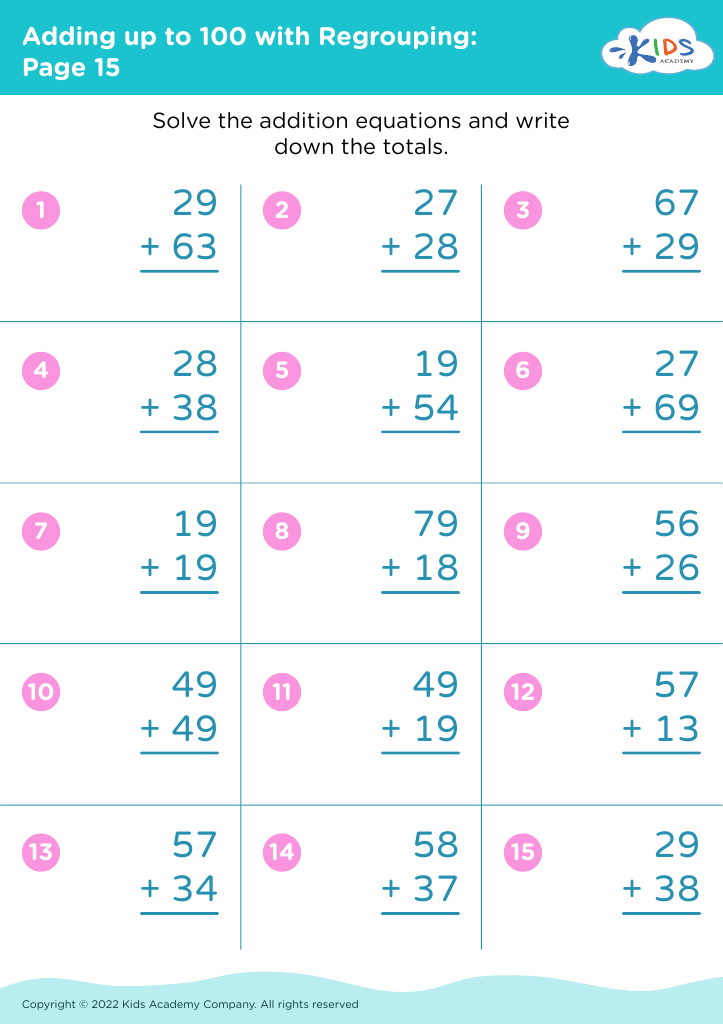
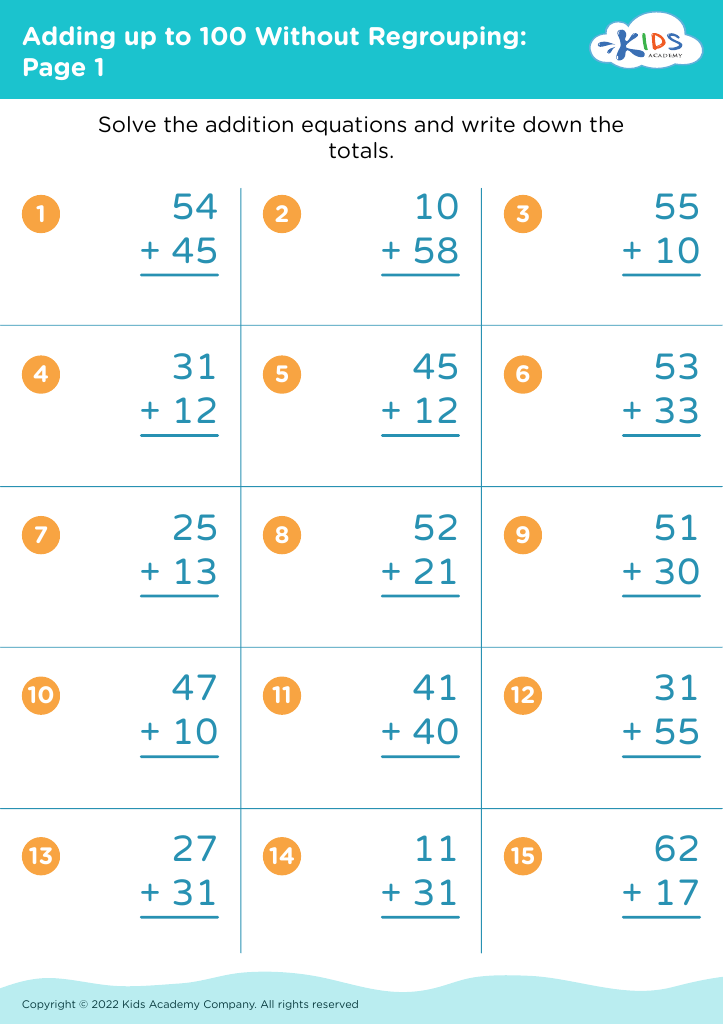
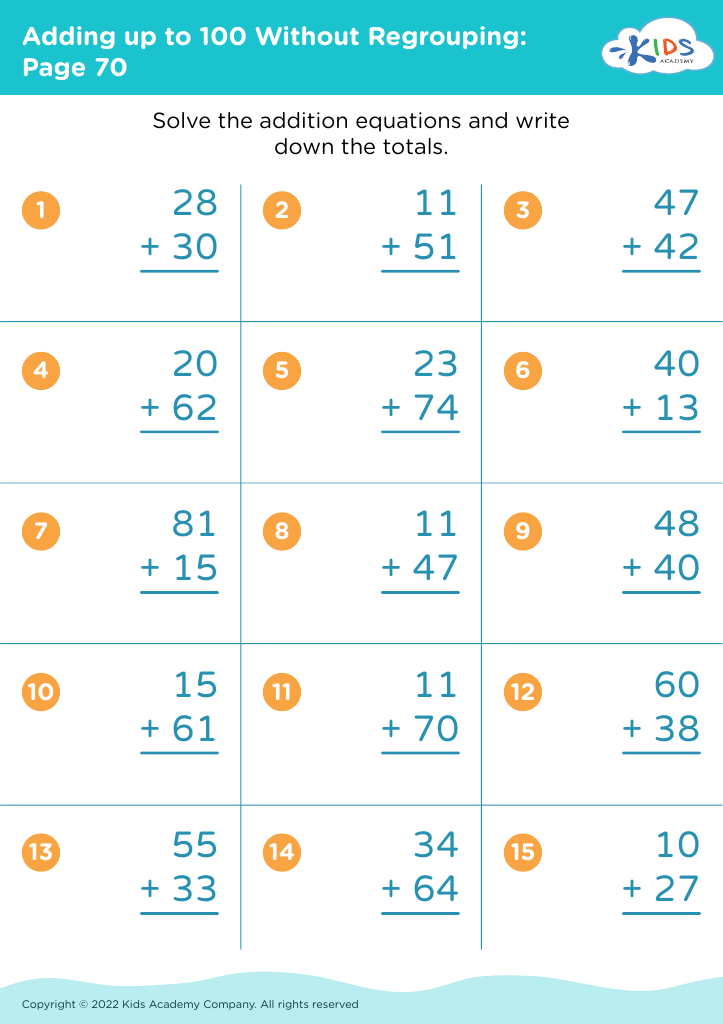
Discover fun and educational "Enhance Counting Skills: Adding up to 100" worksheets designed for 8-year-olds! These engaging resources from Kids Academy are perfect for young learners to practice and advance their addition skills. With a variety of exercises focused on addition up to 100, children will develop their mathematical abilities, boost their confidence, and enjoy a hands-on approach to learning. Ideal for both classroom use and home study, our worksheets provide a structured yet enjoyable way to enhance counting skills. Help your child master addition with these effective and easy-to-follow worksheets today!




%20(1).jpg)


Enhancing counting skills up to 100 for 8-year-olds is a fundamental aspect of their early arithmetic development. At this stage, children transition from basic number recognition to more complex mathematical concepts. Proficiency in counting up to 100 establishes a strong foundation for learning operations such as addition, subtraction, multiplication, and division. This foundational skill helps in understanding place value, which is crucial for comprehensive math knowledge.
For parents and teachers, prioritizing these skills supports overall cognitive development. Counting enhances problem-solving abilities, logical thinking, and memory retention. Children with strong counting abilities are more likely to perform well in advanced math lessons, fostering confidence and a positive attitude toward learning.
Additionally, practical life demands numeracy skills. Engaging in counting activities helps children comprehend everyday tasks such as telling time, handling money, measuring ingredients, or following a timetable. These real-life applications make them more adept at managing daily challenges independently.
Early mastery of counting skills creates a domino effect of academic success. As children build more advanced numeracy skills with confidence, their academic engagement remains high, cultivating a lifelong love for learning. Encouraging and supporting counting skills ensure that children are well-prepared for future educational milestones and everyday functioning.








