Recognize patterns Adding up to 100 Worksheets for 8-Year-Olds
4 filtered results
-
From - To
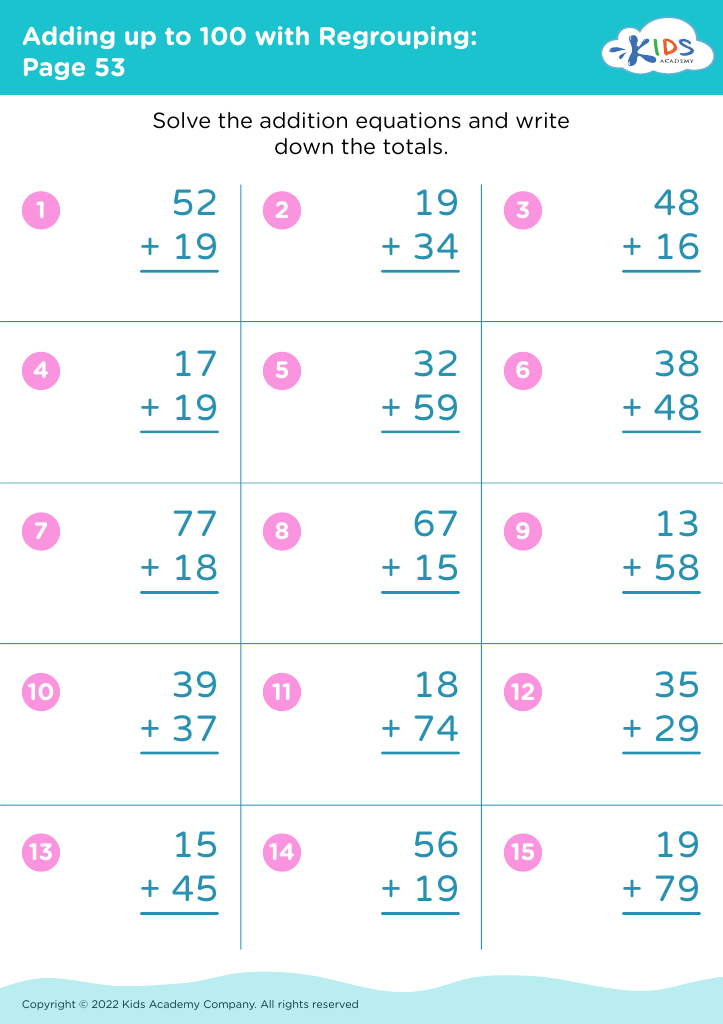
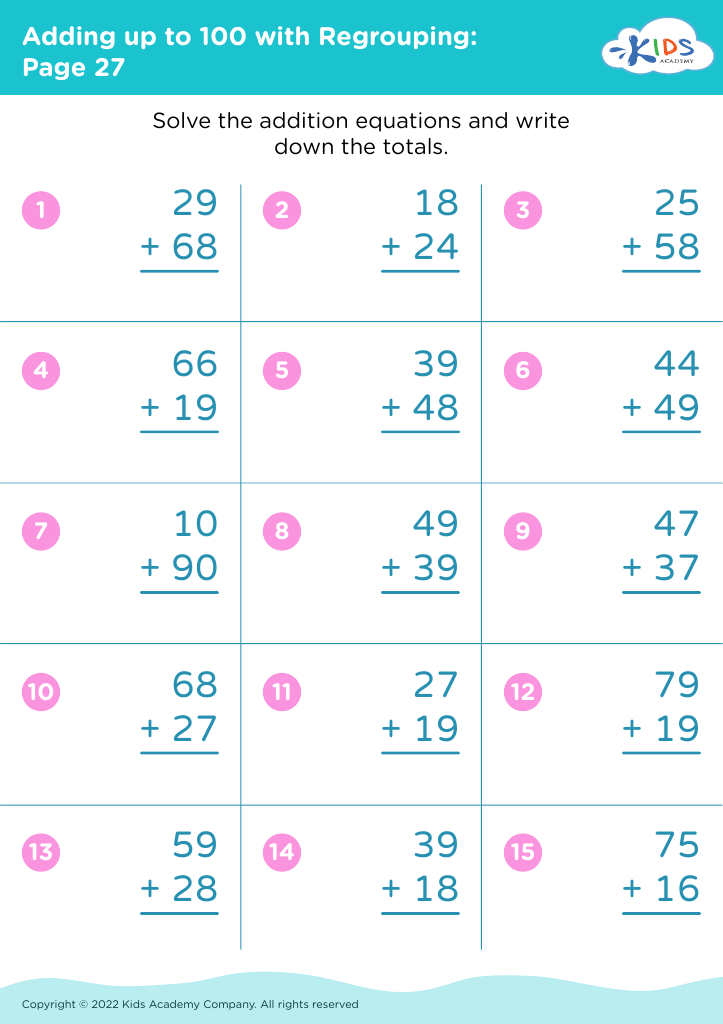
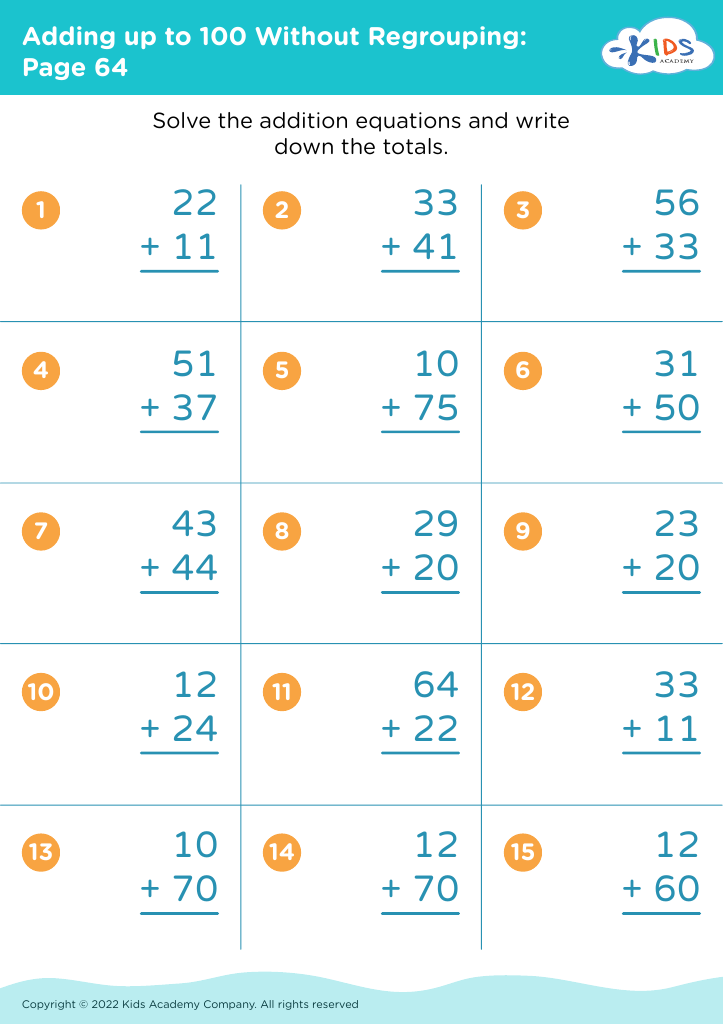
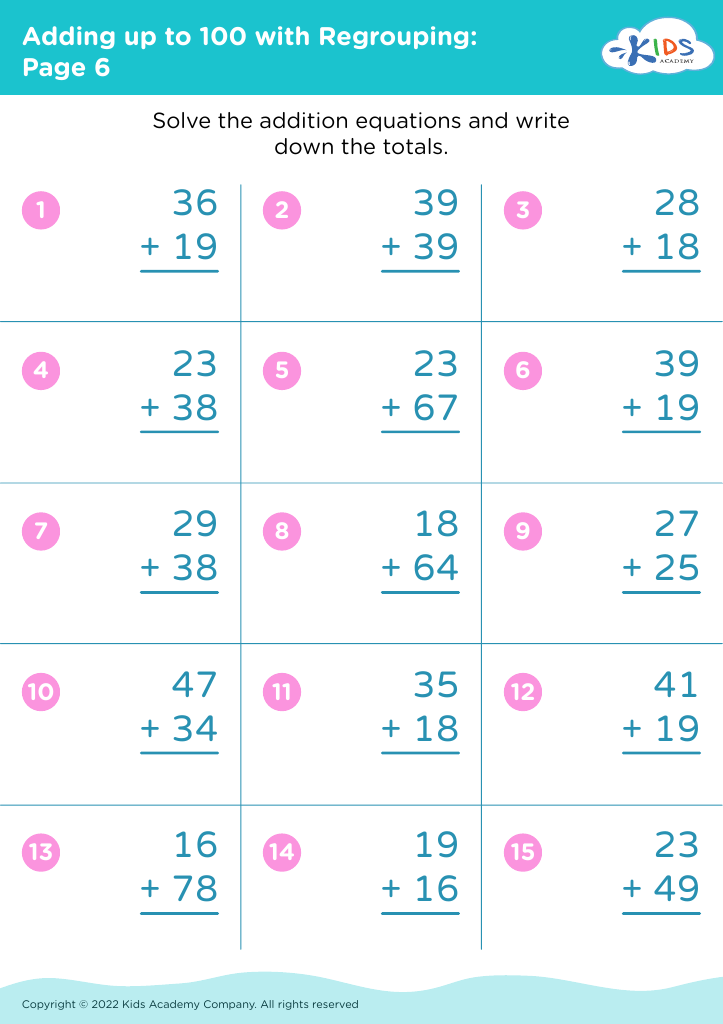
Enhance your 8-year-old's mathematical skills with our "Recognize Patterns: Adding Up to 100" worksheets! These engaging resources are designed to help children identify numerical patterns, reinforcing their understanding of addition while making learning fun. Filled with interactive exercises, our worksheets encourage kids to explore relationships between numbers and discover how patterns can lead to quick and accurate calculations. Perfect for both classroom and at-home practice, these worksheets support essential math skills, boost confidence, and promote a love for learning. Explore our variety of colorful, easy-to-understand worksheets that cater to different learning styles and let your child's mathematical abilities shine!






%20(1).jpg)
Recognizing patterns and mastering addition skills that add up to 100 is crucial for 8-year-olds' mathematical development. At this age, children are transitioning from concrete understanding to more abstract mathematical concepts. Learning to recognize patterns fosters their logical thinking and promotes problem-solving skills, essential for future math learning.
When children learn to identify patterns in numbers—such as pairs that add to 100 (e.g., 1+99, 50+50, 30+70)—they develop a better grasp of number relationships. This not only enhances their addition skills but also builds confidence in their mathematical abilities. Understanding these patterns also aids them in estimating, making calculations quicker and more intuitive.
Parents and teachers play a vital role in this learning phase. They can provide activities and games that engage children in discovering patterns, encouraging a deeper understanding of math, rather than rote memorization. By highlighting the significance of patterns, adults help children cultivate a mindset that appreciates math not as an isolated subject but as a crucial tool for everyday problem-solving. Ultimately, fostering this skill empowers children academically and socially, giving them a solid foundation for future education and real-world applications.








