Filters

51 filtered results

Clear all filters
Favorites
With answer key
Interactive

51 filtered results

Difficulty Level

Grade


Check out this FREE Trial Lesson on Adding up to 100 for age 8!

Sorting Objects into 3 Categories

Favorites
With answer key
Interactive
  • 8
  • Understanding fractions
  • Adding up to 100
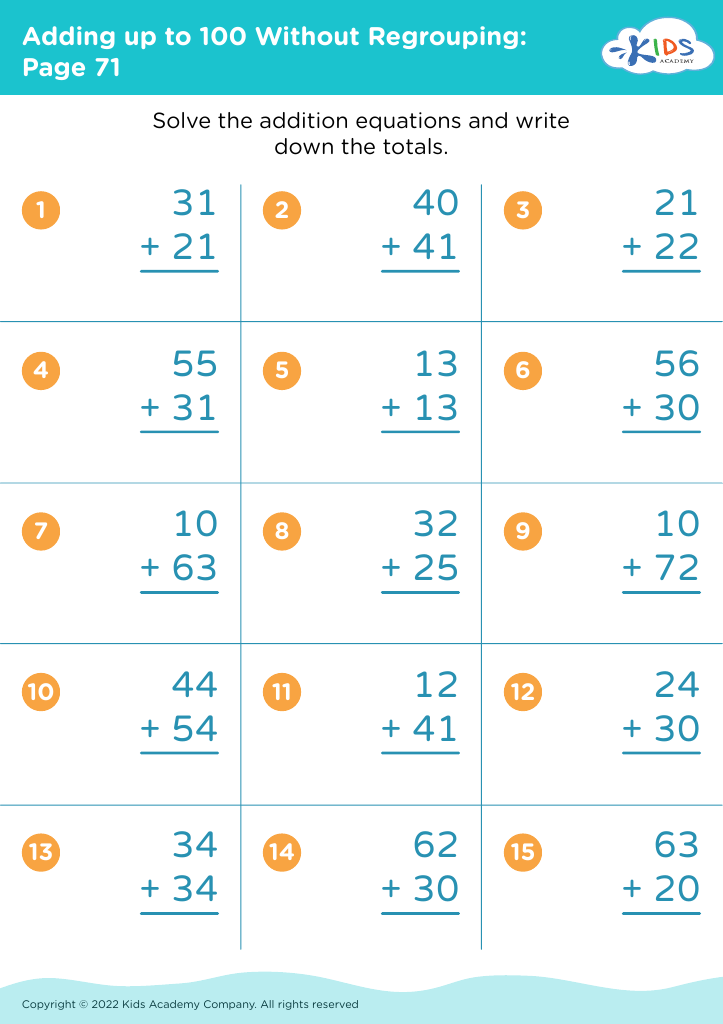
Adding up to 100 Without Regrouping: Page 71
Worksheet
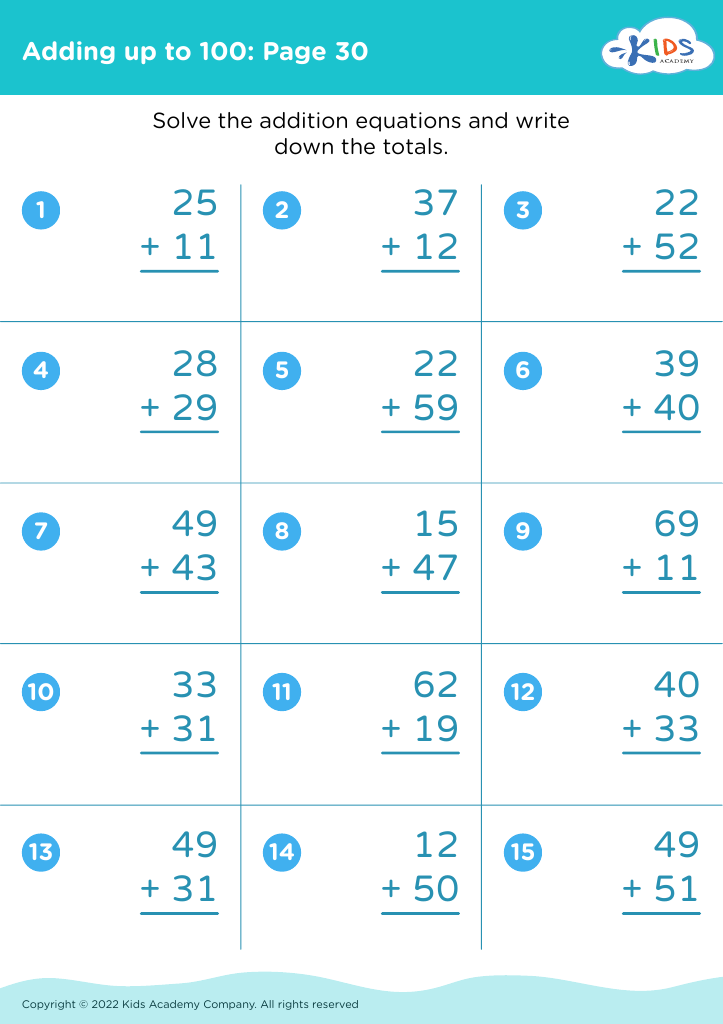
Adding up to 100: Page 30

Adding up to 100: Page 30

Adding up to 100: Page 30
Worksheet
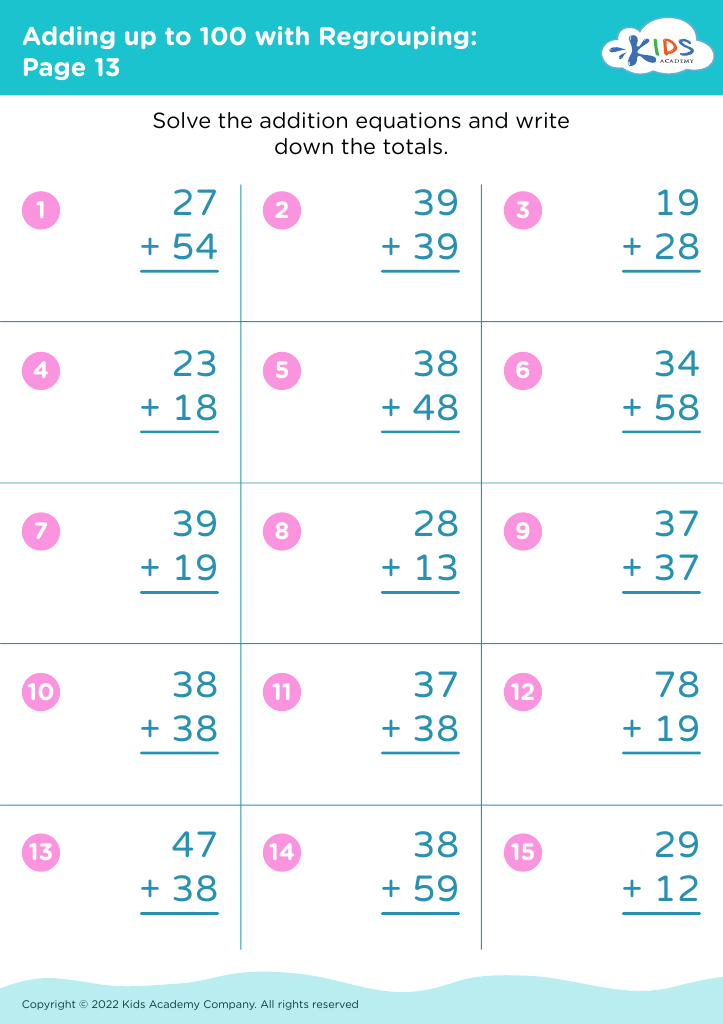
Adding up to 100 with Regrouping: Page 13
Worksheet
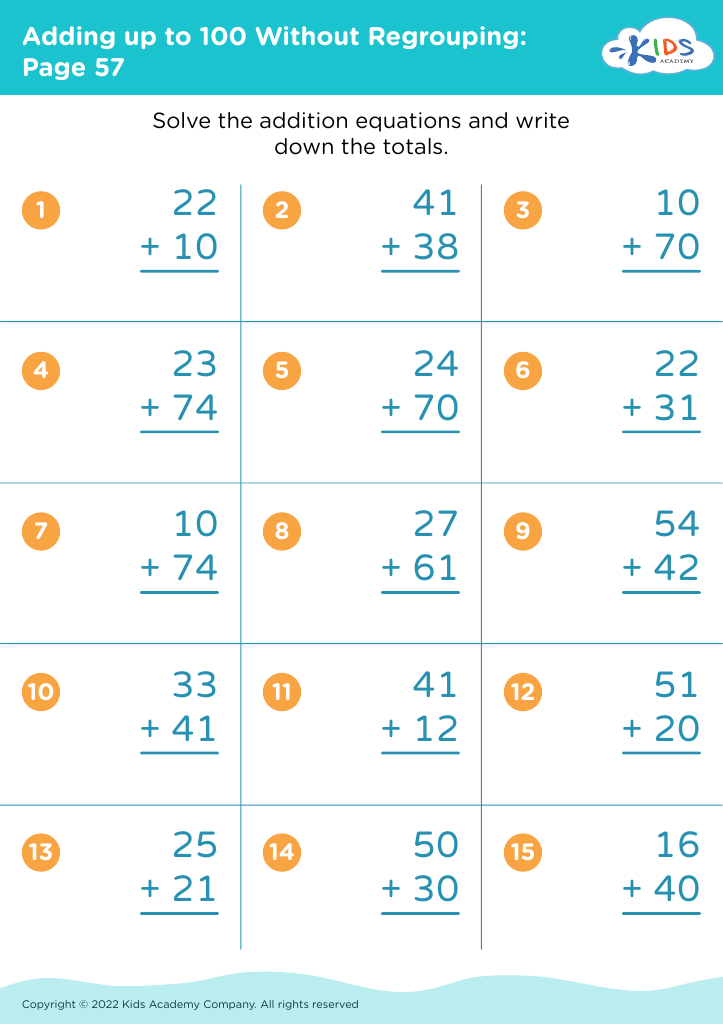
Adding up to 100 Without Regrouping: Page 57
Worksheet
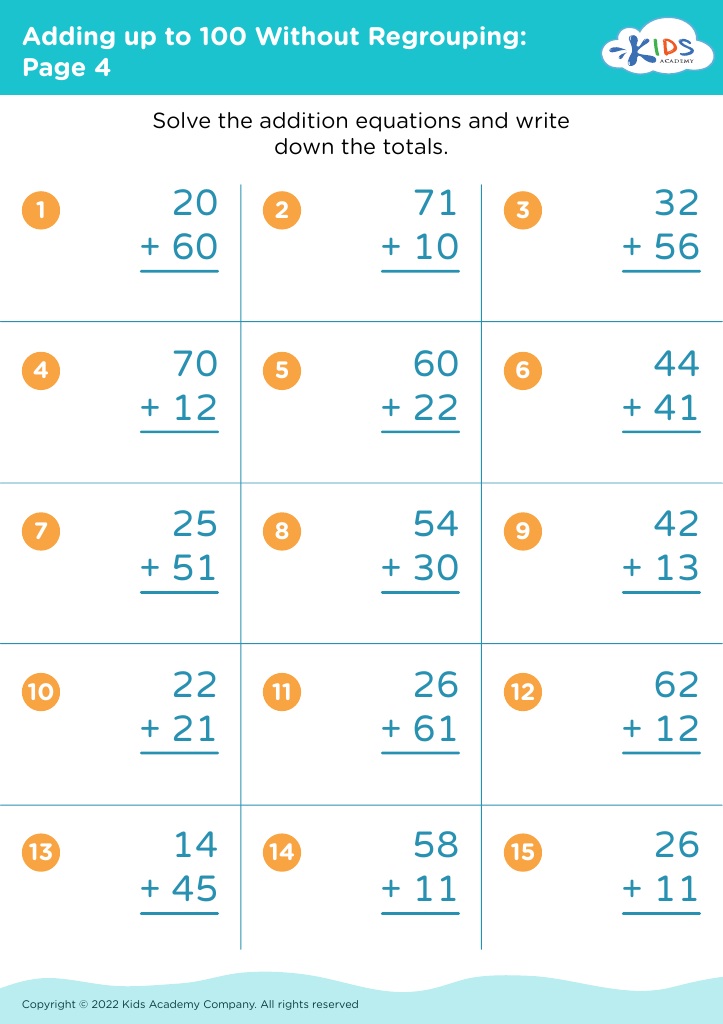
Adding up to 100 Without Regrouping: Page 4
Worksheet
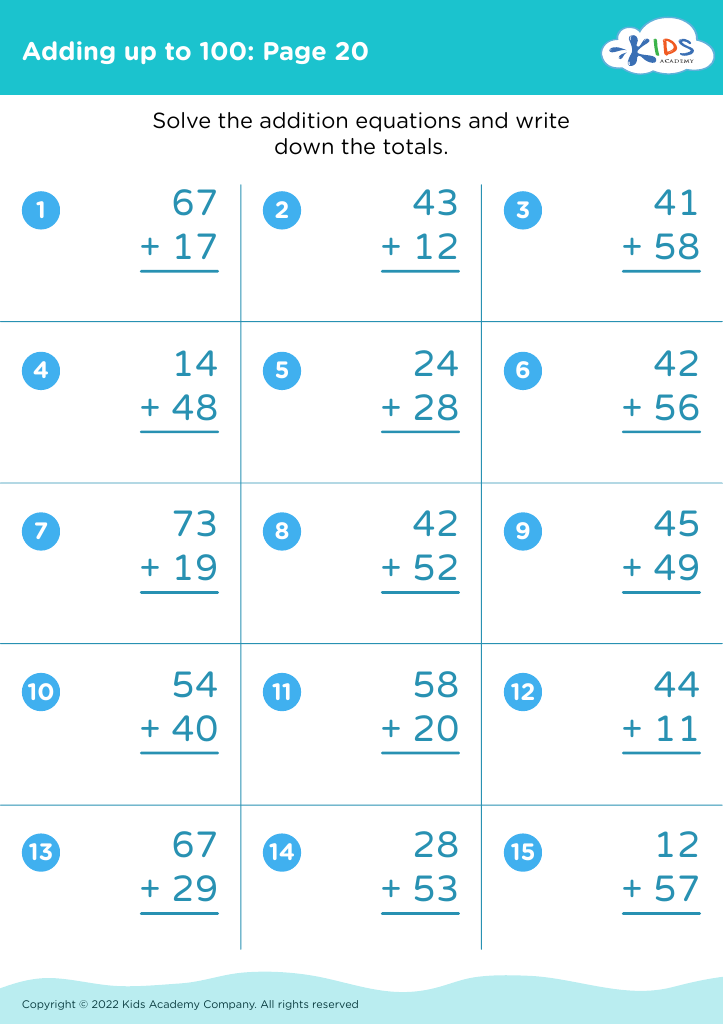
Adding up to 100: Page 20

Adding up to 100: Page 20

Adding up to 100: Page 20
Worksheet
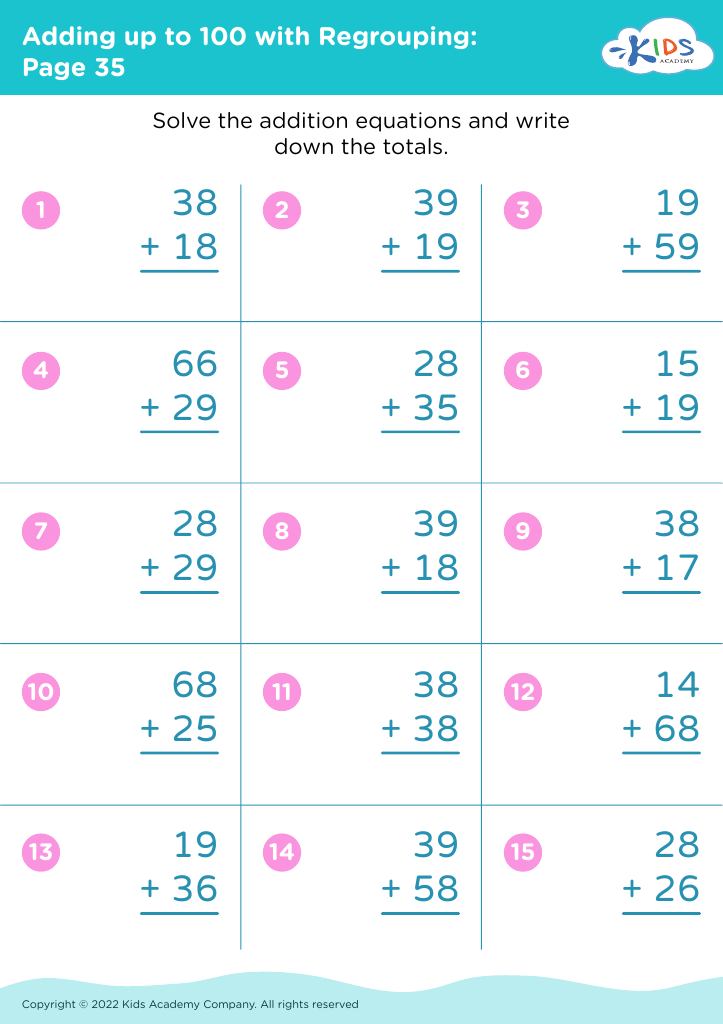
Adding up to 100 with Regrouping: Page 35
Worksheet
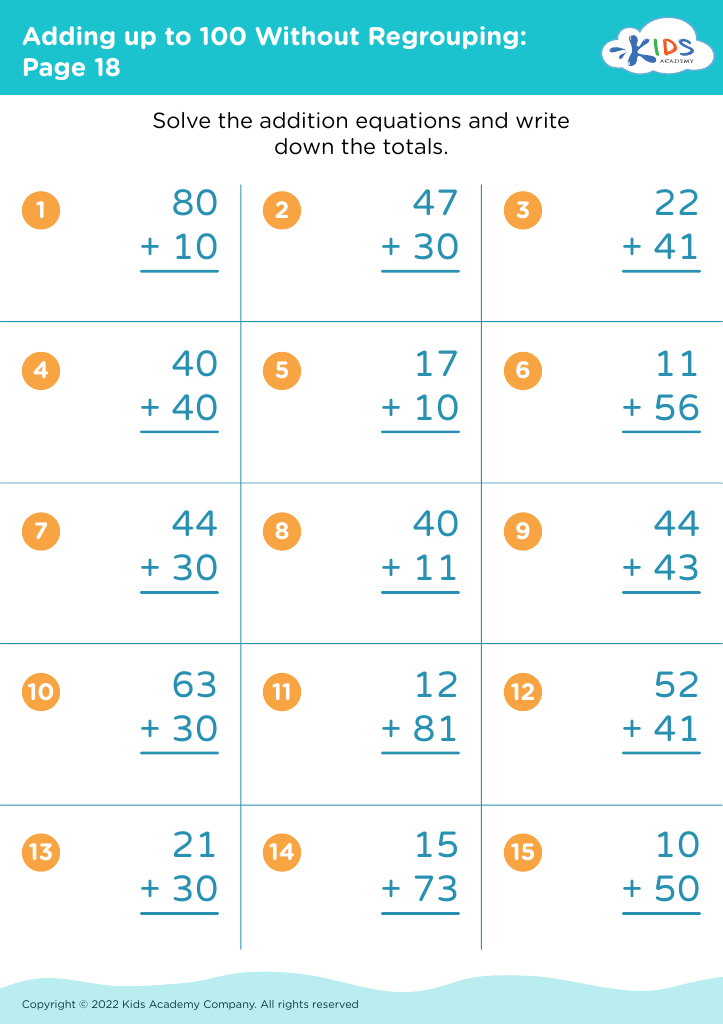
Adding up to 100 Without Regrouping: Page 18
Worksheet
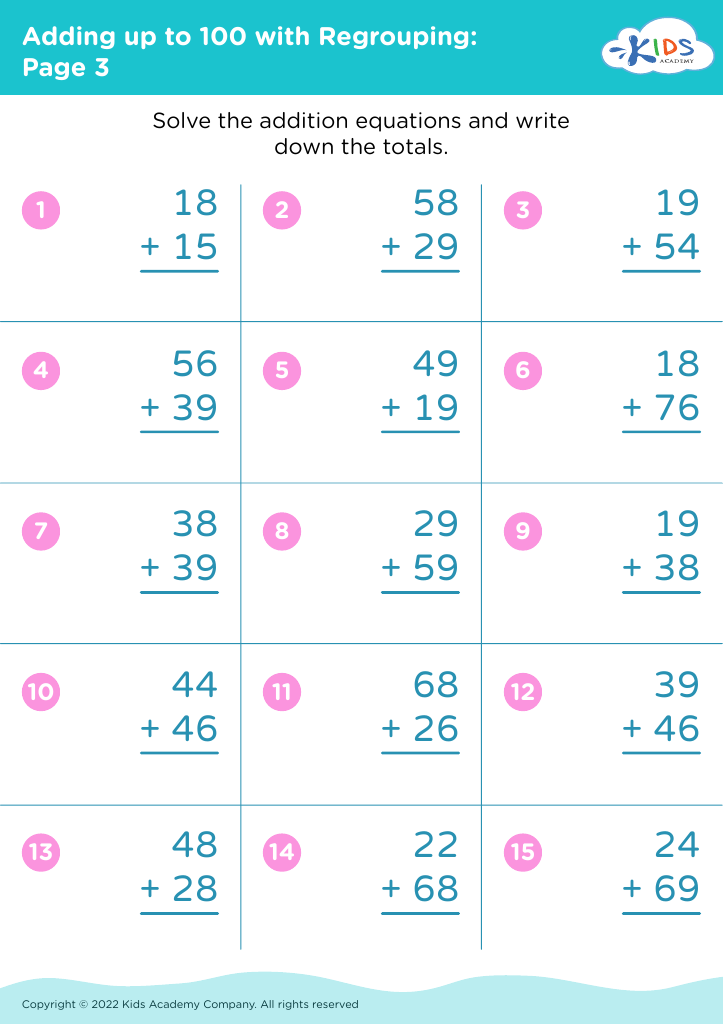
Adding up to 100 with Regrouping: Page 3
Worksheet
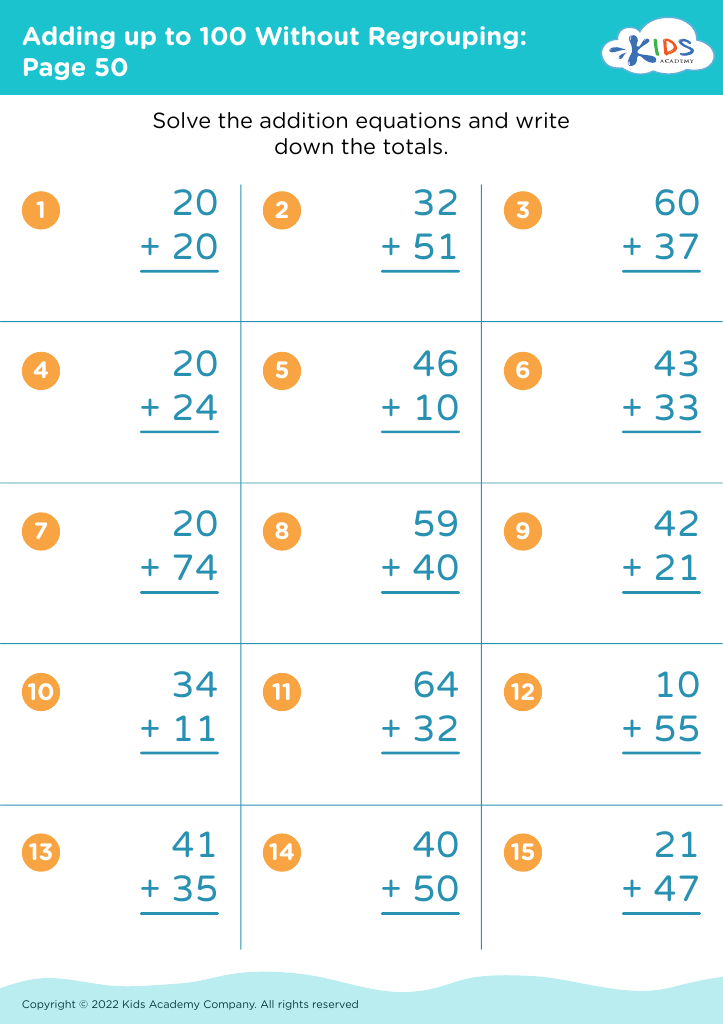
Adding up to 100 Without Regrouping: Page 50
Worksheet
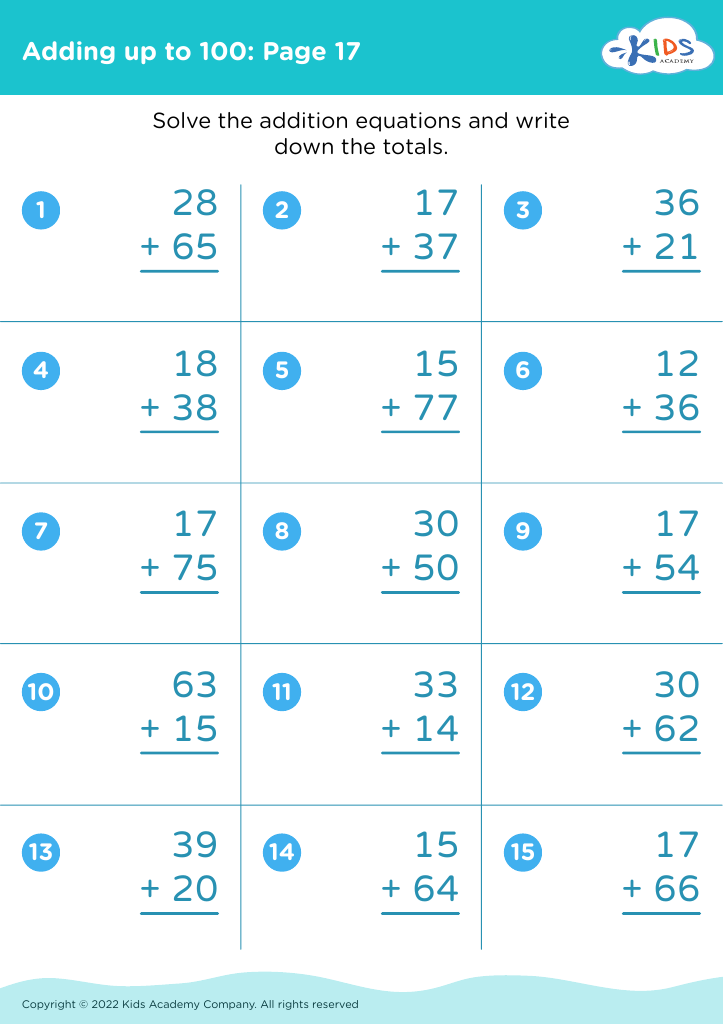
Adding up to 100: Page 17

Adding up to 100: Page 17

Adding up to 100: Page 17
Worksheet
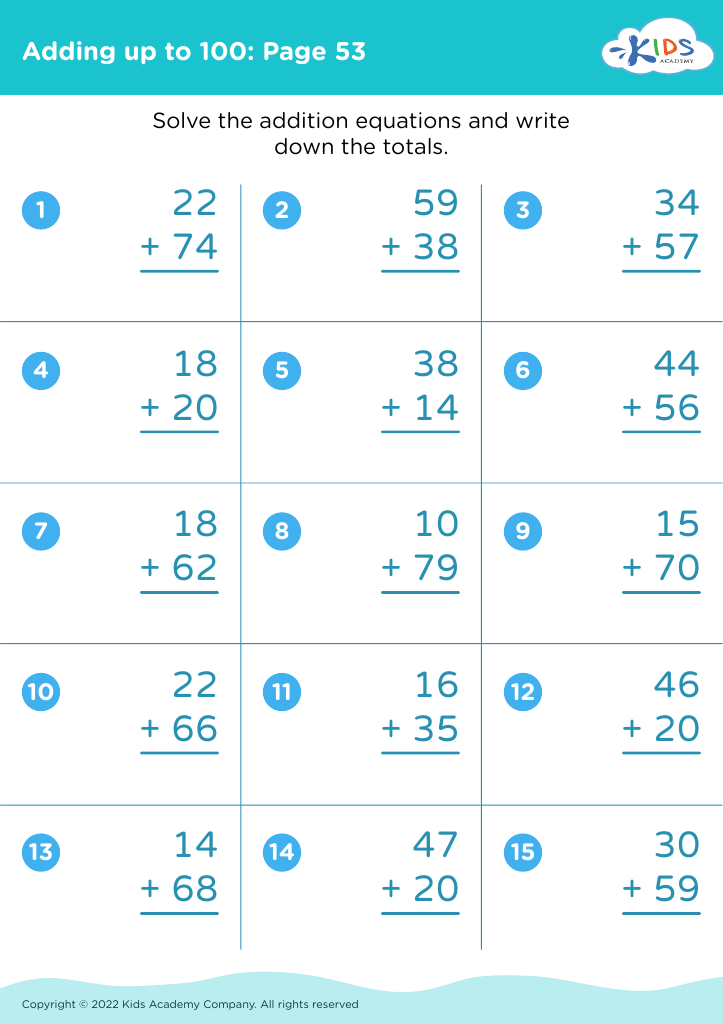
Adding up to 100: Page 53

Adding up to 100: Page 53

Adding up to 100: Page 53
Worksheet
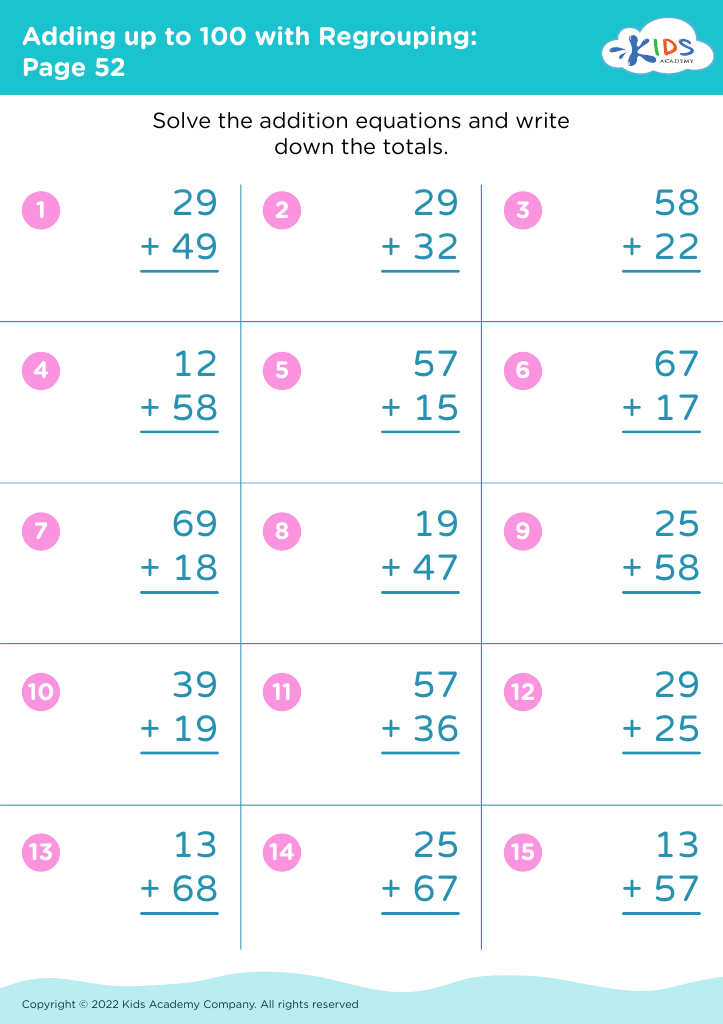
Adding up to 100 with Regrouping: Page 52
Worksheet
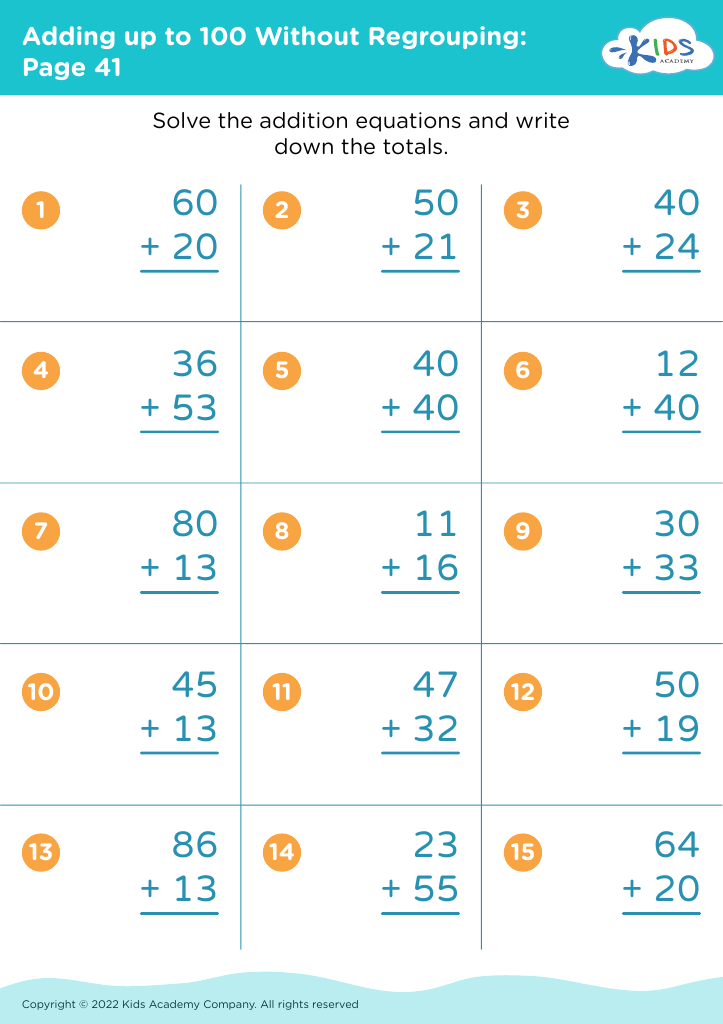
Adding up to 100 Without Regrouping: Page 41
Worksheet
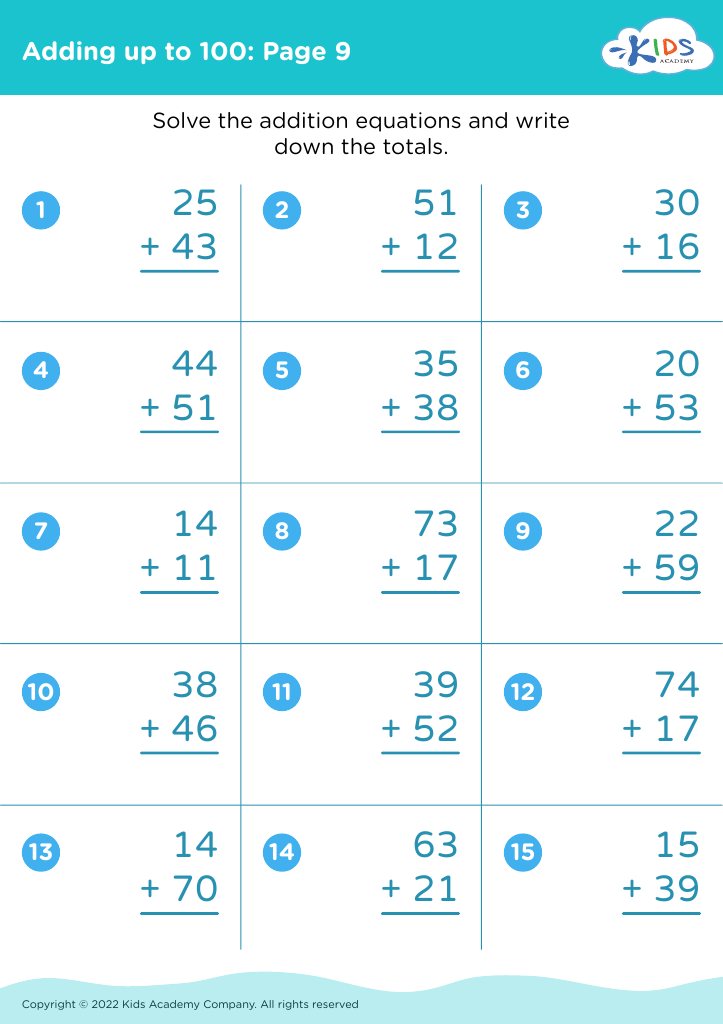
Adding up to 100: Page 9

Adding up to 100: Page 9

Adding up to 100: Page 9
Worksheet
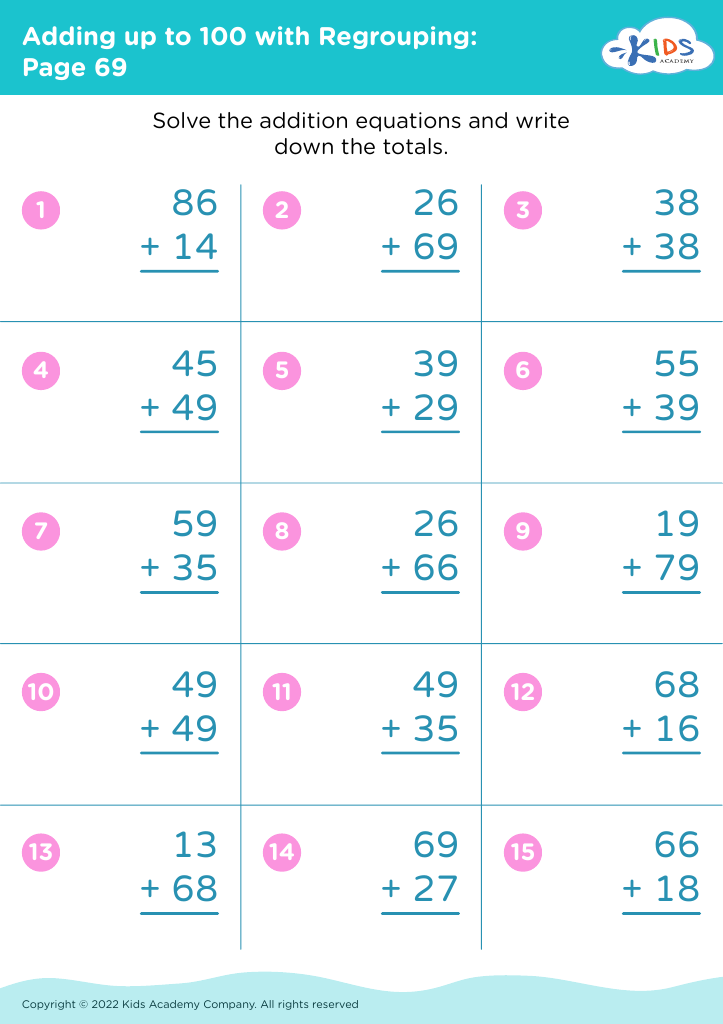
Adding up to 100 with Regrouping: Page 69
Worksheet
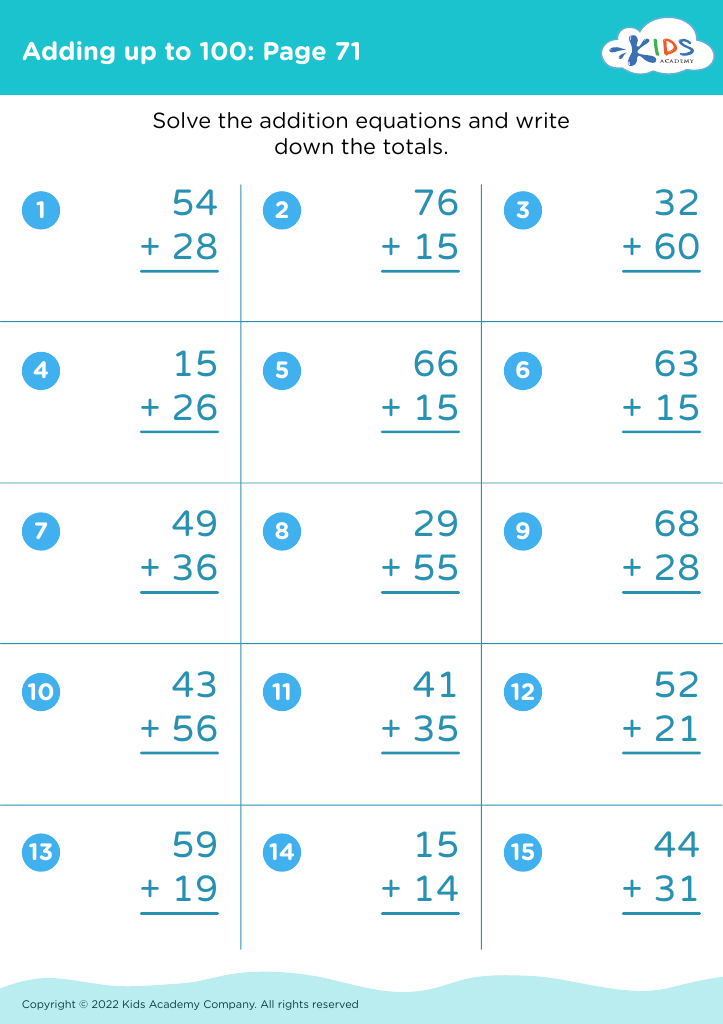
Adding up to 100: Page 71

Adding up to 100: Page 71

Adding up to 100: Page 71
Worksheet
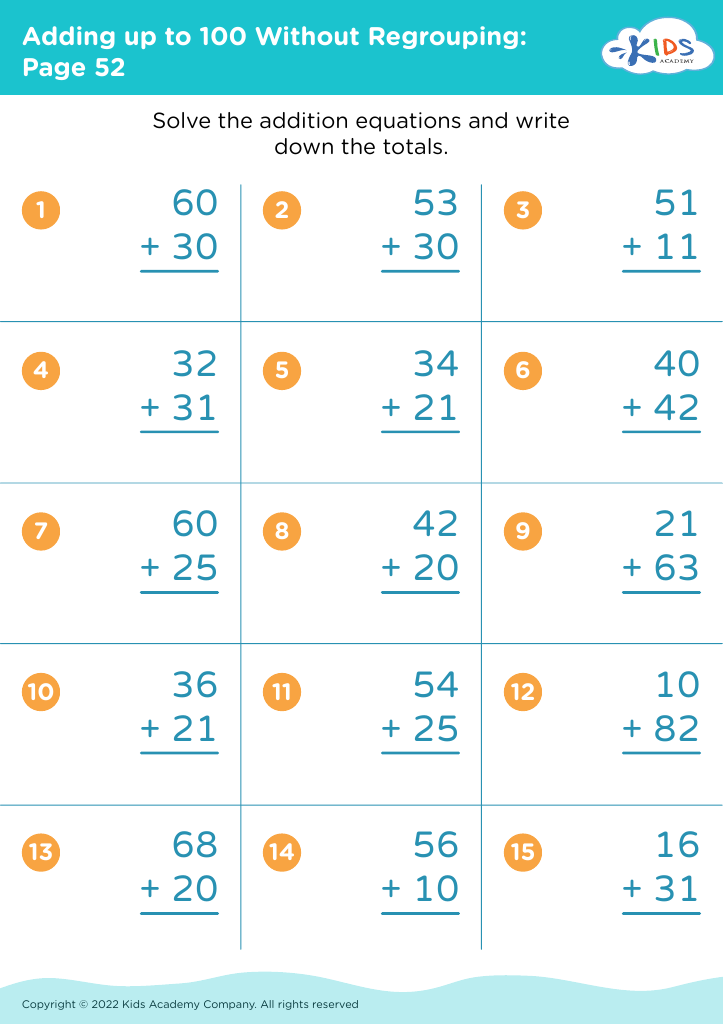
Adding up to 100 Without Regrouping: Page 52
Worksheet
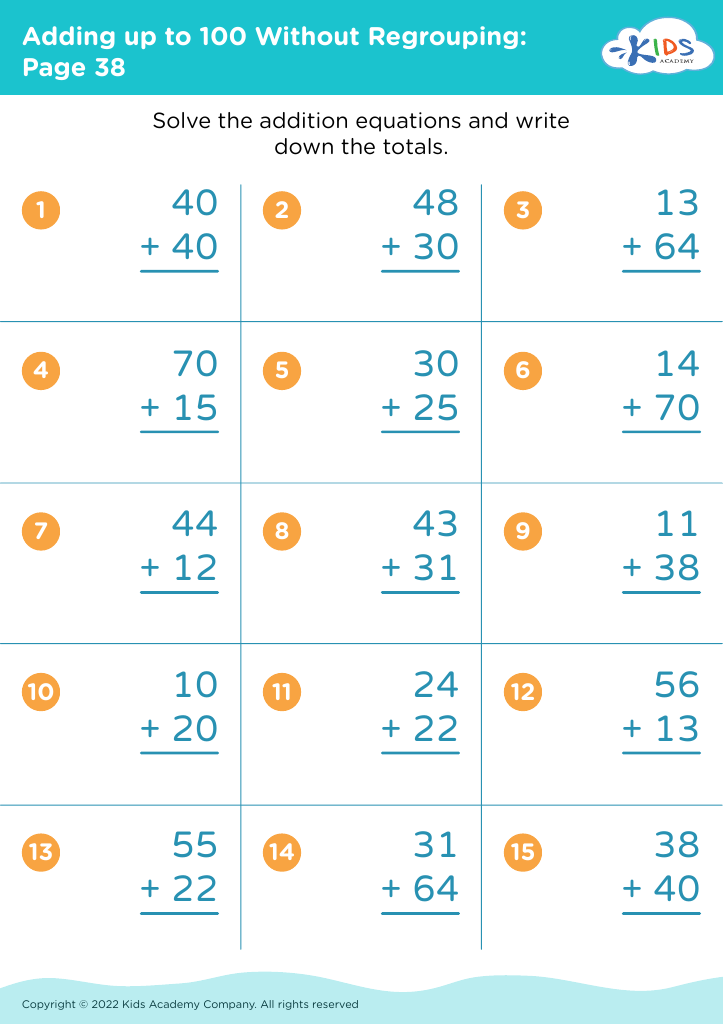
Adding up to 100 Without Regrouping: Page 38
Worksheet
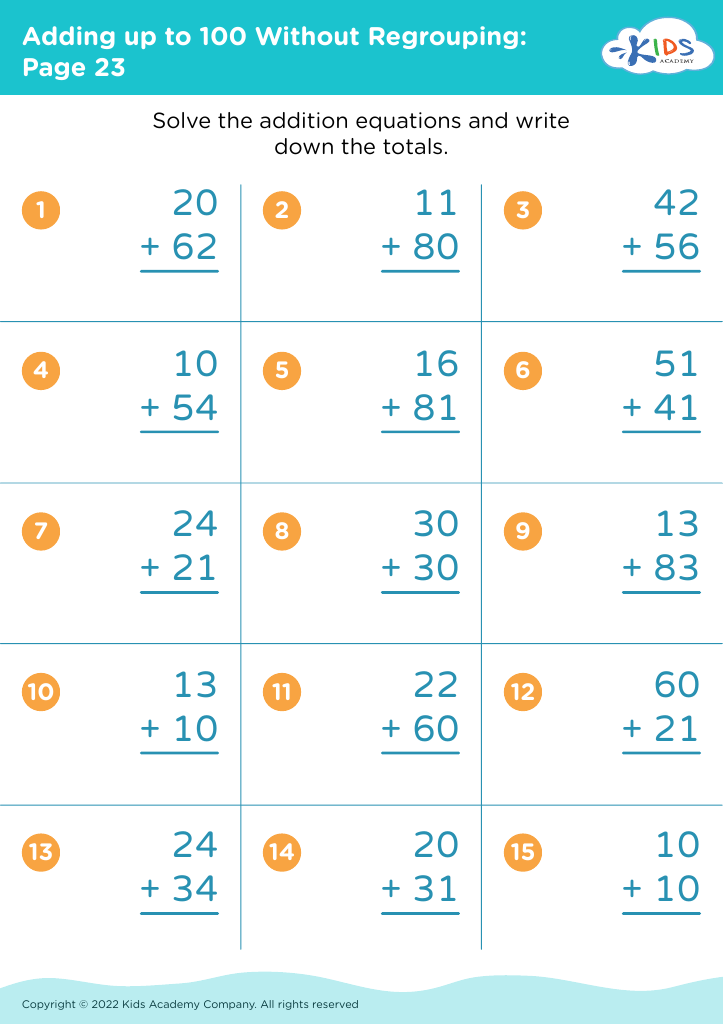
Adding up to 100 Without Regrouping: Page 23
Worksheet
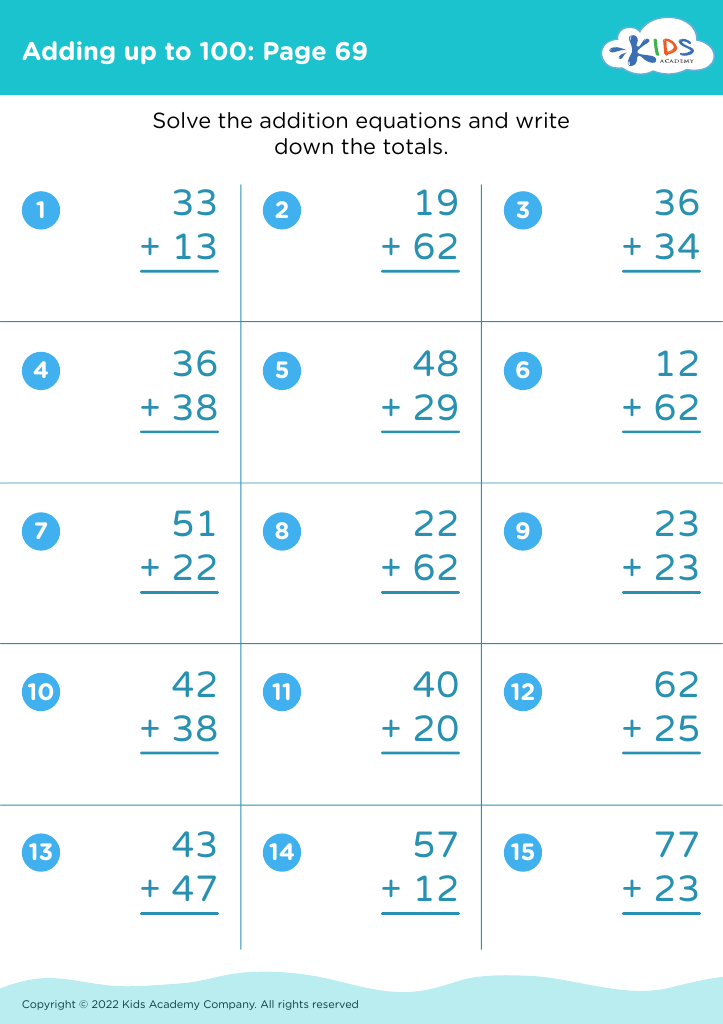
Adding up to 100: Page 69

Adding up to 100: Page 69

Adding up to 100: Page 69
Worksheet
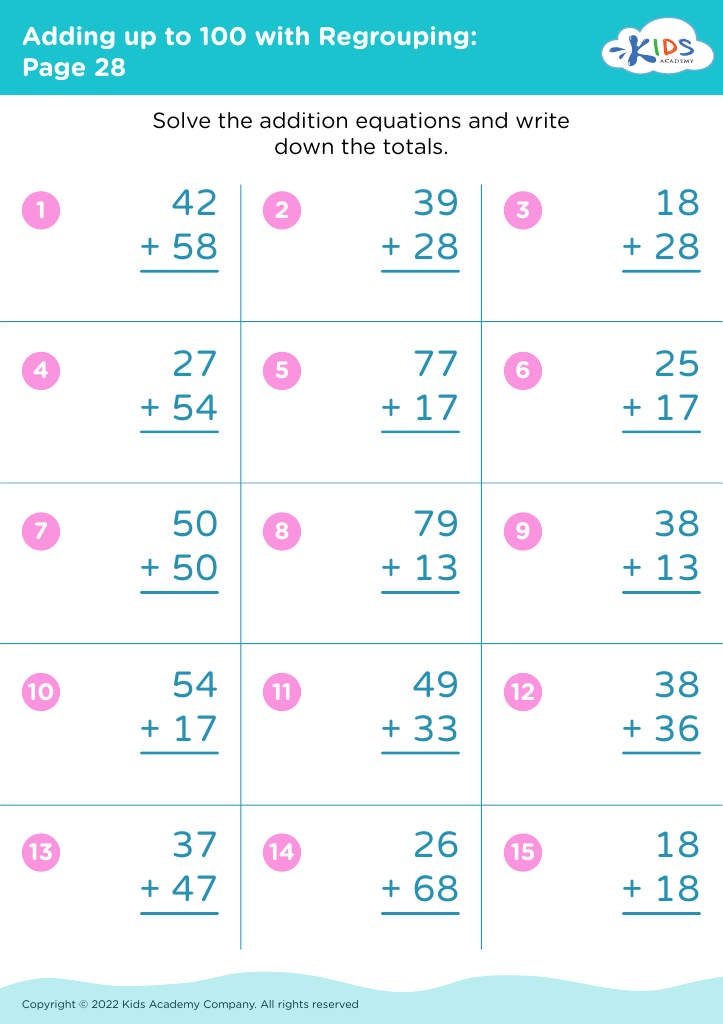
Adding up to 100 with Regrouping: Page 28
Worksheet
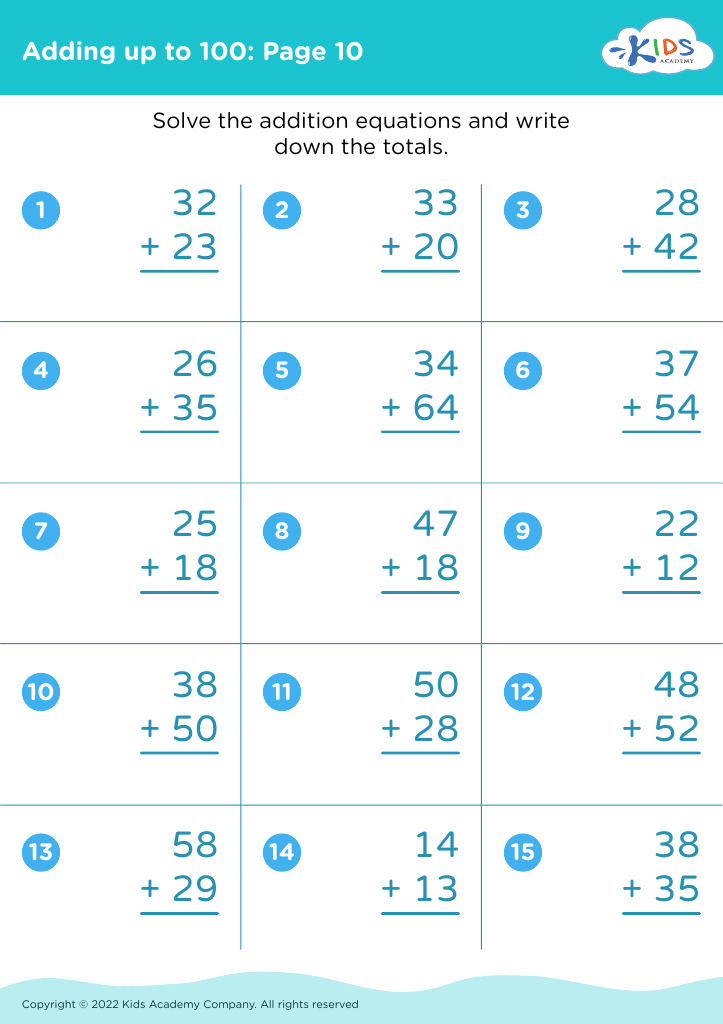
Adding up to 100: Page 10

Adding up to 100: Page 10

Adding up to 100: Page 10
Worksheet
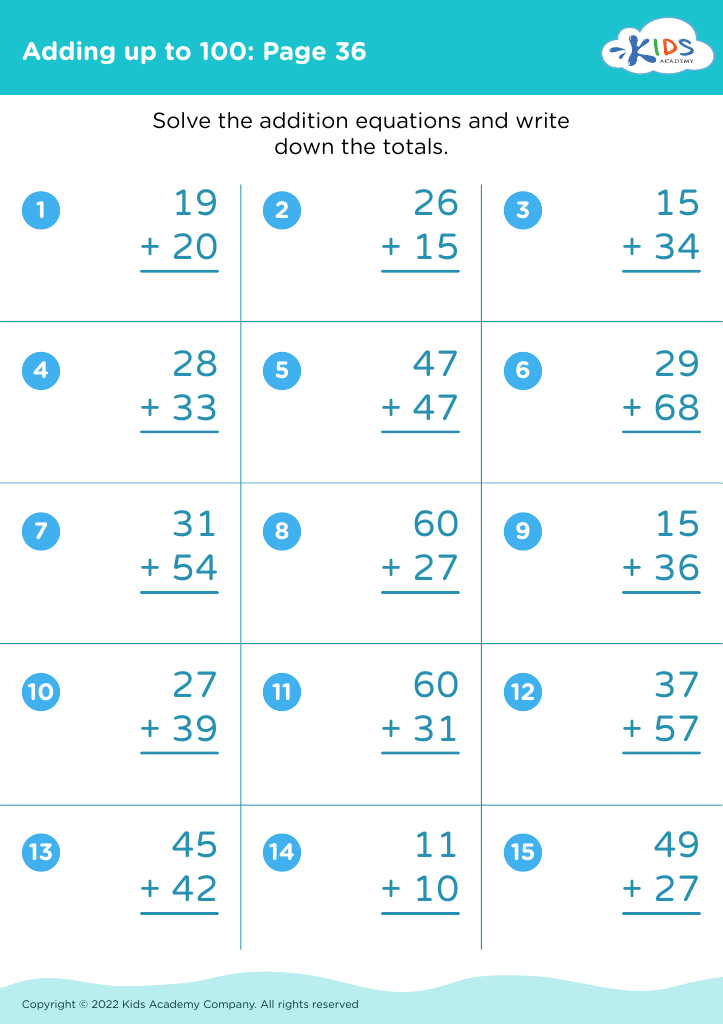
Adding up to 100: Page 36

Adding up to 100: Page 36

Adding up to 100: Page 36
Worksheet


Understanding fractions and their relationship to adding up to 100 is crucial for 8-year-olds as it lays the foundation for more advanced math concepts. At this age, children are starting to comprehend fractional relationships and the significance of part-to-whole, which are vital in everyday situations.

When children learn to add fractions that equal 100, they enhance their problem-solving skills and develop logical reasoning. This understanding not only aids in math skills but also helps children grasp essential life skills, such as budgeting and measuring when cooking or crafting.

Moreover, understanding fractions fosters a positive attitude towards math. When children see the practical applications of fractions in real life, they become more engaged and eager to learn.

For parents and teachers, emphasizing this skill also promotes critical thinking. It encourages kids to explore various ways to create combinations that sum to 100, nurturing creativity and flexibility in thinking.

Ultimately, a solid foundation in fractions helps prepare children for future math challenges and strengthens their confidence. Investing time in this understanding now pays dividends for their academic performance and personal growth in the future.