Elevate your child's arithmetic skills with our "Enhance Comprehension Addition & Subtraction Worksheets for 8-Year-Olds." Specially designed to foster both understanding and fluency, these engaging worksheets help children master key concepts in a fun and interactive way. Through a variety of challenging problems, kids learn to add and subtract with increased accuracy, building a solid foundation for future mathematical learning. Perfect for at-home practice or classroom use, our worksheets support independent learning and boost confidence. Empower your child with the tools needed to excel in math and develop essential problem-solving skills today!
Check out this FREE Trial Lesson on Addition & Subtraction for age 8!

Short and Long Vowel Sort

Favorites
With answer key
Interactive
  • 8
  • Enhance comprehension
  • Addition & Subtraction
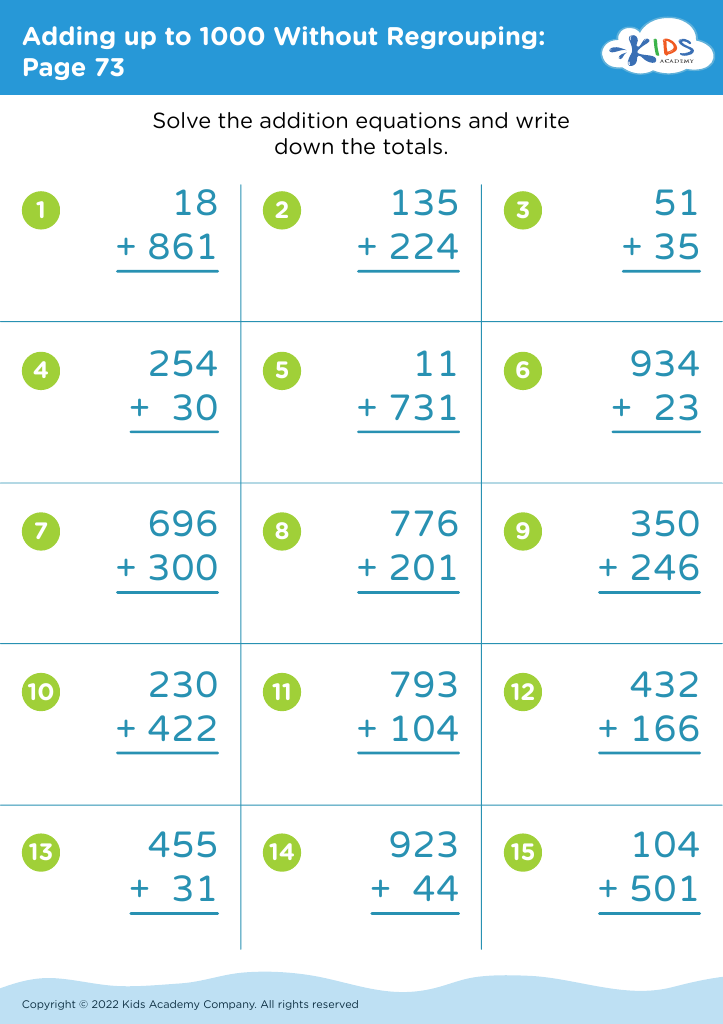
Adding up to 1000 Without Regrouping: Page 73
Worksheet
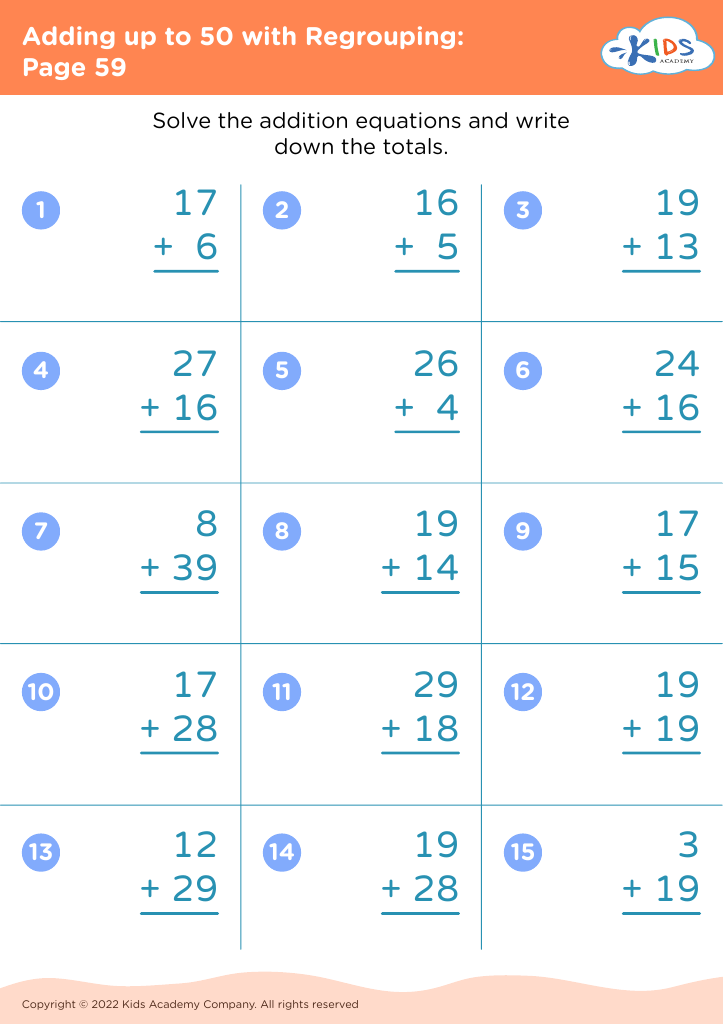
Adding up to 50 with Regrouping: Page 59
Worksheet
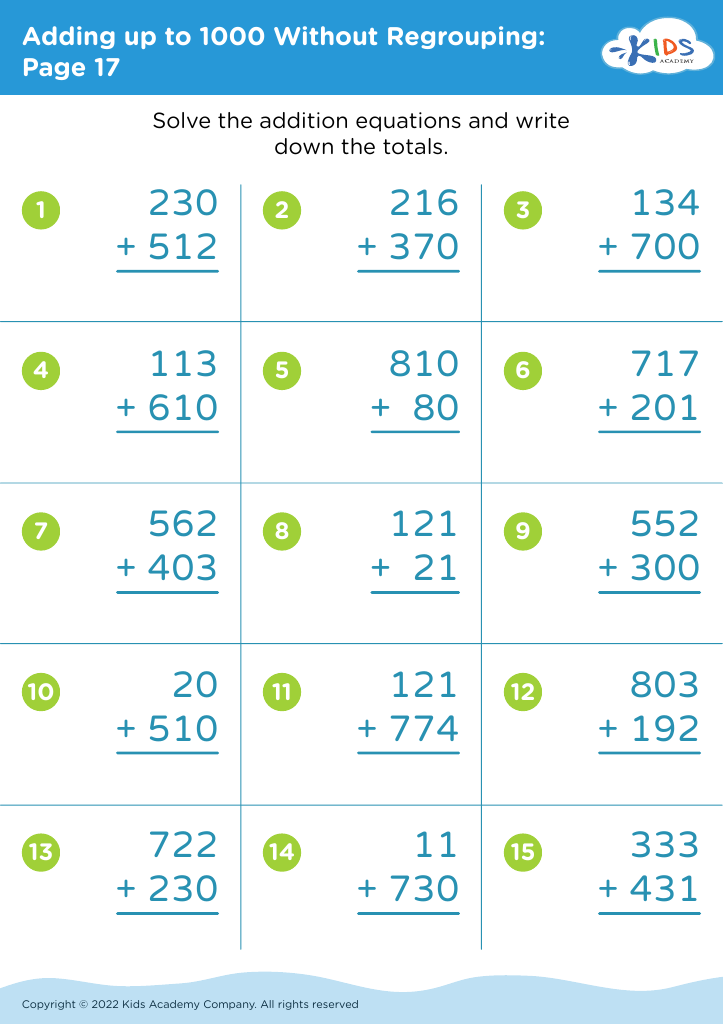
Adding up to 1000 Without Regrouping: Page 17
Worksheet
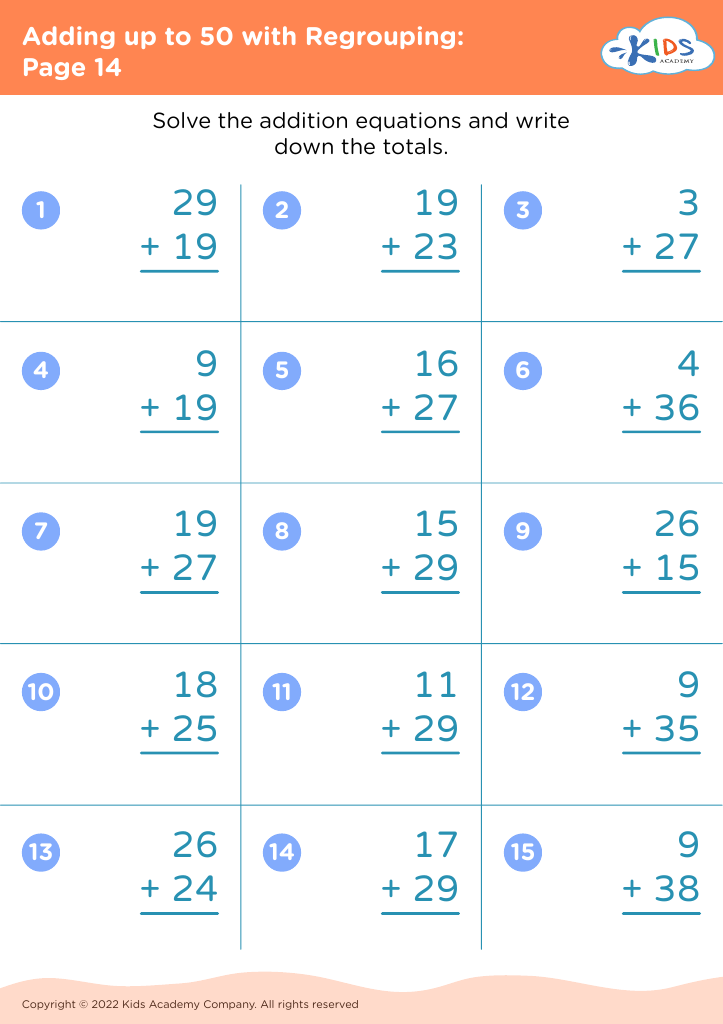
Adding up to 50 with Regrouping: Page 14
Worksheet
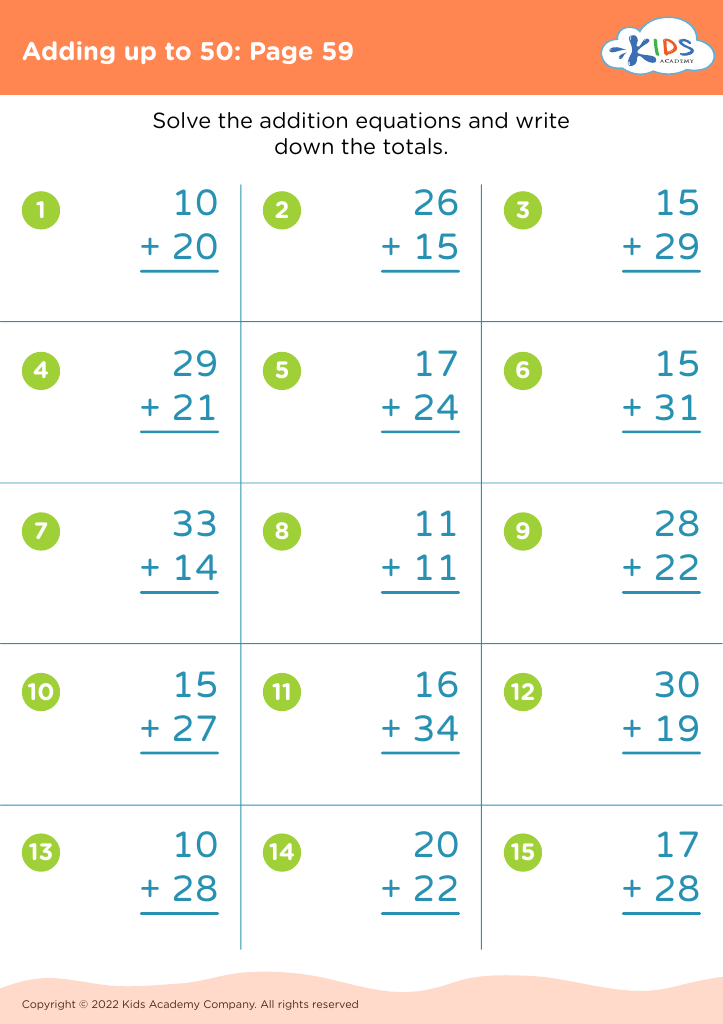
Adding up to 50: Page 59

Adding up to 50: Page 59

Adding up to 50: Page 59
Worksheet
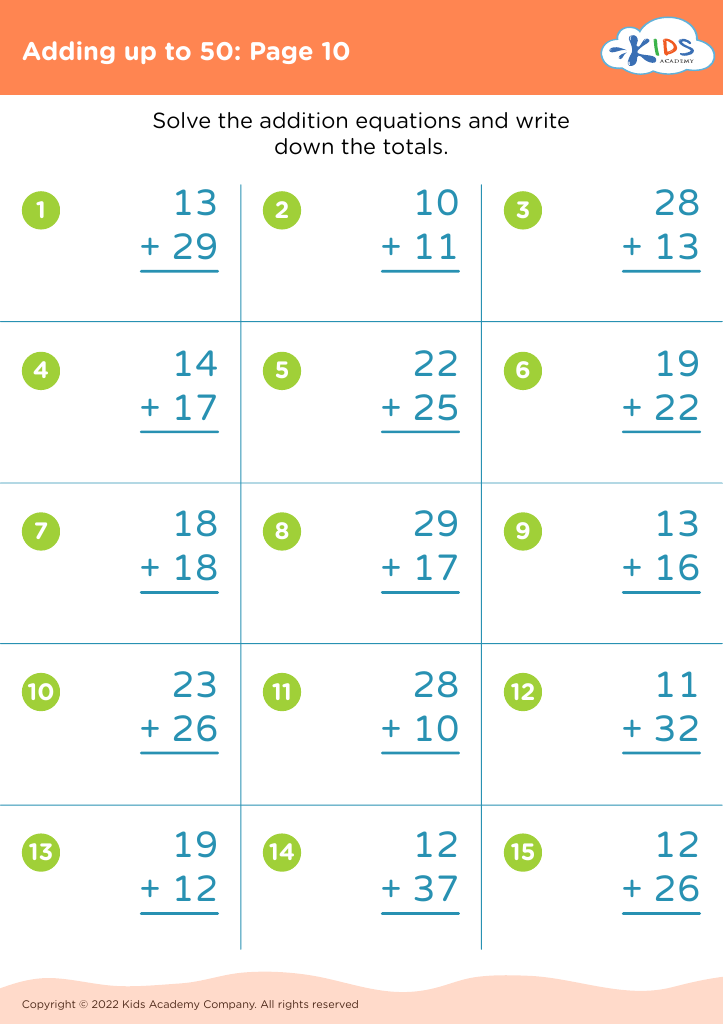
Adding up to 50: Page 10

Adding up to 50: Page 10

Adding up to 50: Page 10
Worksheet
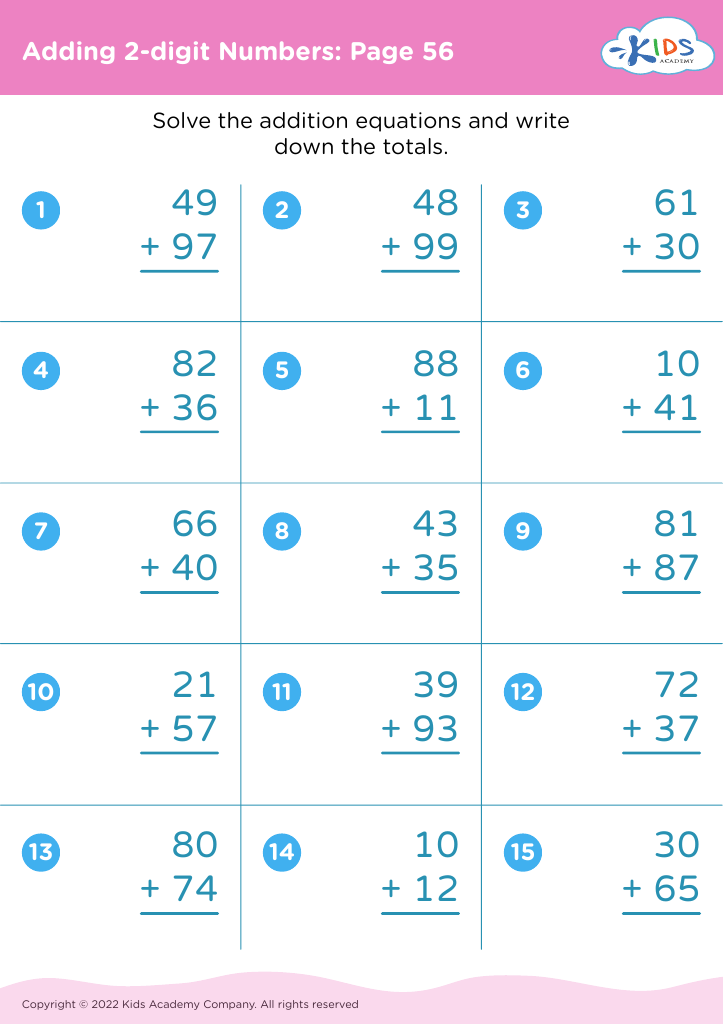
Adding 2-digit Numbers: Page 56

Adding 2-digit Numbers: Page 56

Adding 2-digit Numbers: Page 56
Worksheet
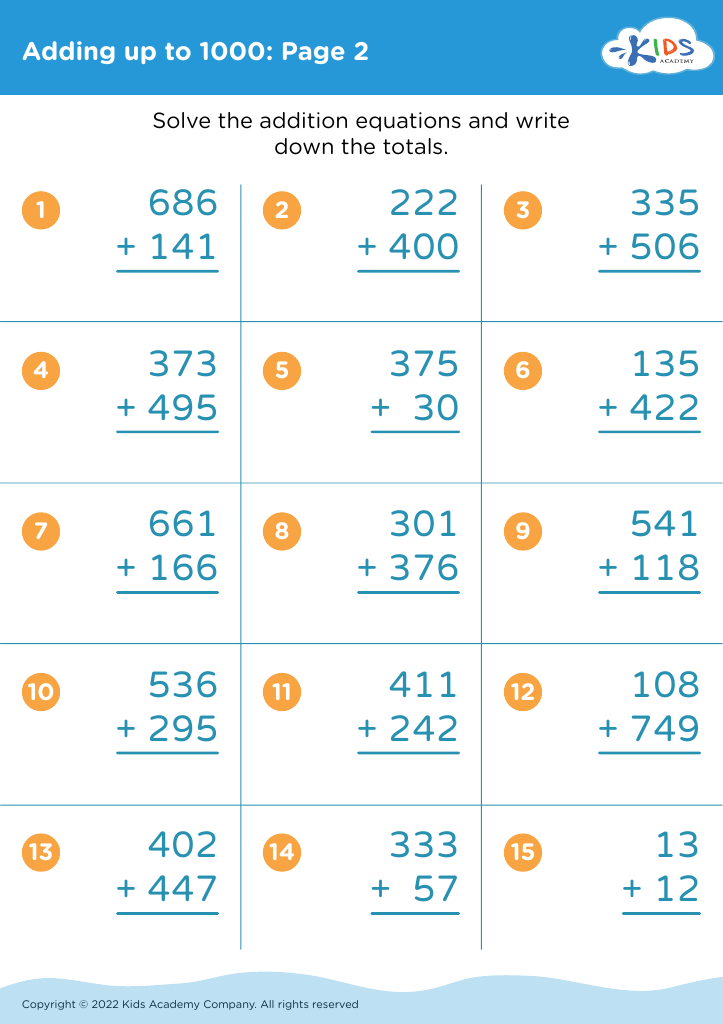
Adding up to 1000: Page 2

Adding up to 1000: Page 2

Adding up to 1000: Page 2
Worksheet
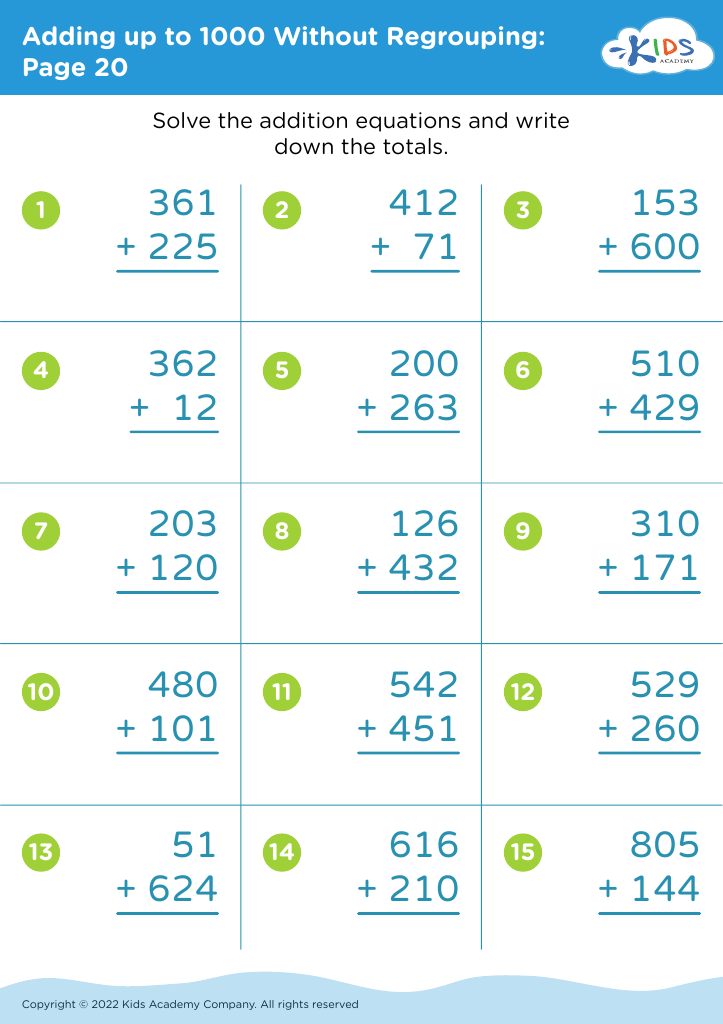
Adding up to 1000 Without Regrouping: Page 20
Worksheet
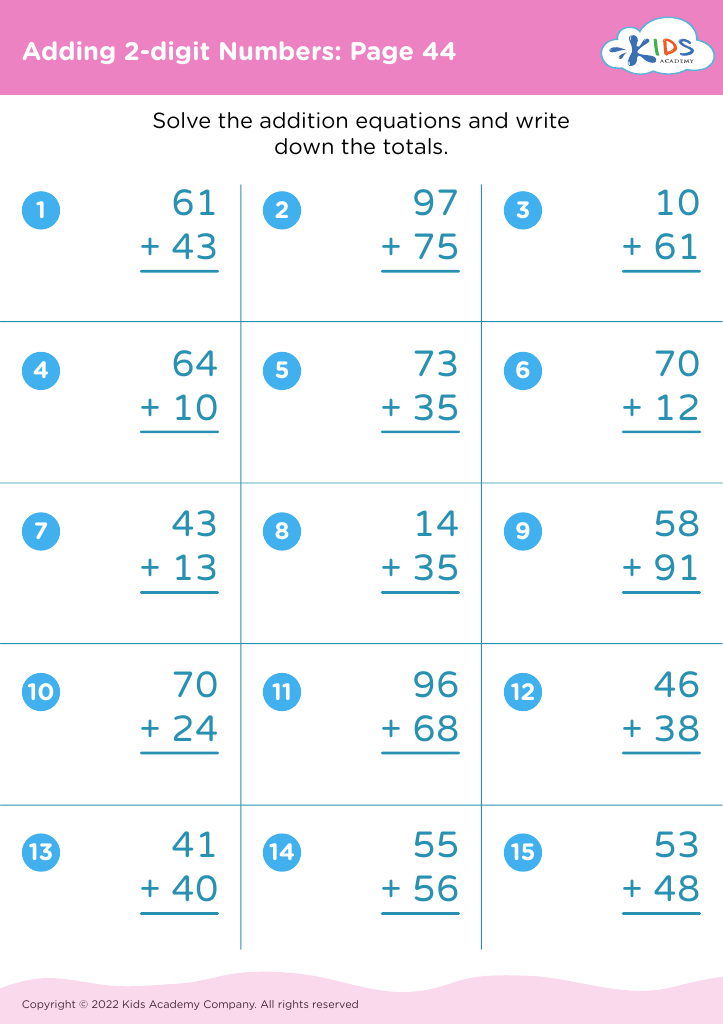
Adding 2-digit Numbers: Page 44

Adding 2-digit Numbers: Page 44

Adding 2-digit Numbers: Page 44
Worksheet
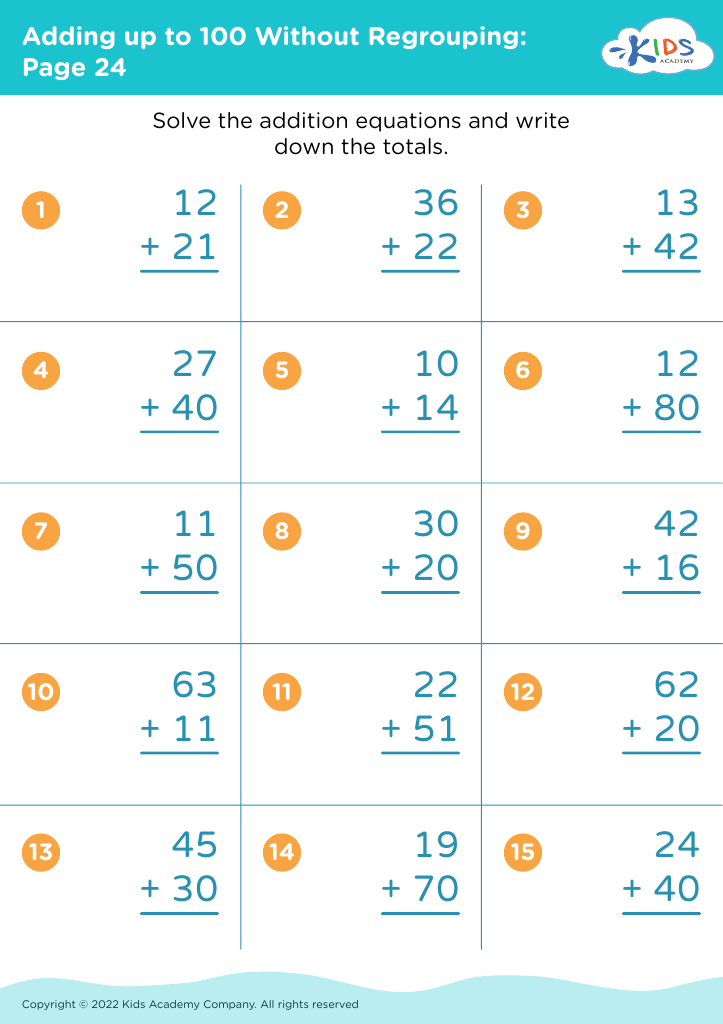
Adding up to 100 Without Regrouping: Page 24
Worksheet
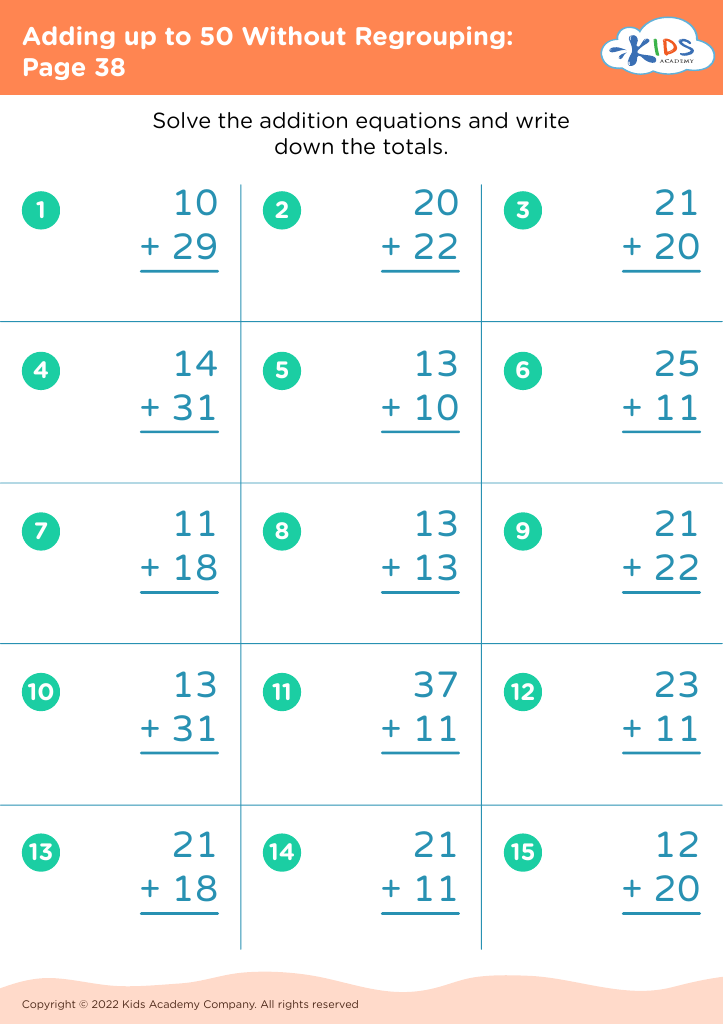
Adding up to 50 Without Regrouping: Page 38
Worksheet
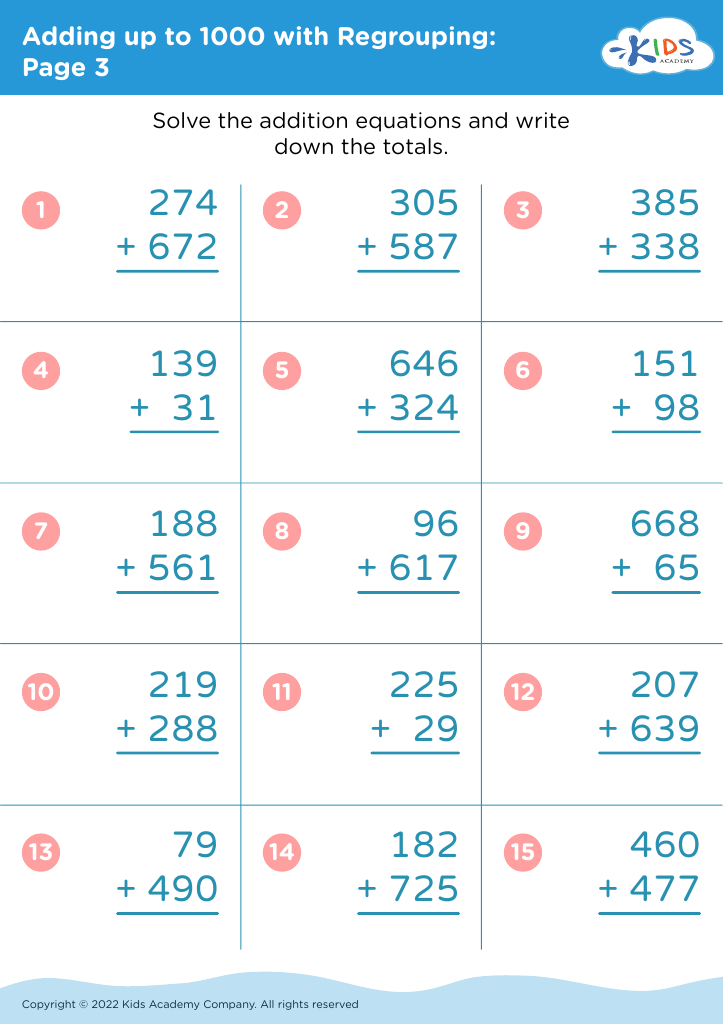
Adding up to 1000 with Regrouping: Page 3
Worksheet
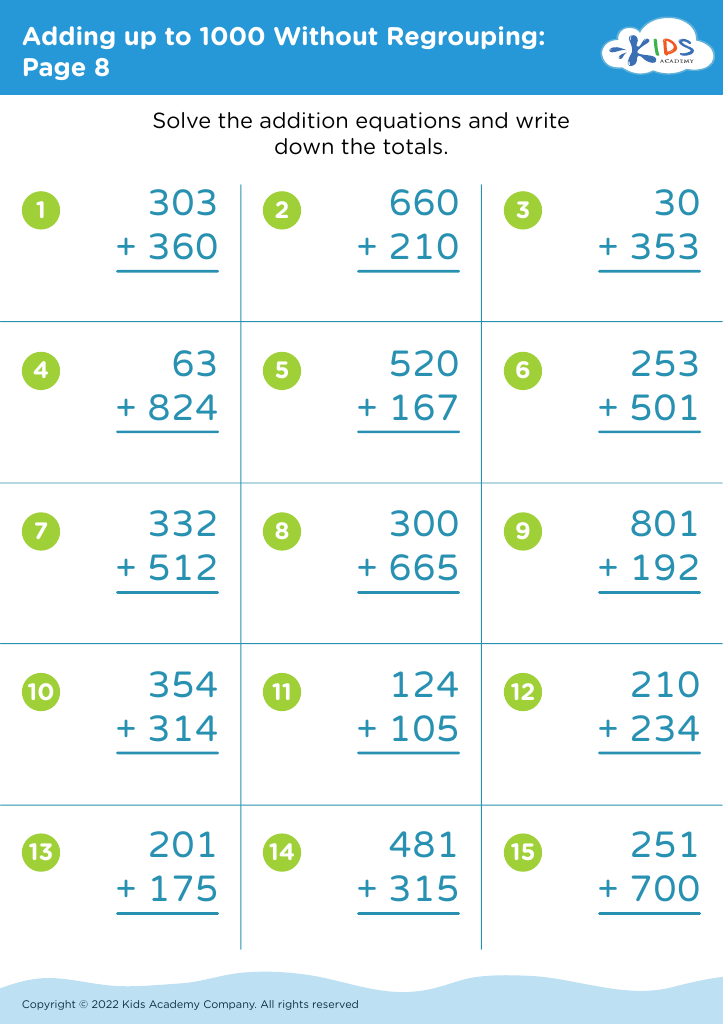
Adding up to 1000 Without Regrouping: Page 8
Worksheet
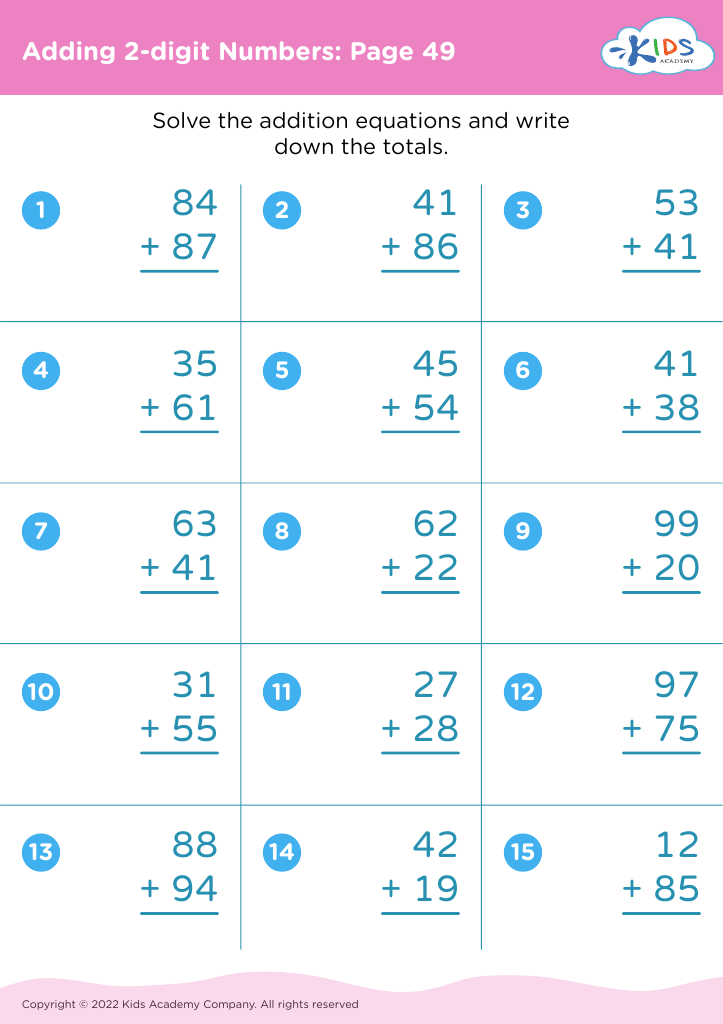
Adding 2-digit Numbers: Page 49

Adding 2-digit Numbers: Page 49

Adding 2-digit Numbers: Page 49
Worksheet
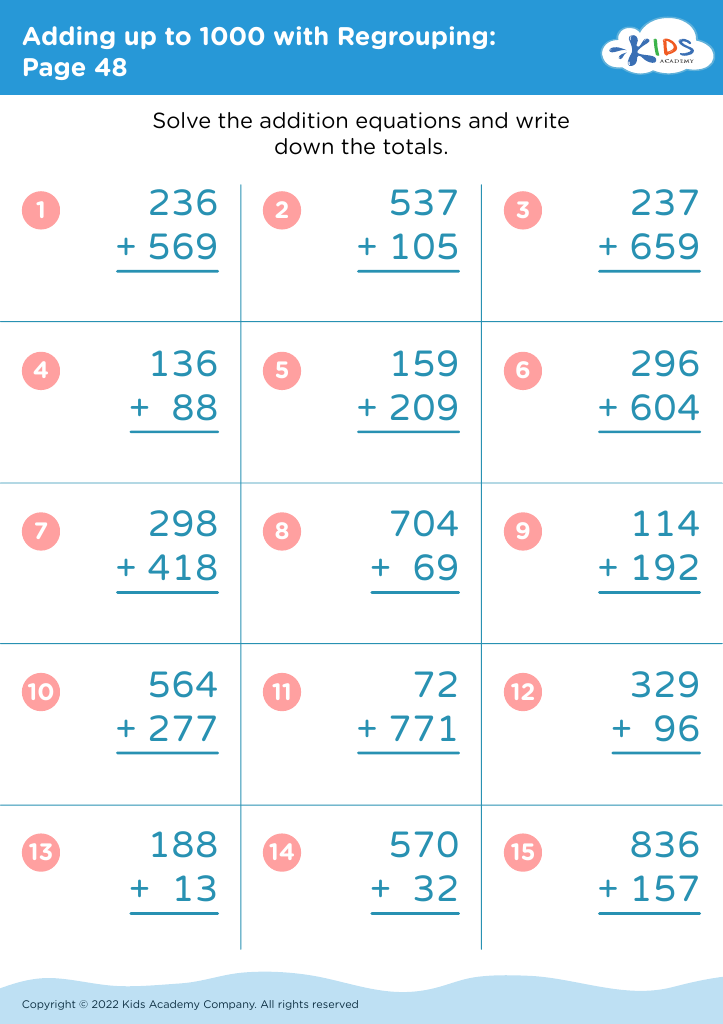
Adding up to 1000 with Regrouping: Page 48
Worksheet
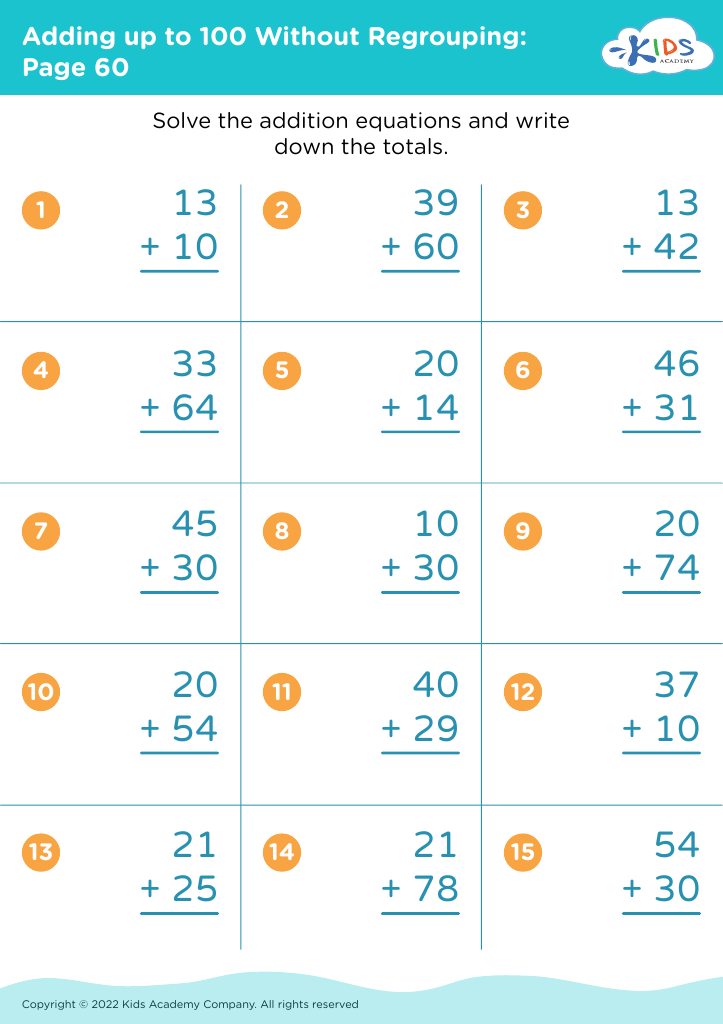
Adding up to 100 Without Regrouping: Page 60
Worksheet


Parents and teachers play a critical role in fostering children's early mathematical skills. Enhancing comprehension in addition and subtraction for 8-year-olds is particularly significant for several reasons. First, these foundational operations are building blocks for more complex math concepts like multiplication, division, and problem-solving. Strong proficiency in basic addition and subtraction sets the stage for future learning and academic success.

Moreover, understanding these fundamental operations aids in the development of logical thinking and reasoning skills. Children learn to approach problems methodically, improve their memory retention, and apply these in daily life situations, such as managing time or money. Proficiency in these skills also bolsters a child's confidence in their abilities, reducing anxiety and promoting a positive attitude toward math.

Enhanced comprehension in math fosters intellectual curiosity and instills a sense of achievement. When children grasp these concepts early, they can more easily shift from rote memorization to genuine understanding, making future learning more efficient and enjoyable.

Lastly, in today’s world where STEM (Science, Technology, Engineering, and Mathematics) education is emphasized, early mathematical competency prepares children for future opportunities in a rapidly evolving job market. Therefore, investing time in enhancing comprehension in addition and subtraction for 8-year-olds is an essential step in equipping them with the skills needed for lifelong success.