Enhance critical thinking Addition & Subtraction Worksheets for 8-Year-Olds
5 filtered results
-
From - To
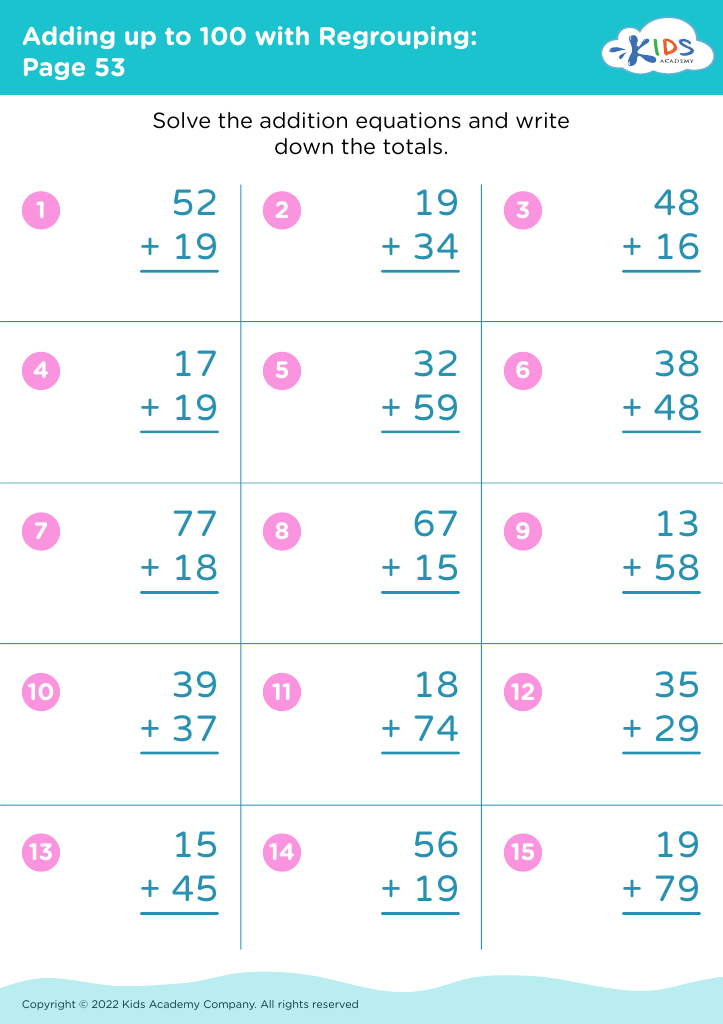
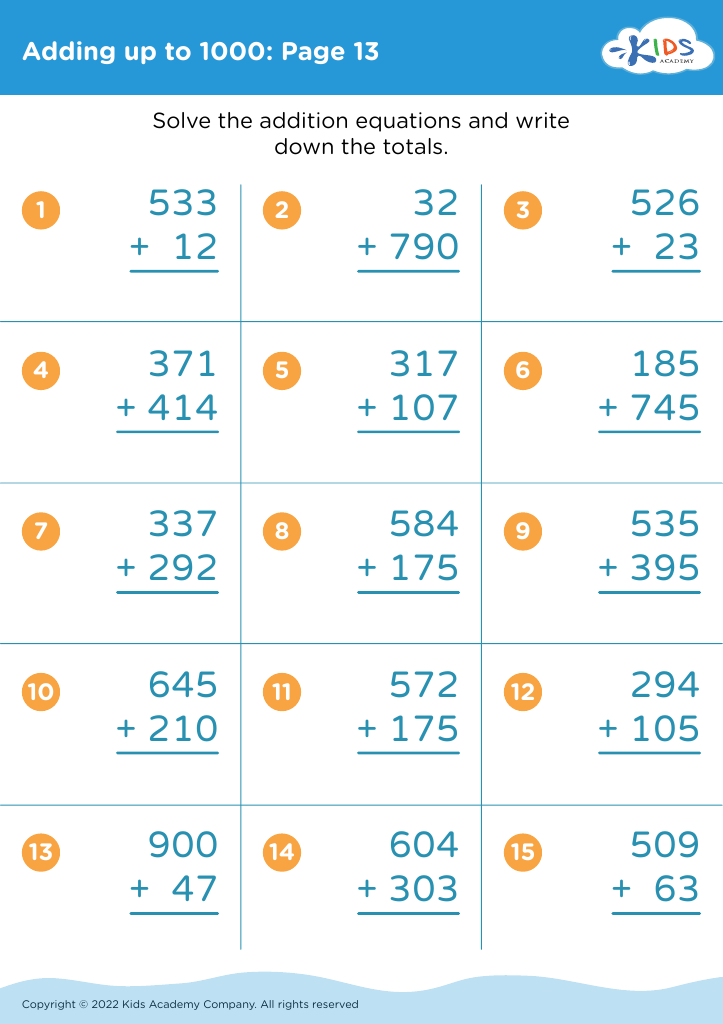
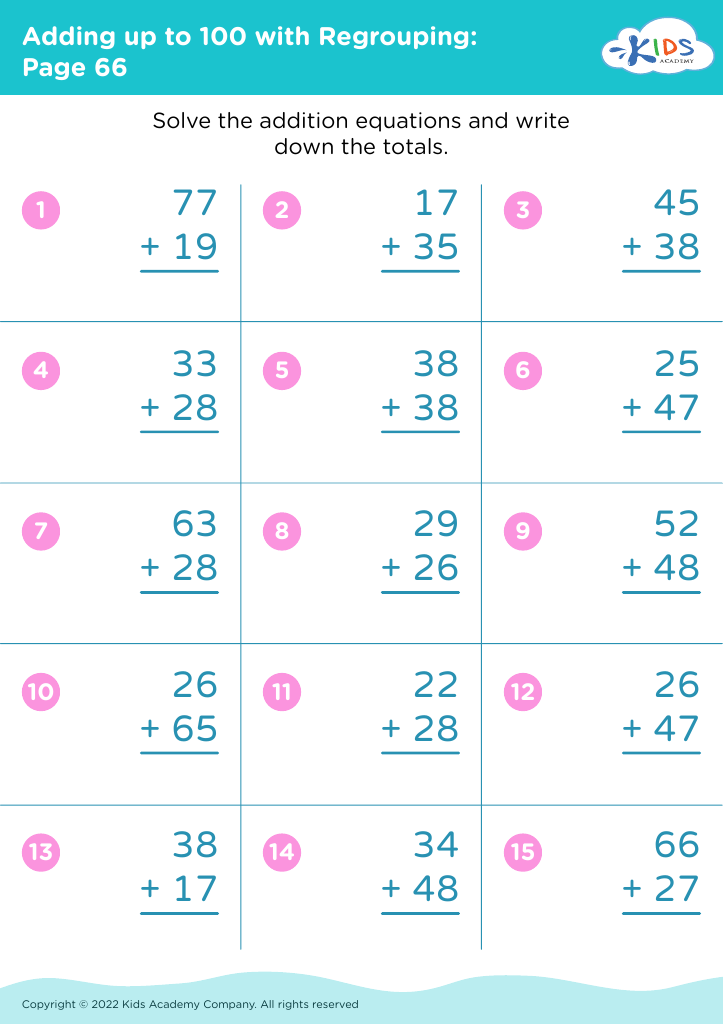
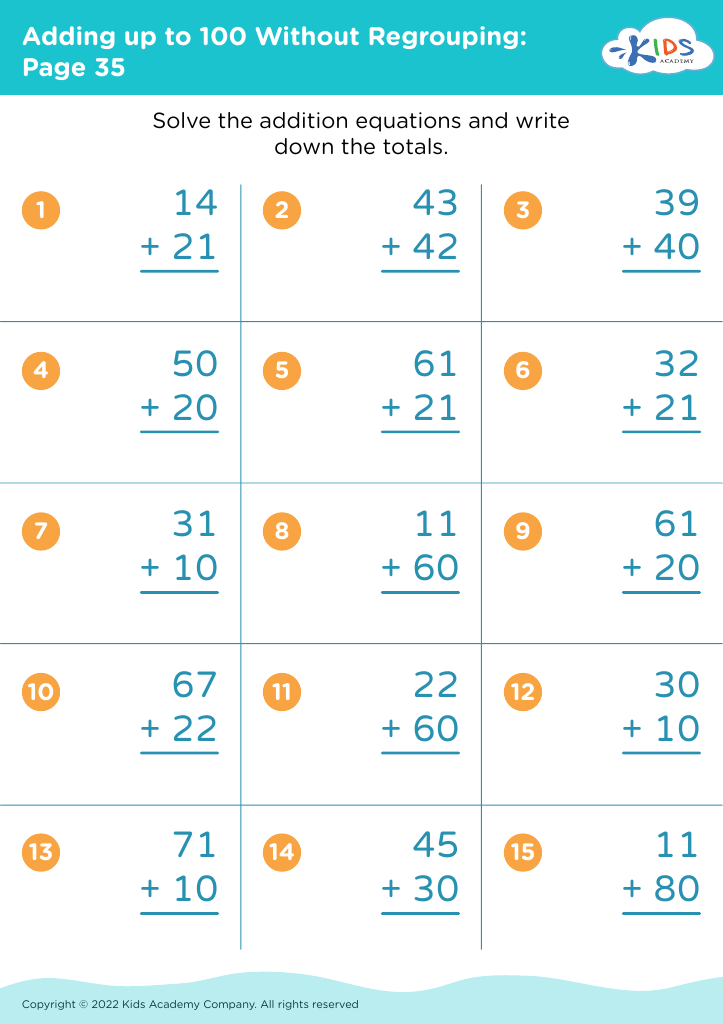
Discover a collection of engaging addition and subtraction worksheets designed to enhance critical thinking skills for 8-year-olds. Our thoughtfully crafted resources challenge young learners to solve puzzles, effectively encourage problem-solving, and deepen their understanding of mathematical concepts. Each worksheet is tailored to foster logical reasoning and analytical skills, making math fun and engaging. With varying levels of difficulty, children can practice at their own pace while building confidence in their abilities. Promote a love for learning and equip your child with essential skills through our comprehensive worksheets that will prepare them for future academic success. Explore now and inspire critical thinkers!
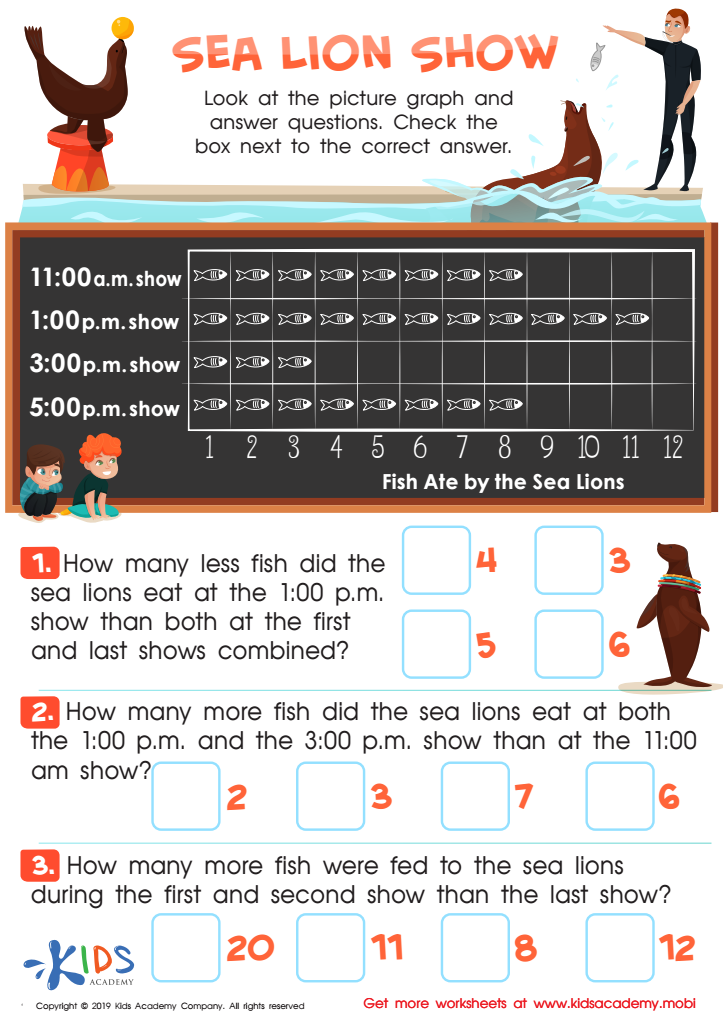
Sea Lion Show Worksheet
 Assign to My Students








Enhancing critical thinking skills in 8-year-olds, particularly in the context of addition and subtraction, is vital for their overall cognitive development and independence. At this age, children are not only honing their mathematical skills but also forming the foundation for future problem-solving abilities and analytical reasoning. Encouraging critical thinking in math helps children to understand concepts deeply instead of relying solely on rote memorization.
Improving their critical thinking also encourages them to approach mathematical challenges with confidence and creativity. When children engage in activities that promote reasoning—like puzzles or word problems—they learn to assess different strategies, evaluate outcomes, and make connections between numbers and real-life situations. This kind of thinking extends beyond mathematics, affecting their performance in other subjects and in daily decision-making.
Furthermore, parents and teachers who prioritize critical thinking in math cultivate a love for learning in children. This approach shifts the focus from getting the right answer to understanding how and why that answer is reached, sparking curiosity and a desire to explore mathematical concepts further. By fostering these essential skills early, we prepare children not only for assessments but for a lifetime of analytical thinking in various aspects of life.








