Fine Motor Skills (coloring) Addition & Subtraction Worksheets for 8-Year-Olds
3 filtered results
-
From - To
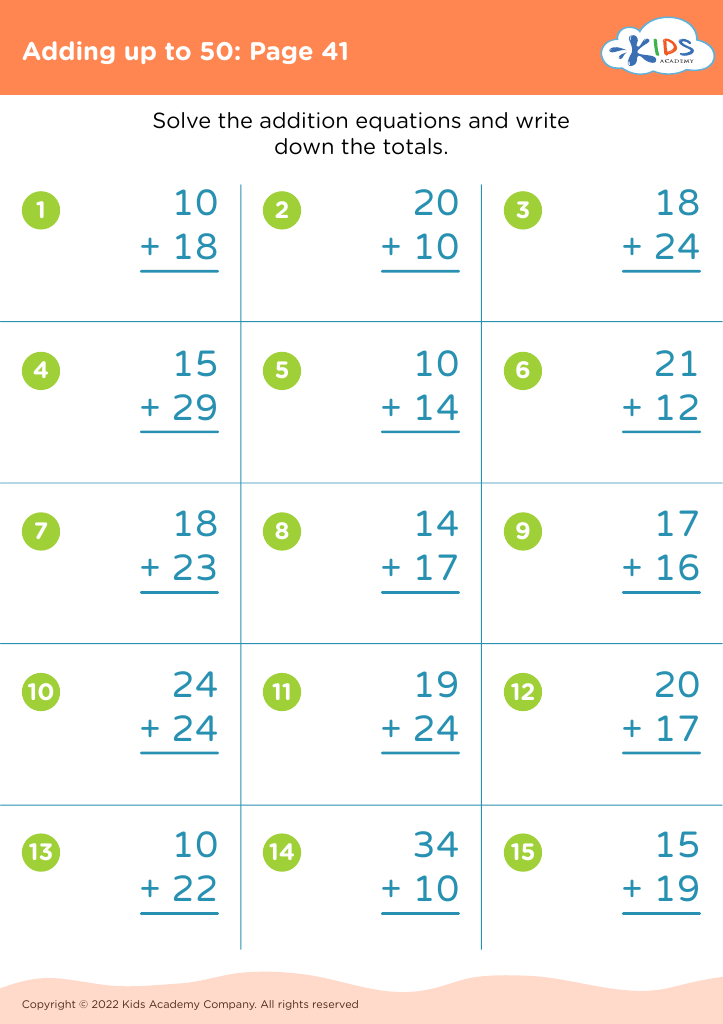
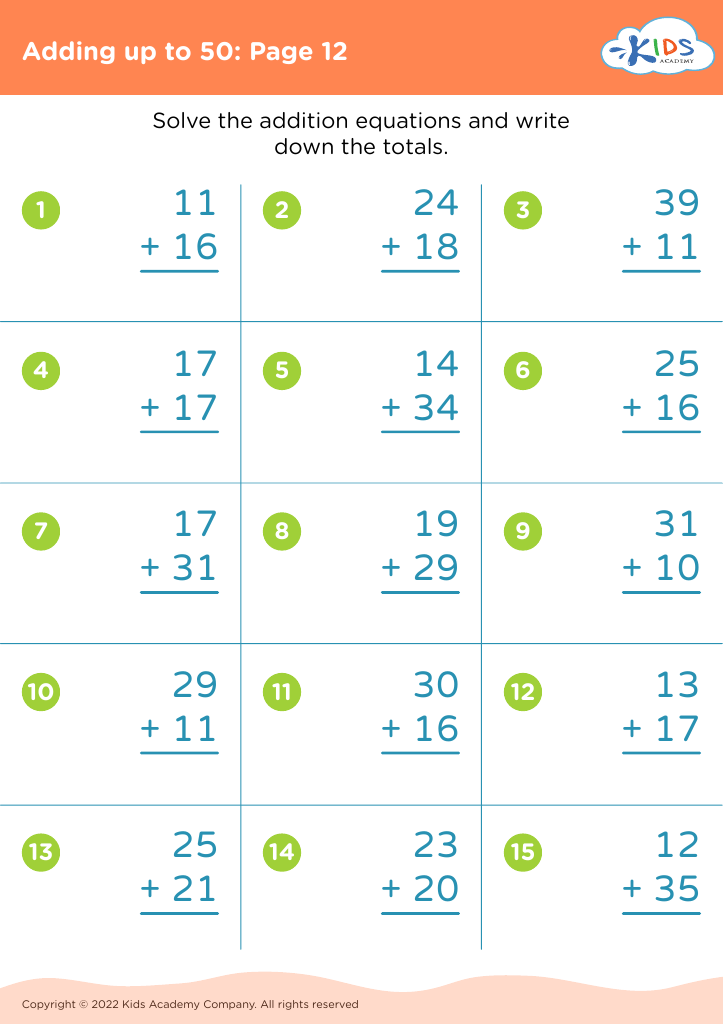
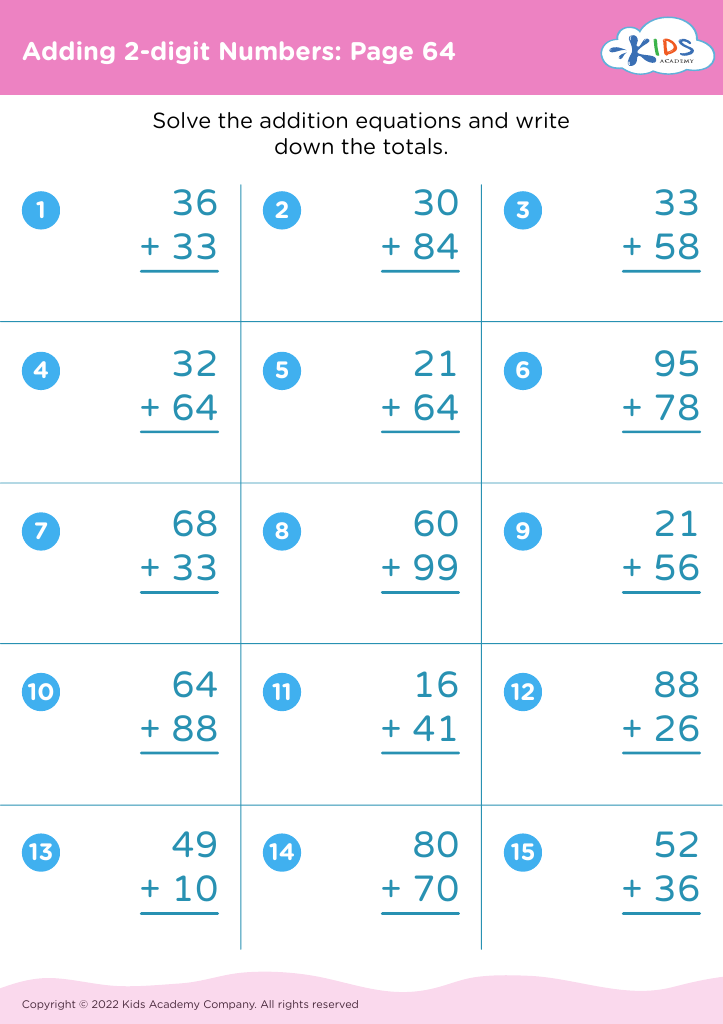
Enhance your child's fine motor skills while they master addition and subtraction with our engaging coloring worksheets designed specifically for 8-year-olds! These fun, interactive activities seamlessly integrate mathematical concepts with creative coloring tasks, encouraging kids to develop precision in their hand movements while reinforcing essential math skills. Perfect for home or classroom use, our worksheets provide clear instructions and exciting visuals, making learning enjoyable. As children solve problems and color vibrant images, they not only hone their mathematical abilities but also boost their creativity and concentration. Explore our collection today to nurture your child's academic growth and motor dexterity!








Fine motor skills are crucial for 8-year-olds as they underpin a child's ability to engage in various learning activities, including coloring, addition, and subtraction. These skills involve the coordination of small muscles in the hands and fingers, which are essential for tasks like holding a pencil correctly, forming letters or numbers, and manipulating small objects. When children practice coloring, they not only express their creativity but also refine their grip, hand-eye coordination, and control over motions, which are foundational for academic tasks.
Moreover, developing fine motor skills supports cognitive functions, particularly in mathematics. As children engage in adding and subtracting, they often use manipulatives or write out problems. Adequate dexterity allows them to efficiently interact with these tools, enhancing their problem-solving abilities. Improved fine motor control fosters greater confidence and independence in learning, equipping them with essential life skills.
Parents and teachers who prioritize fine motor development recognize its significant impact on overall academic performance and daily activities. By nurturing these skills through engaging activities like coloring and math games, they prepare children for future success, encouraging a love for learning that can lead to lifelong educational pursuits. Essentially, it lays the groundwork for essential cognitive and physical capabilities.








