
Handwriting practice Addition & Subtraction Worksheets for 8-Year-Olds
5 filtered results
Difficulty Level
Grade
Age
-
From - To
Subject
Activity
Standards
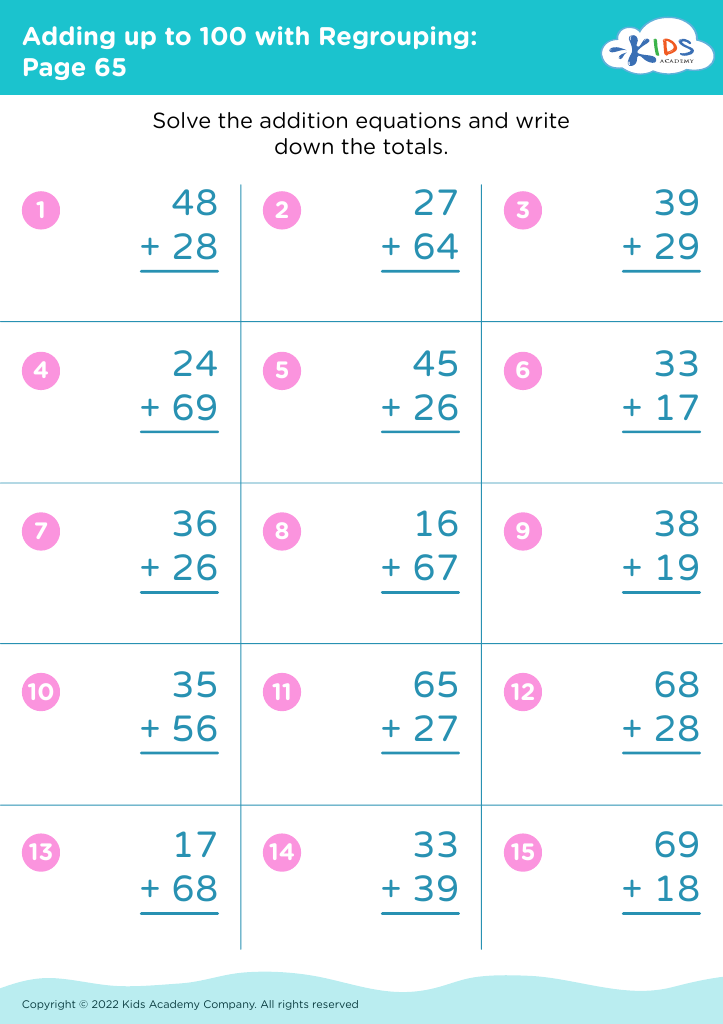
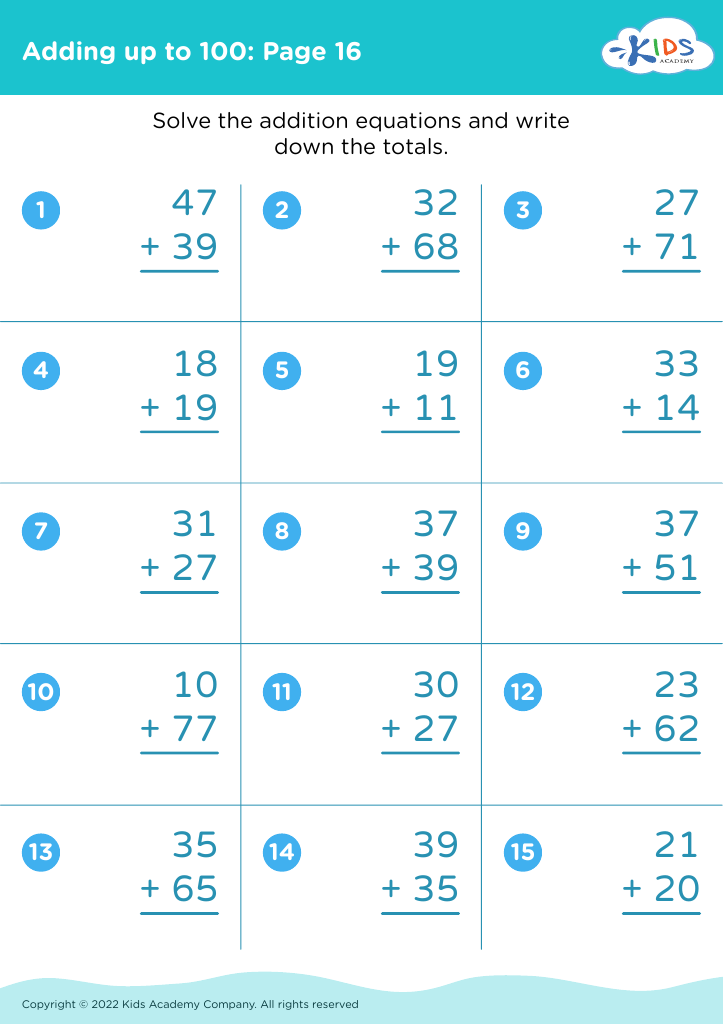
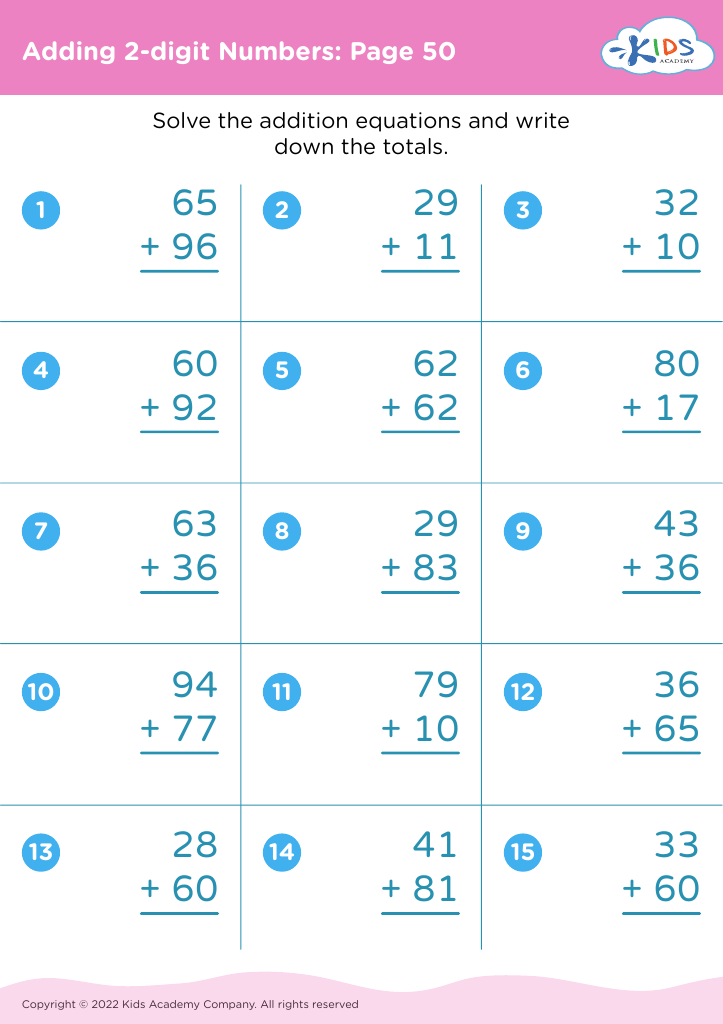
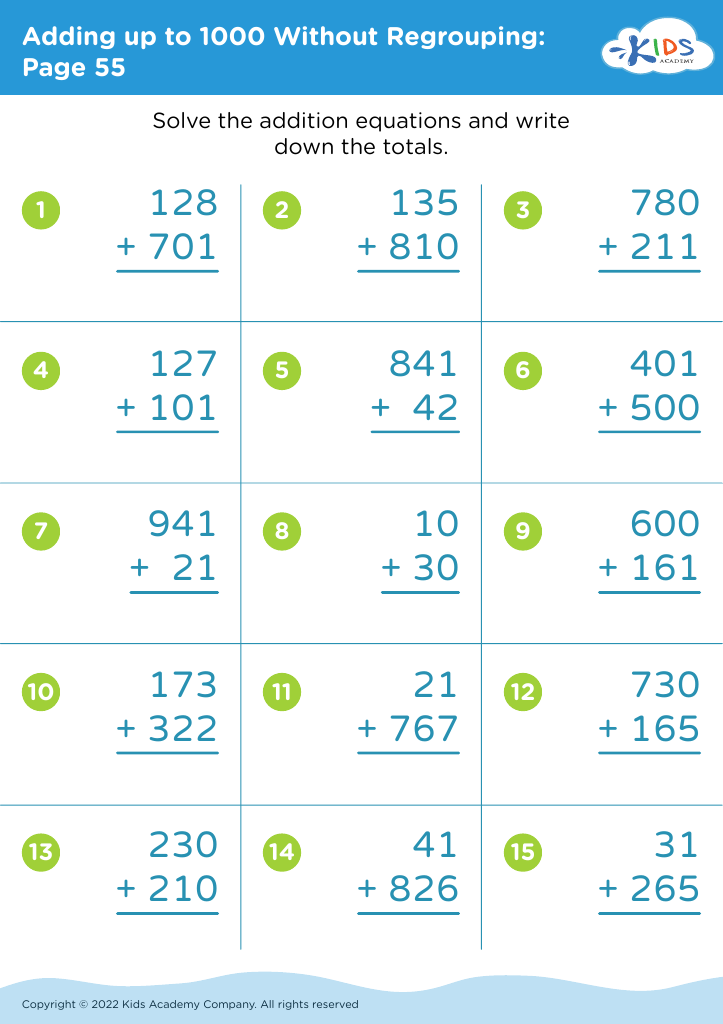
Enhance your child's math skills and handwriting with our engaging Addition and Subtraction Worksheets designed for 8-year-olds. These printable activities combine essential math concepts with handwriting practice, ensuring your child improves both their numeric fluency and fine motor skills. With fun exercises that reinforce basic addition and subtraction, your young learner will gain confidence while learning to write numbers neatly and accurately. Our worksheets are perfect for homework or extra practice at home, making math enjoyable and effective. Discover the importance of writing in math, and watch your child's skills blossom! Visit us today for a world of educational fun!
Favorites
With answer key
Interactive
Join Kids Academy for Free
Who is primarily going to use this learning content?








Handwriting practice for addition and subtraction is crucial for 8-year-olds, as it plays a significant role in cognitive and motor skill development. At this age, children are refining their fine motor skills, and proper handwriting techniques enhance their ability to write legibly and effectively express their thoughts. Good handwriting promotes confidence and fosters a positive attitude towards learning.
Moreover, handwriting in math extends beyond mere calculation; it encourages children to engage with the problems they are solving. Writing out equations and working through addition and subtraction steps helps solidify their understanding of mathematical concepts. This practice aids in problem-solving skills, ensures greater accuracy in calculations, and encourages a mindful approach to learning.
Additionally, consistent handwriting practice builds focus and patience, essential qualities needed for academic success. It also prepares children for future educational requirements where neatness and clarity in their work will be expected.
Lastly, parents and teachers should recognize that developing these skills at a young age lays the foundation for more complex mathematical concepts in the future. Taking the time to integrate handwriting practice into daily activities will yield long-term benefits, impacting both literacy and numeracy competencies.








