Solve word problems Addition & Subtraction Worksheets for 8-Year-Olds
3 filtered results
-
From - To
Help your 8-year-old master addition and subtraction with our engaging word problems worksheets! Designed specifically for young learners, these worksheets foster critical thinking and enhance problem-solving skills. Each worksheet features real-life scenarios that challenge children to apply math concepts in a fun and relatable way. With a variety of problems tailored to different skill levels, kids will enjoy practicing their math skills while building confidence. Ideal for classroom use or homework, these worksheets offer essential practice that aligns with educational standards. Download now and watch your child's love for math grow as they tackle exciting word problems!
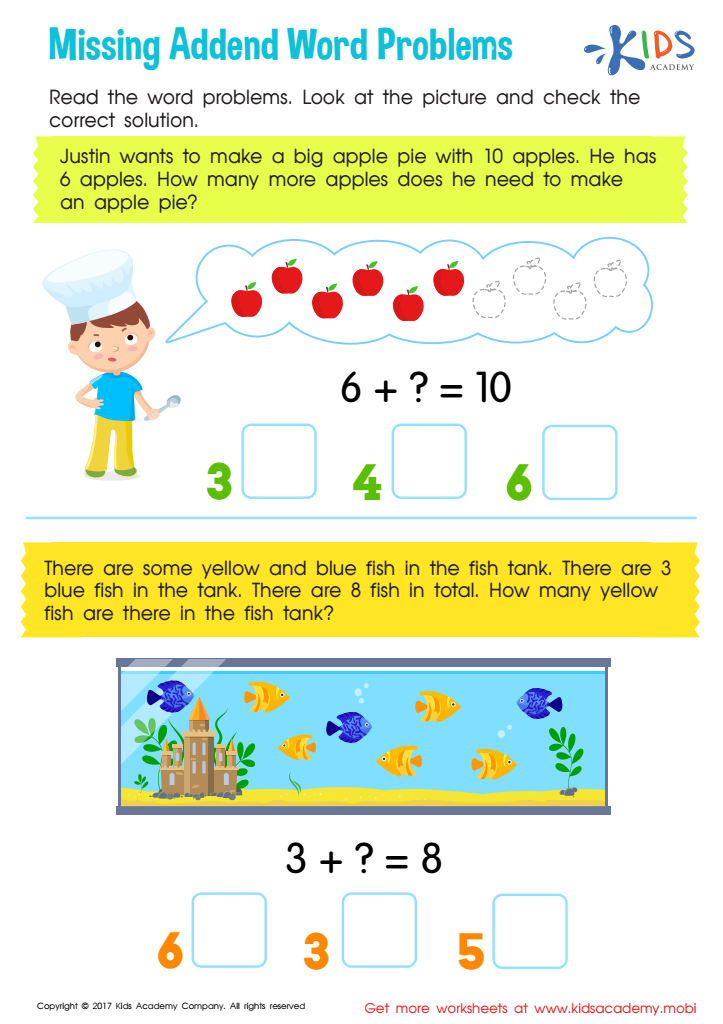
Missing Addend Word Problems Worksheet
 Assign to My Students








Parents and teachers should prioritize teaching 8-year-olds how to solve word problems involving addition and subtraction because these skills are fundamental to a child’s mathematical development and everyday reasoning. Mastering these concepts helps children understand practical applications of math, as word problems require them to comprehend real-life situations—such as budgeting, cooking, or planning—to find solutions.
Furthermore, engaging with word problems enhances critical thinking skills. Children learn to interpret information, discern key details, and apply their knowledge in a context that matters to them. This ability to analyze and synthesize information not only bolsters their math skills but also fosters greater cognitive capabilities across disciplines.
Additionally, proficiency in solving word problems can boost a child's confidence. Successfully navigating these challenges builds a sense of accomplishment, encouraging persistence and a positive attitude towards learning. This early exposure lays a solid foundation for more advanced concepts in mathematics.
Lastly, collaboration between parents and teachers reinforces learning. When both parties show interest in a child's development, they create a supportive environment that fosters curiosity and motivation. By proactively engaging with word problems, parents and teachers can cultivate a child's enthusiasm for mathematics, preparing them for future academic challenges.








