Fine Motor Skills (coloring) Addition Worksheets for 8-Year-Olds
3 filtered results
-
From - To
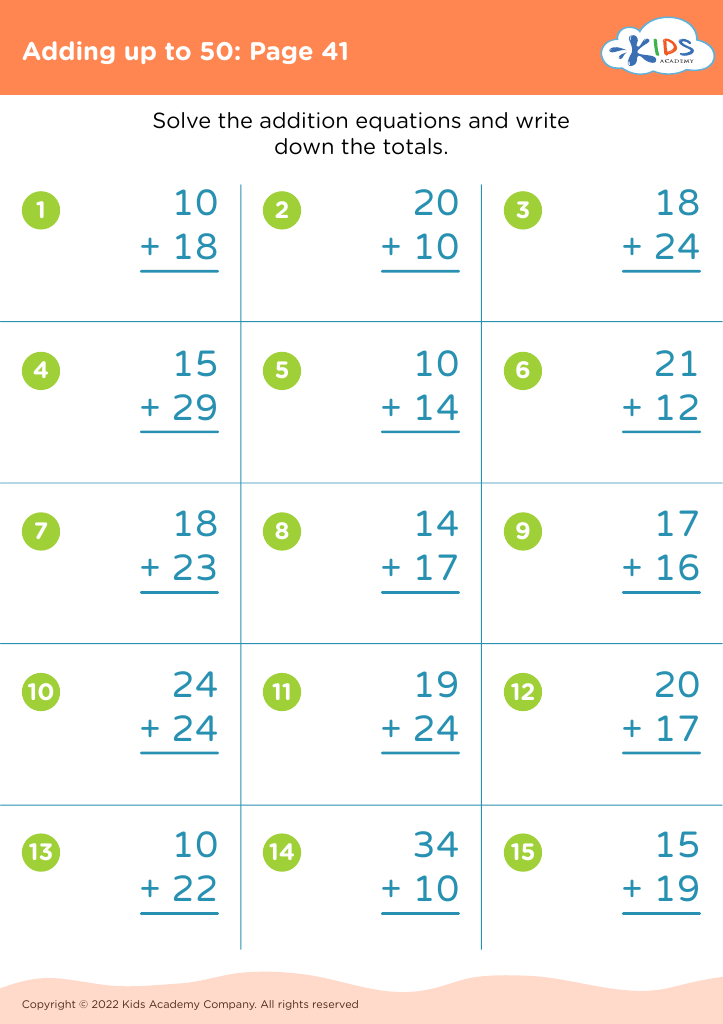
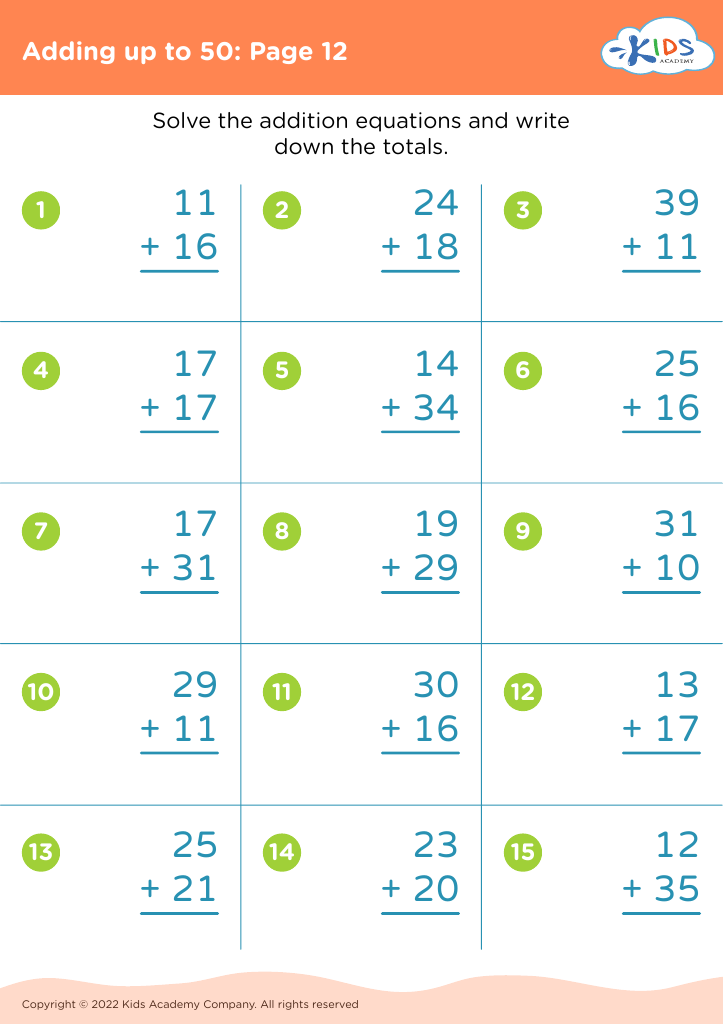
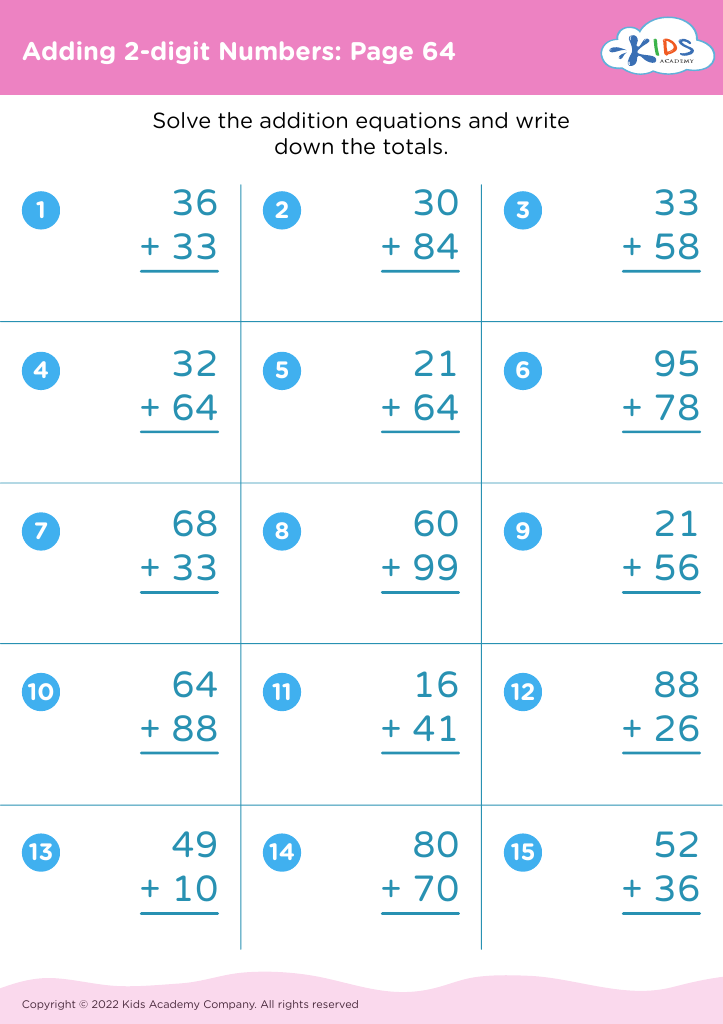
Enhance your 8-year-old’s learning experience with our Fine Motor Skills (Coloring) Addition Worksheets! These engaging worksheets seamlessly combine math practice with creative coloring activities, making learning both enjoyable and effective. Designed to reinforce addition skills while developing fine motor abilities, these worksheets encourage hand-eye coordination and dexterity. Each page features fun, colorful designs that captivate young learners, motivating them to practice their addition skills. Perfect for home or classroom use, our printable resources are ideal for reinforcing math concepts in a unique way. Transform learning into an exciting adventure with our Fine Motor Skills Coloring Worksheets today!








Fine motor skills are essential for children's overall development and academic success, especially in activities like coloring, which is fundamental for 8-year-olds. These skills pertain to the coordination of small muscles in the hands and fingers, and they play a pivotal role in tasks such as writing, crafts, and other daily activities.
When children engage in coloring, they improve their grip, hand-eye coordination, and dexterity. This not only enhances their ability to control writing instruments but also sparks creativity and boosts concentration. Additionally, coloring can stimulate cognitive skills as children learn to differentiate colors, shapes, and patterns.
For parents and teachers, nurturing fine motor skills is vital because these abilities impact a child's ability to perform academically. Struggling with fine motor tasks can lead to frustration, lower self-esteem, and hindered learning progression in subjects like math and language arts. By encouraging activities such as coloring, parents and teachers provide an environment that promotes skill-building while fostering a love for learning.
Investing time into developing fine motor skills can form a strong foundation that aids in lifelong skills and a greater willingness to tackle complex tasks in the future. Ultimately, supporting these skills nurtures confident, capable learners.








