Improve calculation skills Addition Worksheets for 8-Year-Olds
3 filtered results
-
From - To
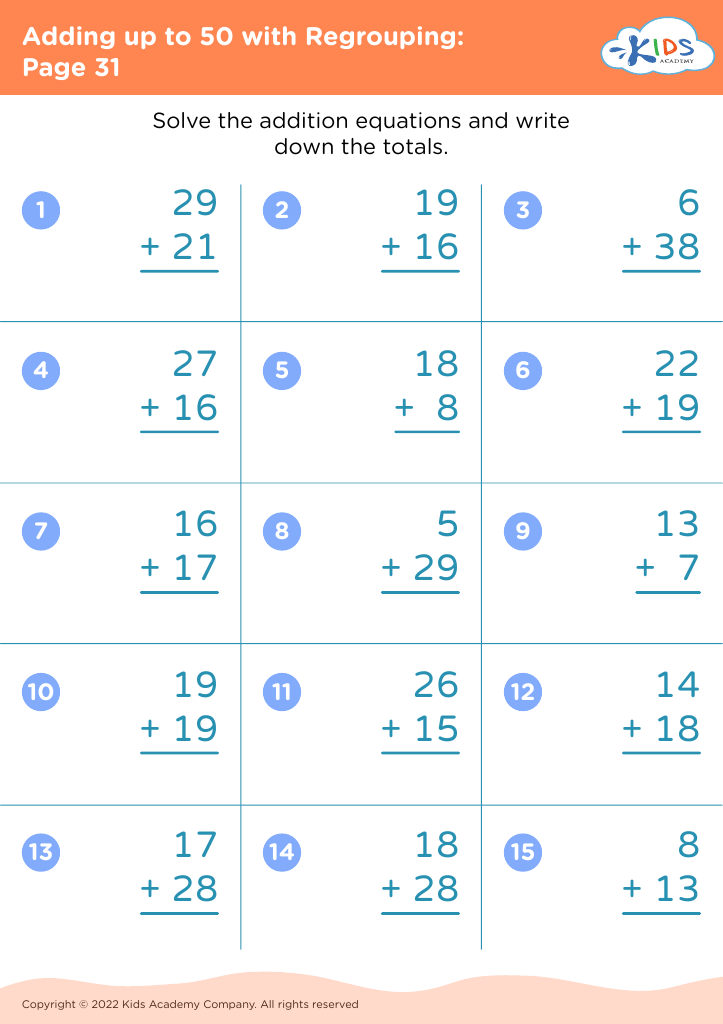
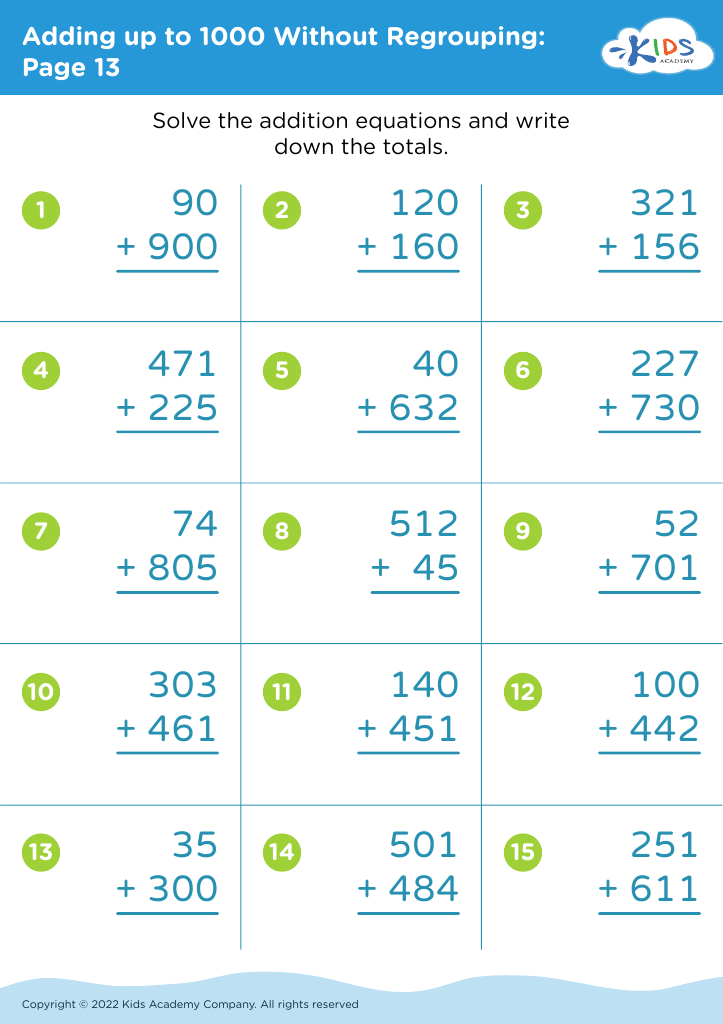
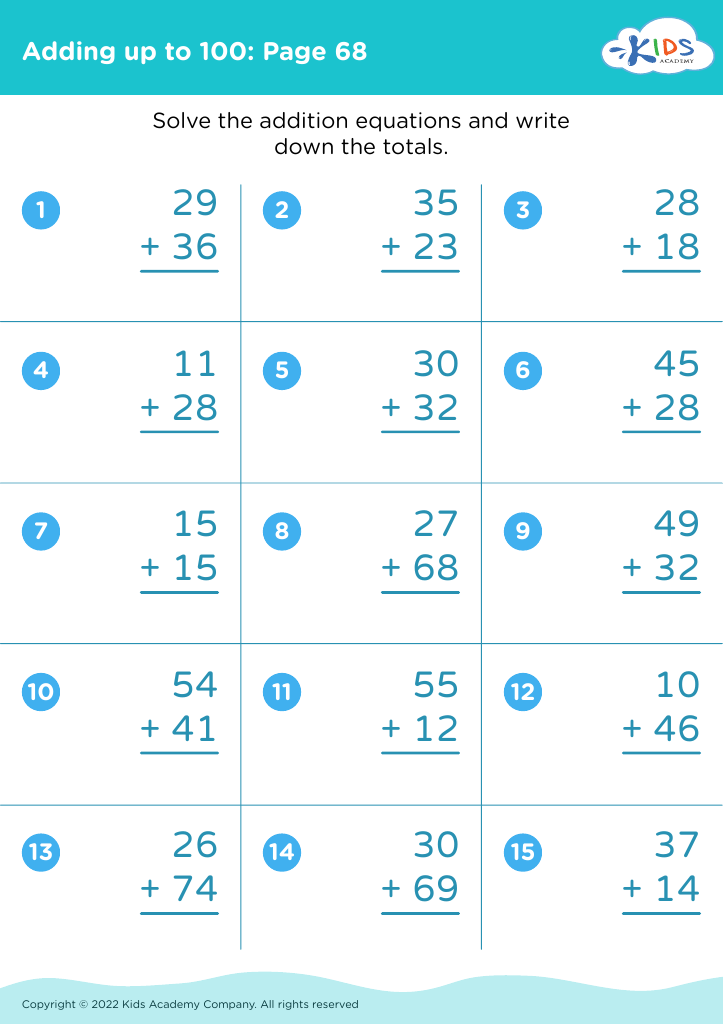
Enhance your 8-year-old's math fluency with our engaging Improve Calculation Skills Addition Worksheets! Designed to make learning fun, these worksheets help children practice essential addition concepts through various activities, including puzzles and games. Each worksheet reinforces skills in a way that promotes confidence and mastery in basic math operations. Tailored for young learners, our resources encourage problem-solving and critical thinking while making practice enjoyable. Students can work at their own pace, allowing for personalized learning experiences. Start your child on a successful math journey today and watch their skills grow with our thoughtfully crafted addition worksheets!





.jpg)


Improving addition skills in 8-year-olds is essential for several reasons. First, strong foundational math skills help build confidence in young learners, making them more willing to engage with and tackle challenging mathematical concepts in the future. Mastery of addition—often considered one of the fundamental building blocks of mathematics—underpins more complex operations, such as subtraction, multiplication, and division, which children will encounter in subsequent grades.
Second, adequate calculation skills enhance problem-solving abilities that extend beyond the classroom. When children can accurately add numbers, they can manage everyday tasks, such as budgeting for allowances or measuring ingredients in cooking, fostering independence and practical life skills.
Furthermore, parents and teachers play a critical role in creating an engaging and supportive learning environment. By encouraging practice, incorporating games, and using manipulatives, they can make learning addition enjoyable and effective. Promoting these skills also prepares students for standardized tests and future academic success, as math proficiency is often a measure of overall educational achievement.
In essence, improving addition skills enriches children's cognitive development, practical life skills, and confidence, paving the way for lifelong learning and success in various subjects.








