Recognizing Patterns Addition Worksheets for 8-Year-Olds
21 filtered results
-
From - To
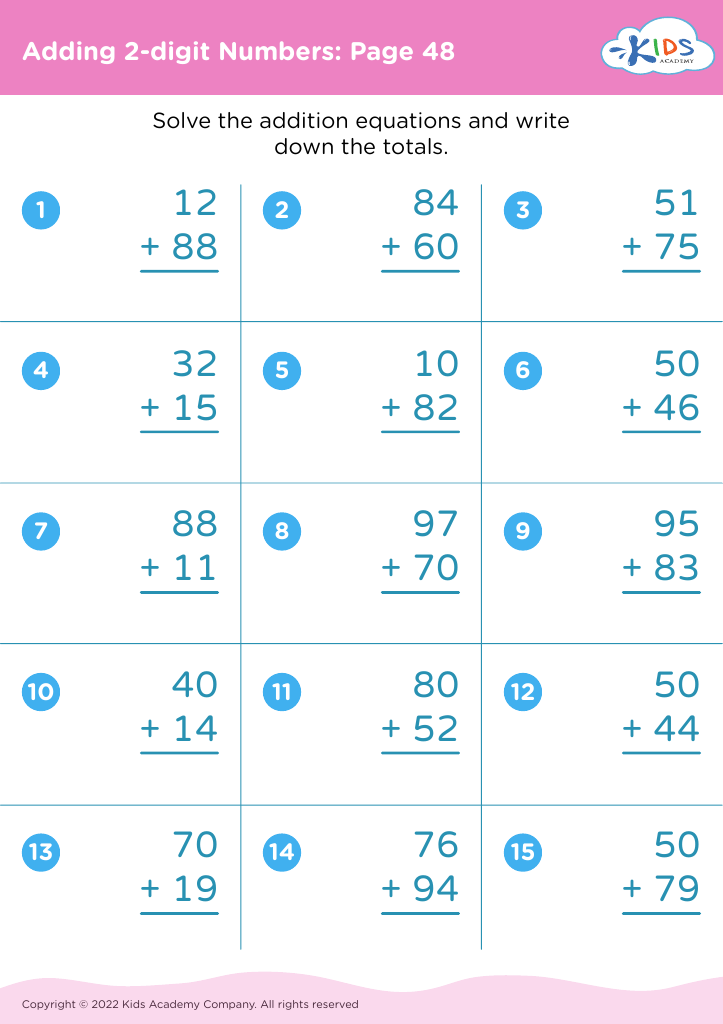
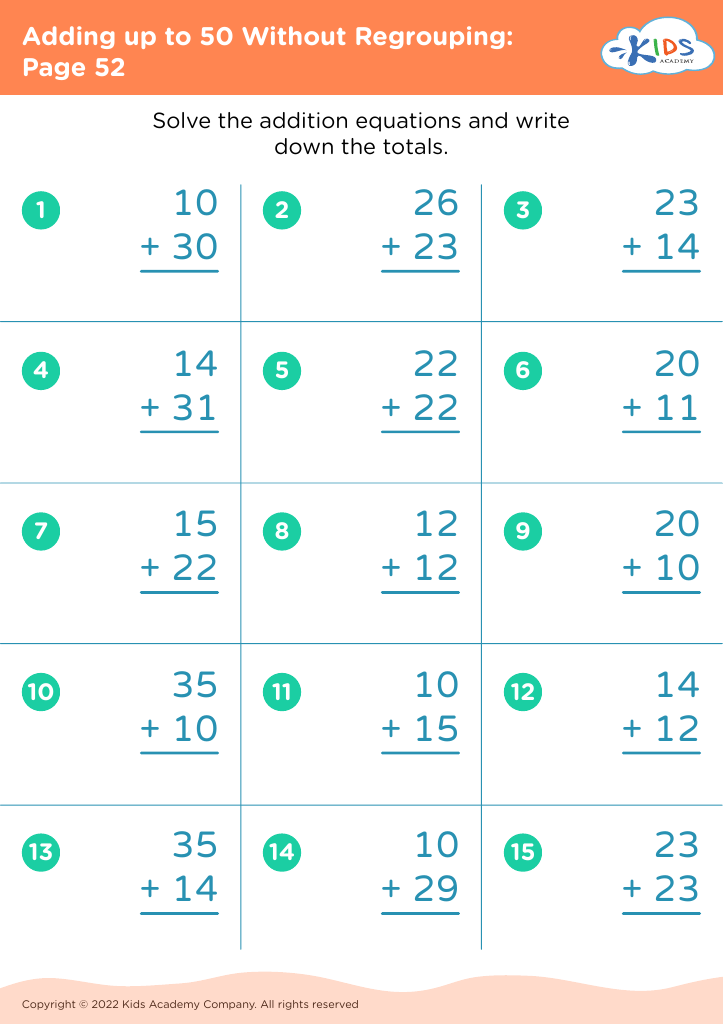
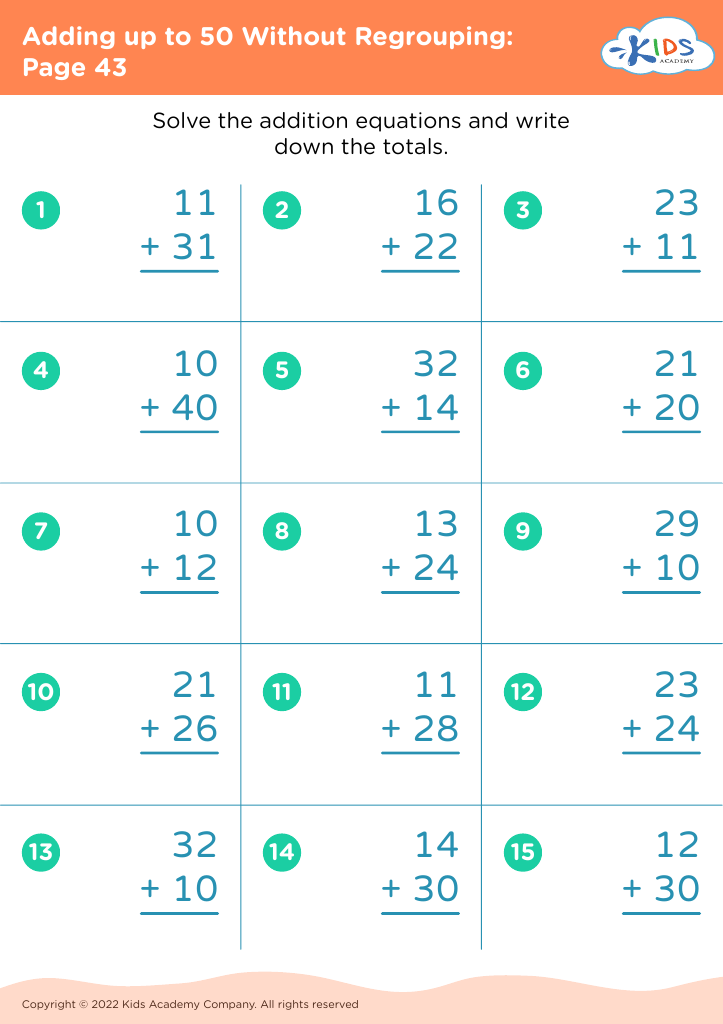
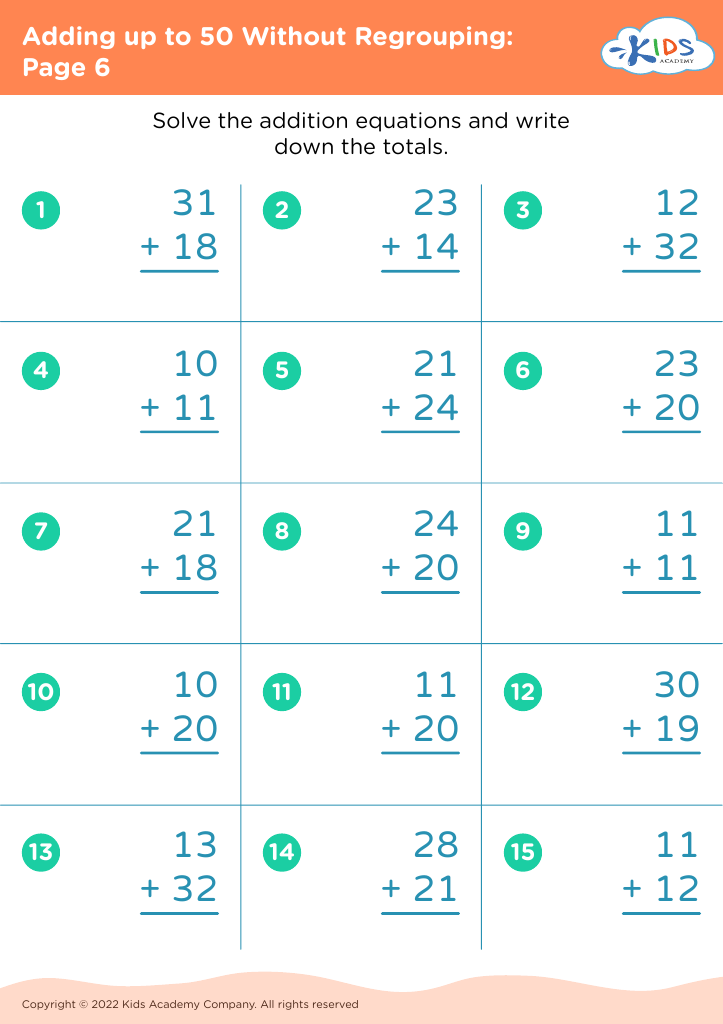
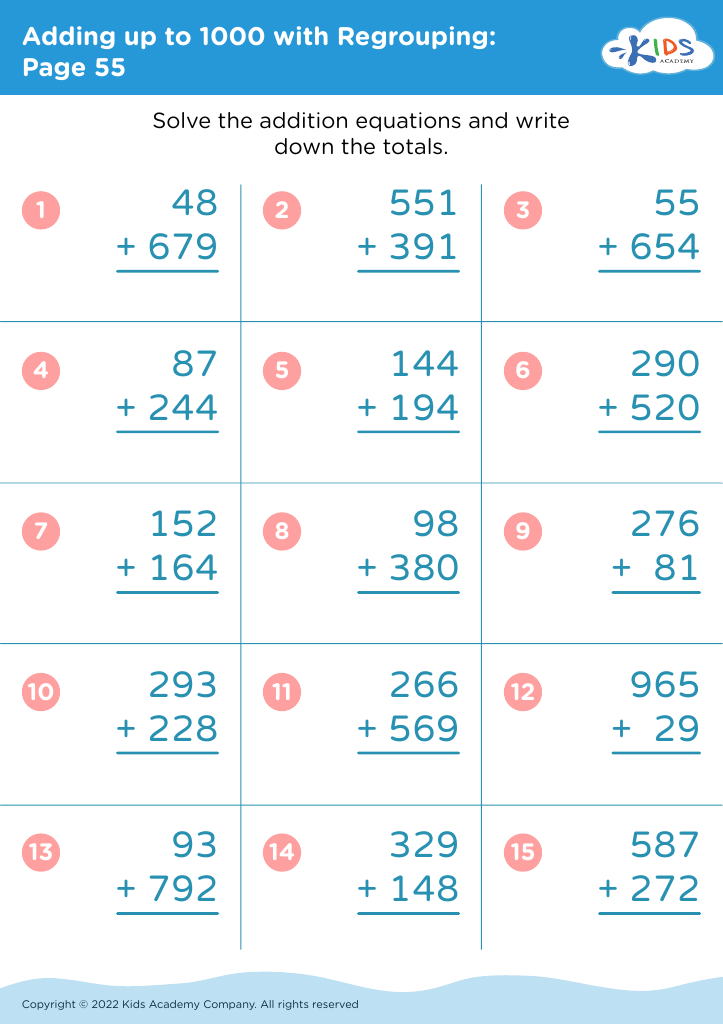
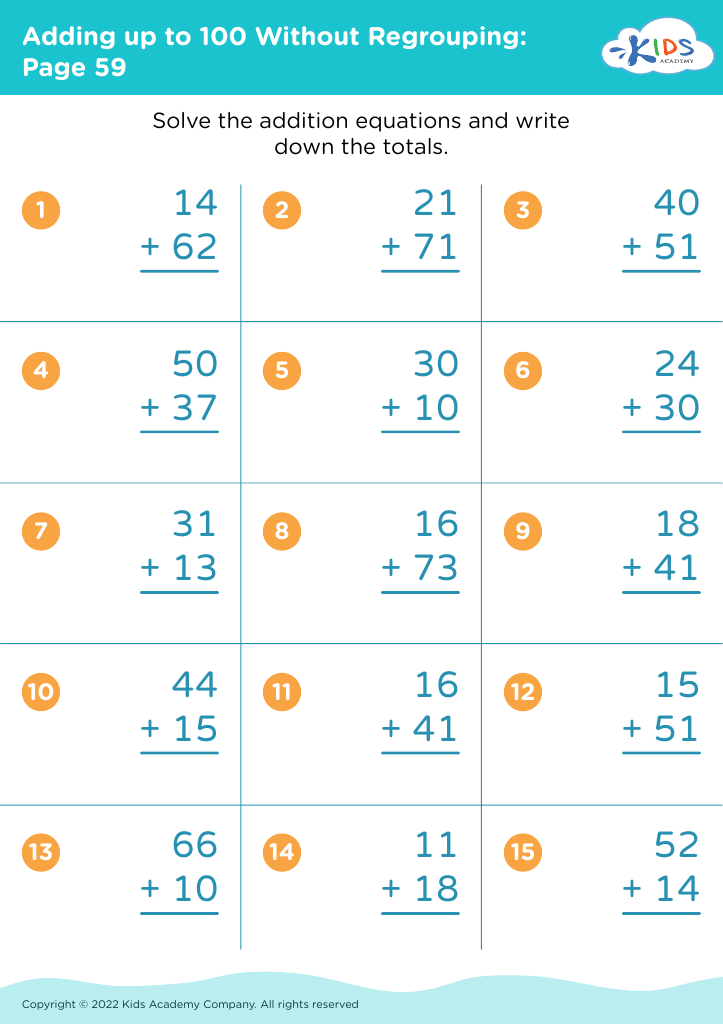
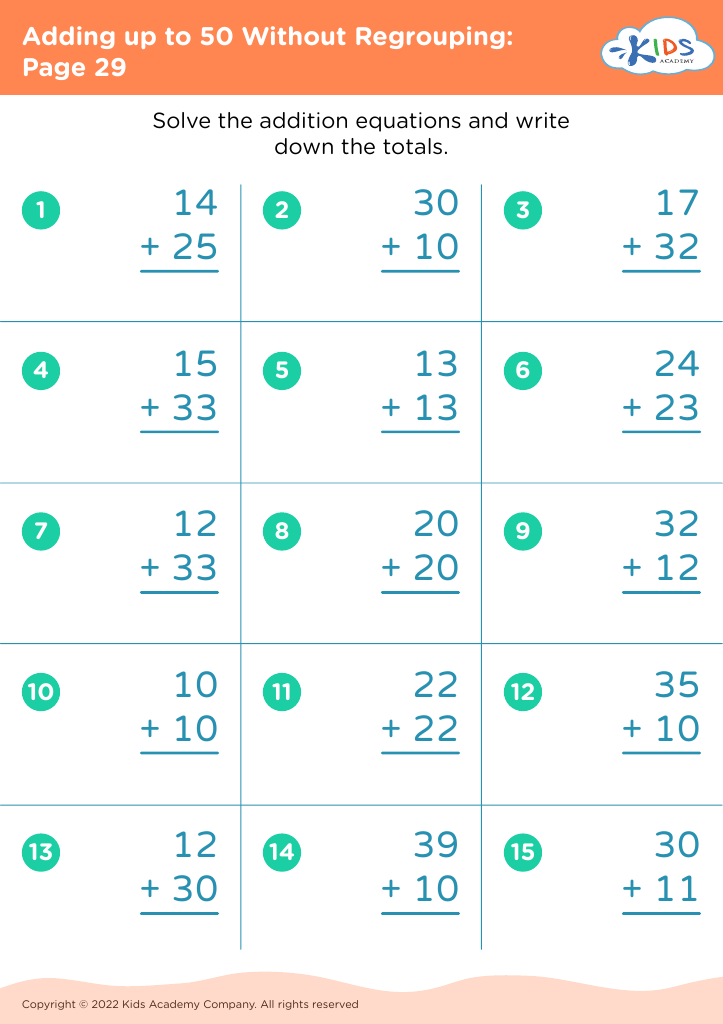
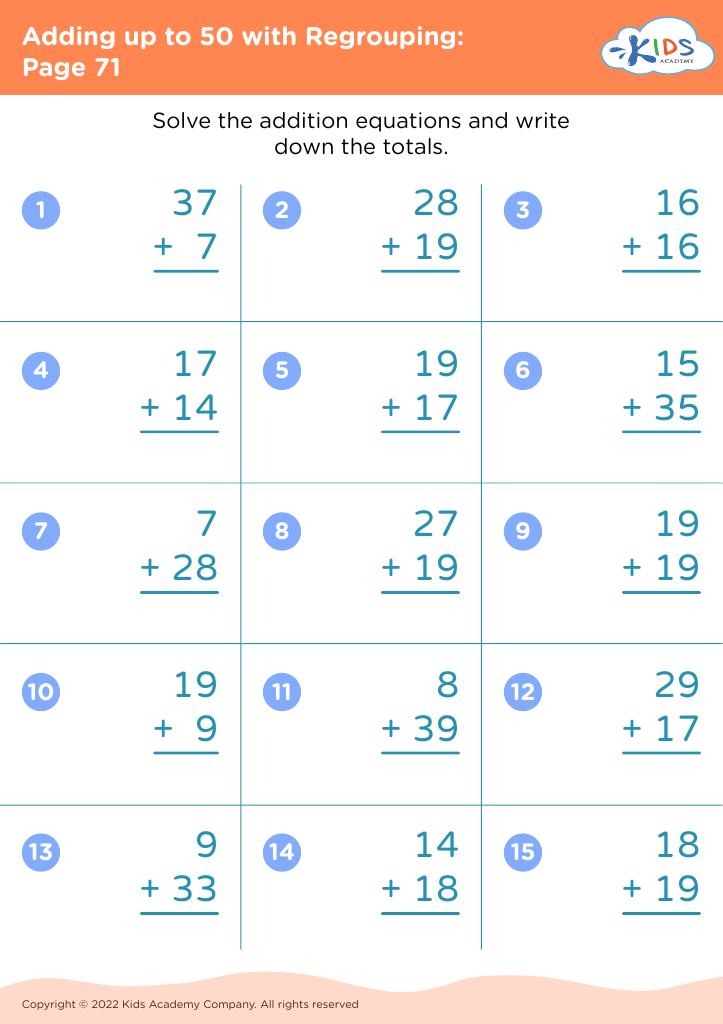
Welcome to our "Recognizing Patterns Addition Worksheets for 8-Year-Olds" page! These engaging worksheets are designed to help children discover and apply patterns in addition problems, enhancing their mathematical skills in a fun way. Through exciting exercises and colorful illustrations, 8-year-olds will learn to identify numerical sequences, practice addition with confidence, and solve problems efficiently. Our worksheets cater to different learning styles, ensuring that every child can grasp the concepts. Whether at home or in the classroom, these resources are perfect for reinforcing pattern recognition, promoting critical thinking, and making learning math an enjoyable experience. Explore our collection and watch your child's skills flourish!
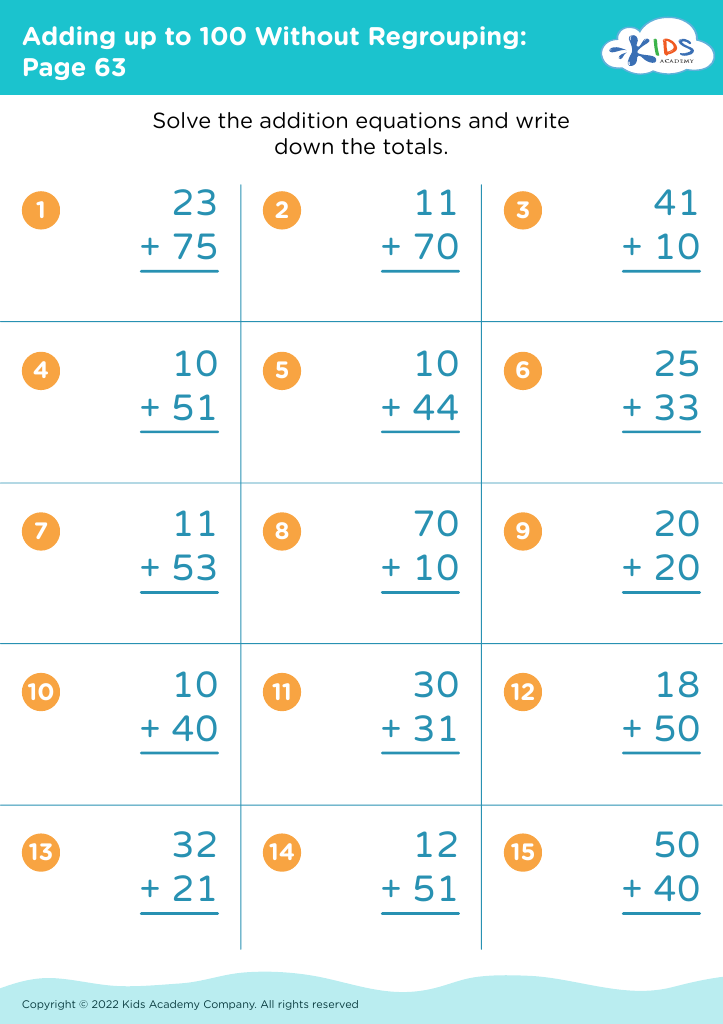
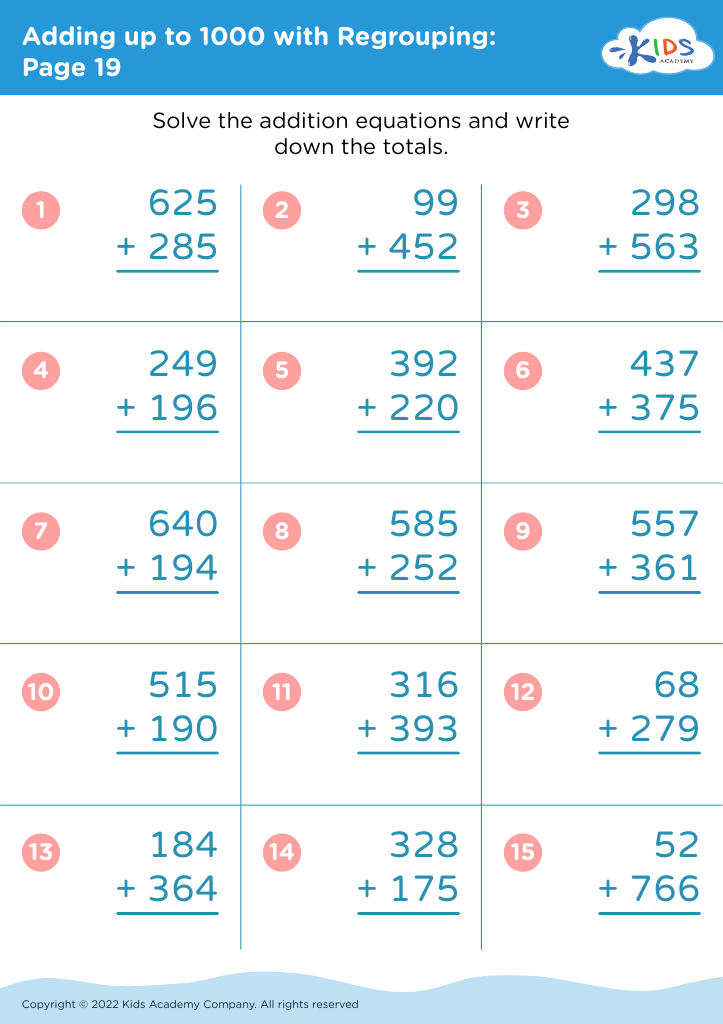
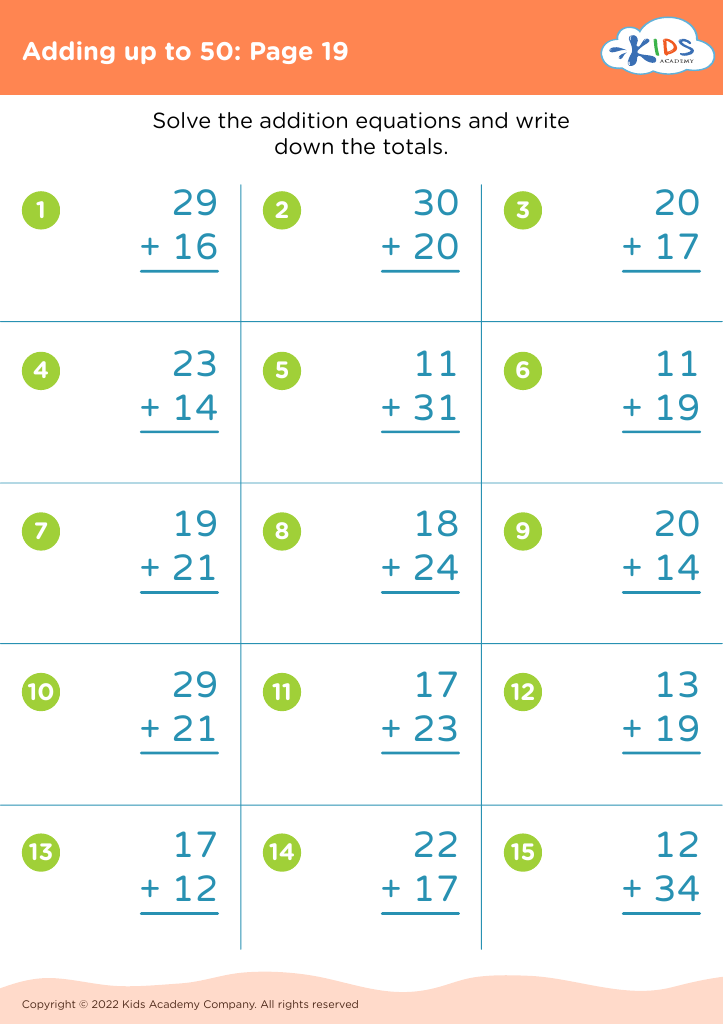
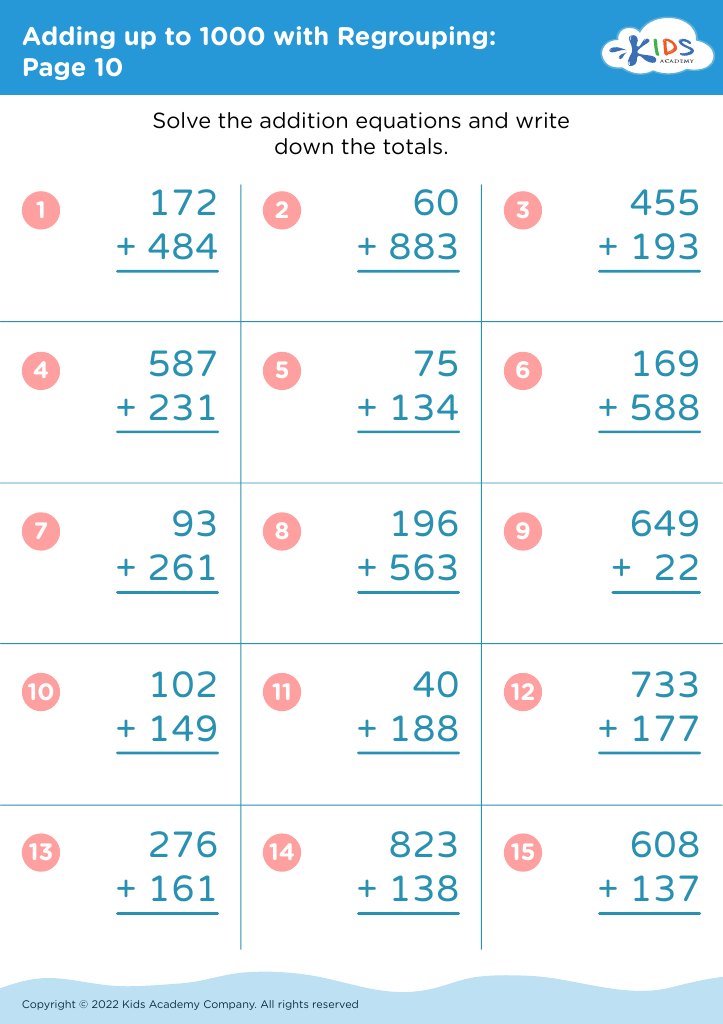
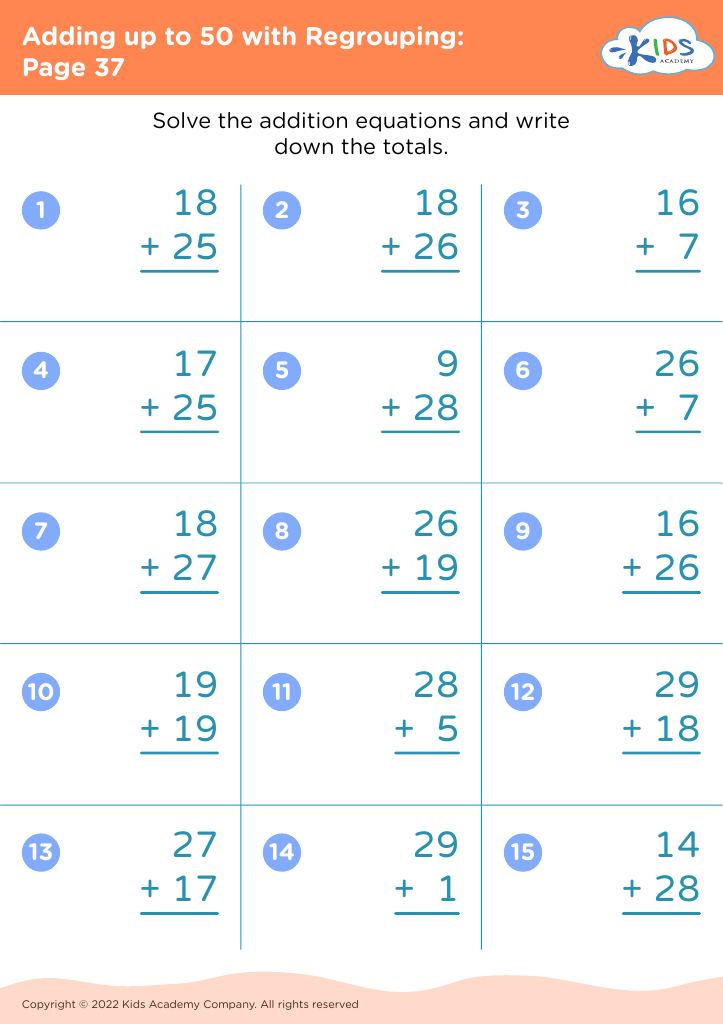
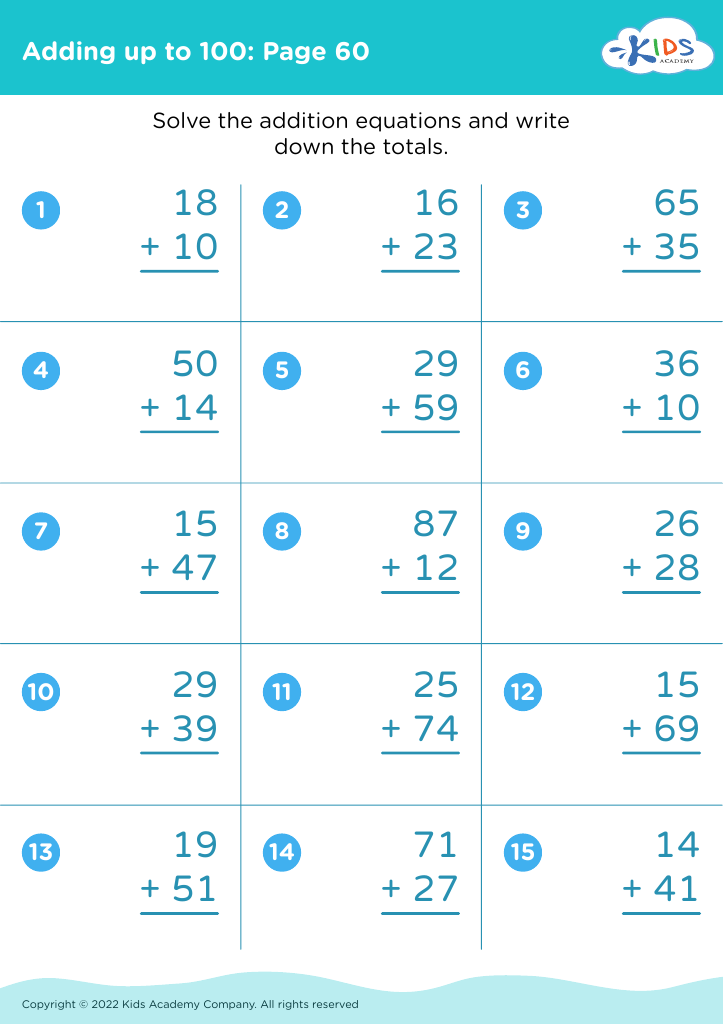
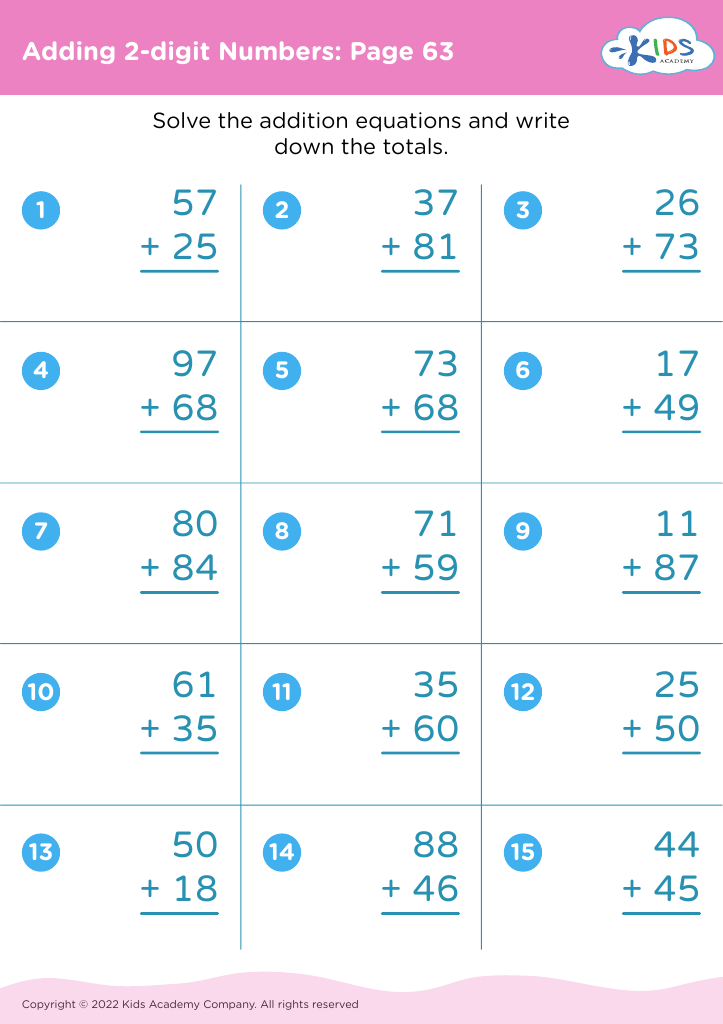
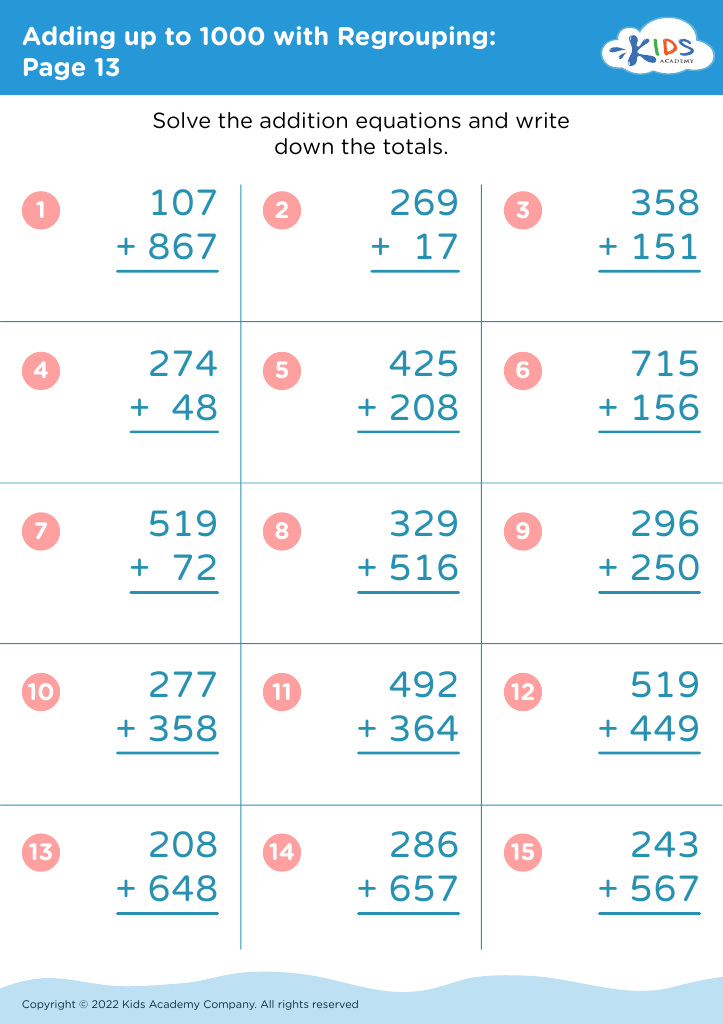
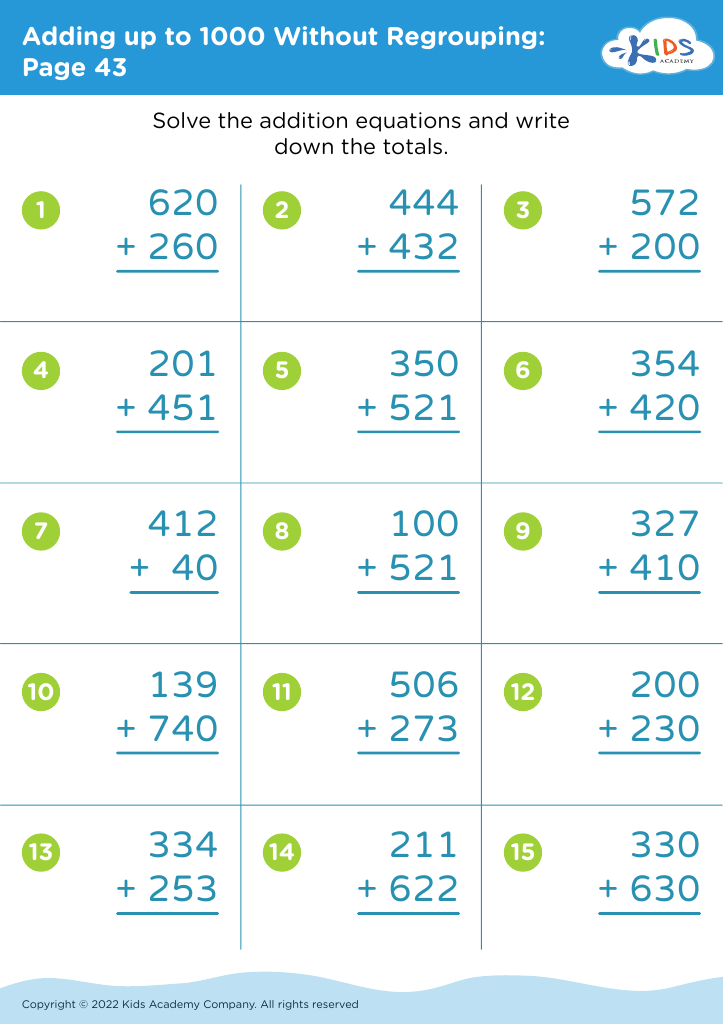
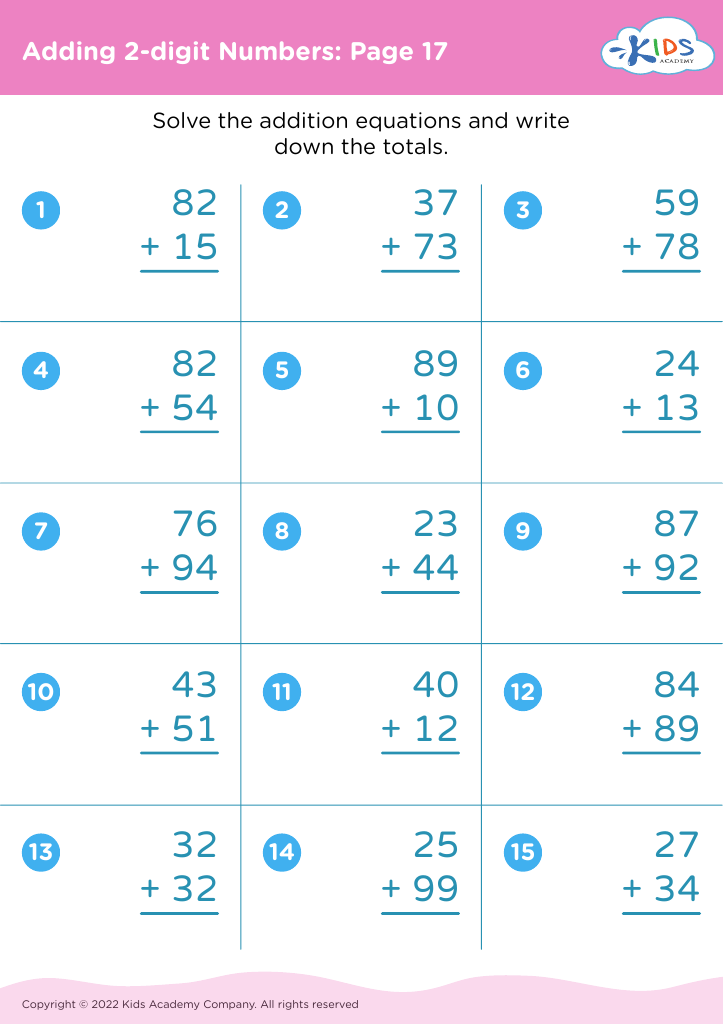
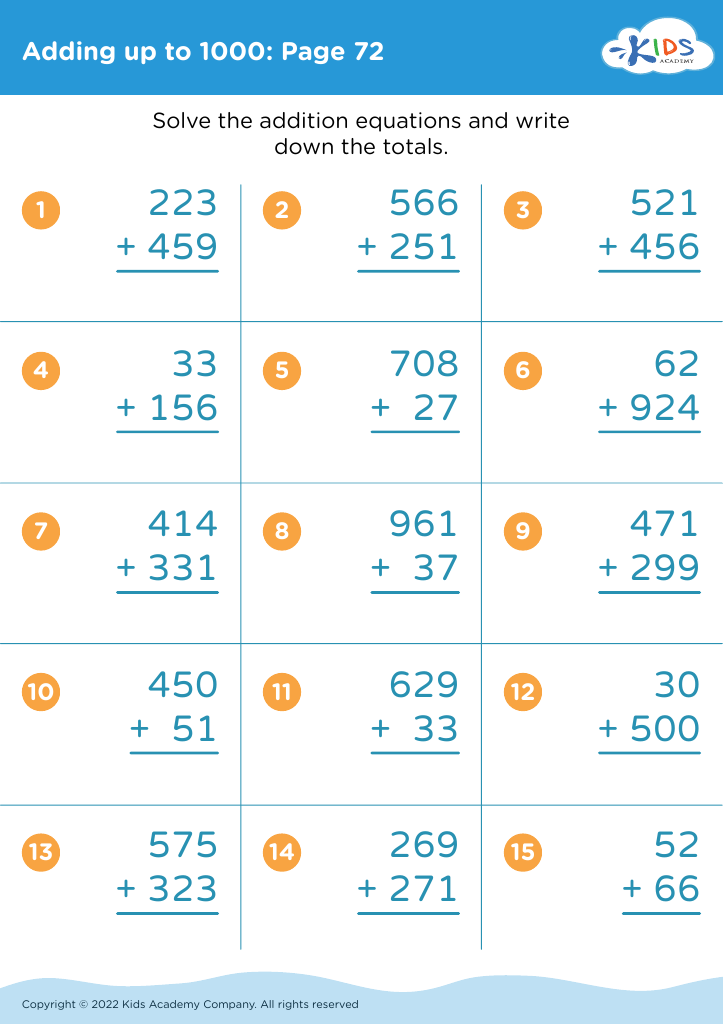
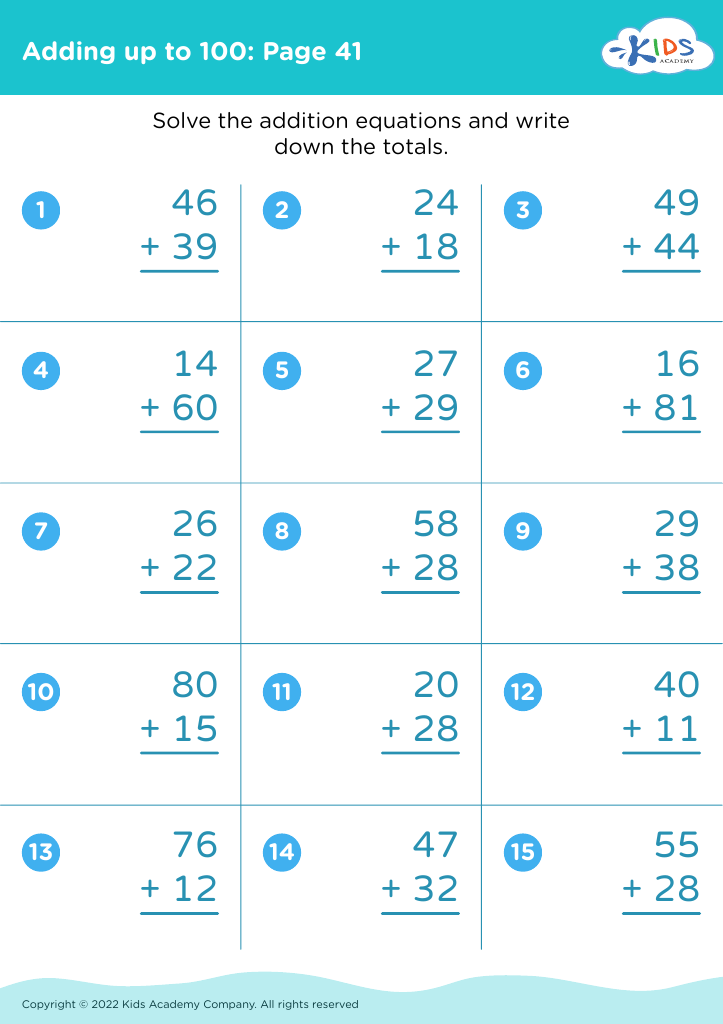
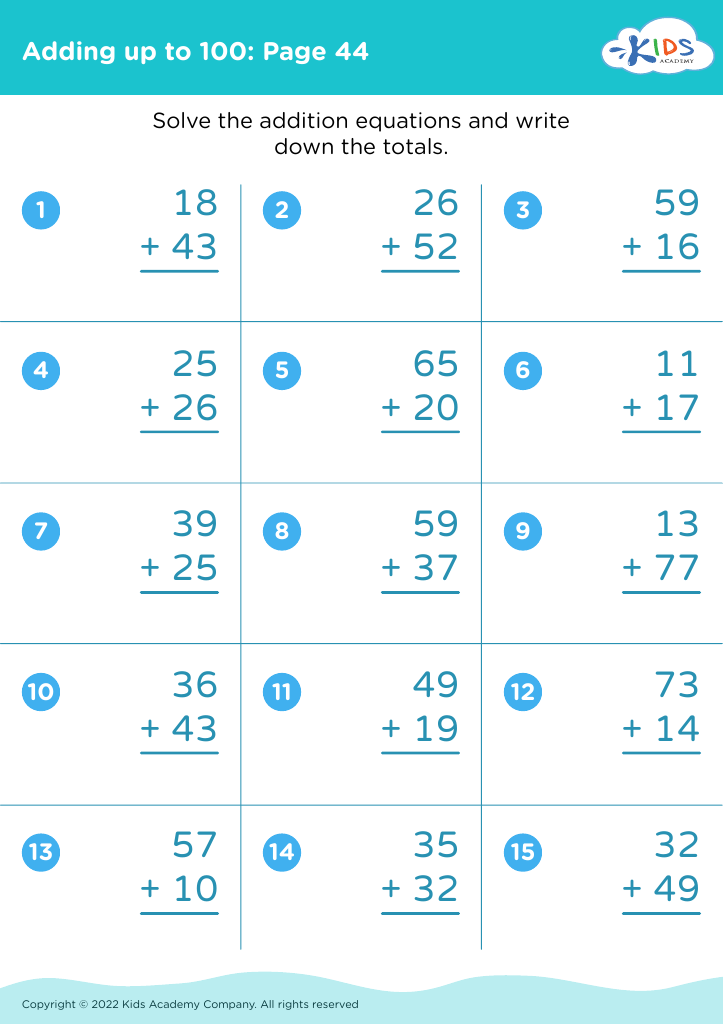








Recognizing patterns in addition is crucial for 8-year-olds as it fosters essential mathematical skills. At this age, children are honing their ability to identify relationships among numbers, which enhances their arithmetic proficiency and problem-solving abilities. Pattern recognition not only makes addition more engaging, but it also builds a foundation for more complex mathematical concepts like multiplication and algebra.
When children grasp patterns, they become more efficient in calculations, leading to greater confidence in their math skills. For example, recognizing that adding 2 to an even number always results in an even number can help them make quicker calculations and develop their number sense. This understanding also encourages critical thinking, as students learn to analyze and predict outcomes based on existing information.
Moreover, recognizing patterns in math promotes a sense of logical reasoning and organization, skills that are valuable well beyond the classroom. By supporting this aspect of their education, parents and teachers cultivate an environment where children can connect abstract mathematical ideas to real-world situations, enhancing their overall learning experience. Therefore, investing time in teaching pattern recognition is critical in developing lifelong thinkers and learners in mathematics.








