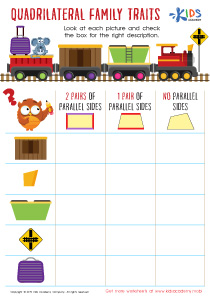
Understanding area Area and Perimeter Worksheets for 8-Year-Olds
3 filtered results
-
From - To
Explore our comprehensive area and perimeter worksheets designed specifically for 8-year-olds to enhance their understanding of these fundamental math concepts. These engaging resources simplify the process of learning about area and perimeter through fun and interactive exercises. Students will solve various problems, helping them visualize and apply what they've learned in real-world contexts. Ideal for classrooms and at-home learning, our worksheets cater to various learning styles, ensuring children grasp the differences between area and perimeter effortlessly. Empower your child's math skills today with our easy-to-understand, creative worksheets that make learning about area and perimeter exciting and enjoyable!
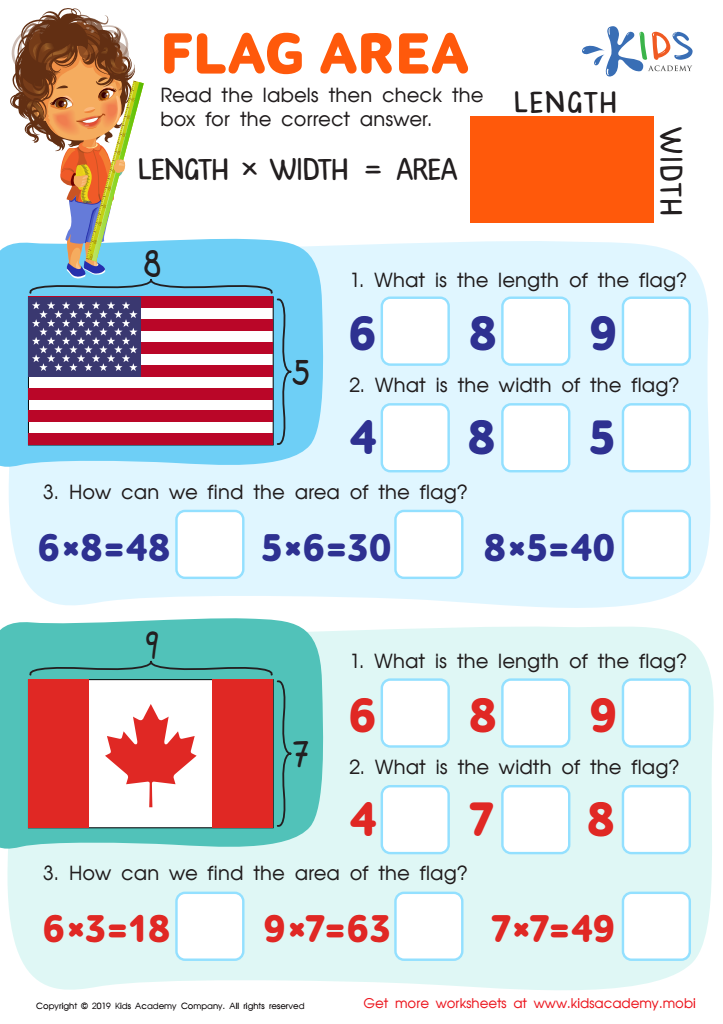
Flag Area Worksheet
 Assign to My Students
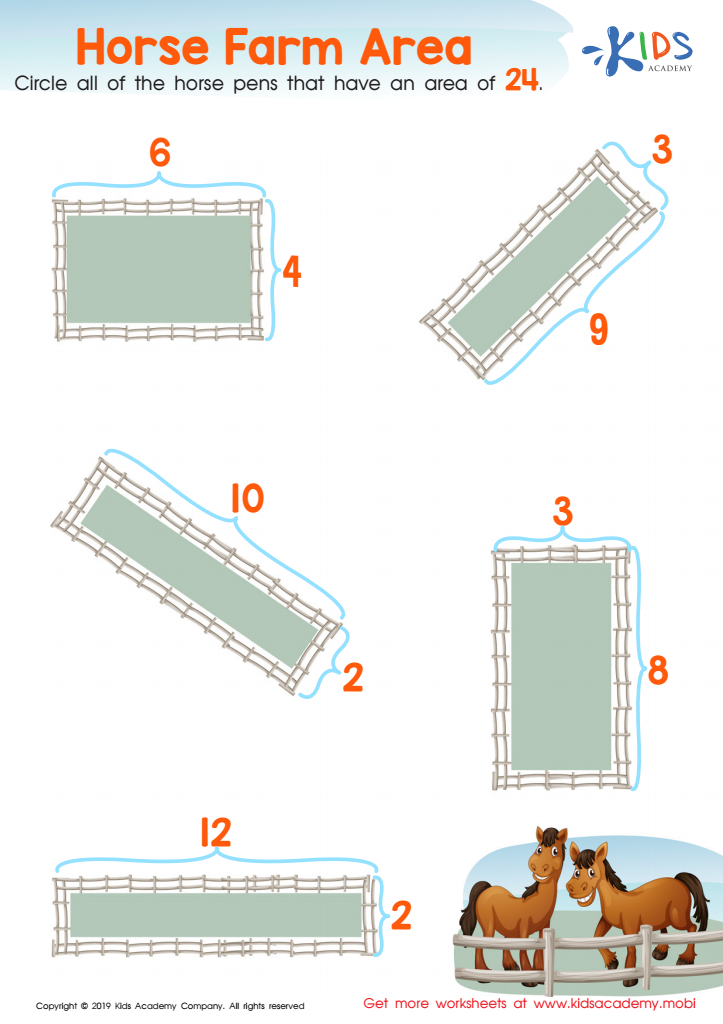
Horse Farm Area Worksheet
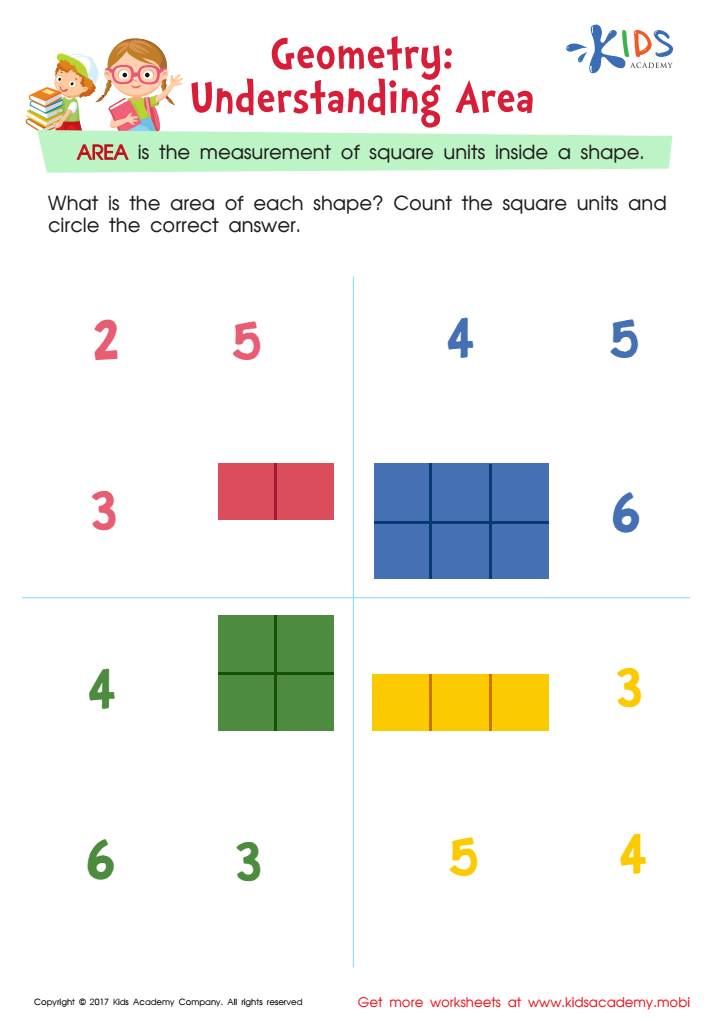
Understanding Area Worksheet








Understanding area and perimeter is crucial for 8-year-olds as it lays the foundation for essential mathematical skills and real-world applications. At this age, children are developing critical thinking and problem-solving abilities, and these concepts introduce them to practical geometry. When children grasp the differences between area (the space inside a shape) and perimeter (the distance around a shape), they learn to connect abstract mathematical concepts to everyday experiences, such as calculating the amount of space needed for furniture or the perimeter for a garden fence.
Moreover, learning about area and perimeter encourages spatial awareness and enhances reasoning skills. Studying these concepts fosters creativity in design, as children engage in planning and determining the best use of space. They can create art, build structures in play, or even approach nature with a more analytical lens.
Additionally, these skills often appear in standardized testing and future math topics, making early mastery important. Knowledge of area and perimeter will not only help children in their current grade but also instill confidence and a positive attitude toward mathematics as they progress. Therefore, it is vital for parents and teachers to actively support and encourage the learning of these concepts in meaningful and engaging ways.