Understanding Perimeter Geometry Worksheets for 8-Year-Olds
3 filtered results
-
From - To
Welcome to our "Understanding Perimeter Geometry Worksheets for 8-Year-Olds" page! Here, you’ll find engaging and educational worksheets designed to help young learners grasp the concept of perimeter in a fun and interactive way. Each worksheet provides age-appropriate exercises, including visual aids, real-life examples, and step-by-step instructions, fostering a solid understanding of measuring distances around shapes. Tailored for 8-year-olds, these resources encourage independent learning and strengthen foundational math skills. Whether in the classroom or at home, our worksheets make learning about perimeter enjoyable and effective, enabling children to explore geometry with confidence! Start your geometry adventure today!
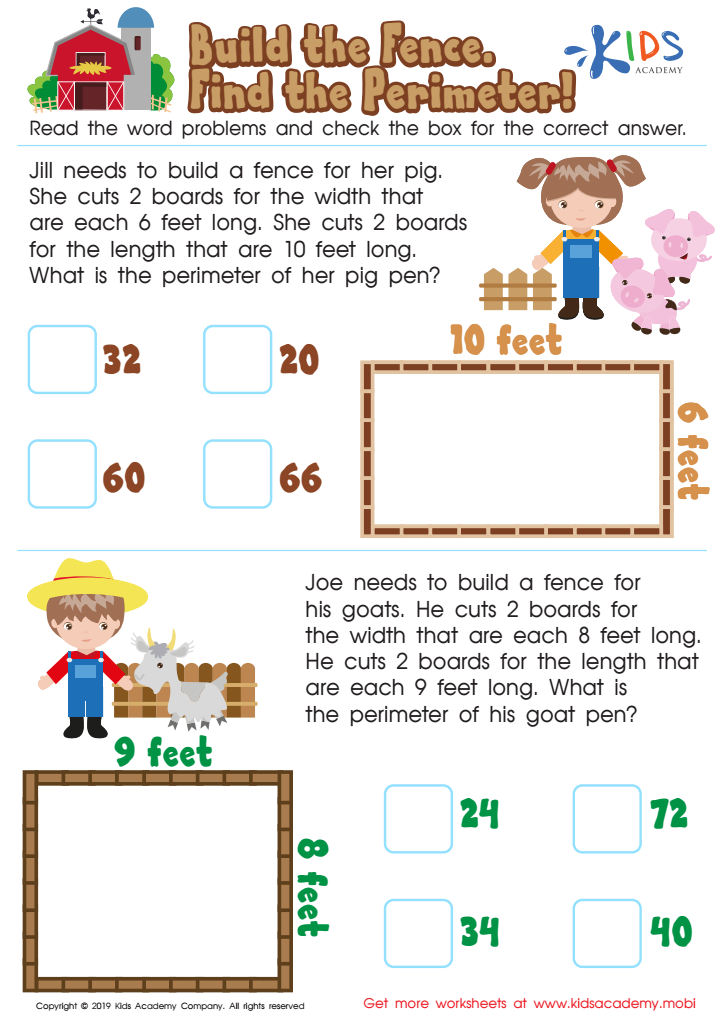
Build the Fence, Find the Perimeter Worksheet
 Assign to My Students











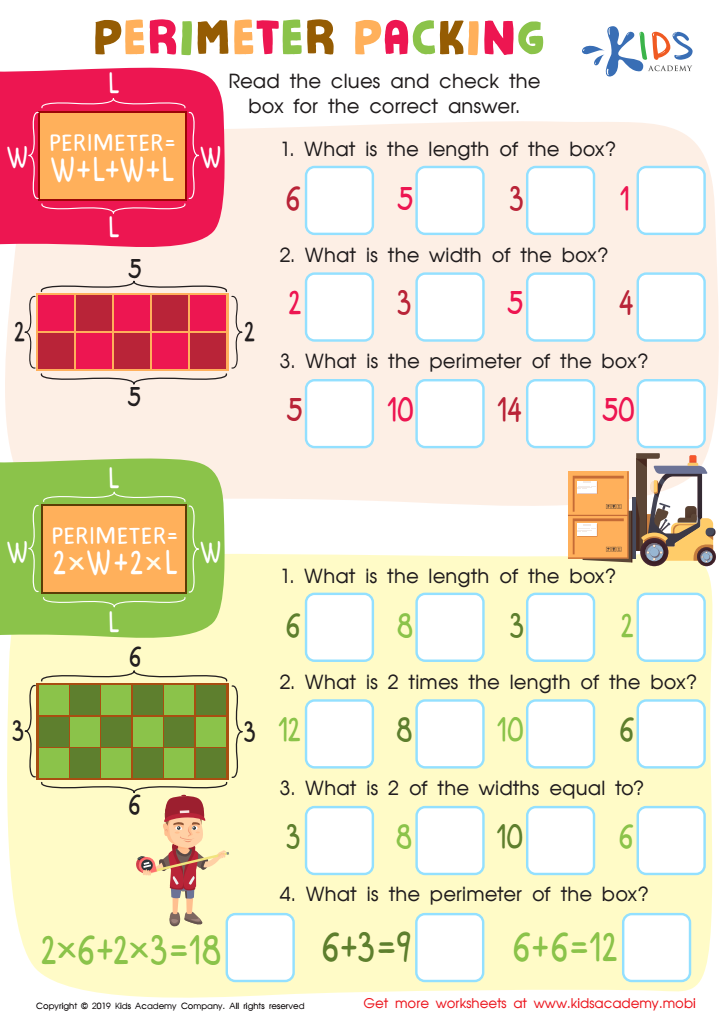
Perimeter Parking Worksheet
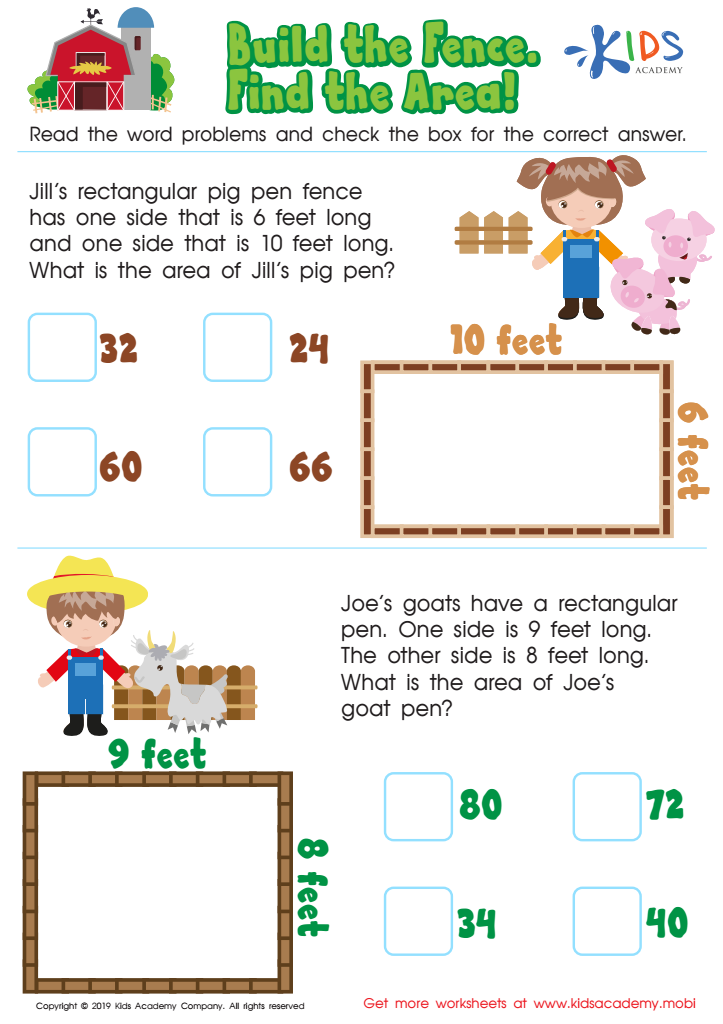
Build the Fence, Find the Area Worksheet








Understanding perimeter geometry is crucial for 8-year-olds as it lays the foundation for essential math skills and real-world applications. At this age, children are developing their critical thinking and problem-solving abilities, and learning about perimeter helps enhance these skills. It introduces them to concepts of measurement and spatial awareness, essential not just in math, but in everyday life.
Parents and teachers should care about this because understanding perimeter encourages logical reasoning. Children learn how to calculate distances around shapes, which can be tied into real-life scenarios, such as determining how much fencing they need for a garden or how to measure a room for furniture placement. Engaging with perimeter geometry also fosters curiosity and creativity as they explore different shapes and their properties.
Moreover, this foundational understanding supports further learning in geometry and math as children advance in their education. It builds confidence in math skills, reducing anxiety towards the subject. When parents and teachers prioritize these foundational concepts, they empower children to make connections across subjects, foster teamwork in projects, and develop a lifelong appreciation for math, thereby enhancing both academic and personal growth. Emphasizing perimeter geometry supports a proactive, hands-on learning experience for young learners.








